
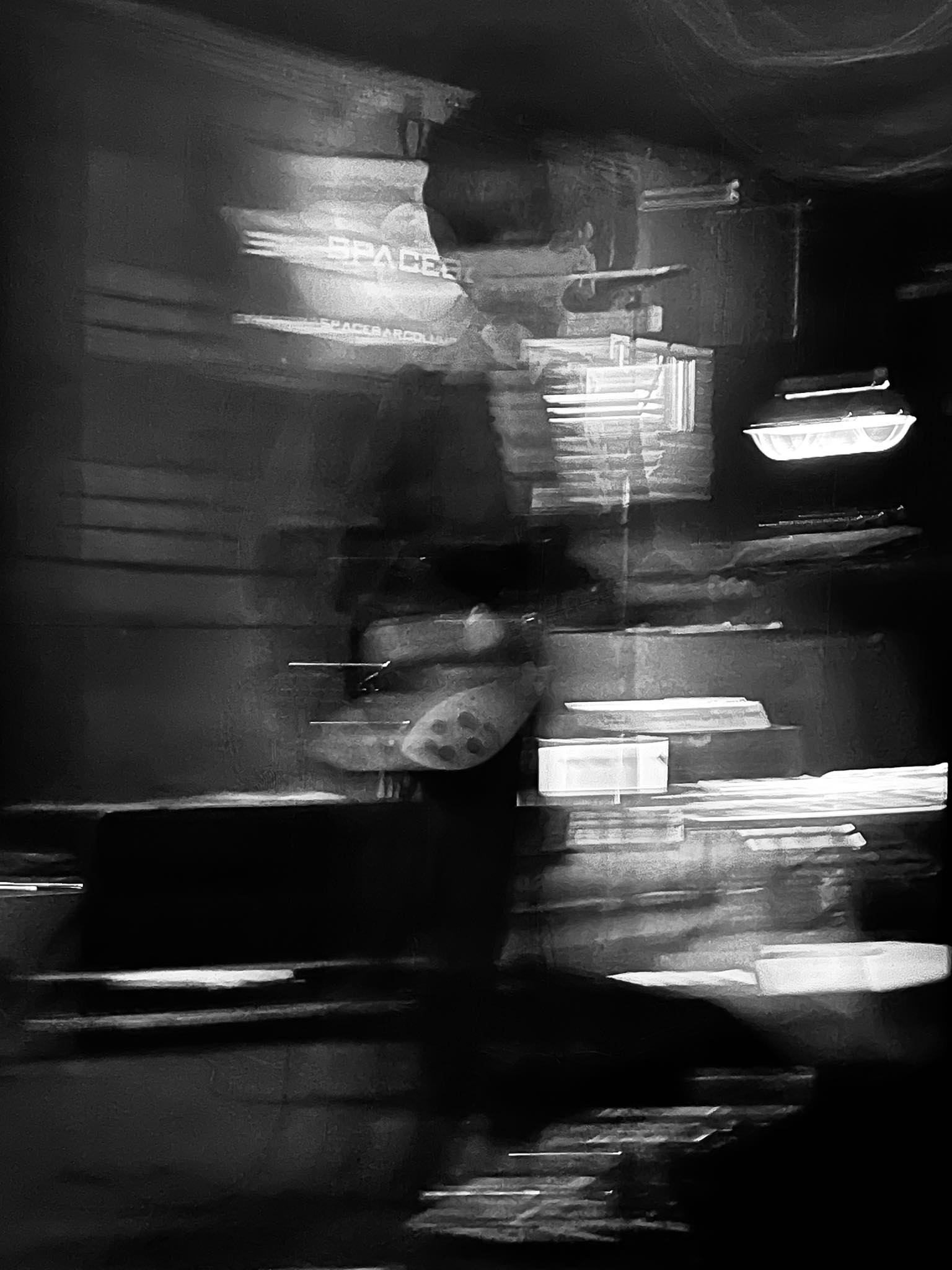
My caffeine-fueled thought about last night’s amazing rock and roll show — By a Lapsed Believer Dragged Kicking and Screaming into Rapture at The Spacebar (May 29, 2025) aka Dr. J.
It started with the silence.
Not the good kind—the pregnant pause before the snare cracks or the breath before a chorus explodes—but the stifling, suffocating kind. The kind that crept in during the pandemic and never fully left. The kind that replaced feedback with buffering wheels, pit sweat with couch inertia, and the sacred communion of the club with the sad, soft glow of your phone or laptop screen.
We all said it was temporary. Just a phase. A pause button. But then people stopped going back. Live music—the lifeblood, the altar, the therapy session-meets-street fight that had once given life to every meaningful moment of youth—was suddenly an option, not a necessity. A niche. A “might”, an “interested” instead of a “must.” Streaming replaced sweat. Earbuds replaced speakers. Watching someone strum a guitar in portrait mode while you folded laundry became the sad parody of what used to be a spiritual act.
And yeah, I bought in. Who didn’t? We got older, softer, more afraid. Netflix kept churning, Spotify never ran dry, and the couch never charged a cover. They had my favorite snacks. Maybe we forgot. Or maybe we chose to forget—because remembering what it was like to feel something, shoulder-to-shoulder with strangers, might have been just too much.
But then, on a random Thursday night in Columbus, Ohio, in a cinderblock joint that still smells like 1994 and regrets, it all came roaring back like a freight train with a grudge. Three bands. A tiny stage. A room. And somewhere in the middle of it all, I found what I didn’t even know I’d lost: the magic.
Maybe we have all been a bit burnt out lately with every morning bringing menace and dread, a thin-skinned attack built on ego, narcissism, and a culture of outrage.
These past few years have felt emotionally scabbed over by years of algorithmic playlists, music discovery if it happens at all is toed strivtly to our personal past choices. And in 2025 so many mainstream limp bands more concerned with brand aesthetics than the beautiful noise of guitar feedback.
Rock and roll has become a ghost in a shaken Polaroid, a relic of denim-scraped memories buried beneath held up poster board ironic mustaches and Instagram filters. The whole thing felt embalmed, pickled, taxidermied—played through boutique pedals and boutique egos, an infinite loop of tasteful mediocrity.
But then came Last Night. One of those nights that swings down from the cosmos like a flaming power chord, grabs you by the lapels, and reminds you why you ever gave a damn in the first place. It happened at The Spacebar in Columbus, Ohio—a cinderblock cathedral tucked between bars, food joints, and a laundromat — the kind of dilapidated storefronts that might still sell VHS tapes or lottery tickets. A venue that smelled of rock and till fightingg for relevance or at least survival. The smell of the grease of good intentions.
The perfect place for resurrection.
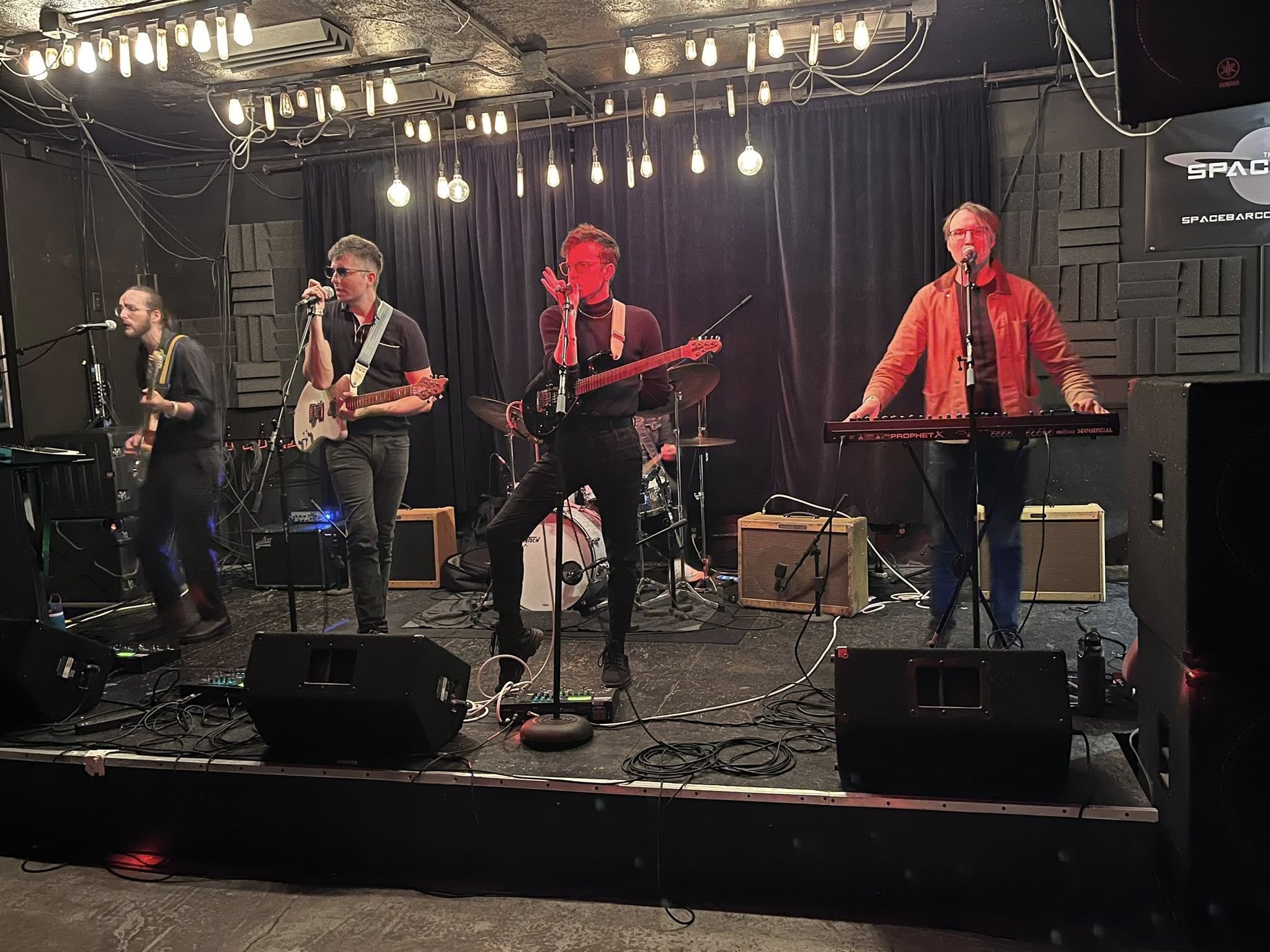
Enter Super City.
Super City hit the stage like a lightning bolt fused with a math equation — too tight to be this wild, too wild to be this tight, like if Devo and Thin Lizzy got into a car crash and left the wreckage bleeding glitter and BPMs.
These guys didn’t play songs so much as detonate them, launching off the stage like human fireworks, synchronized like a goddamn robot army but with all the twitchy, unhinged soul of a band that knows every note could be their last. Guitars traded licks like knife-fighters in a Baltimore alley, drums cracked like whips in a circus gone feral, and the whole thing pulsed with that rare, raw urgency—the kind that makes your brain light up and your spine want to sprint straight through the drywall. It was art-damaged rock and roll with a future-funk death wish, a sound so electrified you could taste the ozone in the room.
And hell, the choreography—yes, choreography—but not in some “industry plant showcase” way. No, this was choreography as combat, synchronized movement not to seduce but to bludgeon, to commit to a kinetic madness so complete it looped around into transcendence.
One minute they were locked in like Kraftwerk with heart palpitations, the next they were thrashing their bodies across the stage like the floor was lava and the only salvation was dance. The whole room went from “I don’t know this band” to “I want to join this band” in under three minutes. They didn’t restore your faith in rock and roll—they reminded you that maybe it had evolved into something new, something faster, weirder, sweatier. Something that lives not in the past but right here, right now, sweating all over you in a bar on a Tuesday night like salvation with a tremolo pedal.

And then The Tisburys took the stage.
You ever see a band that walks out looking like maybe they’re just some regular dudes, guys you know, your co-workers at the local record store or your trivia-night competition—and then proceed to absolutely decimate your soul with rock and roll? That’s the Tisburys. They have that thing. The thing you can’t name without sounding like a lunatic or a prophet. The thing that separates the lifers from the LARPers.
From the first note, they tore into their set like a pack of dogs breaking into a butcher shop—joyful chaos, unrelenting passion, the sonic equivalent of smashing glass just to hear the sound. Think Springsteen’s storytelling welded to Big Star’s chiming melancholia, dragged through the gravel of Philly punk grit and splattered with just enough modern neurosis to feel like now. The guitars rang out like church bells for the godless. The rhythm section didn’t just keep time—they commanded it, like Kronos punching the clock with a snarl.
There was one song—title lost to the ecstatic fog of the moment—that built up slow, with this patient, pleading guitar line that felt like someone whispering secrets at the edge of the world. And when it broke? Jesus. It was like the roof lifted six inches and the universe cracked open just wide enough for all of us—sweaty, cynical, slack-jawed—to catch a glimpse of what music is for.

The Laughing Chimes.
Two minutes into their set, I was already sweating through my cynicism. These kids (and yes, kids—the kind that probably still think Hüsker Dü is a weird Scandinavian joke until they learn better) came out swinging with jangle-pop hooks like they’d just stumbled out of a time portal from Athens, Georgia, circa 1985, blinking into the fluorescence with nothing but Rickenbackers and righteous intention. There was no ironic detachment, no arch knowingness—just melodies sharp enough to slice through the smog of apathy I’d been inhaling since 2016.
They played like they meant it. You know what that means? Probably not. Because meaning it is a lost art. Meaning it is standing in front of twenty-something beer-slingers and 40-year-olds wearing Dinosaur Jr. shirts with a rhythm section that gallops like a dog finally let off the leash and singing about small towns, lost dreams, and heartbreaks that aren’t filtered through TikTok.
I felt young. Not “young” like your skincare ad says—you know, dewy and delusional—but young like: I want to start a band tonight and scream into a microphone until the cops come.
By the time The Laughing Chimes slashed through their final number—a feedback-drenched love letter to the Replacements that made me want to punch the air and cry at the same time—I was halfway converted. I could feel the old hunger stirring, the one that used to wake me up at 2 a.m. with a desperate need to play “Radio Free Europe” at bone-rattling volume.
Not money. Not TikTok virality. Not Spotify streams.
Connection. Defiance. Salvation.
And it wasn’t just the bands. It was us, the crowd—pressed together marinated in secondhand dreams, all there for the same unspoken purpose. To feel something real. I saw a guy in a vintage Guided by Voices tee taking it in like a benediction. I saw a girl lean her head on her girlfriend’s shoulder during a bridge that could have melted glaciers. I saw the bartender nodding along in the back like they’d forgotten they were on the clock. Magic. Not sleight-of-hand, not showbiz gloss—but ancient, electric, and utterly earned.
By the end, I was a puddle. Broken down and rebuilt by the raw, gorgeous power of three bands who didn’t need a light show or viral video to get through to me—just guts, melody, and an unshakable belief in the redemptive fire of a great song, played loud, in a room too small to contain it.

I walked out into the Columbus night buzzing like a man struck by divine lightning. My ears rang with the ghost-echoes of feedback and harmony. My body ached in that holy way, the kind you feel after love, surviving a riot, or finally remembering who the hell you are if even for a fleeting moment.
Rock and roll isn’t dead. It’s just waiting for you at a place like The Spacebar, on a night like that, where belief is possible again. Super City, The Tisburys and The Laughing Chimes didn’t just play a show.
They started a revival.


 your tuesday afternoon alternative