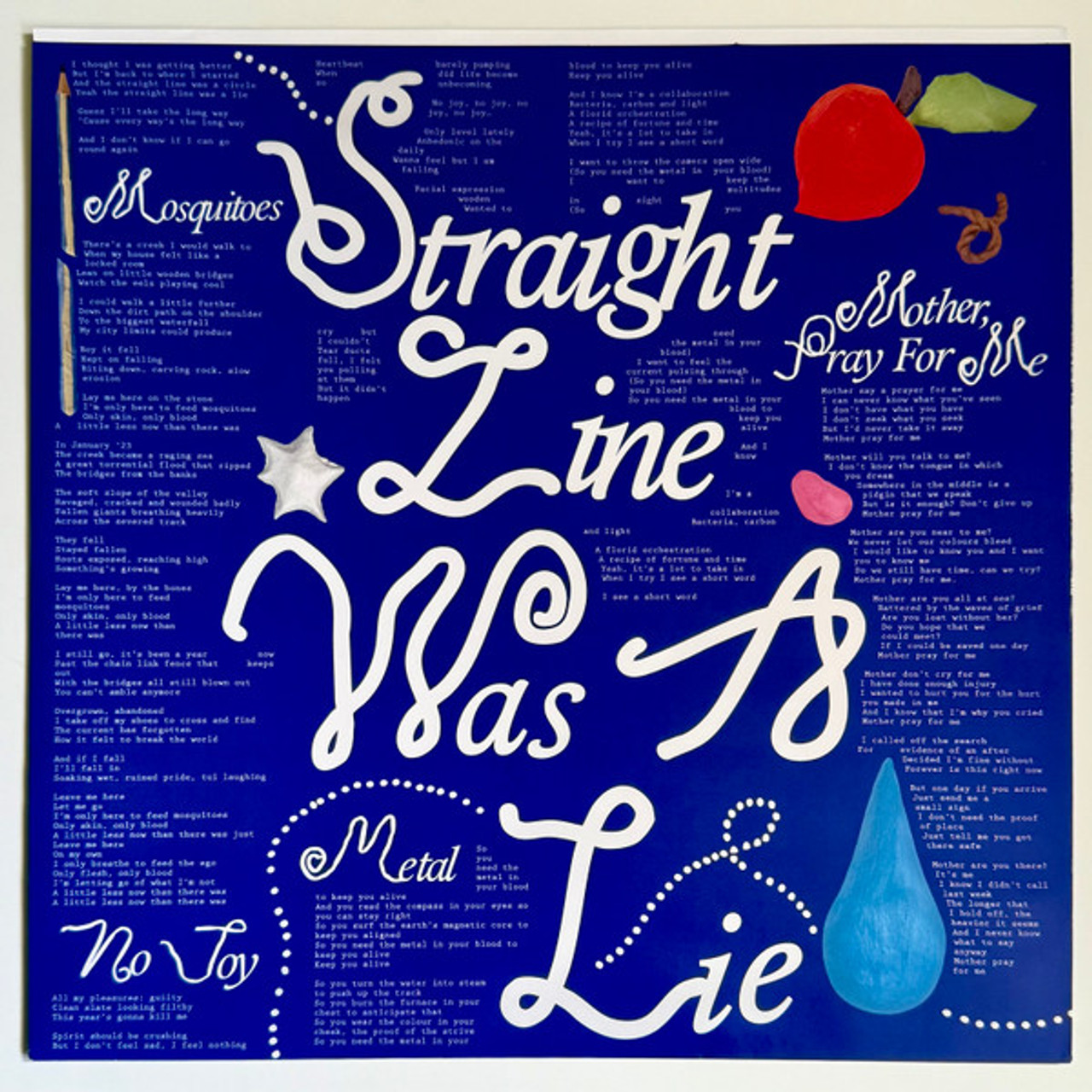
Video of The Day: The Beths – Mother, Pray For Me

“Mother, Pray for Me” finds The Beths doing what they do best: wrapping emotional unease in bright, tensile power-pop. It’s a song that feels instantly familiar if you know their catalog—those interlocking guitar lines, the melodic immediacy, Liz Stokes’ unmistakable vocal clarity—but it also pushes toward something rawer and more pleading than their usual wry self-interrogations.

From its opening measures, the song pulses with a kind of restless confession. Stokes delivers the title phrase not as a dramatic flourish but as a weary admission, a reaching-out from someone who’s been holding it together for too long. The Beths specialize in songs about the gap between who we want to be and who we are on our worst days; here, that gap takes on a spiritual edge. There’s a sense of hitting bottom—not catastrophically, but in the quieter, more believable ways people actually unravel.

The arrangement mirrors that emotional arc. The guitars shimmer and dart; the rhythm section plays with an almost anxious tightness, as if trying to keep the song from slipping out of its own grip. Harmonies, one of The Beths’ signature strengths, arrive like little reinforcements—friends showing up, steadying a shoulder. When the chorus lands, it’s both a release and a recognition: the pop sheen doesn’t lighten the weight of the plea so much as hold it with tenderness.

Lyrically, the song walks that Beths tightrope between self-reproach and self-awareness. The narrator isn’t blaming the world or asking for absolution; they’re simply acknowledging the moments when coping feels like an act of faith. The invocation of a mother’s prayer is less religious than relational—an admission that sometimes we need someone else’s hope to borrow.

“Mother, Pray for Me” ultimately stands out because it expands the band’s emotional vocabulary without abandoning their sonic DNA. It’s catchy, it’s cutting, and it lingers, an anthem for anyone who’s ever felt a little lost and dared to ask for help, even quietly.

Favorite of 2025: The Beths – Straight Line Was A Lie

Introduction: Why The Beths Matter

The New Zealand indie‑pop quartet The Beths have long stood out for their sharp songwriting, earworm melodies, and the emotional honesty that pulses through their lyrics. With their 2025 album Straight Line Was a Lie, they arrive at a new peak — refined in sound yet deeply raw in sentiment. It’s a record that doesn’t just reaffirm what makes them special; it feels like a rebirth: more considered, more textured, and more vulnerable than ever. As the band enters this next chapter, it’s become increasingly clear that The Beths aren’t just good at what they do — they’re extraordinary.

I want to take a moment and explore how each member’s musical contributions blend to form the band’s signature sound, and how the lyrics on Straight Line Was a Lie carve out an intimate, unsettling, yet hopeful portrait of life, growth, and mental health.

First, a quick refresher on the lineup. The Beths consist of:

  • Elizabeth Stokes – lead vocals, rhythm guitar, main songwriter
  • Jonathan Pearce – lead guitar, backing vocals, producer/engineer (on this record)
  • Benjamin Sinclair – bass guitar, backing vocals
  • Tristan Deck – drums, cymbals and percussion, backing vocals

In past releases, The Beths were already celebrated for their “jangly” guitar pop, shimmering harmonies, and driving rhythm section.  On Straight Line Was a Lie, each member seems to lean more deeply into their strengths, and — crucially — into experimentation.

Elizabeth Stokes remains the heart of the band. Her voice — often conversational, sometimes aching — carries the emotional weight; her lyrical voice is sharper, more introspective, grappling frankly with themes of mental health, existential anxiety, familial ties, self-doubt, and the paradoxes of healing. The songs come from a place of personal upheaval, shaped by her experiences with health struggles, medication, and self‑reflection.

Jonathan Pearce wears dual hats on this record: lead guitarist and producer / engineer / mixer (on most tracks). That shift seems to have given the album a more cohesive, textured sonic palette: guitars (both his lead and Stokes’s rhythm) shimmer, sizzle, crash — sometimes jangly, sometimes atmospheric, sometimes dissonant. On songs like “Take,” the guitar solos ring with a fresh urgency; on “Ark of the Covenant,” guitar lines meld with subtle ambient touches to build something cinematic and haunting.

Benjamin Sinclair’s bass underpins the album with steady, often driving low‑end that grounds even the most introspective or experimental moments. While bass can be underappreciated in guitar‑heavy pop, here it anchors songs like “Take” with a muscular backbone that gives weight to the emotional landscape, and in upbeat numbers it drives the momentum forward, pushing choruses into sing‑along territory. The result is a rhythm section that feels both steady and alive.

Tristan Deck’s drumming and percussion complete the engine. On Straight Line Was a Lie, the drums don’t just keep time — they accentuate mood, shake loose tension, and steer transitions between jubilation and melancholy. Whether it’s propulsive beats on faster tracks or minimal, contemplative rhythms on the quieter ones, Deck’s playing adapts to the emotional terrain without overshadowing it. Backing vocals from Deck and Sinclair add subtle harmonic depth, reinforcing what has always been The Beths’ hallmark: layered vocal harmonies that linger.

Together, these four don’t just play instruments — they channel mood, memory, and meaning. On this record, the result feels less like a “band playing songs” and more like four people collaboratively mapping emotional terrain.

The sound of Straight Line Was a Lie: More than “jangly” pop

One of the defining qualities of The Beths’ earlier albums was that “jangly guitar + power‑pop hooks + emotional honesty” formula — and it worked beautifully. On Straight Line Was a Lie, they keep the hooks, but deepen the textures. The production (led by Pearce) emphasizes space, layering, contrast; songs can shift from bright, chiming pop to darker, atmospheric, even gritty territory. Critics note this album as “bigger, better and more complicated than they’ve ever been.”

The opening track and title song begins with a false start — a spoken “sorry I was thinking about something else” — a move that feels deliberate: it sets the tone for an album preoccupied with interruption, derailment, and return. The lyric “I thought I was getting better / But I’m back to where I started / And the straight line was a circle / Yeah the straight line was a lie” resounds as a central thesis. Life, the record suggests, is not a linear progression but a messy, looping, often contradictory journey.

Meanwhile, tracks like “No Joy” jolt with nervy urgency — the upbeat melody and driving beat bely lyrics that speak to anhedonia and existential stasis: “All my pleasures, guilty / Clean slate looking filthy / This year’s gonna kill me … Spirit should be crushing / But I don’t feel sad, I feel nothing.”

On “Metal,” they give form to something beautiful and strange: a metaphor about being alive as a “collaboration of bacteria, carbon and light,” needing “the metal in your blood to keep you alive.” It’s biological, cosmic, grounded, and dreamlike all at once — marrying emotion, science, and wonder in a simple but powerful package.

There’s also room for quiet minimalism. “Mother, Pray for Me” strips things back: gentle picking, soft vocals, aching longing. It’s a song about complicated family, grief, and generational wounds — and it lands not through bombast but through tender reserve.

Even the album’s final moments — on “Best Laid Plans” — feel bittersweet: jangly guitars and a buoyant rhythm, but implicit in the instrumentation and tone is a sense of unresolved longing, of “unfinished business.” It’s the sound of hope, but also of memory’s weight.

In sum: Straight Line Was a Lie isn’t simply “jangly indie pop with hooks” — it’s more ambitious: emotionally deeper, texturally richer, and willing to lean into shadows as much as light.

Lyrical worlds: Mental health, Memory, and the Myth of Progress

If the musical side is about textures, the lyrical work is about truth. On this record, The Beths — primarily through Stokes’s pen — interrogate themes of mental health, healing, identity, memory, and the uneasy breaks in between. The album’s title succinctly captures its philosophical impulse: that “linear progression is an illusion.” Life doesn’t follow a neat arc; healing does not happen on a straight line.

Much of that perspective comes from Stokes’s own life. In recent years she’s navigated serious health challenges (including a diagnosis with Graves’ disease), anxiety, and the disorienting effects of starting antidepressants for the first time. That upheaval forced a radical shift in how she writes: among other changes, she turned to stream‑of‑consciousness writing on a typewriter, exploring memories and feelings she’d avoided, and forcing herself to reckon with difficult emotions.

That kind of emotional honesty shows up throughout. On “Mosquitoes,” she wanders a creek near her home — a haven when “my house felt like a locked room” — only to find devastation: the same creek turned into a “raging sea” after floods. The song becomes quietly terrifying: an elegy to disappearance, impermanence, and the fragility of refuge.

In “Til My Heart Stops,” there’s a longing for simple embodied pleasures — riding a bike in the rain, flying a kite, dancing — even as the world feels heavy and weightless at once. According to one review, the song, with its unsettling distortion and ghostly atmosphere, “charts the fragility of life itself,” its abrupt ending like a heart’s final beat.

Elsewhere, “Ark of the Covenant” and “Best Laid Plans” explore inner excavation: digging through memory, confronting “fossilised nightmares,” searching for meaning — or closure — in the negative space of the self.

But it’s not purely despair or existential weight. There’s still wry humour, sharp imagery, and defiant tenderness. The need for “metal in your blood” in “Metal” — a call for grounding, resilience, a kind of elemental insistence on life — turns the personal and biological into something poetic and universal.

Taken together, the lyrics on Straight Line Was a Lie don’t just reflect mental health struggles or personal trauma — they interrogate the myth of constant improvement. They suggest healing is messy; growth is circular; humanity is fragile, often contradictory — but still worthy of wonder.

What this album means: Growth, Maturation, and a New Chapter for The Beths

For longtime fans, Straight Line Was a Lie may at first sound familiar: The Beths still write songs that stick in your brain. But this time, there’s a sense of expansion, of maturity, of ambition being reframed with nuance. Production is richer, the emotional stakes higher, and nothing feels simply disposable or background music. This is an album that rewards — demands — close listening.

Critically, the record has been widely praised. On aggregators it earns a strong Metascore, reflecting generally favorable to enthusiastic reviews. Reviewers note the band is “bigger, better and more complicated than they’ve ever been.” Others call it perhaps their “most incisive” album yet, one where existential anxieties and lyrical ambition meet pop hooks and evocative soundscapes.

Moreover, Straight Line Was a Lie feels like a milestone — not just in their discography, but in their artistic evolution. The move to have guitarist Jonathan Pearce handle production and engineering gives the album a more unified sonic identity. The decision by Stokes to overhaul her songwriting method — to face trauma, memory, and illness head‑on — brings a weight and vulnerability previously only hinted at. The whole band seems aligned: playing not just with precision and popcraft, but with emotional honesty.

For listeners, this album offers more than catchy choruses: it offers fellowship. It whispers that you are not alone if you’ve felt lost, stuck, or numb. It suggests that healing is not always about triumphs or tallies of progress, but about maintenance — about showing up, living, feeling, enduring. And it does all that while giving you songs you can dance to, or cry to, or sing loud at a concert.

Conclusion: The Beths as Emotional Architects

In a world that often feels driven by optimization, forward momentum, and constant productivity, Straight Line Was a Lie comes as a quiet, necessary reckoning. It refuses the idea that healing, growth, or life itself must follow a neat, linear trajectory. Instead, The Beths propose a different metaphor: life as cyclical, messy, and ongoing — something to be maintained, revisited, reflected upon, not “completed.”

As a band, The Beths have always been more than the sum of their catchy hooks or jangly guitars. On this album, they feel less like a pop act and more like emotional architects — sculptors of feeling, memory, and existential wonder. Each band member’s contribution is essential — from Stokes’s wrenching lyrics to Pearce’s layered production, from Sinclair’s grounding bass to Deck’s subtle but powerful rhythms.

Straight Line Was a Lie may end up being a soundtrack for an era — an album for when the world feels too fast, too forward, too relentlessly optimistic. It offers instead a different rhythm: patience, honesty, acceptance, and defiance.

If you haven’t listened to it yet — or haven’t listened closely — this is the moment: sit back, headphones on, and let The Beths guide you down the crooked, beautiful trail.

What is it that drives the feel in indie music?

Indie music unites us because it thrives on authenticity, creativity, and emotional honesty. Unlike heavily commercialized tracks, it often reflects personal stories, experimentation, and unique perspectives that feel relatable. Fans connect through shared emotions—heartbreak, joy, longing, or defiance—finding meaning in sounds and lyrics that resonate with their own lives. The community around indie music also matters: attending shows, sharing discoveries, and supporting artists fosters a sense of belonging, where people celebrate individuality while feeling part of something bigger.

The Beths’ Best Laid Plans exemplifies the power of rhythm and groove in creating an irresistible musical experience. At its core, the song is anchored by tight, punchy percussion and a driving bassline that create both energy and momentum. This rhythmic foundation gives the track a sense of forward motion, allowing the melody and vocals to shine while the listener is physically engaged—tapping toes, nodding heads, or even dancing along. The combination of percussive precision and melodic bass makes the song feel immediate and alive, illustrating how the “feel” of a song is just as important as its harmonic or lyrical content.

This attention to rhythm and groove is a hallmark of many artists across indie and alternative music. Tamar Berk, for instance, uses nuanced percussion to build layers of tension and release in her music, creating songs that feel both intimate and expansive. Bird Streets similarly blends melodic hooks with a driving rhythm section, demonstrating how bass and drums can define a track’s emotional pulse. Guided By Voices, with their lo-fi yet meticulously arranged recordings, often showcase how a tight rhythm section can make even a chaotic-sounding song feel cohesive and infectious. The Connells and The Cords similarly emphasize song craft, where the music propels the storytelling and emotional impact.

Meanwhile, vocalists like Kim Ware and her effort, The Good Graces, highlight the interplay between rhythm and vocal delivery. In Kim’s songs, the percussive drive and melodic bassline not only support the vocal narrative but enhance the emotional resonance, creating moments of release and catharsis that linger with the listener. Just as The Beths use rhythm to energize Best Laid Plans, these artists leverage bass and percussion to make the music physically and emotionally engaging, proving that the “feel” of a song—its groove, drive, and momentum—is a central component of its power.

Ultimately, what unites these artists is a deep understanding of how guitar, percussion, bass, and overall feel can transform a song from a static composition into a living, breathing experience. From The Beths’ infectious grooves to Bird Streets’ emotive rhythms, from Guided By Voices’ lo-fi magic to Kim Ware’s soulful pulse, these musicians remind us that feel, texture and rhythm are not just accompaniment—it’s a force that connects listeners, moves bodies, and conveys emotions that words alone cannot capture.

Phil Yates Best of 2022

Every year we ask some of our music friends to share some of their thoughts on some of the albums/singles that were released in the past year.

Our pal, Phil Yates of Phil Yates & The Affiliates released a terrific record, A Thin Thread, on July 15th of this year, and much to our joy, he agreed to share his thoughts.

Do you ever tire of hearing people say that there is no good new music nowadays? The music released in 2022 should silence those fools, but you and I know nothing will silence people who think that way. My wallet wishes that I was one of those fools who did not care about new (and old) music this year. Other than what is in the top spot, the rest of my top ten albums of 2022 is in no order.

Wet Leg – Wet Leg. No new release in recent memory has given me as much joy as Wet Leg’s debut record. My actual age is quickly approaching my spiritual age, meaning that I am probably more prone to embracing my inner curmudgeon these days. When a band has so much buzz behind them, my instant reaction is to dismiss them. I am glad I did not do that with Wet Leg.

The record is so much more than the singles released in 2021, “Chaise Longue” and “Wet Dream”. The rest of the record is full of hooks. It feels like the best music from the ’90s but is not a retro record. One of my highlights of the year was seeing them in March at Chicago’s Thalia Hall. It was absolutely thrilling to see a band clearly in its ascendancy yet still figuring things out. I cannot wait to see what Wet Leg does for an encore!

Cate Le Bon – Pompeii. This record contains probably my favorite song of the year, “Remembering Me”. The video to it is incredible. Cate is one of those musicians that I will follow any weird or challenging path she happens to forge.

Elvis Costello & The Imposters – The Boy Named If. I had to check the calendar again. This album came out in January 2022. I am a huge Costello nerd. Huge! This record made me so happy. It is his best since 2004’s The Delivery Man. It is closest to Brutal Youth with respect to the sound of the record. If that does nothing for you, we probably cannot be friends.

The Beths – Expert in a Dying Field. Have The Beths made a bad record yet? Do they even know how to make a bad record? I embrace our new Kiwi rock overlords.

Young Guv GUV III & GUV IV. I’m cheating by combining both Young Guv records as one record. It is full of jangly goodness. These songs sound even more rocking live. One of the highlights of going to England this summer for me was catching Young Guv in Bristol. Great show!

Rolling Blackouts Coastal Fever – Endless Rooms. This Australian band constantly hits my sweet spot.

BOAT – No Plans to Stick the Landing. I’ve been a fan of this Seattle band for a long time since probably 2009’s Setting the Paces. I get the feeling they have the same influences as I do: Guided By Voices, Elliott Smith, Teenage Fanclub, and Pavement.

Spiritualized – Everything Was Beautiful. This is a mild upset. When asked to do lists in the past, Spiritualized normally takes the top spot if they released a record in that year. That to me is weird because I never think to name them as one of my favorite bands. I should rectify that and start name-checking them every chance I get.

Angel Olsen – Big Time. Angel Olsen sounds like a country-leaning Roy Orbison on this record. It is “big” and well worth your “time”. Angel Olsen is another artist I will follow on whatever creative path she takes.

Sloan – Steady. Has Sloan made a bad record yet? Do they even know how to make a bad record? Long live Canada’s answer to The Beatles!

I should have an addendum to the list. I also put out a record with my band, Phil Yates & The Affiliates, called A Thin Thread on Futureman Records. If I was feeling particularly cocky, I would have put it in the Top Ten of 2022. For now, let’s leave it as a nice little footnote for this year.

The year 2022 was great for music books, too. I need to get my hands on Bob Dylan’s latest book. Christmas is coming, so family members reading this, consider that a hint. My favorite book from a musician was Jarvis Cocker’s Good Pop, Bad Pop. It is a great reflection on the memorabilia we collect and what makes some of it keepable and other portions of it more disposable. I could hear Jarvis’ voice whilst reading it.

For those of you wanting to give yourself a bit of a challenge, PJ Harvey’s Orlam should be on your reading list. It is a novel-length poem written in the old Dorset dialect. Don’t worry. There is a glossary of terms at the back of the book.

Thanks for reading! May all of you have a wonderful, music-filled 2023!

Today’s YTAA Playlist

The playlist today includes new music from Lydia Loveless, Al Holbrook, Bob Mould, Chris Forsyth, The Beths, Momma, Mike Bankhead and Tino, Waxahatchee, Speaking Suns, Rufrano, Nada Surf and more! Plus music from David Payne, Wussy, The Story Changes, The Typical Johnsons, Shrug, The Pullouts, Tim Pritchard, The 1984 Draft, The Nautical Theme, The Flamin’ Groovies, Me & Mountains, The Mayflies USA, Toxic Reasons, The Regrettes, American Werewolf Academy, Ass Ponys, Greg Dulli, Son Volt and Samantha Crain.

Some looking back indie courtesy of James, The Smiths, Graham Parker and The Rumour and Brainiac. And a live classic from The Replacements! We pay some small tribute to far overlooked songwriter Emitt Rhodes.

So give the playlist a listen or three!

your-tuesday-afternoon-alternative-color copy


Video of The Day: The Beths – Jump Rope Gazers

The title track from The Beths sophomore record is a classic jangly poppy indie gem. This New Zealand band has been making some impressive music since 2015. The Beths have used social media (Facebook, Soundcloud, Twitter, Instagram and an incredibly socially aware website) to share their music with us! Enjoy!

your-tuesday-afternoon-alternative-color copy

YTAA 05-26-2020 Playlist

We continue to share our playlists via Spotify here. Please give our show a listen and support these terrific artists directly in any way that you can! Now more than ever we need to support and take care of one another!

This week we are playing music from Yuppie, Jetstream Pony, Kidbug, Charlie Jackson and the Heartland Railway, The Beths, Steve Earle, WOODS, Trace Mountain, Khruangbin, The Sonic Dawn, The Radio Dept., David Allen, Porridge Radio, Rolling Blackouts Coastal Fever, Jason Isbell, Choir Boy, The Katawicks, Yalecollegegraduate, Jetty Bones, The National, Loose Tooth, True Lies, Wussy, Kyleen Downes, The Corner Laughers, The Story Changes, Hello June and more!

Check out the live stream from Yuppie at Encore Studios on May 27th at 8pm!

a0025564858_16We are also playing a brand new song that we are very excited to share with all of you music lovers!

Painting Pictures‘ is the latest and newest music from Dayton singer-songwriter, guitar player and all around amazing voice Amber Hargett that came out today! A real gift to have new music from her! Such a great song! She is joining a fine case of local musicians who are live streaming on May 30th to raise funds for Ohio restaurant workers!

R-1790873-1306445379.jpegIn addition to all of that musical goodness, we have two songs from The Connells — one song to celebrate the 22 years since the release for their album ‘Still Life’ and another rare live song ‘Rusted Fields’!

The ‘Still Life’ album was the last to include the original lineup of this legendary band! And the word is that the band has finished recording a new record that is headed our way soon, tentatively titled ‘Steadman’s Wake.’ Count us among the excited for this new music!

So give the playlist a listen. Dr. J will be posting videos on the Facebook page for YTAA beginning at 3pm because that is show time for YTAA! Please stay safe and be well!

your-tuesday-afternoon-alternative-color copy