Please, Please, Please Let Me See the Show (This Time)

Morrissey has always been a weather system, not a touring artist. You don’t buy a ticket to see him so much as you gamble—you place a small, hopeful wager against history, logistics, exhaustion, grievance, the universe, and Morrissey himself. And in the last several years, the house has been winning.

Let’s talk numbers, because numbers have a way of cutting through myth. Since roughly 2019, Morrissey has canceled a staggering share of his scheduled concerts. Tracking sites that obsess over these things, think of them as the baseball-card collectors of broken promises, suggest that in the most recent stretch alone, he’s canceled nearly half of what he’s booked. In 2024, nine out of twenty-three shows vanished. In 2025, thirty-two out of sixty-three evaporated. Early 2026? Two more were gone before the coffee finished brewing on the new year. Forty-three cancellations in about two years. Forty-nine of his last hundred shows, period. Flip a coin. Heads, you get “There Is a Light That Never Goes Out.” Tails, you get an apologetic Instagram post.

Last Night I Dreamt That Somebody Played the Show

Now, before the comment section of this blog lights up like a bonfire of sanctimony, let’s be clear: this isn’t a hit job. Morrissey doesn’t need one. He’s been doing his own PR demolition derby for decades. This is about what it means when an artist who once articulated romantic alienation for an entire generation now can’t reliably show up in the flesh to sing about it.

Because live music, real, sweaty, inconvenient, human live music, is a contract. It’s not just a transaction, not a barcode scan, and a T-shirt upsell. It’s a promise: I will be there if you are. And when that promise breaks often enough, it stops feeling tragic and starts feeling structural.

Here’s where we can kick open the door and start yelling: rock and roll is not supposed to be a reliable thing, but it is supposed to be an act of presence. You can be sloppy, you can be late, you can be drunk, you can be transcendent or terrible, but you have to exist on the stage. Cancellation is the anti-performance. It’s a ghost story told by a promoter.

This Charming Man Will Not Appear Tonight

Morrissey’s defenders will point to his health, exhaustion, the cruelty of touring in one’s sixties, and the meatless catering demands of a man who has turned vegetarianism into performance art. All fair points! Touring is brutal. Capitalism eats its elders. The road is a grinder, but it has better lighting. But here’s the problem: Morrissey’s cancellation habit isn’t a sudden decline—it’s a pattern. A long, well-documented, almost conceptual-art-level commitment to not showing up.

And patterns change how we listen.

Once upon a time, Morrissey’s flakiness felt romantic. The same way The Smiths felt impossibly fragile, like they might dissolve if you looked at them too hard. You forgave the missed shows because the songs felt like secrets whispered directly into your ear. You forgave him because you believed—wrongly, beautifully—that sensitivity was incompatible with reliability.

But fast-forward to now, where entire tour legs disappear like a Vegas magician’s assistant, and the romance curdles into consumer fatigue. Fans book flights. Fans take time off work. Fans arrange childcare. Fans in Latin America, Europe, the Midwest—people for whom a Morrissey show is not a casual Tuesday night but a once-in-a-decade pilgrimage—get left holding the emotional bag.

Schrödinger’s Morrissey: The Show Both Exists and Doesn’t

At some point, the question stops being “Why does Morrissey cancel?” and becomes “Why do we keep pretending this is surprising?”

This is where Morrissey becomes less a singer and more a metaphor for late-stage rock stardom. He is the walking embodiment of the contradiction: an artist whose work once validated vulnerability now presiding over a system that treats audience trust as optional. He’s not alone in this, but he’s the most extreme case study because his cancellation rate is so high it borders on performance itself. It’s almost as if the absence is the point.

And maybe that’s the cruel irony. Morrissey, the great bard of loneliness, has perfected a way to make tens of thousands of people feel collectively stood up.

The tragedy isn’t that he cancels. The tragedy is that the cancellations have become part of the brand. They are baked into the expectation. “Did the show happen?” becomes the first question, not “Was it good?” That’s a catastrophic downgrade in cultural terms. Rock and roll isn’t supposed to be a Schrödinger’s cat.

Meanwhile, somewhere down the street, a local band is loading their own gear into a van that smells like old coffee and regret. They will play whether ten people show up or two hundred. They will play sick. They will play tired. They will play because showing up is the whole damn point. They don’t get to cancel half their dates and still be mythologized. They get one no-show before the scene quietly moves on without them.

That’s the contrast that hurts. Morrissey can cancel forty-nine out of a hundred shows and still sell tickets to the next one because nostalgia is the most powerful drug in the world. It keeps whispering, Maybe this time. It keeps telling us that the version of him we loved in 1986 is still hiding somewhere behind the scrim of lawsuits, grievances, and canceled soundchecks.

And look—I get it. I’d probably still roll the dice myself. To be perfectly honest, I have taken the chance, and I was fortunate in seeing a Morrissey show. That’s the sickness and the beauty of loving music that mattered to you when you were young. You keep hoping for communion even when history tells you to expect a refund.

How Soon Is Now? Very Possibly Never

But let’s stop pretending this is just bad luck. Over the last six years, the data tells a story as clear as any lyric Morrissey ever wrote: absence has become as defining as presence. Cancellation is no longer an exception; it’s a feature.

This isn’t a moral failing so much as a cosmic joke. The man who taught us how to feel has turned unreliability into an art form. The fans keep showing up to an empty stage, humming along to songs about disappointment, living inside the metaphor, whether they like it or not.

And maybe that’s the final, bitter punchline: Morrissey still understands his audience perfectly. He just doesn’t have to be there to prove it.

New Music Isn’t Dead, You Just Stayed Home

They keep saying it like it’s a diagnosis, like a doctor lowering his voice: There’s no good new music anymore. As if the patient is culture itself, lying flatlined under a white sheet, while the rest of us are supposed to nod solemnly and accept that the last real song was written sometime around when they were sixteen and emotionally combustible. This is nonsense, of course, the laziest kind of nonsense, the kind that requires no listening, no leaving the house, no risk, no sweat, no awkward eye contact in a half-lit room where the band is setting up next to a stack of amps that smell like beer, ozone, and promise.

New music is not dead. It’s just not coming to you. It’s not ringing your doorbell or algorithmically tucking itself into your ears while you scroll. It’s happening out there, in rooms that require pants and presence and a willingness to be changed, even slightly. And that’s the real problem: new music demands participation. It demands that you show up.

The great (boy, would he hate that sentiment) rock critic, Lester Bangs, understood this instinctively. He knew that music wasn’t an artifact to be archived, but a live wire, something that crackles when bodies gather, and sound hits air, and something unpredictable happens. The excitement of new music isn’t about novelty for novelty’s sake; it’s about the shock of recognition when you hear something you didn’t know you needed until it’s already inside your head, rearranging the furniture.

Going out to see local music—real local music, not brand-approved “scenes” packaged for export—is a civic act. It’s how communities remember they’re alive. You walk into a bar, a VFW hall, a coffee shop after hours, a basement with questionable wiring, and suddenly you’re part of a temporary republic founded on volume and intent. You’re standing next to people who live where you live, who work the jobs you know, who are writing songs not because it will scale, but because it has to come out. That matters. That changes things.

The need for new music isn’t abstract. It’s psychic. It’s the need to hear someone else articulate the same confusion, joy, dread, or stubborn hope you’re carrying around without a language. No documentation, just a real human need. When people say nothing is exciting being made anymore, what they’re really saying is that they’ve stopped being curious about other people’s interior lives. They want the old songs because the old songs already agree with them. New music argues back, it’s the packaging/re-packaging of human feelings in new bottles.

And that argument is healthy. It keeps culture from calcifying into a museum gift shop stocked with endlessly remastered memories. Live local music reminds us that art is a process, not a product. Bands miss notes. Lyrics change. Drummers (guitarists, bass players, etc.) quit. Someone forgets the bridge and laughs. These imperfections are not flaws; they’re evidence of life. They’re proof that the thing you’re witnessing hasn’t been fully decided yet.

The positive consequences ripple outward. You support a venue, which supports staff, which keeps a place open where people can gather without a screen between them. You give musicians a reason to keep writing, to keep rehearsing, to keep believing that the hours spent hauling gear and arguing about tempos aren’t insane. You create informal networks—musicians meet other musicians, shows lead to collaborations, friendships form, ideas cross-pollinate. This is how scenes happen, not because someone declares one into existence, but because enough people decide that showing up matters.

Local music also recalibrates your sense of scale. Not everything needs to be monumental to be meaningful. A great song played for forty people can hit harder than a festival set swallowed by branding and distance. There’s an intimacy in local shows that can’t be replicated: eye contact with the singer, the thump of the kick drum in your sternum, the shared glance when a chorus lands just right. You don’t leave as a consumer; you leave as a witness to something that you cannot quite describe.

And let’s be honest about the frustration. The claim that nothing compelling is being released now is often a cover for disengagement. It’s easier to blame the times than to admit you’ve stopped listening actively. The world didn’t run out of ideas; you ran out of patience. Meanwhile, musicians are still out here folding genres into new shapes, writing songs about now—about precarity, community, grief, humor, survival—with tools and influences that didn’t exist twenty years ago.

If you want excitement, you have to seek it out. You have to court it. You have to risk boredom, risk disappointment, risk being wrong. That’s the deal. New music doesn’t owe you greatness on demand; it asks for your attention in exchange for the possibility of revelation.

So go out. Stand in the back or press up front. Clap awkwardly. Buy the record/CD/download/tape. Talk to the band. Argue with your friends about what you heard. This is how culture stays porous and human. This is how a town sounds like itself instead of a rerun.

The future of music isn’t missing—it’s tuning up, waiting for you to get off the couch and walk through the door.

Harmony Clash: Dayton’s Sonic Showdown of the Bands

The 2024 Dayton, Ohio Battle of the Bands at The Brightside music and event venue (905 E 3rd St, Dayton, Ohio) marks a significant local cultural event that brings together diverse musical talents and showcases the vibrant local music scene. This annual contest has become a cornerstone for emerging artists, providing them with a platform to exhibit their skills, connect with the community, and potentially expand their reach. Let’s explore the Battle of the Bands contests in Dayton, focusing on the 2024 edition held at The Brightside in collaboration with Sound Valley over six weeks. In the interest of full disclosure, Dr. J has been a judge in previous contests and some of those experiences form the backbone for the comments here.

Dayton, Ohio has a rich musical heritage, with a legacy that includes the funk stylings of the Ohio Players and the avant-garde experimentation of Guided by Voices. The city has long been a breeding ground for impressive musical talent, and events like the Battle of the Bands contribute to the nurturing of this vibrant artistic community. These contests are more than just competitions; they are celebrations of creativity, expressions of identity, and opportunities for musicians to connect with their audience.

The Brightside, an innovative music venue in Dayton, serves as the perfect backdrop for the 2024 Battle of the Bands. With its intimate setting, excellent acoustics, and a history of hosting diverse musical acts, The Brightside has become a hub for both established and emerging artists. The venue’s commitment to supporting local talent aligns perfectly with the spirit of the Battle of the Bands contests.

The 2024 edition of the Battle of the Bands attracts music fans, reflecting the growing enthusiasm and joy of sound within the local music scene. Bands from various genres, ranging from indie rock to hip-hop, eagerly sign up to showcase their musical prowess. The diversity of styles represents an added dynamic element to the contests, ensuring that the audience experienced a wide spectrum of musical styles, performers and expressions.

One of the unique aspects of these contests is its emphasis on originality. Bands are encouraged to perform their own compositions, showcasing not only their technical abilities but also their songwriting skills. This shift towards original content presents an extra layer of excitement, as attendees are treated to fresh, innovative music that reflects unique perspectives of the participating artists.

The judging panels for the 2024 Battle of the Bands consists of industry professionals, local music critics, radio personalities, and others experienced in running local music events. Diverse panels each week ensure a fair evaluation process that consider both technical proficiency and the ability to engage and connect with the audience. Speaking of the audience, they also have a role in this process. Voting is split between the panel of judges and the audience. The judging criteria is transparent, providing bands with clear expectations and allowing them to tailor their performances accordingly.

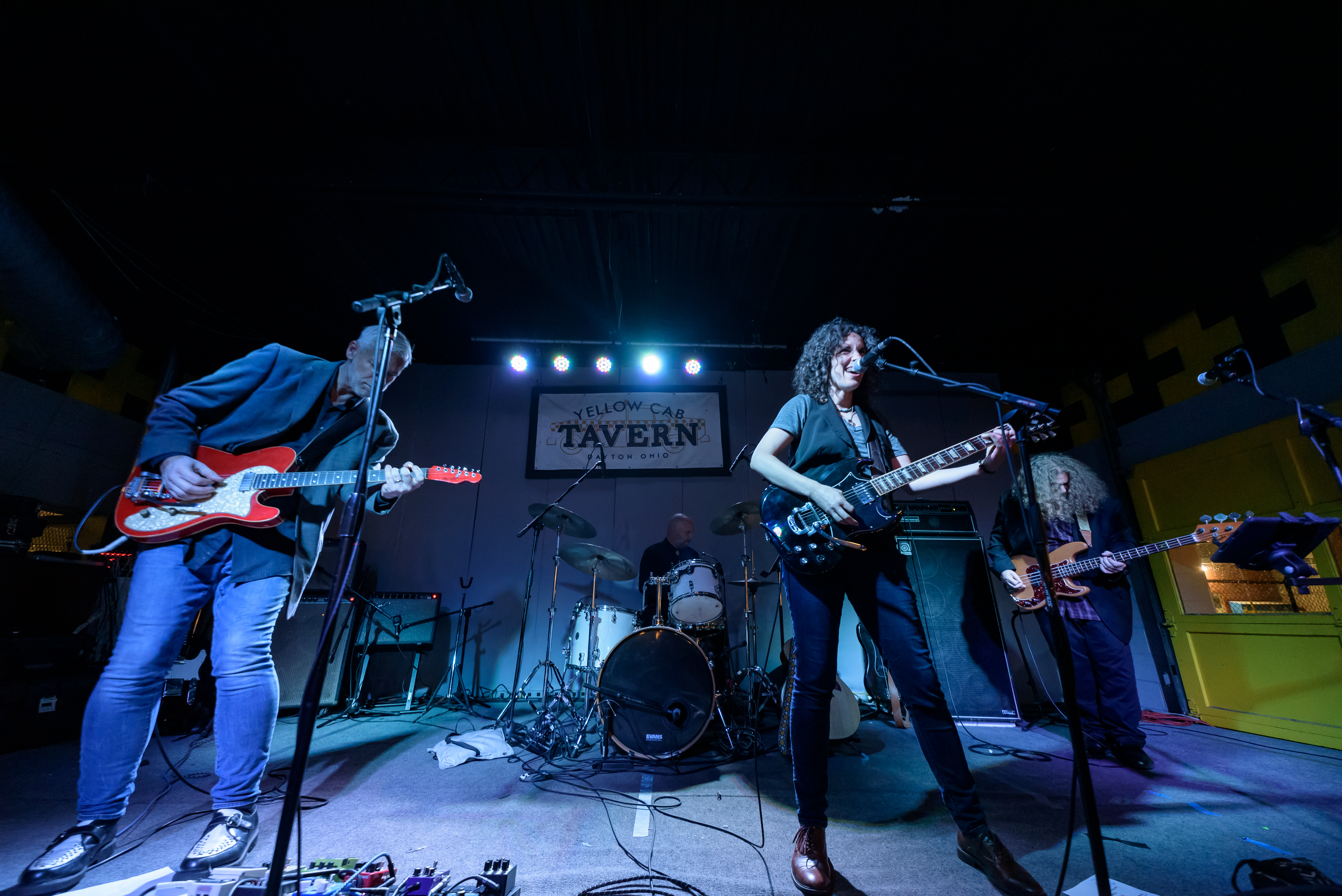
As the contests unfold, The Brightside buzzes with energy and anticipation. Each band takes the stage with a palpable mix of nervousness and excitement, eager to leave a lasting impression. The audience, composed of music enthusiasts, friends, and family members, contribute to the vibrant atmosphere by cheering on their favorites and creating an atmosphere of camaraderie.

The interplay between the bands and the audience highlights the communal nature of this event. Local businesses and sponsors also played a crucial role in supporting the contest, contributing to the prize packages for the winners. The opportunity to play downtown Dayton’s Levitt Pavilion is a highly sought after experience for local musicians. This collaborative effort underscore the symbiotic relationship between the music community and the broader local music ecosystem.

Beyond the competitive aspect, the Battle of the Bands contests foster a sense of unity among musicians. On stage interactions, impromptu creativity, and shared stories created a supportive environment that transcended rivalry. Many bands and musicians form connections during the contest that extend beyond the event, leading to collaborations and joint performances in the future. Those bonds contribute to a healthy music scene in Dayton!

In addition to showcasing musical talent, the 2024 Battle of the Bands addresses important social and cultural themes. Some bands used their performances as a platform to raise awareness about social justice issues, environmental concerns, and mental health. The inclusive nature of the contest provided artists with an opportunity to express their views and connect with audiences on a deeper level.

The grand finale of the 2024 Dayton Battle of the Bands is a culmination of weeks of intense sonic competition. The finalists, having demonstrated exceptional musical abilities and stage presence, face off in a showdown that captivates the audience. The Brightside pulsates with energy as each band delivered a memorable performance, leaving a lasting impression on everyone present.

Ultimately, the judges and audiences face the challenging task of selecting a winner from the pool of exceptionally talented finalists. The decision is always a testament to the high caliber of musicianship on display throughout the contest. The winning band not only secures a substantial prize package but also earns the admiration and respect of their peers and the broader community.

As the 2024 Dayton Battle of the Bands concludes, it can leave a lasting impact on the local music scene. The event not only celebrates musical talent but also strengthens the sense of community among artists and fans alike. The Brightside, with its commitment to fostering creativity and supporting local talent, plays a pivotal role in making the contest a resounding success.

Looking ahead, the legacy of The Battle of the Bands serves as inspiration for future generations of musicians in Dayton. The event demonstrates the power of music to bring people together, transcend boundaries, and serve as a platform for meaningful expression. As the local music scene continues to evolve, events like these will remain instrumental in shaping the cultural identity of Dayton and contributing to its reputation as a thriving hub of artistic innovation. What can you do to contribute to an event such as this? You can be a part of it by going, participating and having fun.

The logistics:
The Doors open each week of The Battle of The Bands at 7pm
(NOTE: due to equipment load in, we cannot let patrons in earlier than 7pm). Shows are expected to run from 7:30pm to 10pm.

Tickets are $10 advance / $15 at the door.
Advance tickets are recommended.
Note – Ticket sales are used to cover production costs and prizes.

Ticket link! If you want to buy all six weeks you get into the finale free!

Dr. J’s Desert Island Albums: The Living Rock and Roll Circus with Kiss

The concept of desert island records and songs has become a fascinating cultural phenomenon, reflecting the profound impact that music can have on our lives. The idea stems from the hypothetical scenario of being stranded on a deserted island with only a limited selection of albums or songs. In this isolated setting, individuals are forced to choose a handful of musical companions that would accompany them through the challenges of solitude. An album in the desert island collection is considered a person’s absolute favorite, one they could listen to repeatedly and never tire of, making their social and physical isolation on an imagined desert island more bearable and more survivable.- Playing these songs and records transports the listener somewhere else, somewhere comfortable and meaningful.

These selections often transcend mere musical preferences, representing a deeply personal and emotional connection to specific tracks or albums. Desert island records are not just about the tunes themselves; they encapsulate memories, emotions, and moments in time. The chosen music becomes a source of solace, inspiration, and a reminder of the outside world.

People’s desert island picks vary widely, showcasing the diversity of musical tastes and the unique ways in which individuals relate to different genres and artists. Whether it’s the soothing melodies of a favorite album or the empowering lyrics of a cherished song, the desert island concept underscores the transformative power of music in shaping our identities and sustaining our spirits, even in the most isolated circumstances. As a cultural phenomenon, it highlights the enduring significance of music as a universal language that transcends boundaries and connects us to our deepest selves.

“Kiss Alive,” released on September 10, 1975, stands as a landmark album in the history of rock music, particularly in the realm of live recordings. This double-disc compilation not only captured the raw energy and charisma of Kiss’s live performances but also catapulted the band to new heights of success. This album — the band’s fourth — is a desert island record for us here at Your Tuesday Afternoon Alternative. In explaining why this record is among the all time favorites of Dr. J, we explore the significance of “Kiss Alive,” delving into its impact on the band’s career, the live album genre, and its enduring influence on subsequent generations of musicians and fans. I received a copy of the album a few years after its release and devoured the record. I grew up in a small Minnesotan farming community, population 550 (seriously!) and the thought of attending an iconic rock and roll concert was a dream that would not come true for a few years for me. However, with “Kiss Alive” I felt as if I were attending a dynamic rock and roll concert. It seemed like I was there in the audience. And that sense of being at a show was a significant characteristic of this record. No other record in my collection has had such a powerful influence on me when I put it on the record player.

“Kiss Alive” emerged during a crucial juncture in Kiss’s career. By 1975, the band had released three studio albums — “Kiss” (1973), “Hotter Than Hell” (1974), and “Dressed to Kill” (1975) — that garnered a dedicated fan base but hadn’t achieved mainstream success. The decision to release a live album was a strategic move, intended to capture the essence of their explosive live shows and convey the power of their stage presence to a wider audience. The album was compiled from recordings of concerts in Detroit, Cleveland, Wildwood, and Davenport during the band’s “Dressed to Kill” tour. The choice of a live album was not only a response to the lukewarm commercial reception of their studio albums but also a testament to Kiss’s belief in the authenticity and intensity of their live performances.

“Kiss Alive” turned out to be a game-changer for the band. The album peaked at No. 9 on the Billboard 200 chart and marked Kiss’s first top-ten album. Its success was instrumental in propelling the band into the mainstream, introducing them to a broader audience. The raw, unbridled energy captured on the album resonated with fans, and “Kiss Alive” quickly became a commercial juggernaut. This success continues today as 97% of Google users like the album.

The album breathed new life into songs that had previously gone unnoticed. Tracks like “Deuce,” “Strutter,” and “Black Diamond” took on a new dimension in the live setting, solidifying their place in the Kiss repertoire. The live versions became definitive renditions, and in some cases, they even surpassed the studio recordings in popularity.

“Kiss Alive” didn’t just elevate the status of the band; it also played a pivotal role in redefining the live album genre. Prior to its release, live albums were often considered secondary to studio recordings, serving as a means for artists to fulfill contractual obligations rather than a medium for artistic expression. “Kiss Alive” challenged this perception by demonstrating that a live album could capture the spirit and dynamism of a live performance, providing listeners with an immersive experience that transcended the studio environment. The success of “Kiss Alive” opened the floodgates for other bands to explore the live album format as a legitimate and powerful artistic statement.

One of the distinguishing features of “Kiss Alive” is its cinematic quality. The album wasn’t just an audio experience; it was a sonic journey that transported listeners into the heart of a Kiss concert. The sequencing of tracks, the interplay between band members and the audience, and the seamless transitions between songs created a narrative arc that mirrored the ebb and flow of a live performance.

The album opens with the iconic sound of a roaring crowd, setting the stage for the sonic assault that follows. Each song is like a chapter in the Kiss saga, with Paul Stanley, Gene Simmons, Ace Frehley, and Peter Criss each contributing their unique elements to the musical narrative. The album’s pacing and structure were carefully crafted to maintain the momentum and excitement of a live show, making it a cohesive and immersive experience for the listener.

Beyond its impact on the music industry, “Kiss Alive” became a cultural phenomenon. The album cover, featuring the iconic image of the band against a stark black background, captured the mystique and theatricality that defined Kiss’s image. The visual impact of the cover art complemented the sonic intensity of the music, creating a cohesive and memorable package.

Kiss’s stage presence and elaborate costumes, coupled with their signature face paint, became synonymous with the band’s identity. This visual spectacle, combined with the energy of their live performances as showcased on Kiss Alive, contributed to the band’s larger-than-life persona. Kiss wasn’t just a musical act; they were a multimedia experience, and “Kiss Alive” served as a gateway for fans to immerse themselves in the sonic world of Kiss.

“Kiss Alive’s” influence extends far beyond its initial release. The album laid the groundwork for the subsequent success of Kiss and paved the way for other artists to explore the potential of live recordings. It remains one of the best-selling live albums of all time and has been certified multi-platinum, a testament to its enduring popularity.

Moreover, “Kiss Alive” continues to inspire generations of musicians. The unbridled energy, the connection with the audience, and the sense of spectacle have become touchstones for artists seeking to create memorable live experiences. The album’s impact on the development of the hard rock and heavy metal genres is undeniable, with countless bands citing Kiss as a major influence.

Kiss Alive stands as a pinnacle in the history of live albums, showcasing the transformative power of a well-executed live recording. Its impact on Kiss’s career, the live album genre, and popular culture as a whole cannot be overstated. Kiss Alive is not merely a document of a band’s live performances; it is a sonic and visual journey that captures the essence of a musical revolution.

As Kiss celebrates its legacy after their final live concert, “Kiss Alive” remains a timeless testament to the band’s ability to connect with audiences and leave an indelible mark on the world of rock music. It is a sonic time capsule that transports listeners back to the mid-1970s, allowing them to experience the magic of a Kiss concert whenever the needle drops on those iconic vinyl grooves.