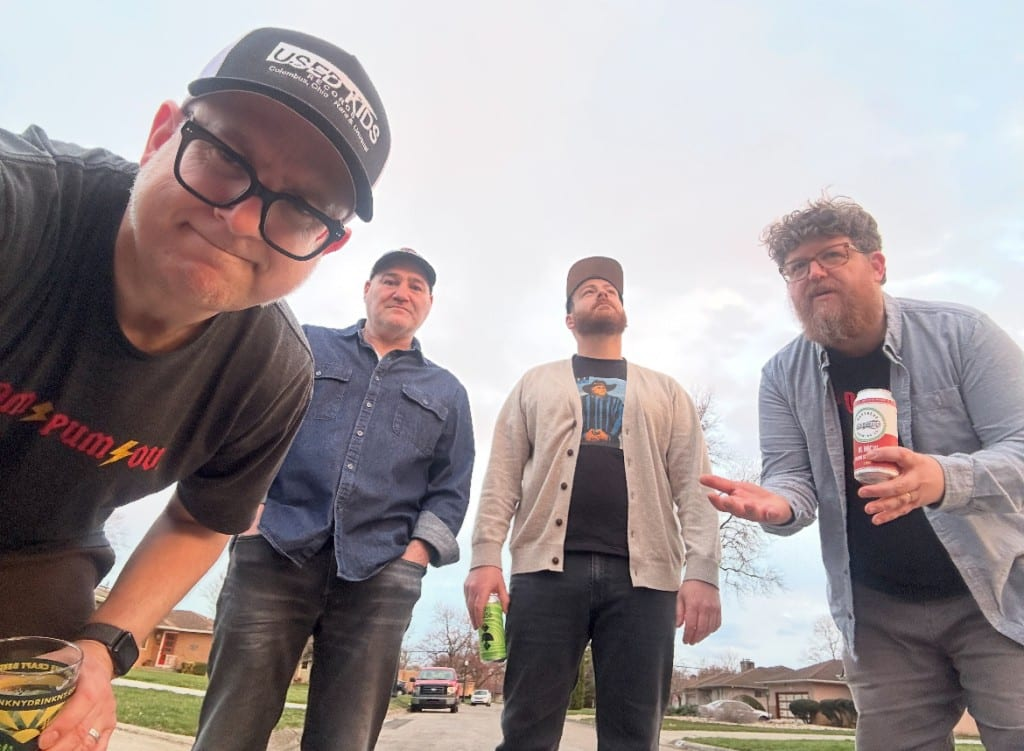
Favorites of 2025: The Cords – The Cords

The Cords: how a band turns pop instincts into craft

If rock and roll really is dead, then The Cords clearly missed the memo, because their new self-titled record kicks the coffin lid open, steals the eulogy notes, and sets the funeral pyre dancing like it’s 1979 again and tomorrow doesn’t exist. This thing isn’t just a debut—it’s a declaration, a sugar-buzzed jolt of pop-bright indie rock that doesn’t pretend to be cool, doesn’t hide behind irony, and doesn’t give a damn about whatever trend some influencer is spoon-feeding their followers this week. It’s melody as oxygen, chorus as lifeline, guitars strummed like they’re trying to shake loose every last excuse you’ve ever had for not feeling something. And thank God for that—because in a year drowning in algorithmic uselessness, The Cord showed up with color, conviction, and the kind of hooks that tattoo themselves on your spine: refreshingly infectious, all-ages indie-pop and jangle pop collection with bright, melodic hooks and irresistible harmonies.

When a band chooses to release a self-titled record deep into a career or at a moment of reinvention, it’s rarely an accident. A self-title asks listeners to pay attention: this is who we are, for better or worse. On The Cords, that gesture reads less like self-importance and more like quiet confidence. The album crystallizes a group whose greatest gift is the paradox of seeming easy: songs that land as immediate, catchy pop but reveal, on repeat listens, careful craftsmanship — arrangements that balance lift and restraint, choruses that stick without shouting, and lyrics that prize specificity over cliché.

This review explores why The Cords has quickly emerged as one of 2025’s most beloved releases (or at least for us at Your Tuesday Afternoon Alternative), examining how the record was made, what each musician brings to its radiant clarity, and how the band’s sound fits squarely—and confidently—within contemporary indie-pop and power-pop currents. Reviewers have praised the album’s effervescent hooks, bright harmonies, and early-Beatles-meets-C86 charm, calling it a reminder that joy, immediacy, and craft can still feel revelatory. By looking closely at the songs and the meticulous yet exuberant musicianship behind them, this piece makes the case echoed by critics across the board: The Cords proves that in an era of over-processed noise, genuine craftsmanship not only still matters—it stands out.

Who are The Cords?

Asking “Who are The Cords?” is entirely reasonable, especially given how quickly the duo seemed to burst onto the 2025 music landscape with a fully formed sound and a debut record that feels more like the work of seasoned veterans than newcomers. Their name appeared almost overnight in reviews, playlists, and year-end lists, prompting curious listeners to wonder how a band this polished could arrive with so little advance fanfare. The question reflects both genuine intrigue and the natural impulse to understand the people behind a record that has connected so widely, so suddenly. Ok, ok… let’s answer the question directly: The Cords are a rising Scottish indie-pop sister duo, Eva (guitar, vocals) and Grace (drums and percussion) Tedeschi, known for their catchy, jangle-pop sound reminiscent of ’80s/90s C86 indie, featuring loud guitars, drums, and infectious melodies. They gained buzz in the UK indie scene, playing with major bands like Belle and Sebastian, and released their self-titled debut album this year, solidifying their place as exciting new musicians with a fresh take on classic indie pop.

So, sure, The Cords are a rising indie rock band whose self-titled debut has pushed them from regional curiosity to one of the year’s most talked-about new acts. That love comes honestly. It is built around a shared love of sharp pop melodies, jangling guitars, and choruses designed to ignite rooms both small and large. The band blends classic power-pop instincts with the earnest shimmer of modern indie. While each member brings a distinct musical background to the project—ranging from DIY home-recording scenes to more polished studio work—they come together with a unity of purpose: to make songs that feel immediate, heartfelt, and boldly melodic. Their chemistry is unmistakable, the kind of collaborative spark that makes a first record sound less like a beginning and more like a band arriving fully formed.

A band in the room, not a solo project on a laptop

One of the first things you notice about The Cords is its sense of feel. The record breathes the way a live band breathes: near-mic’d guitars trade phrases, the bass doesn’t merely hold down the root but sings counterlines, and the drums are both precise and human — they click when they should and push when the song needs momentum. That sonic chemistry suggests an actual group in a room rather than a single songwriter piling tracks onto a click-track.

On this record, the players are careful taste-makers: a lead vocalist who carries the melody with an effortless honesty; a guitar riff is economical but unforgettable; bass lines that anchor and color in equal measure; a drummer who doubles as a dynamic architect; and occasional keys and backing vocals that thicken textures without smothering them. The album’s production is shaped in large part by Jonny Scott and Simon Liddell, who not only handled the recording and overall sonic direction but also contributed additional bass and keyboard parts. Their involvement adds depth, texture, and subtle melodic detail, helping the songs land with a clarity and fullness that elevate the duo’s core ideas. That production leans toward warm melody rather than slick overprocessing — vocals swirl, the guitars ring, and harmonies bloom in native stereo. The effect is immediate and intimate, like a favorite radio station that somehow still surprises you with classic Scottish indie pop, bringing energy and authenticity to the genre.

Classic hooks, modern precision

Musically, The Cords live at the intersection of indie-pop and modern indie rock. If power-pop is the art of building irresistible choruses around smart songcraft, this record nods to that lineage while keeping its feet in the present. The guitars often prefer jangle and concise counter-motifs over endless studio tinkering with reverb; the drum sounds favor snap and presence within the mix; the bass is melodic. Production choices keep the songs forward and communicative.

What’s clever about the album is how it uses contrast. A sleek, hummable chorus might follow a verse that’s rhythmically skittish or harmonically unusual; a bright hook will sit atop an unexpectedly rueful lyric. That push-and-pull keeps songs from flattening into mere earworms. The band knows how to write a chorus that hooks on first listen, but they’re more interested in building shoulders for those hooks to stand on so the singer can mean what she has to say within the sway of the song.

Ordinary detail, emotional honesty

Lyric writing on The Cords resists broad platitudes. Instead of grand pronouncements, these songs live in particulars: a lit street outside an apartment window, the wrong song playing on a cheap jukebox, saying goodbye, not knowing what to say. Those details anchor the songs emotionally; they make choruses feel earned rather than handed to the listener.

Themes recur — the ache of imperfect relationships, the friction between wanting to leave and wanting to belong, the peculiar loneliness of modern urban life — but the band treats these themes as lived experience, not albums’ worth of slogans. There’s tenderness here, an ability to hold both humor and regret in the same line. When the chorus opens up into sing-along clarity, the words are often small but direct, the kind that a listener can latch onto and repeat in daily life.

Rather than a list of titles, the album’s architecture is worth noting: it opens with a confident, urgent cut, “Fabulist” that announces the band’s melodic ambitions; it centers itself with a pair of mid-album songs that reveal its lyrical depth while stilling rocking (“You” and “I’m Not Sad”); and it closes with a return to the jangle with a reflective piece that leaves more questions than answers, “When You Said Goodbye” — a satisfying structure that mirrors human experience rather than manufactured catharsis.

The opener works as a thesis statement: brisk tempo, jangly guitars, a pre-chorus that sets up the payoff, and a chorus that lands like a bright bruise — it’s immediate and impossible to ignore. The arrangement focuses on guitar and drums, yet leaves space for letting the lyric breathe before swelling into a harmony-rich chorus. That dynamic — economy vs. abundance — is where the record’s emotional intelligence shows. The listener feels tugged along rather than pushed.

Musicianship: pop instincts, instrumental care

One of the pleasures of The Cords is hearing instrumentalists who understand restraint within the landscape of Scottish indie pop. The lead guitar rarely indulges in long solos; instead, short melodic figures become hooks in themselves. The bass often carries melodic interest in places a secondary vocal might have; the drums use space and silence as effectively as fills and cymbal swells. These are not instrumental showpieces; they are choices made to serve the song.

Backing vocals are used sparingly but to great effect: stacked parts in choruses heighten the sense of communal voice, whereas single harmony lines in bridges add emotional nuance. Keys and synths make tasteful cameos — a pad here, a tuned key there — supporting rather than competing. The overall musicianship communicates a band comfortable with pop’s mechanics yet allergic to disposable glitz.

Production plays a crucial role in a record like this. The engineers and producers behind The Cords opt for a live-room warmth; you can hear the string of the guitar and the breath before the vocal. The mix privileges midrange clarity so the melodies cut through without overwhelming the low end. Transients on percussion are preserved to give the drums snap, and the stereo image is used to place instruments in space rather than to dazzle with effects. That sonic philosophy — preserve the room, let the song guide the mix — keeps the album feeling human. It’s pop music with a pulse rather than sterilized pop.

For whom this record is made

The Cords will appeal to listeners who prize tunes that reward attention. Fans of classic power-pop and jangly indie rock will find the hooks irresistible, but casual listeners will also appreciate the plainspoken choruses and immediate melodies. The record sits comfortably between the worlds of radio friendliness and indie credibility: radio programmers get singable choruses; critics get craft and nuance.

Younger listeners who grew up with playlist culture may be surprised by how an album built around consistent melodic logic can still create small shocks of recognition — the kind of “I know this” feeling that a succinct chorus can produce. Older listeners will appreciate the band’s affinity for tradition without nostalgia.

This record matters

In a popular music moment dominated by hyper-production, viral singles, and an ever-shortening attention span, a record like The Cords is quietly radical. It insists on songcraft: beginning, middle, and end; it assumes the listener will return; it foregrounds human voices and real instruments. The album’s lack of pretense is, paradoxically, its statement. It shows how pop can be both pleasurable and thoughtful, how choruses can be cathartic without being manipulative.

For a listener who wants immediacy without cheapness — a hook that doesn’t insult intelligence — The Cords offers reassurance: good songs still matter, and a band playing together still sounds like something worth cherishing.

A self-titled album is a claim. The Cords lay claim to that title gently but firmly: here is a band confident in its pop instincts and literate in its emotional choices. The record’s charm rests on the marriage of classic pop construction with modern precision, the musicians’ disciplined instincts, and songwriting that values detail over slogan. It isn’t a manifesto; it’s a practice. And in an era of flash, there’s a particular pleasure in watching a band quietly do the work of making songs that last.

Favorites of 2025: The Kyle Sowashes – Start Making Sense

We could have easily titled this column ‘Making Sense of It All: The Kyle Sowashes and the Enduring Power of Indie Rock Honesty,’ because the band’s new record not only showcases their musical growth but also highlights how their plainspoken sincerity continues to resonate in a genre often crowded with irony and affectation.

Independent rock has long thrived on the margins—small rooms, frayed gear, and bands that carve out meaning from the ordinary. Few groups embody this spirit as honestly and as energetically as The Kyle Sowashes, the long-running Columbus, Ohio outfit centered around singer, guitarist, and songwriter Kyle Sowash. Their terrific new record, Start Making Sense, feels both like a culmination of years of steady work and a refreshed sense of purpose. It is an album that sounds lived-in yet ambitious, familiar yet surprisingly expansive.

Like so many of their releases, it is driven by a collaborative band spirit, anchored by Sowash’s unmistakable songwriting voice. But on Start Making Sense, the musicians around him play an especially notable role. This is not merely a collection of songs written by a single songwriter—it is a group effort in the best sense, marked by thoughtful arrangements, spirited performances, and a chemistry that can only develop after years of making music together. The result is a record that feels warm, wry, cathartic, and deeply human.

A Band Made of People, Not Parts

The Kyle Sowashes have always been a band that foregrounds musicianship over mythology. No one is placed on a pedestal; every member shapes the sound. On Start Making Sense, the interplay among the musicians is central to what makes the record feel so alive.

At the center, of course, is Kyle Sowash, the principal songwriter, guitarist, and narrator of the band’s emotional landscape. His style has always blended self-deprecation with sincerity, humor with frustration, resignation with hope. He writes songs the way people talk when they’ve stopped trying to impress anyone. That honesty, paired with a gift for sticky melodies and driving chord progressions, continues to anchor the band.

But the supporting cast expands and elevates the material. The rhythm section, always a strength for the group, is especially tight on this release. The basslines give songs bounce and propulsion, while the drumming adds both momentum and nuance—capable of big-room punch but also subtle shifts in tone that mirror Sowash’s lyrical turns. Together they give the album its shape: urgent when needed, contemplative when the songs pull inward.

The guitar arrangements, too, show a band deeply comfortable playing with space. There are moments of noisy celebration, fuzzed-out riffs, and guitar lines that nod to 90s indie rock and power pop without ever feeling derivative. But there is also restraint when the songs call for it—arpeggiated lines, single-note phrases, and open-chord patterns that accent Sowash’s vocal pacing. The band understands when to push and when to stay out of the way, and that mutual sensitivity is one of the record’s quiet triumphs.

All of this makes Start Making Sense feel less like a front-person project and more like a snapshot of a genuine musical community. The band members are collaborators—not session players—and the record reflects that shared vision.

Sound: An Indie Rock Dial Tuned Just Right

The defining pleasure of listening to The Kyle Sowashes is the feeling that the band knows exactly who they are and that they approach their sound not as a limitation but as an expressive engine. Start Making Sense follows this tradition, delivering songs that are rooted in classic indie rock but refreshed through craft, energy, and emotional clarity.

The album’s guitar-forward sound recalls the big-hearted crunch of bands like Superchunk, The Weakerthans, early Guided by Voices, and 90s midwestern basement rock. But The Kyle Sowashes are not imitators. Their tone is warmer, their pacing more deliberate, their hooks more conversational. They capture what it feels like to be a functional adult who still carries adolescent anxieties; what it feels like to want to grow but not always know how.

The production strikes a careful balance. It is clean enough to reveal the band’s tight musicianship but raw enough to preserve the lived-in charm that defines their identity. The vocals are present but never over-polished; the guitars are textured but not overly layered; the drums have a live-room feel that makes even the more introspective songs sound communal.

This approach is particularly effective because Sowash’s songwriting thrives on immediacy. These songs feel like they were meant to be played in small rooms full of people who understand what it’s like to try, fail, and try again. The sonic palette—guitars that jangle and buzz, drums that sprint and shuffle, bass that grounds and guides—mirrors the emotional palette of the songs themselves.

What the Lyrics Reveal: Vulnerability Without Pretension

What has always separated Kyle Sowash from many of his indie rock peers is his ability to write lyrics that feel like real conversations. He avoids metaphors that spin out into abstraction and instead leans on the everyday: the tension between optimism and exhaustion, the mundane rhythms of adulthood, the stubborn persistence of doubt.

On Start Making Sense, the lyrics feel particularly pointed. There is a thematic thread running through the record about wanting to take stock of one’s life, wanting to be better (or at least different), but also feeling the tug of old habits or long-held insecurities. This tension animates the album emotionally.

Sowash wrestles with questions familiar to anyone who has lived long enough to feel the weight of their own decisions:

  • Am I becoming the person I hoped to be?
  • Am I letting people down without realizing it?
  • Is it too late to make meaningful changes?
  • Why does clarity arrive when I am least prepared for it?

And yet, the writing never lapses into self-pity. Sowash has a rare talent for pairing difficult emotions with flashes of humor or casual understatement. His delivery—half earnest, half exasperated—adds to this effect. Even in the most introspective moments, he trusts his audience. He doesn’t sermonize or hide behind dense metaphor. He simply tells the truth as he sees it.

The Album as a Whole: Why Start Making Sense Works

The strength of the record lies not just in its individual songs but in its overall narrative arc. Start Making Sense feels like a journey, not in a conceptual or theatrical sense, but in the emotional progression from beginning to end.

The early tracks tend to have a forward-thrusting, energetic urgency—songs filled with questions, doubts, and attempts to find clarity. As the album unfolds, the pacing shifts: there are moments of introspection, acceptance, humor, resignation, and renewed commitment.

By the final songs, the album arrives somewhere quieter and more grounded. The narrator has not solved everything—far from it—but there is a sense of movement, of incremental progress. And that sense is arguably more meaningful than any dramatic revelation would be.

This emotional pacing mirrors the band’s musical pacing. The guitars pull back when the lyrics sink deeper; the rhythm section tightens when the narrator feels unsettled; the arrangements widen when Sowash leans into hopeful refrains. The band listens to the songs, and the songs reward that attention.

Why They Matter Now

There is something profoundly refreshing about hearing a band like The Kyle Sowashes release a record like Start Making Sense in 2025. In a music culture where so many albums are shaped by algorithms, trends, or online personas, this record feels defiantly human. It is made by musicians who value craft, community, and honesty over spectacle.

Moreover, the themes of Start Making Sense—struggle, ambivalence, small victories, persistent hope—resonate in a cultural moment marked by fatigue and uncertainty. Many listeners will hear echoes of their own lives in the record: the feeling of trying to recalibrate when everything seems slightly off; the desire to “start making sense” of things that once felt straightforward.

The album does not promise transformation or transcendence. Instead, it offers companionship—a reminder that confusion and self-questioning are universal, and that music can help make sense of things even when life does not.

A Career Highlight and a Quiet Triumph

Start Making Sense stands as one of The Kyle Sowashes’ most affecting and best-crafted albums. It blends the energy of earlier records with a deeper emotional palette; it shows a band confident in its identity yet open to growth. The musicianship is sharp, the lyrics are resonant, and the sound manages to be both comfortingly familiar and subtly evolved.

It is not merely a strong indie rock record—it is a document of adulthood, of persistence, of reassessment, of trying again. In its modesty, it finds profundity; in its humor, it finds catharsis; in its unvarnished honesty, it finds connection. For longtime fans, Start Making Sense will feel like a natural and satisfying next chapter. For new listeners, it offers a compelling introduction to a band that has quietly built one of the most sincere bodies of work in Midwestern indie rock. And for everyone, it offers something increasingly rare: a rock album that makes you feel less alone.

Video of The Day: The Beths – Mother, Pray For Me

“Mother, Pray for Me” finds The Beths doing what they do best: wrapping emotional unease in bright, tensile power-pop. It’s a song that feels instantly familiar if you know their catalog—those interlocking guitar lines, the melodic immediacy, Liz Stokes’ unmistakable vocal clarity—but it also pushes toward something rawer and more pleading than their usual wry self-interrogations.

From its opening measures, the song pulses with a kind of restless confession. Stokes delivers the title phrase not as a dramatic flourish but as a weary admission, a reaching-out from someone who’s been holding it together for too long. The Beths specialize in songs about the gap between who we want to be and who we are on our worst days; here, that gap takes on a spiritual edge. There’s a sense of hitting bottom—not catastrophically, but in the quieter, more believable ways people actually unravel.

The arrangement mirrors that emotional arc. The guitars shimmer and dart; the rhythm section plays with an almost anxious tightness, as if trying to keep the song from slipping out of its own grip. Harmonies, one of The Beths’ signature strengths, arrive like little reinforcements—friends showing up, steadying a shoulder. When the chorus lands, it’s both a release and a recognition: the pop sheen doesn’t lighten the weight of the plea so much as hold it with tenderness.

Lyrically, the song walks that Beths tightrope between self-reproach and self-awareness. The narrator isn’t blaming the world or asking for absolution; they’re simply acknowledging the moments when coping feels like an act of faith. The invocation of a mother’s prayer is less religious than relational—an admission that sometimes we need someone else’s hope to borrow.

“Mother, Pray for Me” ultimately stands out because it expands the band’s emotional vocabulary without abandoning their sonic DNA. It’s catchy, it’s cutting, and it lingers, an anthem for anyone who’s ever felt a little lost and dared to ask for help, even quietly.

Favorites of 2025: Sadbox – Everything’s A Shame

Sadbox and Everything’s A Shame

In a musical landscape flooded with glossy production and instant-stream forgettability, Everything’s A Shame stands out — not because it tries to conform, but because it embraces messy humanity: raw ideas, family schedules, basement rehearsals, and songs born from everyday chaos. The EP from Dayton-based rock band Sadbox (released October 3, 2025) feels intimately local while resonating with universal truths.

For a band balancing real-life demands — kids, careers, responsibilities — Sadbox delivers a sound that is energetic, quirky, honest, and sometimes unsettling. The result is a three-song burst of “technical weirdo rock,” as some have called it — music that doesn’t aim for radio-friendly formulas or uniform polish but seeks genuine expression, emotional depth, and a touch of controlled chaos.

In what follows, I examine who these musicians are, how the EP was created, what their sound and lyrics reveal, and why Everything’s A Shame feels like a small but significant critique of the sanitized norms of mainstream rock.

Who’s making the noise — the people behind Sadbox

Sadbox isn’t a typical rock band that churns out songs just for fame. It’s a group of musicians grounded in everyday life, each with responsibilities beyond music. Sadbox is led by guitarist and lead singer Paul Levy, whose dual role as a surgeon brings a unique mix of precision and spontaneity to the band’s sound. He’s joined by Eli Alban on guitar, who also plays in The 1984 Draft and adds extra tonal nuance and energy to the group. Ryan Goudy provides the band’s steady, melodic bass foundation, while Ray Owens propels the songs with his dynamic, intuitive drumming. Completing the lineup for this release is Rachele Alban, whose vocals and keyboard work expand Sadbox’s sonic palette and deepen the emotional texture of the record.

The record — recorded, mixed, and mastered by local engineer/producer Fred Vahldiek known as Fredzo at Fredzoz Studio (one of our favorite records from The 1984 Draft, Best Friends Forever was recorded there) — is simple, direct, and straightforward. As drummer Ray Owens mentioned in an interview, balancing family life (with a collective total of 13 kids in the band) means music sometimes has to be as spontaneous and immediate as a family dinner: “the practice forum is similar to a live show.” That constraint — rather than hurting the music — seems to sharpen it, giving the band’s sound a rough clarity and urgency that polished over-production often hides.

Sound and style: “technical weirdo rock” with heart and edge

Sadbox’s music has been described as “alternapop / college-rock-style,” but Everything’s A Shame doesn’t fit neatly into any single category. Instead, it combines elements of grunge, rock, and weird-pop, with occasional narrative or character-driven lyrics that evoke theatrical rock or even prog-lite experiments.

The opening track — “Dust” — leans into ’90s grunge style. Over-amped vocals, gritty guitar sounds, and a tight rhythm section evoke the emotional chaos and existential worry of that time. The feeling of movement — a car speeding down a lonely road, a restless mind at midnight — stands out. That tension fits especially well with the lead singer’s dual identity: the precision of his professional life contrasted with the rough edges of his artistic side.

The second track, “All Rhymes for Scoop,” initially seems like a playful word game, but that expectation is overturned. Instead of listing rhymes for “scoop,” the song acts as a critique — perhaps — of shallow social media echo chambers. Lyrics and rhythms clash unpredictably, reflecting discomfort, discontent, and disillusionment. The syncopated beat combined with semi-nonsensical lyrical stutters mirrors the noise and overload of the digital age. The song reminds us of a previous outting, Mish Mash, from their 2021 record Future Copy.

The final song, “New Low,” slows things down. Clean arpeggiated guitar, minimal percussion, and dual vocals (Paul and Rachele) frame a sad, spare story: one of abandonment, loss, and longing. The song — reportedly inspired by the band finding a stray cat after a tenant move-out — becomes a narrative of innocence left behind, waiting in vain. Its emotional weight comes not from grand gestures but from quiet detail: the missing water dish, the empty stoop, the echo of loss.

Taken together, the three songs create a mini-arc: from restless escape, to social critique, to quiet grief and regret. The textures shift, the pacing varies, but the emotional flow — vulnerability, discomfort, longing — stays consistent.

Lyrics and themes: shame, impermanence, and the small cruelties of modern life

The title Everything’s A Shame seems both faintly sarcastic and deeply earnest. The songs reflect that duality — loss feels tragic, but also mundane; social collapse feels absurd, but also real; emotional weight is often disguised under everyday details.

As Paul Levy put it in an interview: “I am the consequence of the road I travel.” That line — repeated in “Dust” — connects personal history, existential weight, and the unpredictability of life. It frames identity not as a fixed point, but as something shaped by context, time, memory, and chance.

In “All Rhymes for Scoop,” the band critiques the vacuity of online life — the “argument platform,” the endless scroll, the performance of discourse without depth. Using lyrical non sequiturs and abrupt rhythmic shifts, Sadbox turns the song into a kind of musical protest against emptiness disguised as connection.

Then “New Low” returns to personal — and small — narratives: the lonely cat, the abandoned stoop, the emptiness left behind. It’s a portrait not of a sweeping life crisis, but of countless smaller traumas: displacement, abandonment, neglect. The catastrophic becomes quiet, ordinary, and all the more haunting for that.

These are not songs about grand despair or romantic heartbreak. They’re about surviving — surviving social collapse, familial pressure, shifting identity, emotional stasis. There’s shame in defeat, longing in loss, but also a stubborn, human need to speak, to express, to hold on.

The making of the EP: collaboration, constraints, and creative honesty

Given their busy lives — kids, jobs, daily responsibilities — the fact that Sadbox managed to write, rehearse, record, and release Everything’s A Shame is a testament to their dedication. In a  radio interview, drummer Ray Owens explained how the band’s workflow had evolved: what used to be chaotic, slow jams now flow with precision; what once needed prompts and cues now occurs with a glance or shared rhythm. That improved chemistry is evident on the record.

Recording, mixing, and mastering were done by Fredzo at Fredzoz Studio — and the production shows an honesty-over-polish vibe. The guitars bite, the vocals crack, and the drums thud. Space is intentional: silence between notes, breaths between lyrics. Nothing feels overdone; everything feels essential.

That rawness—balanced with musical discipline—gives the EP its power. It’s not perfect, but it doesn’t need to be. It’s lived-in, human, sometimes ragged, and in its raggedness lies its truth.

What Everything’s A Shame achieves — and what it leaves unresolved

One of the EP’s main strengths is its coherence. Despite the sonic and lyrical variety (grunge-inspired rock, indie quirks, quiet ballads), the three tracks feel connected — through mood, theme, and emotional honesty. That sense of unity makes the EP seem like more than a random collection: it feels like a snapshot, a statement, a short film in three acts.

It also demonstrates what a band rooted in real life can achieve when they are committed: even with family obligations and limited time, Sadbox shows that artistic ambition and emotional honesty don’t require big budgets or months in the studio. Sometimes all it takes is clarity, teamwork, and the desire to record what you feel.

However, the EP also leaves space for growth. With just three tracks, listeners might want more — more depth, more storytelling, more time to pause. The ideas hinted at in “Dust,” “All Rhymes for Scoop,” and “New Low” seem like the start of something bigger. There’s a feeling of beginning, not ending.

Furthermore, the looseness that gives Sadbox its charm can also come across as unpolished, even rough around the edges. Listeners expecting tight arrangements or radio-ready vocals might find some of the vocal delivery off-kilter, the rhythms unsettled, and the mood dark. However, for others—those looking for realism, emotional depth, and spontaneous honesty—that roughness is part of the album’s appeal.

Why this EP matters — for the band, for Dayton, for listeners who crave honesty

For Sadbox, Everything’s A Shame reaffirms their commitment: they are serious about music despite life’s demands. Their willingness to embrace their circumstances — family, time constraints, the need for immediacy — doesn’t weaken their art; it enhances it. Their music is more about authenticity than perfection.

For their hometown of Dayton and the broader Ohio music scene, the EP is a tribute to the energy of independent music: small bands, DIY studios, local stages, real lives. It’s a reminder that creativity doesn’t wait for perfect conditions — sometimes it comes from necessity, urgency, and the quiet desperation of juggling everything we care about.

For listeners outside that scene, Everything’s A Shame offers a rare kind of intimacy. It doesn’t pretend to solve problems. It doesn’t promise catharsis or closure. It offers fragments: a line about regret, a wobbly chord, a story about a lost cat, a sigh in the vocal mic. And sometimes fragments are enough — enough to make you pause, reflect, and feel a little less alone.

Everything’s A Shame — a small record with big heart

In 2025, when music often feels disposable — a background for playlists, streams, and fleeting attention — Sadbox’s Everything’s A Shame acts as a quiet form of resistance: a plea to listen, to feel, to inhabit sound rather than glide past it. It’s unpolished. It doesn’t seek easy consumption. It requests patience, presence, and empathy.

Paul Levy, Eli Alban, Ryan Goudy, Ray Owens, Rachele Alban — they’re not rock stars living for tours or hits. They’re humans with lives, demands, imperfections. And yet they created something lovingly imperfect, collaborative, and genuine. That spirit — of DIY honesty, embracing constraints, and channeling everyday life into art — is as rare as it is essential.

Everything’s A Shame might be small — only three songs. But within those songs lie questions, longing, critique, grief, and hope. It doesn’t aim to cover the entire world. It seeks to share a piece of it. And sometimes, a piece is all we need.

Favorite of 2025: The Beths – Straight Line Was A Lie

Introduction: Why The Beths Matter

The New Zealand indie‑pop quartet The Beths have long stood out for their sharp songwriting, earworm melodies, and the emotional honesty that pulses through their lyrics. With their 2025 album Straight Line Was a Lie, they arrive at a new peak — refined in sound yet deeply raw in sentiment. It’s a record that doesn’t just reaffirm what makes them special; it feels like a rebirth: more considered, more textured, and more vulnerable than ever. As the band enters this next chapter, it’s become increasingly clear that The Beths aren’t just good at what they do — they’re extraordinary.

I want to take a moment and explore how each member’s musical contributions blend to form the band’s signature sound, and how the lyrics on Straight Line Was a Lie carve out an intimate, unsettling, yet hopeful portrait of life, growth, and mental health.

First, a quick refresher on the lineup. The Beths consist of:

  • Elizabeth Stokes – lead vocals, rhythm guitar, main songwriter
  • Jonathan Pearce – lead guitar, backing vocals, producer/engineer (on this record)
  • Benjamin Sinclair – bass guitar, backing vocals
  • Tristan Deck – drums, cymbals and percussion, backing vocals

In past releases, The Beths were already celebrated for their “jangly” guitar pop, shimmering harmonies, and driving rhythm section.  On Straight Line Was a Lie, each member seems to lean more deeply into their strengths, and — crucially — into experimentation.

Elizabeth Stokes remains the heart of the band. Her voice — often conversational, sometimes aching — carries the emotional weight; her lyrical voice is sharper, more introspective, grappling frankly with themes of mental health, existential anxiety, familial ties, self-doubt, and the paradoxes of healing. The songs come from a place of personal upheaval, shaped by her experiences with health struggles, medication, and self‑reflection.

Jonathan Pearce wears dual hats on this record: lead guitarist and producer / engineer / mixer (on most tracks). That shift seems to have given the album a more cohesive, textured sonic palette: guitars (both his lead and Stokes’s rhythm) shimmer, sizzle, crash — sometimes jangly, sometimes atmospheric, sometimes dissonant. On songs like “Take,” the guitar solos ring with a fresh urgency; on “Ark of the Covenant,” guitar lines meld with subtle ambient touches to build something cinematic and haunting.

Benjamin Sinclair’s bass underpins the album with steady, often driving low‑end that grounds even the most introspective or experimental moments. While bass can be underappreciated in guitar‑heavy pop, here it anchors songs like “Take” with a muscular backbone that gives weight to the emotional landscape, and in upbeat numbers it drives the momentum forward, pushing choruses into sing‑along territory. The result is a rhythm section that feels both steady and alive.

Tristan Deck’s drumming and percussion complete the engine. On Straight Line Was a Lie, the drums don’t just keep time — they accentuate mood, shake loose tension, and steer transitions between jubilation and melancholy. Whether it’s propulsive beats on faster tracks or minimal, contemplative rhythms on the quieter ones, Deck’s playing adapts to the emotional terrain without overshadowing it. Backing vocals from Deck and Sinclair add subtle harmonic depth, reinforcing what has always been The Beths’ hallmark: layered vocal harmonies that linger.

Together, these four don’t just play instruments — they channel mood, memory, and meaning. On this record, the result feels less like a “band playing songs” and more like four people collaboratively mapping emotional terrain.

The sound of Straight Line Was a Lie: More than “jangly” pop

One of the defining qualities of The Beths’ earlier albums was that “jangly guitar + power‑pop hooks + emotional honesty” formula — and it worked beautifully. On Straight Line Was a Lie, they keep the hooks, but deepen the textures. The production (led by Pearce) emphasizes space, layering, contrast; songs can shift from bright, chiming pop to darker, atmospheric, even gritty territory. Critics note this album as “bigger, better and more complicated than they’ve ever been.”

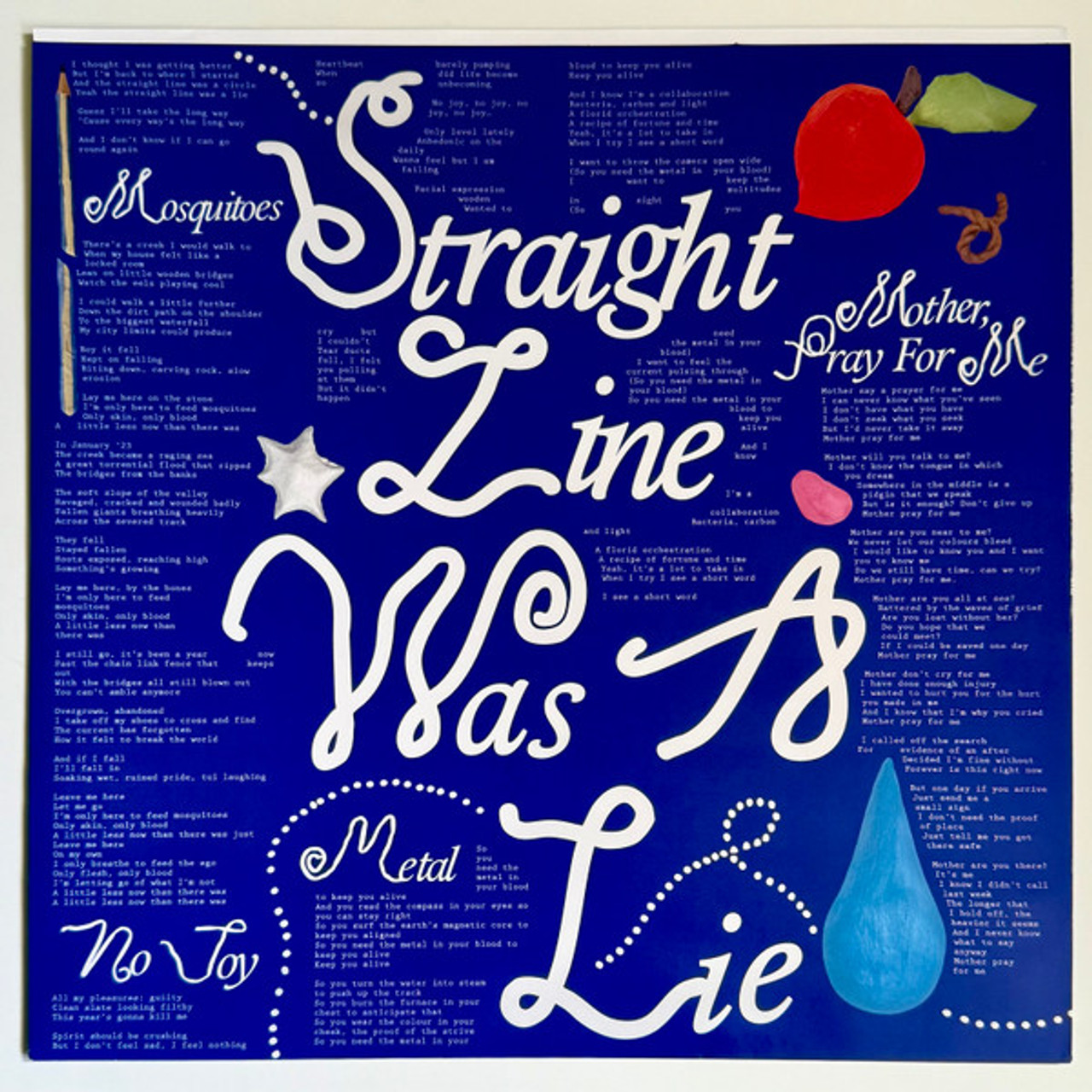
The opening track and title song begins with a false start — a spoken “sorry I was thinking about something else” — a move that feels deliberate: it sets the tone for an album preoccupied with interruption, derailment, and return. The lyric “I thought I was getting better / But I’m back to where I started / And the straight line was a circle / Yeah the straight line was a lie” resounds as a central thesis. Life, the record suggests, is not a linear progression but a messy, looping, often contradictory journey.

Meanwhile, tracks like “No Joy” jolt with nervy urgency — the upbeat melody and driving beat bely lyrics that speak to anhedonia and existential stasis: “All my pleasures, guilty / Clean slate looking filthy / This year’s gonna kill me … Spirit should be crushing / But I don’t feel sad, I feel nothing.”

On “Metal,” they give form to something beautiful and strange: a metaphor about being alive as a “collaboration of bacteria, carbon and light,” needing “the metal in your blood to keep you alive.” It’s biological, cosmic, grounded, and dreamlike all at once — marrying emotion, science, and wonder in a simple but powerful package.

There’s also room for quiet minimalism. “Mother, Pray for Me” strips things back: gentle picking, soft vocals, aching longing. It’s a song about complicated family, grief, and generational wounds — and it lands not through bombast but through tender reserve.

Even the album’s final moments — on “Best Laid Plans” — feel bittersweet: jangly guitars and a buoyant rhythm, but implicit in the instrumentation and tone is a sense of unresolved longing, of “unfinished business.” It’s the sound of hope, but also of memory’s weight.

In sum: Straight Line Was a Lie isn’t simply “jangly indie pop with hooks” — it’s more ambitious: emotionally deeper, texturally richer, and willing to lean into shadows as much as light.

Lyrical worlds: Mental health, Memory, and the Myth of Progress

If the musical side is about textures, the lyrical work is about truth. On this record, The Beths — primarily through Stokes’s pen — interrogate themes of mental health, healing, identity, memory, and the uneasy breaks in between. The album’s title succinctly captures its philosophical impulse: that “linear progression is an illusion.” Life doesn’t follow a neat arc; healing does not happen on a straight line.

Much of that perspective comes from Stokes’s own life. In recent years she’s navigated serious health challenges (including a diagnosis with Graves’ disease), anxiety, and the disorienting effects of starting antidepressants for the first time. That upheaval forced a radical shift in how she writes: among other changes, she turned to stream‑of‑consciousness writing on a typewriter, exploring memories and feelings she’d avoided, and forcing herself to reckon with difficult emotions.

That kind of emotional honesty shows up throughout. On “Mosquitoes,” she wanders a creek near her home — a haven when “my house felt like a locked room” — only to find devastation: the same creek turned into a “raging sea” after floods. The song becomes quietly terrifying: an elegy to disappearance, impermanence, and the fragility of refuge.

In “Til My Heart Stops,” there’s a longing for simple embodied pleasures — riding a bike in the rain, flying a kite, dancing — even as the world feels heavy and weightless at once. According to one review, the song, with its unsettling distortion and ghostly atmosphere, “charts the fragility of life itself,” its abrupt ending like a heart’s final beat.

Elsewhere, “Ark of the Covenant” and “Best Laid Plans” explore inner excavation: digging through memory, confronting “fossilised nightmares,” searching for meaning — or closure — in the negative space of the self.

But it’s not purely despair or existential weight. There’s still wry humour, sharp imagery, and defiant tenderness. The need for “metal in your blood” in “Metal” — a call for grounding, resilience, a kind of elemental insistence on life — turns the personal and biological into something poetic and universal.

Taken together, the lyrics on Straight Line Was a Lie don’t just reflect mental health struggles or personal trauma — they interrogate the myth of constant improvement. They suggest healing is messy; growth is circular; humanity is fragile, often contradictory — but still worthy of wonder.

What this album means: Growth, Maturation, and a New Chapter for The Beths

For longtime fans, Straight Line Was a Lie may at first sound familiar: The Beths still write songs that stick in your brain. But this time, there’s a sense of expansion, of maturity, of ambition being reframed with nuance. Production is richer, the emotional stakes higher, and nothing feels simply disposable or background music. This is an album that rewards — demands — close listening.

Critically, the record has been widely praised. On aggregators it earns a strong Metascore, reflecting generally favorable to enthusiastic reviews. Reviewers note the band is “bigger, better and more complicated than they’ve ever been.” Others call it perhaps their “most incisive” album yet, one where existential anxieties and lyrical ambition meet pop hooks and evocative soundscapes.

Moreover, Straight Line Was a Lie feels like a milestone — not just in their discography, but in their artistic evolution. The move to have guitarist Jonathan Pearce handle production and engineering gives the album a more unified sonic identity. The decision by Stokes to overhaul her songwriting method — to face trauma, memory, and illness head‑on — brings a weight and vulnerability previously only hinted at. The whole band seems aligned: playing not just with precision and popcraft, but with emotional honesty.

For listeners, this album offers more than catchy choruses: it offers fellowship. It whispers that you are not alone if you’ve felt lost, stuck, or numb. It suggests that healing is not always about triumphs or tallies of progress, but about maintenance — about showing up, living, feeling, enduring. And it does all that while giving you songs you can dance to, or cry to, or sing loud at a concert.

Conclusion: The Beths as Emotional Architects

In a world that often feels driven by optimization, forward momentum, and constant productivity, Straight Line Was a Lie comes as a quiet, necessary reckoning. It refuses the idea that healing, growth, or life itself must follow a neat, linear trajectory. Instead, The Beths propose a different metaphor: life as cyclical, messy, and ongoing — something to be maintained, revisited, reflected upon, not “completed.”

As a band, The Beths have always been more than the sum of their catchy hooks or jangly guitars. On this album, they feel less like a pop act and more like emotional architects — sculptors of feeling, memory, and existential wonder. Each band member’s contribution is essential — from Stokes’s wrenching lyrics to Pearce’s layered production, from Sinclair’s grounding bass to Deck’s subtle but powerful rhythms.

Straight Line Was a Lie may end up being a soundtrack for an era — an album for when the world feels too fast, too forward, too relentlessly optimistic. It offers instead a different rhythm: patience, honesty, acceptance, and defiance.

If you haven’t listened to it yet — or haven’t listened closely — this is the moment: sit back, headphones on, and let The Beths guide you down the crooked, beautiful trail.

Video of The Day: Librarians With Hickeys – Hello Operator

Librarians with Hickeys — what a name. You hear it and you immediately start constructing the image in your head: a tangle of smudged glasses, bookish rebellion, a zine-spun ethos slashing through the overcast skies of suburban ennui. Their track “Hello Operator” is nothing short of a jangle pop-fueled call to arms for the underachiever, the bored teenager, the disillusioned adult trapped in a system that runs on decibels of monotonous corporate soul-sucking. But instead of screaming bloody murder or railing against the system, they just slap it in the face with a smirk and soaring ringing guitars. The song is the lead track from their excellent — and one of our favorites of 2024 — record, How To Make Friends By Telephone (out on Big Stir Records).

The song’s pulse is a sweet relentless stomp, feeling like the clock ticking down to something important, but what? Who knows. There’s this sense of the need for connection and the futility of that need, an operator on the other side who may or may not be listening, a technological abyss where human connections dissolve into nothing. The song sweeps forward, like an old jukebox with a bad needle sharing thoughts and desires from one jump thought to the next. And isn’t that just the way? We’re all dialing up, trying to make a connection with something—another person, a higher power, ourselves—and getting lost in the static.

The lyrics, always a strength of this band, are power-pop blissful clarity in the deeply felt reaching out: “Hello operator, can you tell me one more time, what do people say when they talk to you? Hello operator, I really hope you don’t mind. I would like to talk to you. Yes, I would like to talk to you. I think I would like to talk to you.” It’s not just a plea for communication, but a brutal statement about how we’re all caged in by our own methods of connection. Forget the pleasant humdrum of politeness versus the insanity of the world around us, this is the telephone line, frayed and half-spliced, where any answer you get is an accident.

The kicker is the sound. At times driving power-pop cascading, ringing, jangling, like a late-night jam session fueled by too many cans of cheap beer and a pile of too many bad ideas that we took to heart instead of ignoring them. Yet somehow, in this pop gem chaos, there’s a profound sense of liberation. The cry of “hello” is the message.

11 Questions with… Given Names

Happy New Year to everyone! Welcome to 2024!

The new year opens with the return of our 11 Questions with… column. Given Names is an exciting new project from Dr. J’s home state of Minnesota. That state has always been home to thrilling music such as The Replacements, Husker Du, Soul Asylum, Prince, Semisonic, Babe in Toyland, The Jayhawks, The Suburbs, and many more.

Given Names is a group of friends who create music that combines elements of indie, rock, dream pop, and power pop, with hints of synth and dance. The group is an exciting indie pop quartet based in Mankato and Minneapolis, featuring Laura Schultz (lead vocals, rhythm guitar), Meghan Irwin (synth, backing vocals), Michelle Roche (drums, backing vocals), and Mandy Wirig (lead guitar, backing vocals). In 2023, they released their debut single, “Makin’ Eyes’ last year. It is a song that channels their influences while incorporating their distinctive musical vision. It is also one of our favorite singles from this past year.

Given Names creates a swirling yet solid indie dream pop that encapsulates the ethereal essence of dreams through a distinctly feminine lens. It is a musical realm where the boundaries between reality and imagination blur, and emotions cascade in a surreal mix of sound. The musicians collaborate to craft a sonic dreamscape that is both otherworldly and intimately connected to the intricacies of experience. It is real.

Dream pop is often characterized by its atmospheric soundscapes and lush melodies, sound becomes a canvas for these artistic collaborations to explore themes of loss, love, empowerment, and self-discovery. The almost ethereal vocals, layered and harmonized, transport listeners into a transcendent-like state where time seems to slow down, and emotions are amplified. The dreamy quality of the music is a manifestation of the artists’ collective desire to create a space that reflects the intricacies of the psyche.

Lyrically, ‘Makin Eyes’ delves into introspective narratives that navigate the complexities of relationships, self-realization, connection, and the pursuit of one’s dreams. Themes of resilience and empowerment seem to subtly weave through the verses, creating a tapestry of emotions that resonate with listeners on a deeply personal level.

The collaborative nature of Given Names fosters a bond among the artists involved, each contributing a unique perspective to the collective soundscape. This collaboration extends beyond the music itself, influencing the visuals, single art, and live performances. The result is a holistic artistic expression that celebrates the diversity of artists’ voices and experiences. As dreamy all-women-created power pop continues to evolve, it not only pushes the boundaries of musical exploration but also challenges preconceived notions about femininity in the music industry. It remembers and celebrates the creative prowess of women in shaping the sonic landscapes of sonic dreams and emotions, inviting listeners to immerse themselves in a world where the line between reality and reverie is beautifully blurred.

We contacted the band and Laura and Mandy kindly answered our questions for this column (LS: Laura Schultz; MW: Mandy Wirig).

Dr. J: What can you share with us about when and how you started writing music?

LS: I started writing music with a good friend, Laura MacDonald, in high school. She and I wrote songs about strange dreams we had or our World History Teacher, (some lyrics were “Mr. Schnieder, you’re a really cool guy. In World History, you taught us to ask why”). I started doing it more seriously in undergrad in Oshkosh, WI, where I played with some absolutely amazing musicians and friends.

MW: I started writing music in high school. I began playing guitar at thirteen and was in my first band, a punk band, at 16-17. I’ve always been influenced by singer/songwriters and the very melody-driven sounds of the sixties, particularly The Beatles and McCartney, and that influence can be found in almost all of my guitar parts.

Dr. J: What first led to your recording music? How do you approach production?

LS: I see recording as a snapshot of a song in a moment. It may not be how we always perform the song, but it is representative of that moment, with those players and resources that we had at the time. I think of a producer as an editor, someone who can look more objectively at the song and make suggestions, or provide an outside perspective that we might not have been able to access, since we are closer to the song itself.

Dr. J: ‘Makin Eyes’ is your most recent music, what led to the making of that song? What were the main influences on your recording this song?

LS: From the writing perspective, almost all of my songs are written the same way I wrote them with my high school friend, Laura. I free-write a full page of words, careful not to judge them as they come out, not thinking of them as lyrics but just as phrases or strings of words, then I go back and circle words or phrases I like, then I figure out how they all make sense together. The music comes last for me, but it comes easiest for me after I have lyrics.

MW: My love of melody is what inspired the main guitar riff in the song. I’ve always loved how “hummable” George Harrison’s guitar solos are, and how prominent melodic guitar work is in so much of the British Invasion and Power Pop songs that I love. I wanted a lead guitar part that could stand on its own as a melody while still incorporating that shimmery, jangly sound.

Dr. J: The song ‘Makin Eyes’ seems to capture a remarkable constellation of musical influences. The song seems to have an ‘80s pop feel. Is that a correct interpretation? If that is correct, did you intend to create a song that connects to that style? If that is not correct, how would you describe the feeling of the song?

LS: Well thank you! I think you can interpret the song however you like! ’80s pop feel sounds good to me! I try not to think about what style I’m writing songs in, just kind of letting the song ask for what it needs.

MW: I think it definitely hearkens back to bands like The Go-Gos and The Bangles, who themselves were influenced by a lot of Power Pop and earlier styles of music, and I love that you’ve grouped “Makin Eyes” in that category.

Dr. J: How did the song ‘Makin Eyes’ come together musically for you?

MW: Laura is our principal songwriter, and she brought the lyrics and chords to us shortly after I joined the band, so this is one of the first songs that was a true full-band collaboration for us. Within two weeks of our first rehearsal, I had brought the song home and developed what became the signature guitar riff, and the song has really fleshed out during the last couple of years as we’ve continued to perform it live. To see how it’s evolved into the multi-tracked studio version with all of its jangle and shimmer has been really gratifying.

Dr. J: Where do you often derive inspiration to make music?

LS: I think of my lyrics as a sort of amalgamation of what is happening in my life, the way I am consciously or unconsciously feeling about things; the worries or thrills or boredoms of everyday life. I think of songs as a container for my present moment experience.

MW: I’m also a visual artist in addition to a musician, and each medium has always influenced the other. I also derive inspiration from surrounding myself with art of all types—the books I read, the music I listen to, the films I watch, the events I attend. And as cliche as it sounds, there’s nothing quite like a hot shower, a weird dream, or boredom to spark an idea that can be scribbled down for creation.

Dr. J: What is next for you musically? How would you describe your thoughts at this point for your next project or release?

MW: We’re currently in the process of finishing up our first album and getting ready to choose our second single for release. The plan is to get those squared away, and then to start performing more often, hopefully expanding the areas we’re booking shows in beyond our southern Minnesota roots.

Dr. J: How would you describe the music that you create? How has that process evolved or changed over time (especially as you think about your journey in the last few years)?

MW: We describe the music we create as Indie Pop, which is a pretty broad category in and of itself. We originally began as a four-piece with a synth player, and that synth-heavy ‘80s influence is still prevalent in our work, but we also include influences like the Velvet Underground, Low, and reverb-heavy guitar work from the mid- to late-‘60s.

Dr. J: What is your favorite song to perform live? What is your favorite song to perform in general? What makes that song a current favorite in your performances?

MW: My personal favorite is “Game Was Rigged.” It’s a story of love gone wrong set to a bouncy melody that’s impossible not to dance to when you’re playing it.

Dr. J: What is one message you would hope that listeners find in ‘Makin Eyes’?

LS: Honestly what first comes to mind is that I’m interested in narrowing the gap between performer and audience member. I want people to feel as though they could write a song too, they could perform it, they could record it! If it’s something that inspires you, please let it! Let’s all make things.

Dr. J: a musician, how are you adapting to the challenges of creating music? What are your biggest challenges to creating music?

MW: We’ve got a somewhat unique situation where we don’t all live in the same location anymore, with Laura and Michelle living in Mankato while I’ve moved almost an hour-and-a-half away to Minneapolis. Things like practices and recording sessions definitely need to be planned out pretty well in advance to
accommodate this. We’re also three very busy women juggling full-time careers in addition to the band—I’m an artist, teaching artist, and gallery owner, Laura is a social worker, and Michelle is a full-time musician and music teacher who plays in several groups—which can make it challenging to not only coordinate our schedules, but also to make time for things like social media and finding new venues to perform.

We want to extend our sincere gratitude to Given Names and especially Laura and Mandy for answering our questions and continuing to make some really excellent music! Click on the links below the article to visit their social media or to listen to the song that we discussed! If any musicians or artists would like to participate in future ’11 Questions with…’ columns, please feel free to email us at drjytaa@gmail.com. All photos and images courtesy of Given Names.

Bandcamp  Instagram  YouTube

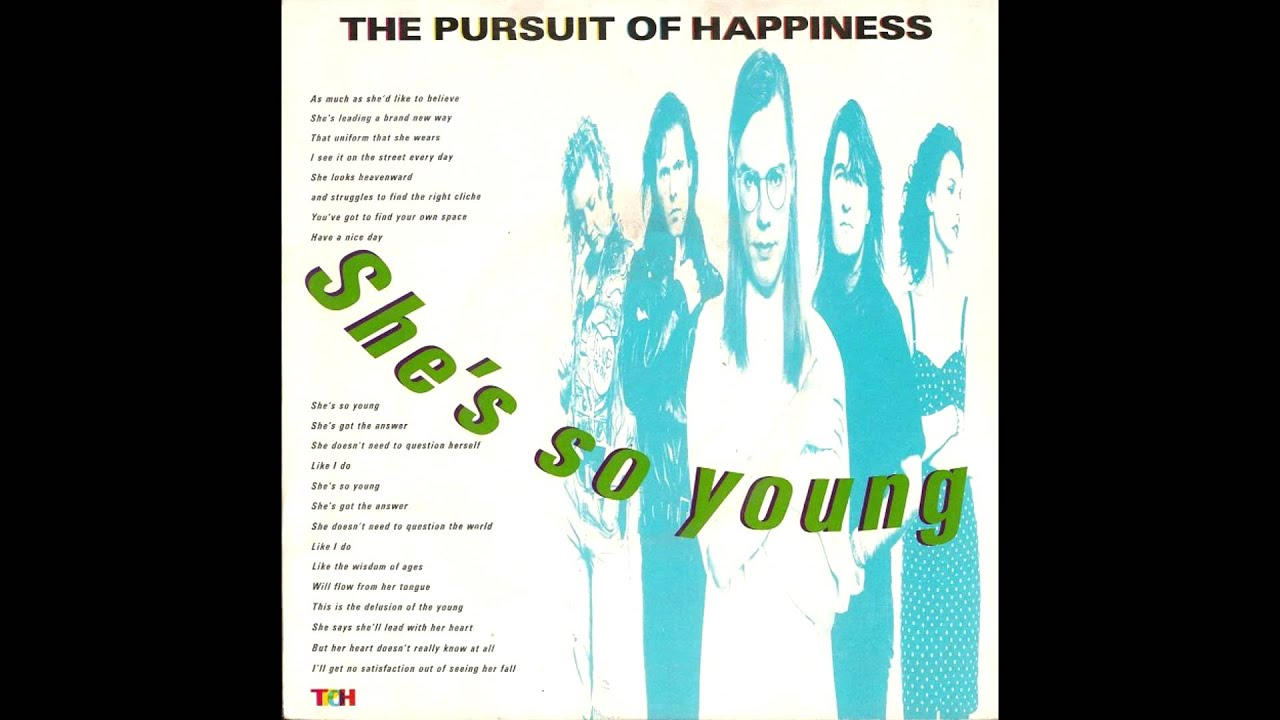
Video of The Day: The Pursuit of Happiness – She’s So Young

In the era of 90s alternative rock, The Pursuit of Happiness emerged as a jangly powerpop force, weaving tales of love, longing, and the tumultuous journey through a conflicted maze of human emotions. Among their repertoire of hits, “She’s So Young” stands as a beautiful jangly gem, capturing the essence of youthful passion and the bittersweet symphony of burgeoning adulthood versus the slow realization of growing older.

Released as a single in the same year as their debut album in 1989 as part of their Todd Rundgren-produced debut album “Love Junk.” The song from the Edmonton, Alberta band should have earned them much more critical acclaim and a much larger fan base across the world. Several decades later, this stunning melodic arrangement should have become an even more celebrated piece of music. Although the album was certified platinum in Canada, the band did not have similar success in the United States. Penned by band leader and lead singer Moe Berg in 1985, “She’s So Young” delves into the complexities of infatuation, desire, jealousy over the illusion of having everything figured out, and the rollercoaster of emotions that accompany the discovery of love in its most youthful, unadulterated form.

The track opens with an immediate vocal and jangly guitar riff that sets the stage for a sonic journey into the heart of lust, anxiety, and angst. Berg’s vocals, tinged with a perfect blend of vulnerability and raw passion, draw listeners into the narrative. As the lyrics unfold, a story of confused and unrequited love takes shape, encapsulating the universal experience of yearning for the unattainable and possibly unattainable for good reason.

Berg’s lyrical prowess shines through in lines like “Like the wisdom of ages, Will flow from her tongue, This is the delusion of the young, She says she’ll lead with her heart, But her heart really doesn’t know at all, I’ll get no satisfaction out of seeing her fall.” Here, he masterfully captures the paradox of youth—a time when the intensity of emotions often outweighs the depth of understanding. The song becomes a vessel for exploring the inherent contradictions of adolescence, where the naivety of youth coexists with the profoundness of burgeoning desires.

(Image credit: Jim Steinfeldt/Michael Ochs Archives/Getty Images)

The melodic cadence of “She’s So Young” mirrors the unpredictability of young love, seamlessly shifting between moments of exuberance and introspection. The instrumentation, marked by catchy hooks and a rhythm section that propels the narrative forward, mirrors the emotional turbulence of the song’s protagonist. It’s a musical engine where the energy of youth converges with the introspection of maturity, creating a sonic space that resonates across generations.

The chorus, a resounding declaration of unrequited love, encapsulates the universal theme of yearning that underpins the track. In fact, the original version of the song began with the chorus instead of the first verse. When re-recording the song for “Love Junk,” the band changed the order to build more tension in the song. Yet, the infectious chorus is power pop bliss: “She’s so young, She’s got the answers, She doesn’t need to question herself like I do” becomes a rallying cry for anyone who has experienced the all-consuming nature of a crush—an emotion that transcends time and space as it moves beyond rational understanding.

Beyond its musical allure, “She’s So Young” invites listeners to reflect on the transient nature of youth and the fleeting beauty of innocence. The song becomes a vessel for nostalgia, a sonic time capsule that transports the audience back to the moments of their own youthful infatuations. In this sense, The Pursuit of Happiness achieves a rare feat—capturing a specific moment in time while crafting a narrative that remains universally relatable.

While the song’s thematic elements resonate on a personal level, it also taps into the broader cultural landscape of the late 80s and early 90s. The alternative rock scene was undergoing a transformative phase, with bands like The Pursuit of Happiness contributing to the evolution of the genre. “She’s So Young” exemplifies the era’s preoccupation with introspective lyrics and a departure from the bombast of ’80s glam rock.

Decades after its release, “She’s So Young” endures as a song of authentic storytelling and infectious melodies. Its influence reverberates. “She’s So Young” stands as a compelling song that celebrates the complexities of human emotion, a reminder that the pursuit of happiness often involves navigating the labyrinth of love, loss, and the eternal quest for connection. This song remains a shining gem and a clear eyes wide-open statement of a collective memory of those who have embarked on the tumultuous yet beautiful journey of growing up.