Turn It Up and Tear the Map: Why Indie Music Still Saves Our Souls

Indie music matters because it refuses to behave.

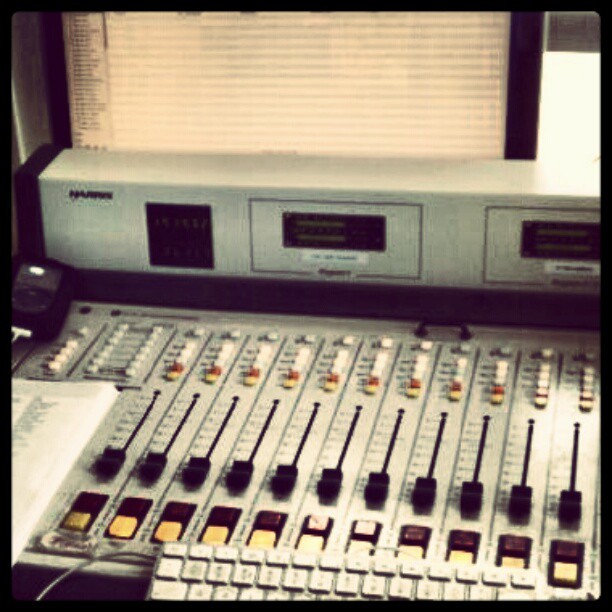
It doesn’t wait for permission, doesn’t ask what’s trending, doesn’t consult a branding deck before plugging in a guitar. It thrives in basements, on Bandcamp pages uploaded at 2 a.m., in college radio booths where the coffee is burnt and the signal barely clears the county line. It exists because someone, somewhere, had to get that sound out of their body.

If that sounds romantic, good. Romance is part of it. But indie music isn’t just a vibe. It’s an ecosystem, a stubborn alternative to the consolidated machinery of the global recording industry – a machinery dominated by conglomerates where quarterly returns can shape artistic decisions. Indie music, by contrast, has historically been defined less by genre than by structure: independent labels, self-released records, do-it-yourself touring circuits.

And that structural difference matters.

The term “indie” first cohered around labels such as Sub Pop and Dischord Records in the 1980s – scrappy operations that documented scenes rather than manufacturing them. Sub Pop helped export the Pacific Northwest’s snarling weirdos to the wider world, while Dischord Records, co-founded by Ian MacKaye, built an ethical framework around fair pricing and all-ages shows. These labels weren’t just distribution companies; they were community engines.

Indie music matters because it creates spaces where scenes can incubate without being immediately strip-mined for content.

Take Athens in the late 1970s and early 1980s. The town wasn’t a music capital. It was a college town with cheap rent and a handful of clubs. But out of that environment came bands like R.E.M. and The B-52’s – artists who began outside the mainstream industry’s glare. Their early records sounded like dispatches from a parallel America: jangling, strange, deeply regional. Before they were platinum, they were local.

That trajectory – from local to global without entirely shedding the local – is one of indie’s great gifts. It insists that geography, community and idiosyncrasy matter. It resists the flattening effect of algorithmic sameness.

Now, you could argue that in the age of streaming platforms, everything is “indie” and nothing is. After all, an artist can upload a track to Spotify from their bedroom and technically bypass a label. But independence is not just about distribution; it’s about control. Who owns the masters? Who decides the release schedule? Who determines whether a seven-minute feedback freakout makes the cut?

When artists retain creative and financial agency, they can take risks that a major-label A&R department might flag as commercially dubious. And risk is the lifeblood of cultural innovation.

Consider how many now-canonical bands began as indie outsiders. Sonic Youth turned dissonance into architecture, building cathedrals out of alternate tunings. The Replacements wrote songs that felt like barroom confessions shouted through a broken P.A. These groups were messy, imperfect, and gloriously human. Early R.E.M. showed that you could love where you come from and need to desperately leave it. They were not optimized. That was the point.

Indie music matters because it documents emotional realities that don’t always fit radio formats. Heartbreak that’s awkward rather than cinematic. Political anger that’s granular and local rather than slogan-ready. Joy that’s weird and private.

It also matters economically. Independent venues, record stores and labels form part of a broader cultural infrastructure. A club show supports bartenders and sound engineers. A small pressing plant keeps manufacturing skills alive. When fans buy directly from artists – on tour or through platforms like Bandcamp – a greater share of revenue stays within that ecosystem.

There is, too, a pedagogical dimension. For young musicians, indie scenes function as informal schools. You learn how to book shows, how to design a flyer, how to record on a shoestring budget. You learn that art is labor and collaboration. You learn that community is not a marketing demographic but a network of actual people who will help you load gear at midnight.

And yes, indie music is prone to mythologizing itself. It can lapse into gatekeeping, fetishize obscurity or confuse lo-fi aesthetics with moral virtue. Independence does not automatically equal integrity. But the aspiration toward autonomy – toward making something because you need to, not because a focus group requested it – remains vital.

In an era of cultural consolidation and algorithmic curation, indie music represents friction. It interrupts the seamless scroll with something jagged, something that doesn’t immediately resolve. It asks listeners to lean in rather than passively consume.

That friction can be uncomfortable. It can also be transformative.

Because at its best, indie music reminds us that culture is not only something delivered to us by corporations. It is something we make together in garages, in community centers, in cramped apartments with egg cartons taped to the walls. It is sustained by volunteers at college radio stations, by promoters who take a financial gamble on an unknown band, by fans who show up on a Tuesday night.

Indie music matters because it proves that art does not have to begin with scale. It can begin with urgency. With a riff that won’t let you sleep. With a lyric scribbled on a receipt. With a handful of friends who believe that their small-town noise deserves to exist.

And once it exists, it changes the air.

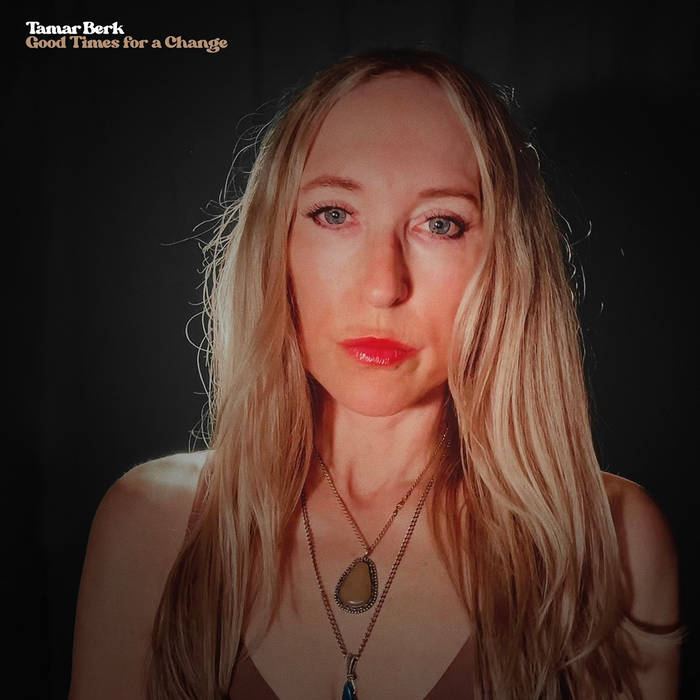
Video of The Day: Tamar Berk – Chicago

“CHICAGO” OR: HOW TAMAR BERK FOUND A MIRAGE IN THE MIDDLE OF A DYING DREAM

So there I was, chin-deep in a bowl of Frosted Flakes, when Chicago” dropped through the ceiling like a sigh you forgot you were holding for thirty years. I was reviewing music and videos for YTAA when Tamar Berk, that sparkle-voiced assassin of suburban malaise, spins up something here that’s not quite a love letter, not quite a breakup note, sort of a tear stained note to her hometown. Or perhaps it is something more like a sonic postcard from the corner of hope and loss.

The song opens with this gauzy, aching shimmer—guitars jangling like they’re trying to remember what joy used to feel like. And Berk’s voice—wow, that voice—it floats in like an old Polaroid burned around the edges. It’s part Liz Phair, part Aimee Mann, and all that unnamable ache you get when you realize your childhood bedroom is now a guestroom with beige walls.

“Chicago” is about the place, sure, but also not. It’s about your Chicago—whatever town you left and keep returning to in your heart. Tamar doesn’t sing to the city as much as she sings through it, like she’s tunneling under Wicker Park and digging up old mixtapes and unread diaries. There’s a part where she sings, “It’s not that bad, it’s just sometimes I get so sad,” and if that doesn’t make you want to cry into your last CTA transfer, you’re probably already lost to us.

And the video! God. It’s a melancholic fever dream dipped in filters, grainy and glorious. We see Tamar playing the song, but the video also wanders through neighborhoods, streets, and venues that used to be the places she played in the past. Those places have a hold on us, a feverish dream of what was and isn’t where we are now, but has become inescapably a part of our identity. She doesn’t posture, doesn’t play cute—she just exists, like a memory you can’t delete, even though the file’s corrupted. There’s a stoic poetry to it all, like she’s auditioning for a role in the past and already knows she’s gonna get the part.

What Berk manages to do here—somehow, miraculously—is take nostalgia, which is usually just a cheap phony thought, and make it ache honest. “Chicago” is not some gimmick about going home; it’s a reckoning. It’s the realization that going back doesn’t fix anything, but you keep doing it anyway because sometimes ghosts are better company than strangers.

In the end, this song isn’t about Chicago. It’s about you. Me. All of us who traded in magic for rent payments, who look at our hometown skylines and see a mausoleum instead of a monument. Tamar Berk nailed that feeling to the wall like a love letter returned unopened. And for that, I thank her.

Now, if you’ll excuse me, I’ve got to go cry in a parking lot outside a now-defunct Denny’s.

Traveling Lo-fi Locations: ‘Take A Trip’ Through Mythical Motors’ ‘Upside Down World'”

In the space where Guided By Voices, Neutral Milk Hotel, and Pavement are the well recognized signposts of indie rock, bands often struggle to carve out a distinct identity, Mythical Motors’ latest offering, “Upside Down World,” emerges as a refreshing assured guitar driven lo-fi beauty. Their sound is a kaleidoscope of rock aesthetics, alternative swagger, garage rock grit, and melodic hooks that ensnare the listener in a whirlwind of sonic exploration. Released amidst a sea of all too predictable soundscapes, this album boldly ventures into uncharted territory, blending elements of psychedelic rock, folk, and dream pop to create a mesmerizing sonic journey. If fairness truly existed, this band would be a household name.

At the heart of Mythical Motors’ sonic identity is their penchant for brevity and spontaneity. Each song feels like a fleeting moment captured in time, with abrupt transitions and a sense of urgency that keeps the listener on their toes. The lo-fi production quality adds a layer of authenticity, as if the music is being transmitted directly from the garage where it was conceived.

From the opening track, “Take A Trip,” Mythical Motors invites listeners into a swirling and swaying universe where reality blurs and imagination reigns supreme. The passionate vocals soar over layers of equal parts jangling and fuzzy guitars next to driving bass and sparkle of intense percussion, setting the tone for the album’s sonic palate. Amidst the fuzz and distortion, there’s an undeniable pop sensibility that shines through in the form of catchy melodies and infectious hooks. Mythical Motors has a knack for crafting earworms that burrow their way into your subconscious, lingering long after the music has stopped. You will hum the tune long before you know the words.

Throughout “Upside Down World,” Mythical Motors demonstrate a remarkable ability to seamlessly weave together disparate musical influences without losing the Ramones-ian power pop finish. Tracks like “The Office of Royal Discovery” and “Grand January High” showcase the band’s penchant for crafting immediate atmospheric environment reminiscent of ’60s psychedelia, while songs like “Plastic Saturn,” “Upside Down World,” and “Book of Broken Man” incorporate early alternative melodies and harmonies as if Peter Buck played in early Guided By Voices.

One of the album’s standout moments comes in the form of “Court of The Beekeepers,” a fantastic song that showcases emotive vocals against a backdrop of synth blips, fuzz guitar and perfect backing vocals. Feels like ‘A Bell is a Cup… until its Struck’-era Wire. The song’s introspective lyrics explore themes of introspection and self-discovery, adding a layer of depth to the album’s gravity. And that last ten seconds of call and response will make you want to play the song over and over again.

Yet, for all its lo-fi allure, “Upside Down World” is not without its moments of raw energy and intensity. Tracks like “Elijah Stop Spinning” and “Stop The Sun” inject a dose of adrenaline into the album’s sonic tapestry, with driving rhythms and distorted guitars that propel the listener into a frenetic cascade of sound that feels like the listener should be spinning.

But perhaps the most remarkable aspect of “Upside Down World” is its ability to evoke a sense of nostalgia while still feeling decidedly contemporary. Drawing inspiration from the music of alternative past while embracing the present, Mythical Motors crafts a sound that feels both timeless and fresh, inviting listeners to lose themselves in its hypnotic melodies and evocative lyrics.

Upside Down World” is more than just an album—it’s a transcendent experience that transports listeners to another realm entirely. With its near constant guitar attack, captivating vocals, and expansive sonic palette, Mythical Motors has crafted a musical odyssey that is sure to resonate with fans of indie rock and beyond. In a world where conformity runs the shop, Mythical Motors dares to defy expectations, offering up a sonic journey that is as daring as it is beautiful.

Facebook Soundcloud Bandcamp Songkick Instagram