Six Hours in the Wild: The Latest Your Tuesday Afternoon Alternative Shows Land on Mixcloud

If you’ve ever driven around town with the radio on and the sun doing that late-afternoon slant that makes everything look like a memory already—gas stations glowing, parking lots half empty, the air buzzing with possibility and dread—then you already understand what Your Tuesday Afternoon Alternative is supposed to feel like.

And now, for the first time in a while, the last two full three-hour broadcasts are sitting online in all their sprawling, unruly glory over on Mixcloud. That’s six straight hours of music, ideas, weird segues, accidental poetry, and the kind of radio that only really works when nobody is trying too hard to make it work. Which, if we’re being honest, is the best kind.

Think of it as a kind of sonic time capsule: three hours where the world’s chaos gets distilled into guitars, synthesizers, a stray folk lament, maybe a punk blast that lasts ninety seconds but somehow resets your whole nervous system. Then you do it all again the next week. Radio as ritual. Radio as wandering conversation.

The thing about listening to these shows after the fact is that they become something slightly different than they were in the moment. Live radio is adrenaline and improvisation—you throw a song into the air and see what it does to the room. But on replay, the structure reveals itself. Themes emerge like ghosts in the static. Songs talk to each other across decades. A jangly indie track from 2024 suddenly feels like it’s answering a garage-rock scream from 1966.

That’s the secret architecture of good radio: it sounds loose but it’s secretly a web of connections. Which makes these two archived episodes especially fun to revisit. Over six hours, the mood drifts the way an actual Tuesday afternoon does. One minute the sun is out and everything sounds hopeful; the next minute you’re staring out the windshield thinking about every mistake you’ve ever made while some beautifully melancholy track hums through the speakers.

And that emotional whiplash is the point.
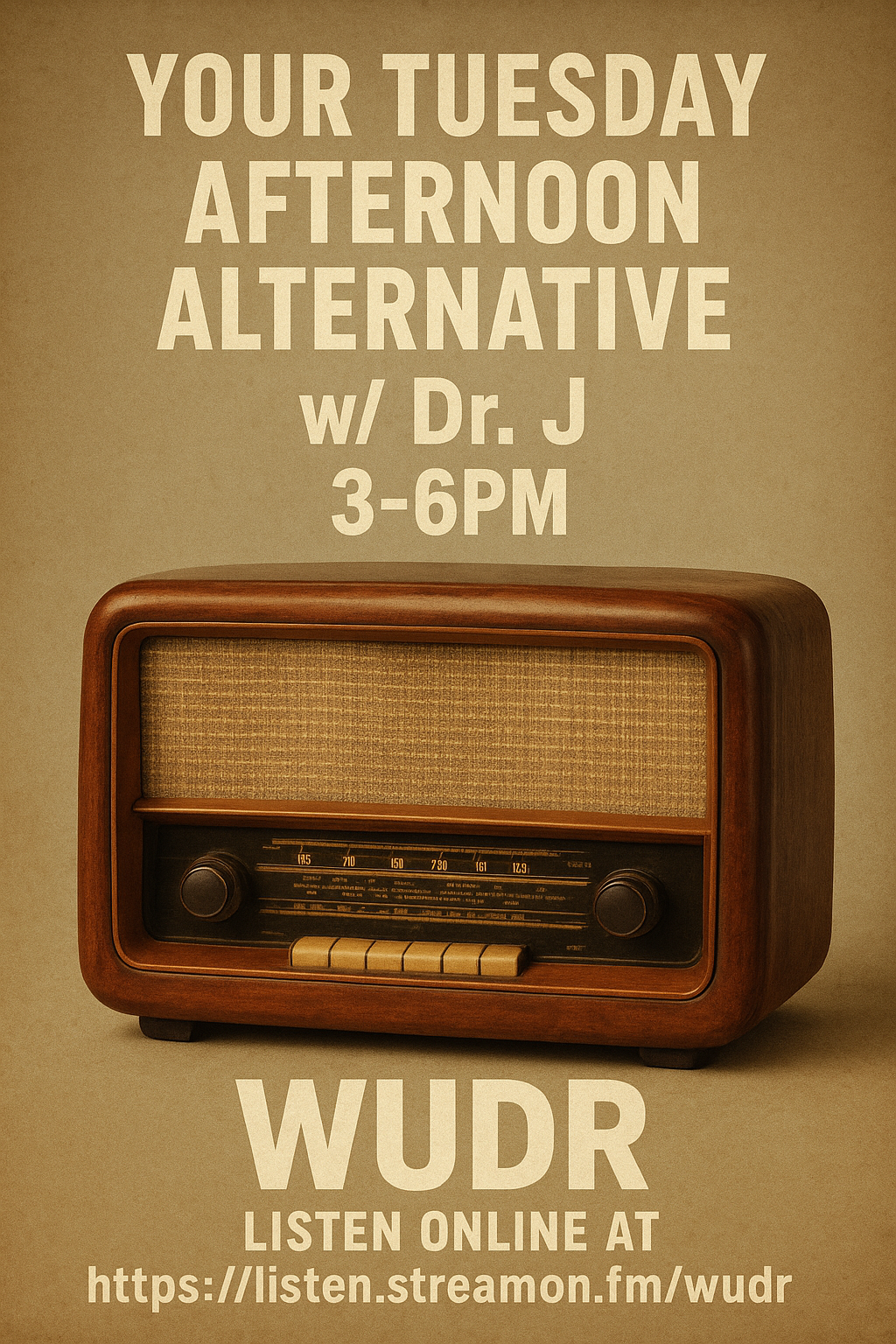
Great radio—especially college radio—has always been about resisting the algorithm. The streaming services want to smooth everything out into playlists that never challenge you. But real DJs still believe that music should occasionally knock the wind out of you. A dreamy pop song might suddenly give way to something ragged and noisy, and then a minute later you’re floating through a slow acoustic tune that feels like someone left a window open in your heart. That’s not bad programming. That’s life.

The two newly available shows capture that beautifully messy spirit. Across the six hours, you’ll hear indie rock rubbing shoulders with folk, garage, synth-pop, and the occasional left turn that makes you sit up and say, “Wait—what was that?” The answer, of course, is that it doesn’t always matter. Discovery is half the thrill.

And because the shows were recorded live, you also get the little human moments that make radio feel alive: the slightly crooked transitions, the spontaneous reflections, the sense that the whole thing could veer off the rails at any moment but somehow lands exactly where it needs to.

It’s the opposite of polished. It’s the sound of someone digging through a record collection and saying, You need to hear this.

Which is why having the full episodes archived on Mixcloud matters. Instead of a clipped highlight or a tidy playlist, you get the whole ride—the long arc of the afternoon, the gradual build, the strange emotional geography of three uninterrupted hours.

In other words: real radio.

In the Margins of the Music: Why We Still Write Notes for Every Song

Someone asked me the other day if we actually write notes for all of the music we play on the show. And I love that question, because it gets at the heart of what this whole strange, beautiful ritual is about.

The short answer? Yes. Absolutely. Maybe not always in the neat, bullet-point, producer-approved sense. But every song has a story attached to it. Every track gets time, attention, a listen with the lights low or the car windows cracked. We don’t just drag and drop files into a playlist and hope for magic. The magic is in the listening.

Sometimes the notes are scribbled in a notebook—half-legible phrases about a guitar tone that sounds like “late summer asphalt” or a chorus that feels like it’s trying to outrun heartbreak. Sometimes they’re typed up neatly: where the band’s from, who produced the record, why this particular track matters right now. And sometimes the notes are just a feeling we carry into the mic—a memory, a connection, a reason this song needs to be heard tonight.

Writing notes is a way of honoring the artists. Someone spent months, maybe years, making that three-minute song. They argued over snare sounds. They rewrote verses. They risked something personal in the lyrics. The least we can do is meet that effort with attention. To listen closely. To ask: what is this song trying to say? Where does it sit in the arc of the record? Why does it belong in this hour, next to these other songs?

It’s also about you—the listener. When we share a few thoughts before or after a track, we’re not trying to lecture. We’re building a bridge. Maybe you’ll hear a lyric differently. Maybe you’ll catch a harmony you might’ve missed. Maybe you’ll go home and play the whole album because something about it stuck.

Radio, at its best, is companionship. It’s someone in the dark saying, “Hey, listen to this.” The notes are part of that companionship. They’re proof that this isn’t background noise. It’s a conversation. A relationship. A shared moment in time.

So yes, we write notes. We think about sequencing. We care about transitions. We argue lovingly over which song should close the set. Because music deserves that care. And honestly? So do you.

Thanks for listening closely enough to even ask.

How do you find music?

Today it seems that keeping up with new music is like trying to take a drink from an open fire hydrant. One of the consequences of music streaming and related online tools is the geometric increase in music widely and — most importantly — easily available to us at any time, for any reason. But a single snowflake can be lost in a snowstorm. How do you find music given the wide variety available? Of course, this assumes that people want to find music. One of the possible outcomes of so much music being so accessible is that the experience of music becomes less important to some of us.

The constant torrent of new songs, re-releases, remixes, live recordings, and more can feel like a whirl of glimpses and phrases. While few bands and artists are as prolific as Guided By Voices/ Robert Pollard, there are over 2,000 albums released every week. And that does not measure the backlog of older music and more.

On the show yesterday, we discussed the different tools that we use to try and keep up with music releases. We use a mix of streaming services, music aggregators, emails from song pluggers, magazines, blogs, and newsletters. We also find that social media can be helpful in trying to expand what we play on YTAA. What are people interested in music talking about? What new music are the artists we admire excited about? What are they listening to at the moment?

On YTAA, we are trying to avoid the ‘big’ artists who are on the major record labels or who comprise what Alan Krueger called “The Superstar Economy” in concerts and music releases. The “Winner Take All” assumption of the music industry overlooks thousands of artists who have good qualities that deserve praise, support, attention, etc. Since the beginning of the show in 2004, we have focused on indie, alternative, and local music that we believe deserves more support than it gets. This is just as true today as it was when we started almost 19 years ago.

So, the question remains: What do you do to keep up with new music releases? How do you track down new music? What tools, services, and approaches help you find new music that you love? Send us any thoughts you would like to share at drjytaa at gmail.com.

How do you find music?