Favorites of 2025: Sadbox – Everything’s A Shame

Sadbox and Everything’s A Shame

In a musical landscape flooded with glossy production and instant-stream forgettability, Everything’s A Shame stands out — not because it tries to conform, but because it embraces messy humanity: raw ideas, family schedules, basement rehearsals, and songs born from everyday chaos. The EP from Dayton-based rock band Sadbox (released October 3, 2025) feels intimately local while resonating with universal truths.

For a band balancing real-life demands — kids, careers, responsibilities — Sadbox delivers a sound that is energetic, quirky, honest, and sometimes unsettling. The result is a three-song burst of “technical weirdo rock,” as some have called it — music that doesn’t aim for radio-friendly formulas or uniform polish but seeks genuine expression, emotional depth, and a touch of controlled chaos.

In what follows, I examine who these musicians are, how the EP was created, what their sound and lyrics reveal, and why Everything’s A Shame feels like a small but significant critique of the sanitized norms of mainstream rock.

Who’s making the noise — the people behind Sadbox

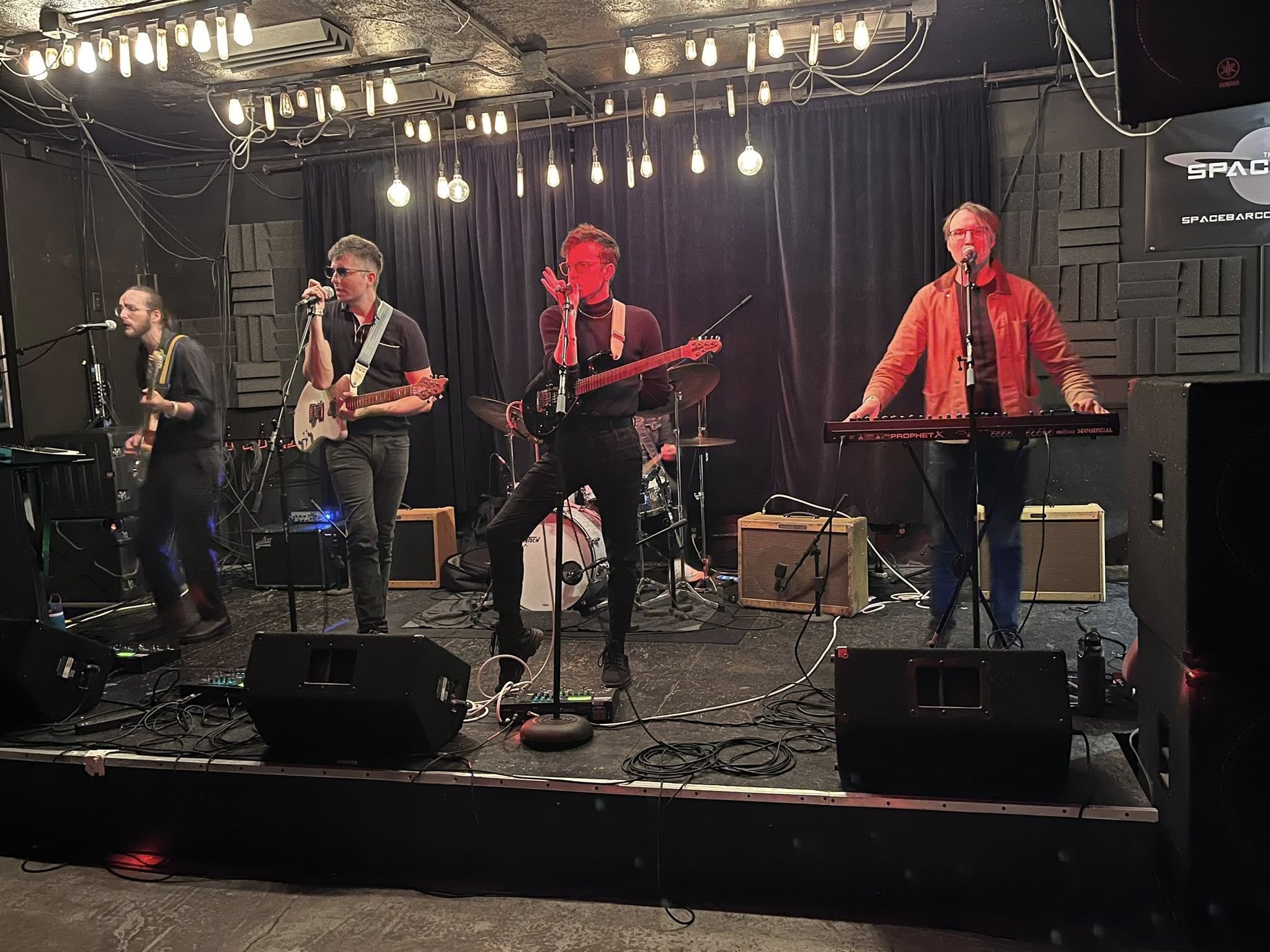
Sadbox isn’t a typical rock band that churns out songs just for fame. It’s a group of musicians grounded in everyday life, each with responsibilities beyond music. Sadbox is led by guitarist and lead singer Paul Levy, whose dual role as a surgeon brings a unique mix of precision and spontaneity to the band’s sound. He’s joined by Eli Alban on guitar, who also plays in The 1984 Draft and adds extra tonal nuance and energy to the group. Ryan Goudy provides the band’s steady, melodic bass foundation, while Ray Owens propels the songs with his dynamic, intuitive drumming. Completing the lineup for this release is Rachele Alban, whose vocals and keyboard work expand Sadbox’s sonic palette and deepen the emotional texture of the record.

The record — recorded, mixed, and mastered by local engineer/producer Fred Vahldiek known as Fredzo at Fredzoz Studio (one of our favorite records from The 1984 Draft, Best Friends Forever was recorded there) — is simple, direct, and straightforward. As drummer Ray Owens mentioned in an interview, balancing family life (with a collective total of 13 kids in the band) means music sometimes has to be as spontaneous and immediate as a family dinner: “the practice forum is similar to a live show.” That constraint — rather than hurting the music — seems to sharpen it, giving the band’s sound a rough clarity and urgency that polished over-production often hides.

Sound and style: “technical weirdo rock” with heart and edge

Sadbox’s music has been described as “alternapop / college-rock-style,” but Everything’s A Shame doesn’t fit neatly into any single category. Instead, it combines elements of grunge, rock, and weird-pop, with occasional narrative or character-driven lyrics that evoke theatrical rock or even prog-lite experiments.

The opening track — “Dust” — leans into ’90s grunge style. Over-amped vocals, gritty guitar sounds, and a tight rhythm section evoke the emotional chaos and existential worry of that time. The feeling of movement — a car speeding down a lonely road, a restless mind at midnight — stands out. That tension fits especially well with the lead singer’s dual identity: the precision of his professional life contrasted with the rough edges of his artistic side.

The second track, “All Rhymes for Scoop,” initially seems like a playful word game, but that expectation is overturned. Instead of listing rhymes for “scoop,” the song acts as a critique — perhaps — of shallow social media echo chambers. Lyrics and rhythms clash unpredictably, reflecting discomfort, discontent, and disillusionment. The syncopated beat combined with semi-nonsensical lyrical stutters mirrors the noise and overload of the digital age. The song reminds us of a previous outting, Mish Mash, from their 2021 record Future Copy.

The final song, “New Low,” slows things down. Clean arpeggiated guitar, minimal percussion, and dual vocals (Paul and Rachele) frame a sad, spare story: one of abandonment, loss, and longing. The song — reportedly inspired by the band finding a stray cat after a tenant move-out — becomes a narrative of innocence left behind, waiting in vain. Its emotional weight comes not from grand gestures but from quiet detail: the missing water dish, the empty stoop, the echo of loss.

Taken together, the three songs create a mini-arc: from restless escape, to social critique, to quiet grief and regret. The textures shift, the pacing varies, but the emotional flow — vulnerability, discomfort, longing — stays consistent.

Lyrics and themes: shame, impermanence, and the small cruelties of modern life

The title Everything’s A Shame seems both faintly sarcastic and deeply earnest. The songs reflect that duality — loss feels tragic, but also mundane; social collapse feels absurd, but also real; emotional weight is often disguised under everyday details.

As Paul Levy put it in an interview: “I am the consequence of the road I travel.” That line — repeated in “Dust” — connects personal history, existential weight, and the unpredictability of life. It frames identity not as a fixed point, but as something shaped by context, time, memory, and chance.

In “All Rhymes for Scoop,” the band critiques the vacuity of online life — the “argument platform,” the endless scroll, the performance of discourse without depth. Using lyrical non sequiturs and abrupt rhythmic shifts, Sadbox turns the song into a kind of musical protest against emptiness disguised as connection.

Then “New Low” returns to personal — and small — narratives: the lonely cat, the abandoned stoop, the emptiness left behind. It’s a portrait not of a sweeping life crisis, but of countless smaller traumas: displacement, abandonment, neglect. The catastrophic becomes quiet, ordinary, and all the more haunting for that.

These are not songs about grand despair or romantic heartbreak. They’re about surviving — surviving social collapse, familial pressure, shifting identity, emotional stasis. There’s shame in defeat, longing in loss, but also a stubborn, human need to speak, to express, to hold on.

The making of the EP: collaboration, constraints, and creative honesty

Given their busy lives — kids, jobs, daily responsibilities — the fact that Sadbox managed to write, rehearse, record, and release Everything’s A Shame is a testament to their dedication. In a  radio interview, drummer Ray Owens explained how the band’s workflow had evolved: what used to be chaotic, slow jams now flow with precision; what once needed prompts and cues now occurs with a glance or shared rhythm. That improved chemistry is evident on the record.

Recording, mixing, and mastering were done by Fredzo at Fredzoz Studio — and the production shows an honesty-over-polish vibe. The guitars bite, the vocals crack, and the drums thud. Space is intentional: silence between notes, breaths between lyrics. Nothing feels overdone; everything feels essential.

That rawness—balanced with musical discipline—gives the EP its power. It’s not perfect, but it doesn’t need to be. It’s lived-in, human, sometimes ragged, and in its raggedness lies its truth.

What Everything’s A Shame achieves — and what it leaves unresolved

One of the EP’s main strengths is its coherence. Despite the sonic and lyrical variety (grunge-inspired rock, indie quirks, quiet ballads), the three tracks feel connected — through mood, theme, and emotional honesty. That sense of unity makes the EP seem like more than a random collection: it feels like a snapshot, a statement, a short film in three acts.

It also demonstrates what a band rooted in real life can achieve when they are committed: even with family obligations and limited time, Sadbox shows that artistic ambition and emotional honesty don’t require big budgets or months in the studio. Sometimes all it takes is clarity, teamwork, and the desire to record what you feel.

However, the EP also leaves space for growth. With just three tracks, listeners might want more — more depth, more storytelling, more time to pause. The ideas hinted at in “Dust,” “All Rhymes for Scoop,” and “New Low” seem like the start of something bigger. There’s a feeling of beginning, not ending.

Furthermore, the looseness that gives Sadbox its charm can also come across as unpolished, even rough around the edges. Listeners expecting tight arrangements or radio-ready vocals might find some of the vocal delivery off-kilter, the rhythms unsettled, and the mood dark. However, for others—those looking for realism, emotional depth, and spontaneous honesty—that roughness is part of the album’s appeal.

Why this EP matters — for the band, for Dayton, for listeners who crave honesty

For Sadbox, Everything’s A Shame reaffirms their commitment: they are serious about music despite life’s demands. Their willingness to embrace their circumstances — family, time constraints, the need for immediacy — doesn’t weaken their art; it enhances it. Their music is more about authenticity than perfection.

For their hometown of Dayton and the broader Ohio music scene, the EP is a tribute to the energy of independent music: small bands, DIY studios, local stages, real lives. It’s a reminder that creativity doesn’t wait for perfect conditions — sometimes it comes from necessity, urgency, and the quiet desperation of juggling everything we care about.

For listeners outside that scene, Everything’s A Shame offers a rare kind of intimacy. It doesn’t pretend to solve problems. It doesn’t promise catharsis or closure. It offers fragments: a line about regret, a wobbly chord, a story about a lost cat, a sigh in the vocal mic. And sometimes fragments are enough — enough to make you pause, reflect, and feel a little less alone.

Everything’s A Shame — a small record with big heart

In 2025, when music often feels disposable — a background for playlists, streams, and fleeting attention — Sadbox’s Everything’s A Shame acts as a quiet form of resistance: a plea to listen, to feel, to inhabit sound rather than glide past it. It’s unpolished. It doesn’t seek easy consumption. It requests patience, presence, and empathy.

Paul Levy, Eli Alban, Ryan Goudy, Ray Owens, Rachele Alban — they’re not rock stars living for tours or hits. They’re humans with lives, demands, imperfections. And yet they created something lovingly imperfect, collaborative, and genuine. That spirit — of DIY honesty, embracing constraints, and channeling everyday life into art — is as rare as it is essential.

Everything’s A Shame might be small — only three songs. But within those songs lie questions, longing, critique, grief, and hope. It doesn’t aim to cover the entire world. It seeks to share a piece of it. And sometimes, a piece is all we need.

A Night at the Altar of Rock: The Tisburys, Super City, and The Laughing Chimes, and the Resurrection of Everything that Matters

My caffeine-fueled thought about last night’s amazing rock and roll show — By a Lapsed Believer Dragged Kicking and Screaming into Rapture at The Spacebar (May 29, 2025) aka Dr. J.

It started with the silence.

Not the good kind—the pregnant pause before the snare cracks or the breath before a chorus explodes—but the stifling, suffocating kind. The kind that crept in during the pandemic and never fully left. The kind that replaced feedback with buffering wheels, pit sweat with couch inertia, and the sacred communion of the club with the sad, soft glow of your phone or laptop screen.

We all said it was temporary. Just a phase. A pause button. But then people stopped going back. Live music—the lifeblood, the altar, the therapy session-meets-street fight that had once given life to every meaningful moment of youth—was suddenly an option, not a necessity. A niche. A “might”, an “interested” instead of a “must.” Streaming replaced sweat. Earbuds replaced speakers. Watching someone strum a guitar in portrait mode while you folded laundry became the sad parody of what used to be a spiritual act.

And yeah, I bought in. Who didn’t? We got older, softer, more afraid. Netflix kept churning, Spotify never ran dry, and the couch never charged a cover. They had my favorite snacks. Maybe we forgot. Or maybe we chose to forget—because remembering what it was like to feel something, shoulder-to-shoulder with strangers, might have been just too much.

But then, on a random Thursday night in Columbus, Ohio, in a cinderblock joint that still smells like 1994 and regrets, it all came roaring back like a freight train with a grudge. Three bands. A tiny stage. A room. And somewhere in the middle of it all, I found what I didn’t even know I’d lost: the magic.

Maybe we have all been a bit burnt out lately with every morning bringing menace and dread, a thin-skinned attack built on ego, narcissism, and a culture of outrage.

These past few years have felt emotionally scabbed over by years of algorithmic playlists, music discovery if it happens at all is toed strivtly to our personal past choices. And in 2025 so many mainstream limp bands more concerned with brand aesthetics than the beautiful noise of guitar feedback.

Rock and roll has become a ghost in a shaken Polaroid, a relic of denim-scraped memories buried beneath held up poster board ironic mustaches and Instagram filters. The whole thing felt embalmed, pickled, taxidermied—played through boutique pedals and boutique egos, an infinite loop of tasteful mediocrity.

But then came Last Night. One of those nights that swings down from the cosmos like a flaming power chord, grabs you by the lapels, and reminds you why you ever gave a damn in the first place. It happened at The Spacebar in Columbus, Ohio—a cinderblock cathedral tucked between bars, food joints, and a laundromat — the kind of dilapidated storefronts that might still sell VHS tapes or lottery tickets. A venue that smelled of rock and till fightingg for relevance or at least survival. The smell of the grease of good intentions.

The perfect place for resurrection.

Enter Super City.

Super City hit the stage like a lightning bolt fused with a math equation — too tight to be this wild, too wild to be this tight, like if Devo and Thin Lizzy got into a car crash and left the wreckage bleeding glitter and BPMs.

These guys didn’t play songs so much as detonate them, launching off the stage like human fireworks, synchronized like a goddamn robot army but with all the twitchy, unhinged soul of a band that knows every note could be their last. Guitars traded licks like knife-fighters in a Baltimore alley, drums cracked like whips in a circus gone feral, and the whole thing pulsed with that rare, raw urgency—the kind that makes your brain light up and your spine want to sprint straight through the drywall. It was art-damaged rock and roll with a future-funk death wish, a sound so electrified you could taste the ozone in the room.

And hell, the choreography—yes, choreography—but not in some “industry plant showcase” way. No, this was choreography as combat, synchronized movement not to seduce but to bludgeon, to commit to a kinetic madness so complete it looped around into transcendence.

One minute they were locked in like Kraftwerk with heart palpitations, the next they were thrashing their bodies across the stage like the floor was lava and the only salvation was dance. The whole room went from “I don’t know this band” to “I want to join this band” in under three minutes. They didn’t restore your faith in rock and roll—they reminded you that maybe it had evolved into something new, something faster, weirder, sweatier. Something that lives not in the past but right here, right now, sweating all over you in a bar on a Tuesday night like salvation with a tremolo pedal.

And then The Tisburys took the stage.

You ever see a band that walks out looking like maybe they’re just some regular dudes, guys you know, your co-workers at the local record store or your trivia-night competition—and then proceed to absolutely decimate your soul with rock and roll? That’s the Tisburys. They have that thing. The thing you can’t name without sounding like a lunatic or a prophet. The thing that separates the lifers from the LARPers.

From the first note, they tore into their set like a pack of dogs breaking into a butcher shop—joyful chaos, unrelenting passion, the sonic equivalent of smashing glass just to hear the sound. Think Springsteen’s storytelling welded to Big Star’s chiming melancholia, dragged through the gravel of Philly punk grit and splattered with just enough modern neurosis to feel like now. The guitars rang out like church bells for the godless. The rhythm section didn’t just keep time—they commanded it, like Kronos punching the clock with a snarl.

There was one song—title lost to the ecstatic fog of the moment—that built up slow, with this patient, pleading guitar line that felt like someone whispering secrets at the edge of the world. And when it broke? Jesus. It was like the roof lifted six inches and the universe cracked open just wide enough for all of us—sweaty, cynical, slack-jawed—to catch a glimpse of what music is for.

The Laughing Chimes.

Two minutes into their set, I was already sweating through my cynicism. These kids (and yes, kids—the kind that probably still think Hüsker Dü is a weird Scandinavian joke until they learn better) came out swinging with jangle-pop hooks like they’d just stumbled out of a time portal from Athens, Georgia, circa 1985, blinking into the fluorescence with nothing but Rickenbackers and righteous intention. There was no ironic detachment, no arch knowingness—just melodies sharp enough to slice through the smog of apathy I’d been inhaling since 2016.

They played like they meant it. You know what that means? Probably not. Because meaning it is a lost art. Meaning it is standing in front of twenty-something beer-slingers and 40-year-olds wearing Dinosaur Jr. shirts with a rhythm section that gallops like a dog finally let off the leash and singing about small towns, lost dreams, and heartbreaks that aren’t filtered through TikTok.

I felt young. Not “young” like your skincare ad says—you know, dewy and delusional—but young like: I want to start a band tonight and scream into a microphone until the cops come.

By the time The Laughing Chimes slashed through their final number—a feedback-drenched love letter to the Replacements that made me want to punch the air and cry at the same time—I was halfway converted. I could feel the old hunger stirring, the one that used to wake me up at 2 a.m. with a desperate need to play “Radio Free Europe” at bone-rattling volume.

Not money. Not TikTok virality. Not Spotify streams.

Connection. Defiance. Salvation.

And it wasn’t just the bands. It was us, the crowd—pressed together marinated in secondhand dreams, all there for the same unspoken purpose. To feel something real. I saw a guy in a vintage Guided by Voices tee taking it in like a benediction. I saw a girl lean her head on her girlfriend’s shoulder during a bridge that could have melted glaciers. I saw the bartender nodding along in the back like they’d forgotten they were on the clock. Magic. Not sleight-of-hand, not showbiz gloss—but ancient, electric, and utterly earned.

By the end, I was a puddle. Broken down and rebuilt by the raw, gorgeous power of three bands who didn’t need a light show or viral video to get through to me—just guts, melody, and an unshakable belief in the redemptive fire of a great song, played loud, in a room too small to contain it.

I walked out into the Columbus night buzzing like a man struck by divine lightning. My ears rang with the ghost-echoes of feedback and harmony. My body ached in that holy way, the kind you feel after love, surviving a riot, or finally remembering who the hell you are if even for a fleeting moment.

Rock and roll isn’t dead. It’s just waiting for you at a place like The Spacebar, on a night like that, where belief is possible again. Super City, The Tisburys and The Laughing Chimes didn’t just play a show.

They started a revival.

YTAA Full Show is up!

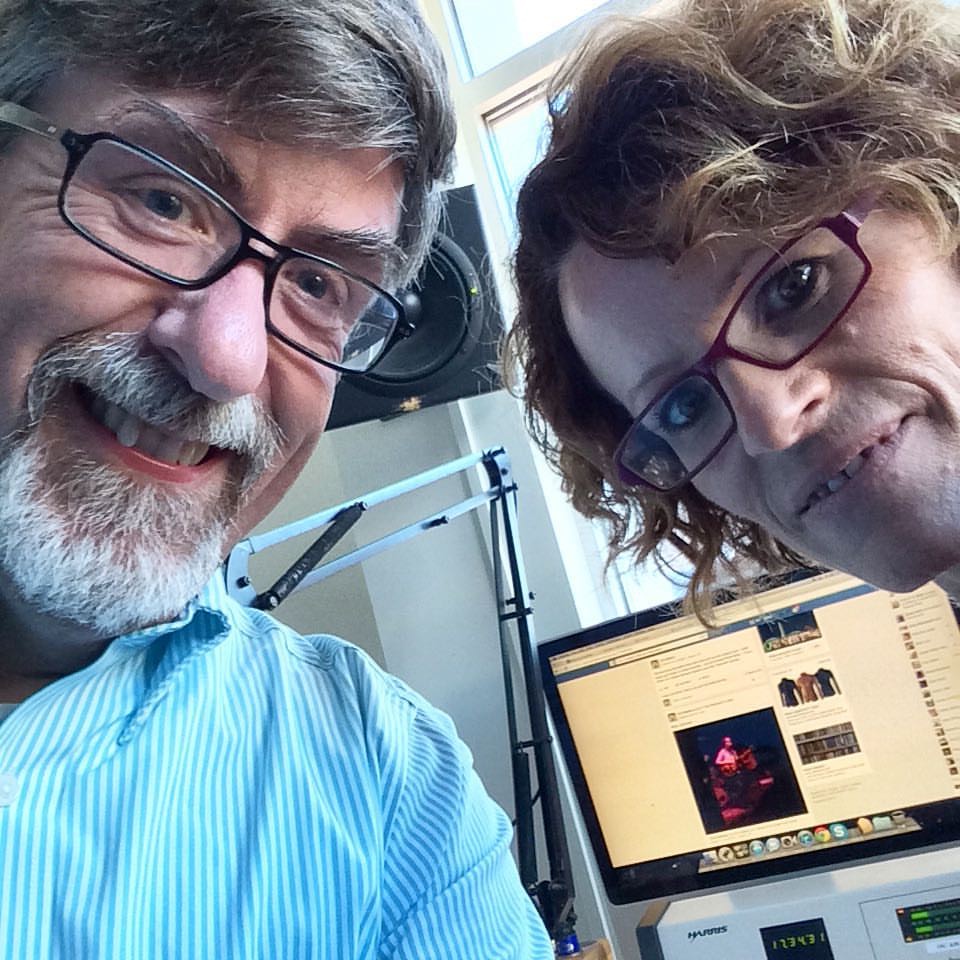
Doing local indie radio for 20 years is a labor of love, a commitment to the community, and a constant source of joy. At least, it sure has been for us at YTAA! Indie radio is a unique space where personality and passion shine through, where the constraints of commercial programming give way to creativity, spontaneity, and local voices. For two decades, the joy has been in connecting people through sound, amplifying voices that would otherwise go unheard, and showcasing music, stories, and topics that truly reflect the heart of music in times of darkness and light.

One of the most rewarding aspects of this journey has been building connections with listeners. Over the years, these listeners become more than just people tuning in—they become a family. Calls, emails, tweets, comments, posts, and even the occasional letter remind us that the work is meaningful and that there’s an audience who feels seen, heard, and represented by what’s being aired. In a world where media often feels homogenized and so darn artificial, we would like to believe that indie radio creates an unbreakable bond with its listeners by staying local, rooted, and real.

Another source of joy for us here at YTAA is discovering and promoting new, underrepresented music. The indie scene is full of gems that don’t always make it to mainstream playlists (for shame!), and introducing these sounds to an eager audience is incredibly fulfilling, heck – you might say it is the thing that keeps us coming back for more. The excitement of finding a new track or local artist and knowing that it will resonate with someone out there makes the work feel fresh, even after so many years.

The joy of indie radio also lies in the freedom to take risks, to be unconventional, and to experiment. Unlike larger stations tied to strict playlists or advertising pressures, an indie station, like WUDR, has the freedom to talk about niche issues, dive into deep conversations, and let shows develop organically. After 20 years, it’s clear that indie radio is more than just broadcasting; it’s about fostering a shared experience, celebrating local culture, and continuing a legacy of creativity and authenticity.

Faves of 2023: Smug Brothers – In The Book of Bad Ideas

As we continue to pause and reflect on some amazing music from this year, we turn to an amazing local band. Smug Brothers, the indie rock veterans hailing from Dayton, Ohio, returned with their highly anticipated 2023 album, “In The Book of Bad Ideas.” Known for their eclectic sound and thought-provoking lyrics, the band has consistently pushed the boundaries of indie rock, and their latest release is no exception. “In The Book of Bad Ideas” not only showcases the band’s evolution but also serves as a clarion call to their ability to craft intricate and unconventional musical narratives.

In The Book of Bad Ideas,” is an adventure through the space that indie, psychedelia, lo fi share together in a flat where Robert Pollard has Big Star’s “Third” playing in the background. This album — one of the band’s best — defies expectations and solidifies the band’s status as indie rock innovators who connect to their influences without sounding derivative or contrived. Smug Brothers’ breathe new life and vigor into the musical consciousness of indie. From the opening chords of “89 Lullaby” where the band jumps immediately into the song like leaping into a rushing river, the album grabs listeners with its raw energy and doesn’t let go. That first song sets the tone for the sonic journey ahead. The intricate guitar work and dynamic drumming create a sense of urgency, drawing the listener in with its raw energy. Lead singer and songwriter Kyle Melton’s distinctive vocals add a layer of authenticity, immediately grabbing attention.

The back-to-back tracks, “Mistaken for Stars” and “Let Me Know When It’s Yes” encapsulates the band’s ability to seamlessly blend genres, creating a musical tapestry that is familiar and unique. Imagine songs that are both complex, catchy — damn catchy — and accessible.

Bend Blue The Copper” is a standout piece that exemplifies Smug Brothers’ ability to blend genres seamlessly. The track weaves through indie rock, punk, and even elements of folk, creating a sonic landscape that is as unpredictable as it is captivating. The lyrics seem to explore the consequences of impulsive decisions, adding depth to the already complex musical arrangement.

The album is a testament to the band’s evolution, showcasing a willingness to explore uncharted territory within the arrangements associated with independent music. Tracks like “Pattern Caveat” and “Since The First Time I Heard You Laugh” introduce experimental elements, with atmospheric soundscapes and genre-bending instrumentation. Smug Brothers’ frontman, Kyle Melton, delivers poignant lyrics throughout, exploring themes of impulsive decisions, nostalgia, and reinvention. These tracks seamlessly blends elements of psychedelic rock with electronic flourishes, creating a kaleidoscopic sonic tapestry. The result is a mesmerizing journey that defies categorization, showcasing the band’s fearlessness in pushing their artistic boundaries.

What Starts Out as Fun” takes the listener into uncharted territory with its experimental instrumentation and atmospheric production. The use of synthesizers and layered vocals creates a dreamlike quality, offering a stark contrast to the more straightforward rock elements present in earlier tracks. The band’s willingness to explore new sonic realms pays off, adding a refreshing dimension to the album.

An Age In An Instant” is a poignant ballad that showcases Smug Brothers’ ability to convey emotional depth through their music. The stripped-down arrangement allows Melton’s heartfelt lyrics to take center stage, touching on themes of nostalgia and loss. The subtle use of keyboards and acoustic guitar enhances the overall intimacy of the track, leaving a lasting emotional impact.

Stiff arms At The Still Waters” introduces a rhythmic complexity that keeps the listener on their toes. The interplay between the drums and bass creates a sense of urgency, while the guitar riffs add a layer of sophistication. The track’s dynamic shifts and unexpected twists highlight the band’s prowess in crafting music that is both intellectually stimulating and sonically engaging.

Enceladus Lexicon” stands out as a cinematic storytelling piece, with its evocative lyrics and sweeping musical arrangement. The instruments create soundscapes that transports the listener into the narrative woven by the song. Smug Brothers demonstrate their ability to create sonic landscapes that feel expansive and immersive.

Paradise Farms” injects a burst of energy into the album, featuring upbeat rhythms and infectious melodies. The track pays homage to the band’s Midwestern roots, capturing the spirit of resilience and reinvention. The juxtaposition of the lively instrumentation with thought-provoking lyrics adds layers of complexity to the overall listening experience.

In The Book of Bad Ideas” is more than just an album; it’s an experience that takes the listener on a rollercoaster of emotions and sonic landscapes. The band’s ability to balance introspective moments with energetic bursts creates a dynamic listening experience that resonates long after the final notes fade away. With this release, Smug Brothers have crafted a musical gem that pushes the boundaries of indie rock, inviting listeners to join them in the exploration of the unconventional and the brilliant. Throughout the record, the band, demonstrates their growth as musicians and their commitment to pushing the boundaries of indie rock. The album takes the listener through a diverse set of experiences in sound, from the raw energy of the opening track to the introspective moments of emotional vulnerability. With each track, Smug Brothers prove that they are not content to rest on past successes, but instead, they continue to evolve and explore new sonic territories. “In The Book of Bad Ideas” is a must-listen for anyone who appreciates music that challenges, engages, and ultimately transcends genre conventions. Smug Brothers have once again proven that they are at the forefront of indie rock’s creative frontier.

Faves of 2023: The 1984 Draft – Best Friends Forever

The city of Dayton, Ohio, has long been a hotbed for musical creativity, birthing numerous bands that have left an indelible mark on the music industry and on the hearts of music lovers. Among these, The 1984 Draft has carved its niche, blending indie rock sensibilities and the cleverness of punk music with heartfelt lyrics that resonate with audiences. In 2023, the band released “Best Friends Forever.” The buzz on this band is well earned and delivers on a promise of a musical journey that fans and critics alike were eager to embark upon.

Formed in the heart of Dayton, The 1984 Draft has been a mainstay in the indie rock scene, captivating listeners with their distinctive sound and poignant songwriting. Comprising members around the nucleus of principal songwriter, singer, guitarist Joe Anderl and uncompromising drummer and percussionist Justin Satinover, the band has consistently evolved while staying true to its roots. The band is rounded out with Eli Alban on guitar and Chip Heck on bass and most recently Cherry Fullam on backing/co-vocals. The band’s previous releases, including “Heisman Trophy Winner” and “Makes Good Choices,” showcased a musical maturation that hinted at the depth to come with “Best Friends Forever.”

“Best Friends Forever” is not just an album; it’s a sonic tapestry woven with the threads of emotion, experience, and musical prowess. From the opening chords to the fading echoes, the listener is taken on a captivating journey through the varied spaces, places and emotions of sound and sentiment. This is meaningful rock and roll that is not afraid to explore the challenges of maturity, work, aging, family, spirituality and the need for community.

The album kicks off with an anthemic track, “erryday” that serves as a rallying cry, immediately establishing the tone for what’s to come. The infectious energy and melodic hooks set the stage for a collection of songs that traverse the spectrum of human emotion without pulling any punches. If you are looking for charging rock and roll played and sung as if the band members lives depended on it, this it the record for you. Joe Anderl sings about topics deep and mundane with the same ‘take no prisoners’ approach that we used to take for granted from Bob Mould, Paul Westerberg and J. Robbins.

One of the standout features of The 1984 Draft’s music has always been the authenticity of their lyrics. “Best Friends Forever” is no exception. Each song is a lyrical voyage, delving into themes of life, challenge, resilience, and introspection. The band’s ability to craft narratives that resonate universally while maintaining a personal touch is a testament to their songwriting prowess.

Musically, the album showcases the band’s versatility. From the driving rhythms and electrifying guitar solos to the more subdued, introspective moments, The 1984 Draft proves their ability to experiment with different sonic panorama while maintaining a cohesive identity. The production quality elevates the listening experience, allowing each instrument and lyric to shine with clarity. The second track — and a personal favorite of ours — “Big Star” — celebrates the contributions of all of the members of the band. The backing vocals of Cherry Fullam elevate the song and her voice blends seamlessly with Joe Anderl’s.

Throughout the record, Justin Satinover demonstrates an unbelievable effort behind the drum kit that sounds and feels superhuman. The bass is played as a prime and lead instrument by Chip Heck. The bass is not an afterthought, the contribution of the lower end is just as critical as every other instrument. And speaking about the higher end, Eli Alban’s solos and progressions take the songs into orbit. Just listen to “Bells,” “War II,” “Rhino,” “Toldeo Strong” and ‘Hold Steady” — damn, this band rocks.

As “Best Friends Forever” made its way into the ears of fans and critics alike, the response was correctly overwhelmingly positive. Music journalists praised the album for its musical dexterity, lyrical depth, and emotional resonance. The band’s ability to seamlessly blend elements of alternative rock, punk, indie, and post-punk drew favorable comparisons to both classic and contemporary bands. Fans — such as us here at YTAA — took to social media to express their admiration for the album, with many highlighting specific tracks that resonated with them personally, give a listen to “Two Cow Barrage” and not feel the band’s love for the legendary Two Cow Garage. The sense of connection that The 1984 Draft fosters with their audience has always been a hallmark of their work, and “Best Friends Forever” only deepens that bond.

Within the ever-evolving music we call indie rock, The 1984 Draft’s “Best Friends Forever” is not only a spark from the band’s artistic growth and unwavering commitment to their craft, it is one of our favorite records of 2023. The album is not just a collection of songs but a narrative woven with sonic threads that tug at the heartstrings and heads of listeners. As the band’s musical journey continues, one can only anticipate what new real emotional landscapes The 1984 Draft will explore in the years to come.

The Unconventional Jingle: Exploring the Charms of Indie Rock Holiday Songs

The holiday season is traditionally accompanied by the familiar sounds of sleigh bells, cheerful choirs, and iconic tunes from well-established artists. However, for those with an inclination towards alternative and independent music, the indie rock genre offers a refreshing twist to the festive soundtrack. On November 21st, Tom Gilliam and I celebrated our 13th annual YTAA Indie Holiday show. We played music from Dolph Chaney, The Popravinas, The Ramones, The Pogues, Darling West, Heather Redman, Fitz and The Tantrums, My Morning Jacket, Van Plating, Olivia Frances, The Surfajettes, Best Coast, Trey Stone and The Ringers, Calexico, Librarians with Hickeys, Debra Devi, Fountains of Wayne, The Decemberists, Joey Ramone, Bad Religion, Heartless Bastards, The Killers, and Dayton’s own Escape Velocity among others over three hours. I wanted to publicly thank Tom Gilliam of the excellent Dayton-based band Ghost Town Silence, for doing this special show with me for over a decade. I wondered what is it about independent music that allows for the creation of exciting new holiday music. So, if you will indulge me as we enter the holiday season, I will delve into the world of indie rock holiday songs, exploring the charm and uniqueness they bring to the season.

Taking a break from tradition can be a healthy and positive experience. Indie rock holiday songs provide a welcome departure from the conventional jingles and carols that dominate the airwaves during the festive season. Unlike the predictability of traditional holiday music, indie rock artists infuse their creativity into the lyrics and melodies, offering a fresh and sometimes irreverent take on the holiday spirit. The departure from traditional sounds allows listeners to experience the season with a new perspective, embracing the diversity that indie rock brings to the table.

One of the hallmarks of indie rock is its ability to convey complex emotions through music, expressing complex emotions — that special sense of being hit “in the feels” can be a moment of self-reflection. While traditional holiday songs often focus on joy and celebration, indie rock holiday tunes explore a broader spectrum of feelings associated with the season. From the melancholic reflections on solitude during the holidays to the bittersweet nostalgia of past celebrations, indie rock captures the multifaceted nature of the holiday experience. Artists like Sufjan Stevens, The Shins, Debra Devi, and Heartless Bastards weave intricate narratives that resonate with those who may find the holiday season to be a mix of joy and introspection. The Decemberists’ reinterpretation of Big Star’s Jesus Christ, from their album 3rd released in 1974, illustrates this approach quite clearly. The band’s official video incorporates the idea of a Yule Log experience into the music video.

Indie rock holiday songs showcase a range of perspectives on the holidays, reflecting the diversity of experiences within the indie rock community. One of the great aspects of alternative and independent music is the opening to diverse perspectives on the holidays. These songs often touch upon themes like non-traditional celebrations, unconventional family dynamics, and the challenges of navigating societal expectations during the festive season. The narratives presented in indie rock holiday songs provide a sense of relatability for listeners who may not find their own experiences mirrored in more mainstream holiday music. The 2016 original holiday song, “I Feel It In My Bones” from The Killers’ alternative holiday album “Don’t Waste Your Wishes” takes a dark, almost sinister interpretation of Santa Claus.

Indie rock, by its very nature, is a genre that thrives on experimentation and innovation. The best characteristic of an independent song is the surprise you discover when you hear it. Dolph Chaney’s excellent “Jingle Bells” set to Van Halen’s “Panama” is a complete surprise as well as a delight! Big Stir Records has released several fantastic indie holiday songs as part of their Yuletide Wave. When applied to holiday music, the willingness to explore and recreate results in a rich tapestry of unique soundscapes in which to capture the seasonal vibe. From the indie alt-country and folk-infused sounds of Trey Stones and The Ringers’ “Santa, Please Bring Me a Guitar” to the rock and roll vibes of The Ramones “Merry Christmas (I Don’t Want to Fight Tonight),” these songs reimagine the sonic landscape of the holidays. The infusion of indie rock elements into holiday music introduces listeners to a sonic experience that goes beyond the traditional, breathing new life into the seasonal soundscape.

Indie rock holiday songs offer a delightful departure from the familiar tunes that dominate the airwaves during the festive season. By expressing complex emotions, presenting diverse perspectives, and exploring unique soundscapes, indie rock artists contribute a distinct flavor to the holiday music repertoire. The unconventional jingles and alternative carols provide an avenue for listeners to connect with the holiday spirit in ways that resonate with the ever-evolving nature of contemporary music. So, this holiday season, consider expanding your playlist to include indie rock gems that bring a touch of creativity and innovation to the festive sounds we hear this time of year.