The Shining Sound of Soft White Gold

Just watched the Music Box documentary on Yacht Rock and while I really enjoyed the doc and learned a lot, I have a few thoughts.

Let’s get something straight right away. What you think you know about yacht rock, the fluffy sound of pastel sunsets and private islands that has become this new-age cultural obsession, probably isn’t it. You’ve heard it described as “easy listening,” “smooth,” and “classic,” but that’s missing the point. It’s not just the music. It’s the myth, the lifestyle, and more importantly, the swagger of a scene that existed so perfectly between 1975 and 1984 that it might as well have been designed by a board of directors on a private jet circling above Malibu. But let’s go deeper. Let’s talk about the boat.

Now, I know what you’re thinking. “Dr. J, come on, you’re gonna write a whole column about yacht rock? About that thing that’s been hijacked by irony and people who don’t even know who Steely Dan is?” Yes. Yes, I am. Because yacht rock isn’t just about the Steely Dan hits or Hall & Oates’s most absurdly catchy singles. It’s about capturing that moment in time when the music was way too smooth for its own good, when it gleamed like a diamond but had a heart of condescending, bougie brass. This is the kind of music that, if it were a drink, would be a gin and tonic mixed by someone who’d never seen a factory, whose whole life had been spent swimming through trust funds and palm trees. And that’s what makes yacht rock not only fascinating but, in a sick way, beautiful.

The term itself came from a set of YouTube videos where some twentysomething comedians, probably using too much gel in their hair, tried to describe the genre by showing clips of a pretend Michael McDonald crooning into a microphone in a ridiculously pristine studio and footage of people on boats with their aviator glasses reflecting back the California sun. It was a term born out of the early 2000s nostalgia machine, washed through a modern lens of irony and undercut by hipsters who loved to act like they were the first to discover what we were already all too familiar with from an incessant amount of radio airplay. But when you put the irony aside—yes, even you, Mr. Mustache and Lumberjack Flannel Guy—the truth is undeniable: yacht rock is brilliant, and in its own way, it’s a microcosm of the 1970s and early ’80s: the last days of the American dream before it descended into the ironic, grating corporate nightmare it would later become. Think in terms of the corporate rock of ’80s Journey or later period Styx.

Yacht Rock isn’t just music—it’s a way of being. A sonic ritual, a testament to the last great age of the American elite who could pull off a smirk without breaking a sweat or even the tiniest hint of sarcasm. The millionaires who sat at dinner parties telling stories about private planes, untraceable offshore bank accounts, and their perfectly groomed Labradoodles. And, yeah, when they popped in a Hall & Oates tape or fired up the Boz Scaggs album on vinyl, they weren’t just looking for an aesthetic. No, this was the soundtrack to their lives, their enviable lives where everything was polished and dripped with the perfect mixture of effortless cool, and terrifying boredom.

Yacht Rock is fundamentally lazy. This isn’t rock music for people who give a damn about being rebellious or standing for anything. This is the sound of those who’ve long given up on caring and instead embraced the art of looking like they don’t care at all. And if you’ve ever wondered what happens when the desire for wealth and success collides with a complete and utter lack of passion—look no further. This is yacht rock’s emotional landscape. Look at the lyrics of “Africa” by Toto, for instance: it’s the sonic equivalent of sitting in a mansion in a hot tub while someone brings you another margarita. There’s no world-threatening crisis in the background, no apocalyptic landscape looming on the horizon. The only looming thing is the sunset on a yacht deck, the plush leather seats in the air-conditioned salon, and the real prospect of not doing anything for the next 45 minutes while a vague sense of satisfaction pervades your soul.

I’m not saying yacht rock isn’t talented. It’s composed with musical precision that I, and maybe you too, have to admit is impossible to ignore. The chord progressions are impeccable, smooth without crossing into sugary. The musicianship? Slicker than a greased weasel. Michael McDonald’s falsetto was made to soar over a sea of impeccably placed synthesizers and guitars that no longer knew how to rock—only to glide, dream-like, toward the horizon. Jeff Porcaro’s drumming on Toto’s hits has a loose-tight perfection that makes you feel like you’re cruising, even if you’re sitting in your bedroom, staring at a T-shirt with a tiger on it.

But there’s an undercurrent to yacht rock that sets it apart from your average cheesy ‘70s pop. It’s the dark side of paradise, the awareness of its own emptiness, a reflection of a time when everyone, in a desperate attempt to have it all, realized that they had lost it. It’s that strange, magnetic pull between desperation and detachment.

Take, for example, the 1979 smash hit “What a Fool Believes” by the Doobie Brothers. It’s a killer track, sure—undeniably catchy, sweet, and clean. But the song’s protagonist, though utterly convinced he’s still in the game with some former lover, is a fool. It’s almost a warning, but not quite, a portrait of men in their prime, still obsessed with their fading youth, convinced they can recapture it, even though they never could. Yacht rock is rife with these kinds of paradoxes. The juxtaposition of slick, professional presentation and emotional desolation makes it deeply compelling, even as it lures you into its own trap.

Some would say that yacht rock is just ’70s soft rock with the volume turned down. I get it; it’s easy to dismiss. It’s easy to call this stuff middle-aged dad music or even worse, corporate background noise. But dismissing yacht rock is like dismissing the materialism of the 1980s by calling it just ‘cheap plastic.’ You don’t really get it unless you understand that the music was the product of an era, a time when the American dream was sold with a glossy, well-packaged exterior but was as hollow as the yachts it was named after. The lush, tropical sounds could’ve only come from an era obsessed with excess but hiding an ugly truth beneath the surface. There’s something unsettling about yacht rock, an idea that keeps pulling you in even as you feel yourself getting stuck. It’s like a perfectly formed trapeze swing at the edge of the world—inviting, smooth, but ultimately designed for you to fall off into the unknown.

Yacht rock also does something even rarer—it’s tragic without being overtly melancholic. When I listen to Steely Dan’s “Peg,” for instance, I can hear a longing in the gleaming production, a sense of trying to perfect something that can never be perfected. The track glistens like the dashboard of a car you never want to get out of. The keyboard melodies are so tight you could cut glass with them, but then Donald Fagen sings about a love that doesn’t care. And that’s the thing: Yacht Rock is all about yearning for something just out of reach, even as it sips from the top of the financial food chain. It’s crafted into a beautiful lie we’re all willing to buy into because we think that we need it. In the end, the joke’s on us, but the joke sounds damn good as we gently nod or heads to the tune.

Let’s not kid ourselves. Yacht rock is not about rocking. This isn’t your punk or your heavy metal or even your classic rock. This is smooth sailing, low-effort, aesthetically tuned, self-aware decadence that’s more about the vibe than the actual substance. It’s a celebration of excess, yes, but more than that—it’s the soundtrack of the very realization that excess itself is meaningless. So let’s set aside the hipster irony and take the music for what it is: a time capsule of a world that floated effortlessly toward the horizon without ever looking back. A place where love and loss, wealth and alienation, beauty and emptiness were all woven together in a smooth, crystalline melody with unassailable harmonies.

And here’s the thing—if you’ve ever found yourself on a boat, or even just on the edge of a dream, trying to forget the world for a moment, yacht rock will be there waiting for you, like an old friend who never quite left. So yeah, it’s Yacht Rock. It’s slick, it’s soft, and it’s, in its own absurd way, the music of a generation that sailed too close to the sun.

And God help us, it still shines.

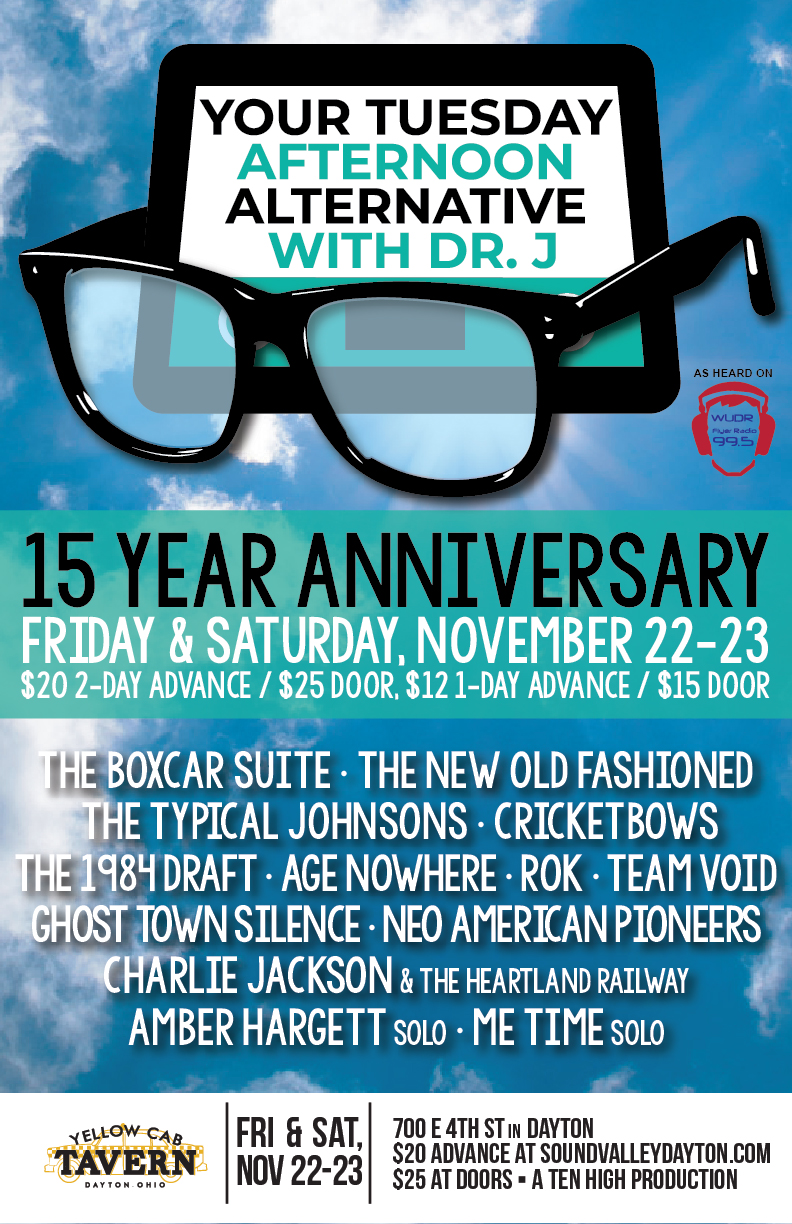
Grooving to the Beat of ‘Your Tuesday Afternoon Alternative’: The 19-Year Sonic Odyssey of a Radio DJ

Nineteen years feels like a long time to do anything. Why do a radio show when no one may be listening?

Let me tell you, being a radio DJ isn’t just a gig; it’s a cosmic voyage into the heart of musical expression and requires more endurance than you think. Just the other day, someone came up to me with ‘Hey, you’re that weird DJ guy!’ To which I answered, ‘Yup.’ And then they said, “Why do a show when you know no one is listening!” And, I stopped short, wondered about whether they were right, and then came to the conclusion that as long as one person finds comfort, as long as one person finds a song that speaks to them – then it matters. We are a community. We stand strong in the face of a destructive tide of avoidance and ignorance of new music. And that’s why I am who I am, standing behind the microphone every Tuesday afternoon, steering the ship that is ‘Your Tuesday Afternoon Alternative.’

If I were to condense 19 years of my life into a single, rhythmic heartbeat, it would be the pulsating cadence of a radio wave, broadcasting stories, music, and dreams to an invisible audience. My journey through college radio has been a dance with the ether, a passionate affair with sound, and a canvas for my creative expression. I invite you to join me on a nostalgic journey through the tapestry of my radio experience.

The Birth of an Odyssey

As the crackling needle touched vinyl for the first time in 1983, I found myself immersed in a world that was both electrifying and liberating. I began doing radio to work on improving my stutter but I also wanted to know more about music. I wanted to comb through the vinyl collection and find records that I had read about but never had the chance to hear. I was hungry for music old and new. College radio at the University of Minnesota was not just a hobby; it was a calling. Like music journalist David Marsh dissecting the nuances of rock lyrics, I dissected the frequencies and wavelengths that carried the voices of generations before me while anxiously awaiting the new music that was to come.

My first show, Radio Artifacts, was from 1983 to 1984 where I truly learned about indie music, Minnesota-based bands, and in so many ways the future of music through bands like R.E.M., Hüsker Dü, The Smiths, U2, The Replacements, The Cure, The Connells, and The Clash. From 1984 to 1988, a new show focused on alternative and college music and the art of music making, the poorly named ‘Art for Artsake’ that was both a play on my first name and — at least to me — a reflection of the mission of the show. During graduate school from 1988 to 1993, I was involved with Bowling Green State Universities’ WBGU where I had a succession of shows whose names were lost to reflections and glimpses of memory. After grad school, I dabbled in radio at WMUB in Oxford, Ohio from 1995 to 2000. For four years I had an itch I could not scratch.

The love of indie and alternative music was something that stayed with me even without a show. But eventually, that itch became unbearable and I started a show “The School of Rock with Dr. J” in 2004 at The University of Dayton’s WUDR. Modeled in some ways on the Jack Black movie — yeah I know: Cue the eye roll. TSOR was an almost didactic approach, I played music that mattered to me and explored current indie, local, and Dayton music. I explored how current unknown and undiscovered music was connected to the music of the past. Several shows explored how The Byrds – The Flying Burrito Brothers – The Eagles – Jason and the Scorchers – Cowpunk – Uncle Tupelo – Son Volt and Wilco were all connected. The airwaves were my playground from which I discovered the richness of independent, alternative, and college music.

During these various shows, I interviewed indie artists and underground bands. College radio was not just about the music; it was about the stories behind the notes. The vibrant community of DJs, producers, and listeners was a testament to the power of shared passion. Just like Dave Marsh in his work united rock aficionados, we united lovers of alternative sounds, forging connections beyond the frequencies.

Nineteen years is a long time to do anything, and within the span of my radio experiences, I have witnessed the tectonic shifts in the audio and radio landscape. College radio stations evolved from humble FM stations to digital juggernauts streaming across the globe. Writers and journalists have chronicled the evolution of rock music, and I chronicled the evolution of radio itself in the changes in my own practice. The use of digital tools has made so much of the “doing of radio” the clicks of buttons and the dragging of files. Many tasks that once involved carts and tape or vinyl were replaced with CDs which in turn were replaced themselves with digital files. The advent of the internet brought a new dawn, expanding our reach but also challenging our authenticity. Is radio still real in the digital age? In an era of Spotify, does radio still matter when you can listen to what you want, when you want, and do it all in the palm of your hand? Why do a radio show when no one might be listening?

The Sonic Shaman

You see, being a radio DJ is more than just “spinning tracks,” It’s more than just “playing music.” It is far more than just clicking a button and dragging a cursor across the soft glow of a computer screen. It’s about conjuring emotions and weaving stories through sound. When I join with the airwaves and internet signals, I am driven by faith in the power of new music. The beauty and the lifeblood of local music call to me. Maybe all of this is some strange and unchangeable part of being a “music evangelist.” Perhaps one becomes a sonic shaman of sorts, guiding listeners through the labyrinthine tapestry of music. Every tune I play carries a piece of my soul, and when those frequencies hit your ears, they transcend mere notes and rhythms. It’s a trip through time and space seeking the person who feels alone with a simple message that they are not disconnected, they matter and the community is better for their contributions.

The Rebel Cry

Lester Bangs, one of the quintessential American rock critics, taught us that music is the language of rebellion. And that’s precisely what I aim to channel with ‘Your Tuesday Afternoon Alternative.’ It’s a rebellion against the mundane, against the homogenized playlists of corporate radio. in my vision of myself, I am like the underground guerrilla fighter, battling the forces of mediocrity with a vinyl arsenal of sonic revolutionaries. Each song I play is a battle cry, a defiant scream against the mainstream. Or at least, that is probably what I really want to believe because, you know, 19 years is a long time.

The Community Connection

Radio is a lifeline to the community, a bridge between disparate souls. ‘Your Tuesday Afternoon Alternative’ is not just a show; it’s a lifeline for misfits, dreamers, and music lovers who still hang tight to the idea that music matters. I’m not just playing records; I’m forging connections. I’m the curator of a sonic underground, bringing people together through the magic of music. When that listener calls in to request a song, it’s more than a request; it’s a statement that says, “I’m part of this, too.” Those moments of connection are more important now than ever before. We need that musical validation: “Look, we are here and the music that speaks to us matters.”

The Quest for Obscurity

Lester Bangs was all about the obscure, the unknown, the raw. I share that passion. My show isn’t about chart-toppers or Billboard hits; it’s about the hidden gems, the indie bands struggling for recognition, the perfect voice that chills us while holding us close and telling us that everything is going to be alright. YTAA is about the beautiful unknowns, the forgotten tracks that deserve a second chance, and the great new songs that need to be heard. I think of myself as a musical archaeologist, digging through archives, near and far, and unearthing sonic treasures. It’s about unearthing the lost voices and forgotten riffs that deserve a place in the sun.

The Journey Continues

So why am I a radio DJ with ‘Your Tuesday Afternoon Alternative’? Why continue to be a DJ even if no one is listening? Because it’s not just a job; it’s a calling, a mission, a cosmic journey through the soundscape of the human experience. It’s a rebellion, a lifeline, and a quest for the obscure. It’s about community, connection, and the never-ending search for that perfect riff, that perfect groove, that unbelievable hit of the drum, that chilling voice that makes you catch your breath. It’s about the song that you cannot forget, no matter how hard you may try. It’s about the perfect lyric that shows you that you are not alone in feeling the way that you do.

Today, as I look back on 19 years of college/indie/alternative radio with YTAA, I see the echoes of countless voices, the resonance of music that touched souls, and the indelible mark it left on my life. David Marsh once wrote, “Rock and roll is an attitude, it’s not a musical form of a strict sort. It’s a way of doing things, of approaching things.” College radio, in my world, was — and is — that attitude – a way of doing things that transcended the mere act of broadcasting. So, yeah, it’s more than pushing a button and just playing a song. I would like to believe that it matters, and if it has meant something to just one person somewhere, anywhere then it was absolutely worth it for me.

Hopefully, this essay has helped chronicle my lifelong journey with college/indie radio – a journey that echoed the rhythms of my heart, shaped my identity, and allowed me to be a storyteller in a world of sound. Just as the radio DJs, Music writers, and journalists of the past contributed words that continue to resonate with music enthusiasts, the memories and experiences of 19 years on the airwaves/internet will forever resonate within me, a testament to the enduring power of radio and the magic of its transmission through time and space.

In the spirit of Lester Bangs, I’ll keep cranking up the volume, diving deep into the musical abyss, and taking you along for the ride. Because ‘Your Tuesday Afternoon Alternative’ is not just a show; it’s an alternative reality, a refuge for the sonic explorers, and a testament to the power of music to change our lives. So, tune in, turn it up, and let’s keep this cosmic journey rolling for as long as we are able to do so.

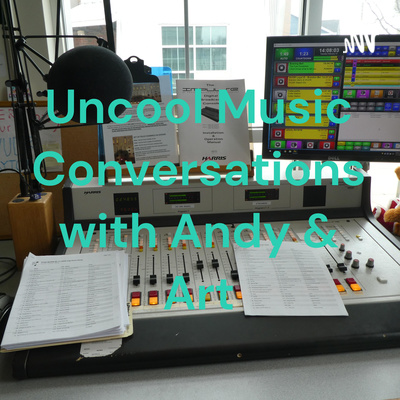
Uncool Music Conversations with Andy & Art

The fabled rock music critic Lester Bangs once wrote that “the only currency in this bankrupt world is what you share with someone when you are uncool.” That idea of sharing your passion as honestly and directly as you can became the basis of a new effort.

Today our first episode of the new podcast ‘Uncool Music Conversations with Andy & Art’ is available at Anchor and Spotify.

The purpose of the podcast is to explore music in deep conversation. Andrew Hunt, the original host of The Local Show on WUDR, and our own Dr. J have been talking about launching a podcast for quite some time. And now we believe that the time is right. The point is to have fun in investigating local music, Dayton music, the music we love and the reason we feel called to that music. These are two nerdy music fans want to find a way to take the necessary time, roll up their sleeves and push themselves to show everyone that music matters and that music chooses you. A podcast gives the opportunity to untangle the complexity that surrounds music and the reasons that we love it so much.

We hope that you will join us in this exploration into the heart of music, song creation and performance.

If you have any interest in being in a future episode of the Uncool Music Convo podcast, please reach out to us! We are on twitter at uncoolmusiccon1 and instagram at uncoolmusicconvo.

YTAA YouTube Channel

Your Tuesday Afternoon Alternative has a YouTube Channel where you can watch past shows, interviews and live performances on #YTAA! Dr. J also adds videos about doing YTAA, his record collection and music! If there is something you wish to see, let us know!

your-tuesday-afternoon-alternative-color copy


Fun with Photos

All pictures courtesy of Gabrielle Elizabeth Studios!  Follow her on twitter at gabrielleboltz and instagram at gabriell.e.lizabeth.