Favorites of 2025: The Kyle Sowashes – Start Making Sense

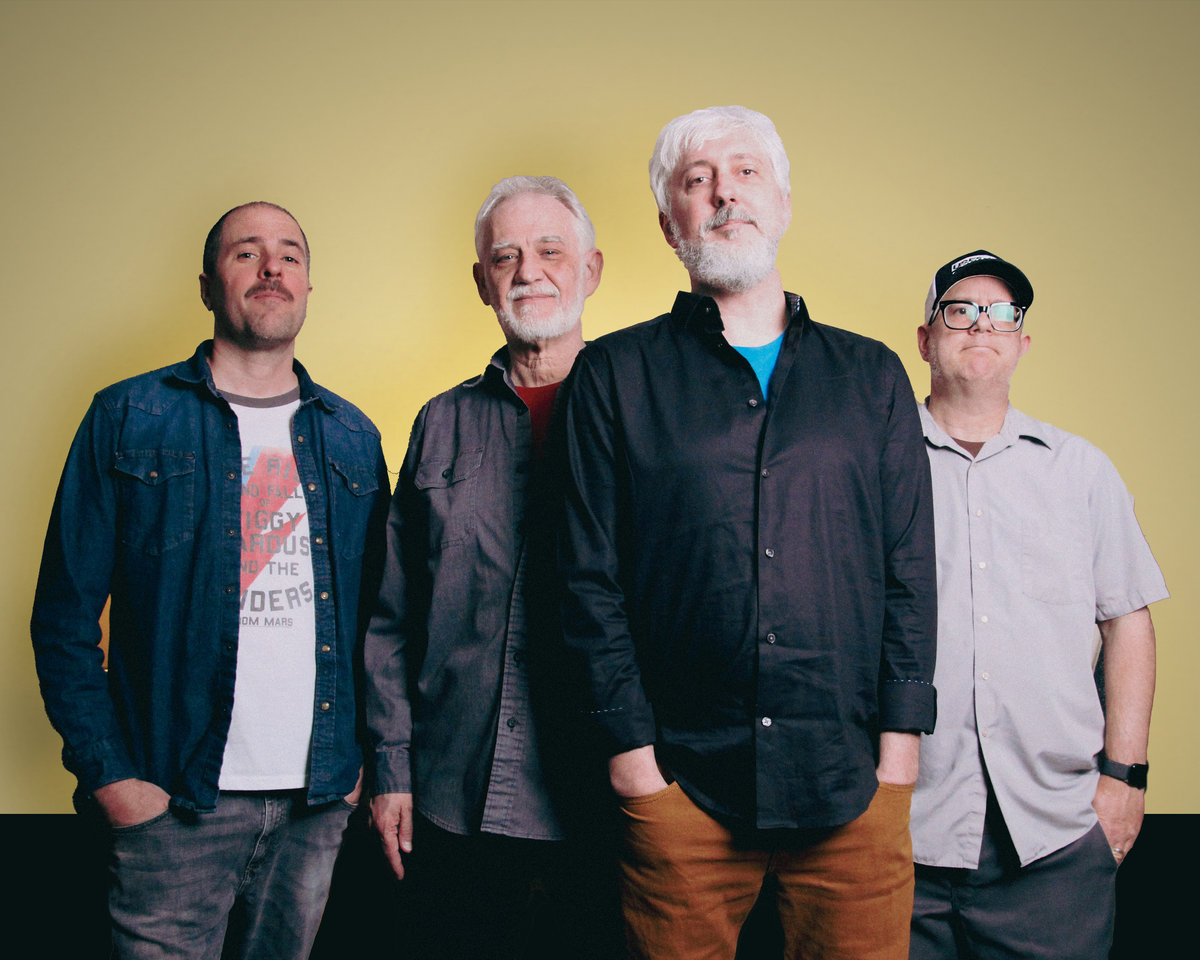
We could have easily titled this column ‘Making Sense of It All: The Kyle Sowashes and the Enduring Power of Indie Rock Honesty,’ because the band’s new record not only showcases their musical growth but also highlights how their plainspoken sincerity continues to resonate in a genre often crowded with irony and affectation.

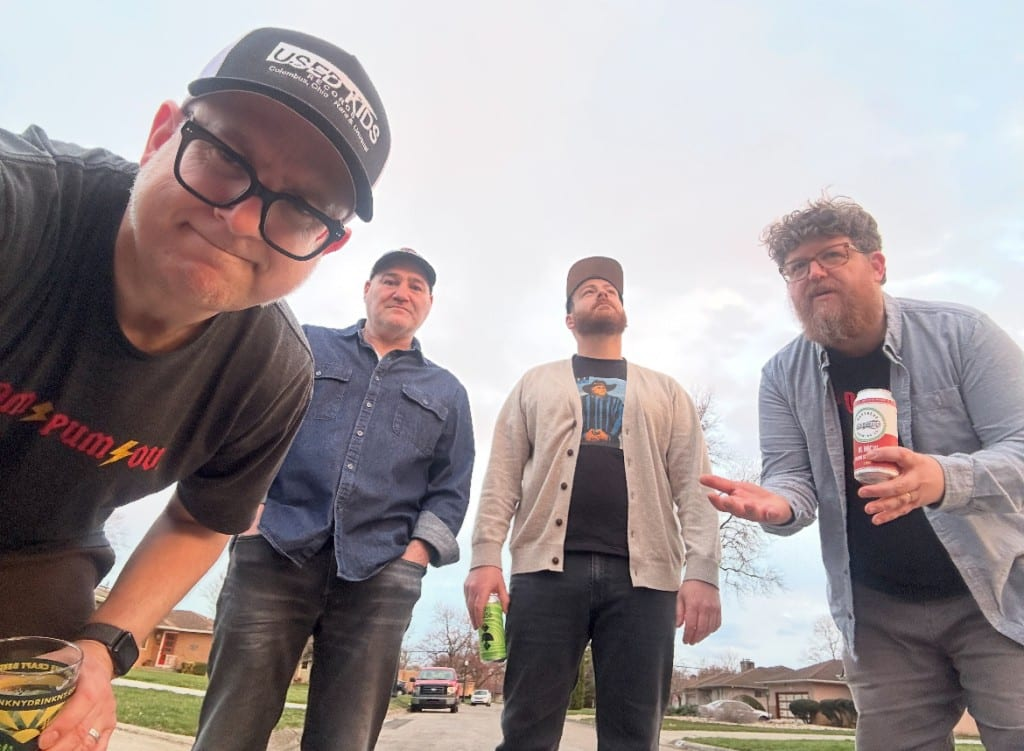
Independent rock has long thrived on the margins—small rooms, frayed gear, and bands that carve out meaning from the ordinary. Few groups embody this spirit as honestly and as energetically as The Kyle Sowashes, the long-running Columbus, Ohio outfit centered around singer, guitarist, and songwriter Kyle Sowash. Their terrific new record, Start Making Sense, feels both like a culmination of years of steady work and a refreshed sense of purpose. It is an album that sounds lived-in yet ambitious, familiar yet surprisingly expansive.

Like so many of their releases, it is driven by a collaborative band spirit, anchored by Sowash’s unmistakable songwriting voice. But on Start Making Sense, the musicians around him play an especially notable role. This is not merely a collection of songs written by a single songwriter—it is a group effort in the best sense, marked by thoughtful arrangements, spirited performances, and a chemistry that can only develop after years of making music together. The result is a record that feels warm, wry, cathartic, and deeply human.

A Band Made of People, Not Parts

The Kyle Sowashes have always been a band that foregrounds musicianship over mythology. No one is placed on a pedestal; every member shapes the sound. On Start Making Sense, the interplay among the musicians is central to what makes the record feel so alive.

At the center, of course, is Kyle Sowash, the principal songwriter, guitarist, and narrator of the band’s emotional landscape. His style has always blended self-deprecation with sincerity, humor with frustration, resignation with hope. He writes songs the way people talk when they’ve stopped trying to impress anyone. That honesty, paired with a gift for sticky melodies and driving chord progressions, continues to anchor the band.

But the supporting cast expands and elevates the material. The rhythm section, always a strength for the group, is especially tight on this release. The basslines give songs bounce and propulsion, while the drumming adds both momentum and nuance—capable of big-room punch but also subtle shifts in tone that mirror Sowash’s lyrical turns. Together they give the album its shape: urgent when needed, contemplative when the songs pull inward.

The guitar arrangements, too, show a band deeply comfortable playing with space. There are moments of noisy celebration, fuzzed-out riffs, and guitar lines that nod to 90s indie rock and power pop without ever feeling derivative. But there is also restraint when the songs call for it—arpeggiated lines, single-note phrases, and open-chord patterns that accent Sowash’s vocal pacing. The band understands when to push and when to stay out of the way, and that mutual sensitivity is one of the record’s quiet triumphs.

All of this makes Start Making Sense feel less like a front-person project and more like a snapshot of a genuine musical community. The band members are collaborators—not session players—and the record reflects that shared vision.

Sound: An Indie Rock Dial Tuned Just Right

The defining pleasure of listening to The Kyle Sowashes is the feeling that the band knows exactly who they are and that they approach their sound not as a limitation but as an expressive engine. Start Making Sense follows this tradition, delivering songs that are rooted in classic indie rock but refreshed through craft, energy, and emotional clarity.

The album’s guitar-forward sound recalls the big-hearted crunch of bands like Superchunk, The Weakerthans, early Guided by Voices, and 90s midwestern basement rock. But The Kyle Sowashes are not imitators. Their tone is warmer, their pacing more deliberate, their hooks more conversational. They capture what it feels like to be a functional adult who still carries adolescent anxieties; what it feels like to want to grow but not always know how.

The production strikes a careful balance. It is clean enough to reveal the band’s tight musicianship but raw enough to preserve the lived-in charm that defines their identity. The vocals are present but never over-polished; the guitars are textured but not overly layered; the drums have a live-room feel that makes even the more introspective songs sound communal.

This approach is particularly effective because Sowash’s songwriting thrives on immediacy. These songs feel like they were meant to be played in small rooms full of people who understand what it’s like to try, fail, and try again. The sonic palette—guitars that jangle and buzz, drums that sprint and shuffle, bass that grounds and guides—mirrors the emotional palette of the songs themselves.

What the Lyrics Reveal: Vulnerability Without Pretension

What has always separated Kyle Sowash from many of his indie rock peers is his ability to write lyrics that feel like real conversations. He avoids metaphors that spin out into abstraction and instead leans on the everyday: the tension between optimism and exhaustion, the mundane rhythms of adulthood, the stubborn persistence of doubt.

On Start Making Sense, the lyrics feel particularly pointed. There is a thematic thread running through the record about wanting to take stock of one’s life, wanting to be better (or at least different), but also feeling the tug of old habits or long-held insecurities. This tension animates the album emotionally.

Sowash wrestles with questions familiar to anyone who has lived long enough to feel the weight of their own decisions:

  • Am I becoming the person I hoped to be?
  • Am I letting people down without realizing it?
  • Is it too late to make meaningful changes?
  • Why does clarity arrive when I am least prepared for it?

And yet, the writing never lapses into self-pity. Sowash has a rare talent for pairing difficult emotions with flashes of humor or casual understatement. His delivery—half earnest, half exasperated—adds to this effect. Even in the most introspective moments, he trusts his audience. He doesn’t sermonize or hide behind dense metaphor. He simply tells the truth as he sees it.

The Album as a Whole: Why Start Making Sense Works

The strength of the record lies not just in its individual songs but in its overall narrative arc. Start Making Sense feels like a journey, not in a conceptual or theatrical sense, but in the emotional progression from beginning to end.

The early tracks tend to have a forward-thrusting, energetic urgency—songs filled with questions, doubts, and attempts to find clarity. As the album unfolds, the pacing shifts: there are moments of introspection, acceptance, humor, resignation, and renewed commitment.

By the final songs, the album arrives somewhere quieter and more grounded. The narrator has not solved everything—far from it—but there is a sense of movement, of incremental progress. And that sense is arguably more meaningful than any dramatic revelation would be.

This emotional pacing mirrors the band’s musical pacing. The guitars pull back when the lyrics sink deeper; the rhythm section tightens when the narrator feels unsettled; the arrangements widen when Sowash leans into hopeful refrains. The band listens to the songs, and the songs reward that attention.

Why They Matter Now

There is something profoundly refreshing about hearing a band like The Kyle Sowashes release a record like Start Making Sense in 2025. In a music culture where so many albums are shaped by algorithms, trends, or online personas, this record feels defiantly human. It is made by musicians who value craft, community, and honesty over spectacle.

Moreover, the themes of Start Making Sense—struggle, ambivalence, small victories, persistent hope—resonate in a cultural moment marked by fatigue and uncertainty. Many listeners will hear echoes of their own lives in the record: the feeling of trying to recalibrate when everything seems slightly off; the desire to “start making sense” of things that once felt straightforward.

The album does not promise transformation or transcendence. Instead, it offers companionship—a reminder that confusion and self-questioning are universal, and that music can help make sense of things even when life does not.

A Career Highlight and a Quiet Triumph

Start Making Sense stands as one of The Kyle Sowashes’ most affecting and best-crafted albums. It blends the energy of earlier records with a deeper emotional palette; it shows a band confident in its identity yet open to growth. The musicianship is sharp, the lyrics are resonant, and the sound manages to be both comfortingly familiar and subtly evolved.

It is not merely a strong indie rock record—it is a document of adulthood, of persistence, of reassessment, of trying again. In its modesty, it finds profundity; in its humor, it finds catharsis; in its unvarnished honesty, it finds connection. For longtime fans, Start Making Sense will feel like a natural and satisfying next chapter. For new listeners, it offers a compelling introduction to a band that has quietly built one of the most sincere bodies of work in Midwestern indie rock. And for everyone, it offers something increasingly rare: a rock album that makes you feel less alone.

A Night at the Altar of Rock: The Tisburys, Super City, and The Laughing Chimes, and the Resurrection of Everything that Matters

My caffeine-fueled thought about last night’s amazing rock and roll show — By a Lapsed Believer Dragged Kicking and Screaming into Rapture at The Spacebar (May 29, 2025) aka Dr. J.

It started with the silence.

Not the good kind—the pregnant pause before the snare cracks or the breath before a chorus explodes—but the stifling, suffocating kind. The kind that crept in during the pandemic and never fully left. The kind that replaced feedback with buffering wheels, pit sweat with couch inertia, and the sacred communion of the club with the sad, soft glow of your phone or laptop screen.

We all said it was temporary. Just a phase. A pause button. But then people stopped going back. Live music—the lifeblood, the altar, the therapy session-meets-street fight that had once given life to every meaningful moment of youth—was suddenly an option, not a necessity. A niche. A “might”, an “interested” instead of a “must.” Streaming replaced sweat. Earbuds replaced speakers. Watching someone strum a guitar in portrait mode while you folded laundry became the sad parody of what used to be a spiritual act.

And yeah, I bought in. Who didn’t? We got older, softer, more afraid. Netflix kept churning, Spotify never ran dry, and the couch never charged a cover. They had my favorite snacks. Maybe we forgot. Or maybe we chose to forget—because remembering what it was like to feel something, shoulder-to-shoulder with strangers, might have been just too much.

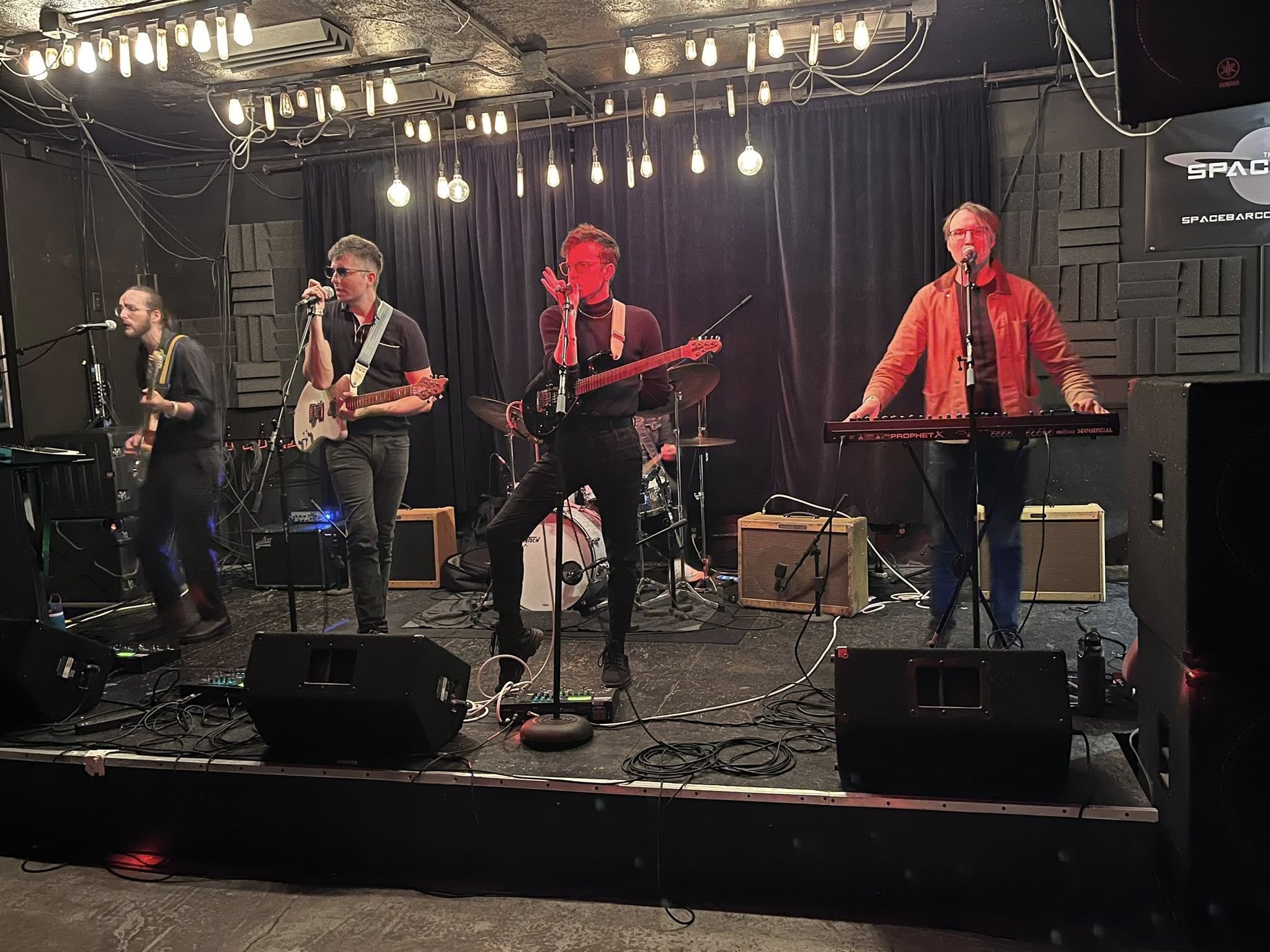
But then, on a random Thursday night in Columbus, Ohio, in a cinderblock joint that still smells like 1994 and regrets, it all came roaring back like a freight train with a grudge. Three bands. A tiny stage. A room. And somewhere in the middle of it all, I found what I didn’t even know I’d lost: the magic.

Maybe we have all been a bit burnt out lately with every morning bringing menace and dread, a thin-skinned attack built on ego, narcissism, and a culture of outrage.

These past few years have felt emotionally scabbed over by years of algorithmic playlists, music discovery if it happens at all is toed strivtly to our personal past choices. And in 2025 so many mainstream limp bands more concerned with brand aesthetics than the beautiful noise of guitar feedback.

Rock and roll has become a ghost in a shaken Polaroid, a relic of denim-scraped memories buried beneath held up poster board ironic mustaches and Instagram filters. The whole thing felt embalmed, pickled, taxidermied—played through boutique pedals and boutique egos, an infinite loop of tasteful mediocrity.

But then came Last Night. One of those nights that swings down from the cosmos like a flaming power chord, grabs you by the lapels, and reminds you why you ever gave a damn in the first place. It happened at The Spacebar in Columbus, Ohio—a cinderblock cathedral tucked between bars, food joints, and a laundromat — the kind of dilapidated storefronts that might still sell VHS tapes or lottery tickets. A venue that smelled of rock and till fightingg for relevance or at least survival. The smell of the grease of good intentions.

The perfect place for resurrection.

Enter Super City.

Super City hit the stage like a lightning bolt fused with a math equation — too tight to be this wild, too wild to be this tight, like if Devo and Thin Lizzy got into a car crash and left the wreckage bleeding glitter and BPMs.

These guys didn’t play songs so much as detonate them, launching off the stage like human fireworks, synchronized like a goddamn robot army but with all the twitchy, unhinged soul of a band that knows every note could be their last. Guitars traded licks like knife-fighters in a Baltimore alley, drums cracked like whips in a circus gone feral, and the whole thing pulsed with that rare, raw urgency—the kind that makes your brain light up and your spine want to sprint straight through the drywall. It was art-damaged rock and roll with a future-funk death wish, a sound so electrified you could taste the ozone in the room.

And hell, the choreography—yes, choreography—but not in some “industry plant showcase” way. No, this was choreography as combat, synchronized movement not to seduce but to bludgeon, to commit to a kinetic madness so complete it looped around into transcendence.

One minute they were locked in like Kraftwerk with heart palpitations, the next they were thrashing their bodies across the stage like the floor was lava and the only salvation was dance. The whole room went from “I don’t know this band” to “I want to join this band” in under three minutes. They didn’t restore your faith in rock and roll—they reminded you that maybe it had evolved into something new, something faster, weirder, sweatier. Something that lives not in the past but right here, right now, sweating all over you in a bar on a Tuesday night like salvation with a tremolo pedal.

And then The Tisburys took the stage.

You ever see a band that walks out looking like maybe they’re just some regular dudes, guys you know, your co-workers at the local record store or your trivia-night competition—and then proceed to absolutely decimate your soul with rock and roll? That’s the Tisburys. They have that thing. The thing you can’t name without sounding like a lunatic or a prophet. The thing that separates the lifers from the LARPers.

From the first note, they tore into their set like a pack of dogs breaking into a butcher shop—joyful chaos, unrelenting passion, the sonic equivalent of smashing glass just to hear the sound. Think Springsteen’s storytelling welded to Big Star’s chiming melancholia, dragged through the gravel of Philly punk grit and splattered with just enough modern neurosis to feel like now. The guitars rang out like church bells for the godless. The rhythm section didn’t just keep time—they commanded it, like Kronos punching the clock with a snarl.

There was one song—title lost to the ecstatic fog of the moment—that built up slow, with this patient, pleading guitar line that felt like someone whispering secrets at the edge of the world. And when it broke? Jesus. It was like the roof lifted six inches and the universe cracked open just wide enough for all of us—sweaty, cynical, slack-jawed—to catch a glimpse of what music is for.

The Laughing Chimes.

Two minutes into their set, I was already sweating through my cynicism. These kids (and yes, kids—the kind that probably still think Hüsker Dü is a weird Scandinavian joke until they learn better) came out swinging with jangle-pop hooks like they’d just stumbled out of a time portal from Athens, Georgia, circa 1985, blinking into the fluorescence with nothing but Rickenbackers and righteous intention. There was no ironic detachment, no arch knowingness—just melodies sharp enough to slice through the smog of apathy I’d been inhaling since 2016.

They played like they meant it. You know what that means? Probably not. Because meaning it is a lost art. Meaning it is standing in front of twenty-something beer-slingers and 40-year-olds wearing Dinosaur Jr. shirts with a rhythm section that gallops like a dog finally let off the leash and singing about small towns, lost dreams, and heartbreaks that aren’t filtered through TikTok.

I felt young. Not “young” like your skincare ad says—you know, dewy and delusional—but young like: I want to start a band tonight and scream into a microphone until the cops come.

By the time The Laughing Chimes slashed through their final number—a feedback-drenched love letter to the Replacements that made me want to punch the air and cry at the same time—I was halfway converted. I could feel the old hunger stirring, the one that used to wake me up at 2 a.m. with a desperate need to play “Radio Free Europe” at bone-rattling volume.

Not money. Not TikTok virality. Not Spotify streams.

Connection. Defiance. Salvation.

And it wasn’t just the bands. It was us, the crowd—pressed together marinated in secondhand dreams, all there for the same unspoken purpose. To feel something real. I saw a guy in a vintage Guided by Voices tee taking it in like a benediction. I saw a girl lean her head on her girlfriend’s shoulder during a bridge that could have melted glaciers. I saw the bartender nodding along in the back like they’d forgotten they were on the clock. Magic. Not sleight-of-hand, not showbiz gloss—but ancient, electric, and utterly earned.

By the end, I was a puddle. Broken down and rebuilt by the raw, gorgeous power of three bands who didn’t need a light show or viral video to get through to me—just guts, melody, and an unshakable belief in the redemptive fire of a great song, played loud, in a room too small to contain it.

I walked out into the Columbus night buzzing like a man struck by divine lightning. My ears rang with the ghost-echoes of feedback and harmony. My body ached in that holy way, the kind you feel after love, surviving a riot, or finally remembering who the hell you are if even for a fleeting moment.

Rock and roll isn’t dead. It’s just waiting for you at a place like The Spacebar, on a night like that, where belief is possible again. Super City, The Tisburys and The Laughing Chimes didn’t just play a show.

They started a revival.

Video of the Day: The Kyle Sowashes – I’m Busy

Love this band! And you should too! No one documents the ups and downs, the tribulations and challenges of everyday life like this band! The Kyle Sowashes from Columbus, Ohio have been making some great indie rock since 2005! Their latest video “I’m Busy” comes from the excellent “I Don’t Know What To Tell You” on Anyway Records. The video includes live footage filmed by Chris Young. Mr Kyle Sowash himself directed this epic piece of cinematography. Well done Kyle!

your-tuesday-afternoon-alternative-color copy