 In our tenth installment of ’11 Questions with…’ column, we are excited to feature Kyleen Downes. She is a gifted songwriter, singer, guitarist, pianist and ukulele player. We want to publicly thank Kyleen for taking the time out of her schedule to answer these questions for us here at YTAA!
Kyleen have been making some of the most open and energetic yet introspective music in the Dayton Music Scene. She has a clever way with words that inspires listeners while not feeling calculated to produce a particular feeling. Kyleen is able to turn a phrase in a way that is direct and welcoming. Her insightfulness allows a listener to see themselves and their experiences cast with an unfailing honest optimism and generosity of spirit that opens the heart.
 Kyleen has been making music since 2009 when she took inspiration from the social bond of those involved in the Dayton music community. This sense of attachment and commitment led to 2016’s ‘Maybe Sometimes.’ This first collection of songs from Kyleen demonstrate her range as both a vocalist and multi-instrumentalist. The seven songs on this album stretch across a continuum of personal reflection (‘Things Change‘) to the accessible optimism of finding those splendid moments with those you care about (‘Perfect Ending‘) and the percussive staccato of ‘Talk Like You Don’t Know‘.
 Kyleen’s next record in 2018 was the enthusiastic ‘Friends‘ EP. Kicking off with the driving ‘Exhale‘ and then flowing into the rocker ‘And So It Goes.’ An excellent One-Two punch. The upbeat attitude on ‘Goes‘ pulls one into a happy space. The next two songs, the confessional ‘Six Years‘ and imaginative ‘In Dreams‘, showcase creative guitar work and inventive lyrics. The album demonstrates her humor and continuing evolution as a songwriter. ‘Friends‘ marks Kyleen’s collaboration with producer extraordinaire Patrick Himes. Himes’ analog approach to recording allows the songwriting to stand on its own in a way that digital recording all too often interferes with. Instead of approaching recording the music in an overly serious manner or in a heavy handed way, Downes and Himes establish an accessible palette that still explores deep and real emotion. The delightfulness of the album is a strength. The partnership with Himes will lead her to the most recent album ‘Come On Sit Down.’
 Come On Sit Down opens with the community jam ‘Give Up The Ghost.’ The handclaps and percussion drive this sing along! The next song, the single, ‘Last Drop‘ demonstrates the strength of Kyleen and her band. They can move across genres, styles and arrangements surprisingly easily without feeling contrived. Authenticity is a rare pleasure in popular music. Kyleen’s background in music and as a guitar teacher/instructor are consistently illustrated on this record. The background vocals from a Dayton Power trio of vocalists — Khrys Blank, Amber Hargett and Heather Redman elevate ‘Last Drop‘ into a remarkably evocative ending. ‘All My Life‘ leads the record into personal reflection which is then followed by the poppy ‘Keep Your Ways.’ ‘Tiny Little Table‘ courses with an electricity and humor that are distinctive to Kyleen Downes. The album closes with the meditation on thankfulness of ‘In The Dark.’ Consistently, Kyleen’s lyrics are descriptive, accessible and deeply affecting. If you have had the opportunity to see her perform, you know that Kyleen’s stage presence is charismatic.
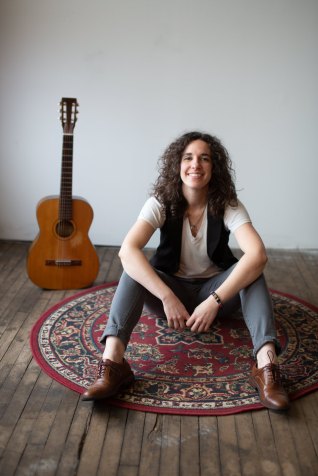 Dr. J: What can you share with us about when and how you started writing your latest album Come On Sit Down?
Kyleen Downes (KD): I had written a few new songs in 2018 and started working on them with the band. I booked some studio time in November of 2018 and unfortunately, the band hadn’t had enough rehearsal prior to going into the studio.
I went to the studio solo and brought in two low-key songs, In the Dark and All My Life. I had initially thought of releasing a few singles but once the band started recording in 2019, the song list began to grow. So I figured I’d hold out and do a big sha-bang of a full length LP to be released on vinyl (a first for me!) I really liked the idea of combining songs I worked on with the band, with the songs that I fleshed out in the studio with just myself and my producer Patrick Himes.
Dr. J: You worked closely with Patrick Himes at Reel Love Recording Company here in Dayton, Ohio, what led to your recording with Patrick?
KD: Patrick reached out to me several years ago, just to say hi and introduce himself. Which is a great example of just how cool Dayton musicians are! I knew of his work through Paige Beller when he worked on her live album, Live and a Person. After seeing her show and hearing that recording, I knew once I had material to record I wanted to work with him. It’s an added bonus that he records analog, or to tape, because that was a new experience I wanted to try!
Dr. J: ‘Myself’ is a personal favorite, so I am curious about it. The song is compelling and driving musically. Yet the lyrics seem to address loneliness. Did you set out to address the concerns and challenges of human connection when starting to work on that song?
KD: I really appreciate the thoughtfulness of this question, it’s almost like you knew my state of mind when I wrote it! I was spending a lot of time by myself and with my thoughts. Even after spending time with others I was coming home to just me. I had recently gone through a very challenging separation after a long relationship. I was desperately trying to find security within myself, because I was realizing how it can be unhealthy to have it only come from someone else.
Dr. J: All My Life also addresses other connection – is that a correct interpretation of some of the lyrics and feel of the song? In addition, if that is correct, did you intend to address connection, love, and relationships or did the song evolve in that direction over time?
KD: That song came out of strumming chords in waltz time, which I wonder if that made me feel a certain sweetness about it when the lyrics started to flow. It’s definitely rooted in the sense of connection you feel when you realize you’ve longed for a certain feeling all your life and now that you have it, you must not take it for granted.
Dr. J: How did Myself come together musically for you?
KD: Funny enough, it came to life after opening my front door and hearing a melodic squeak from the hinge. I hummed it and went down to my basement to harmonize it on the guitar. Then I let the lyrics flow. I was so caught up in this song, I wrote some of it while sitting in my personal finance class, haha! The song was originally an acoustic song, but when I was prepping to take it into the studio, I really wanted to play around with amping it up. I started by playing it on the electric guitar and then adding some guitar parts. I heard a song on the radio one day and used that for my drum inspiration. I’ll be honest, it still feels like a puzzle to me, so I’m really happy to hear it resonates with you!
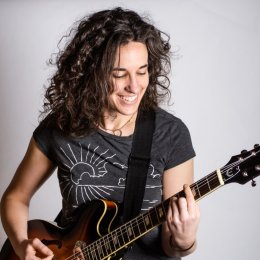 Dr. J: Where do you often derive inspiration to make music?
KD: Through listening to music. As a kid, I loved singing a catchy song or letting music transport my daydreams. Then once I started playing guitar, the sound of it inspired me to create different musical ideas. So often, I will come up with an idea after or while listening to music. If I connect with the vibe, I like to channel my own version of it. And undoubtedly if there is a guitar in my hands, I end up playing something that catches my ear and I want to start fleshing it out (which can sometimes lead to late bedtimes, ha ha!)
Dr. J: How would you describe the music that you typically create? How has that process evolved or changed over time (especially as you think about your journey from Friends to Come On Sit Down)?
KD: I describe my music as sonically approachable. As I’ve progressed, I’m getting more comfortable with taking risks and I feel/hope my music has become a little more candid since the beginning of my journey.
Dr. J: What is next for you musically? How would you describe your thoughts at this point for your next project after Come On Sit Down?
KD: I have several thoughts on future projects BUT I know I need to focus on the material first. There are several songs I am excited to finish. I think once the music comes to life, the projects will reveal themselves more clearly. I’ve also lost a few songs along the way because they get pushed aside once a project starts. I plan on finding them though! (They may have fallen under my couch, who knows!?)
Dr. J: What is your favorite song to perform? What makes it a current favorite in your
performances?
KD: I LOVE performing Tiny Little Table, it has SO much fun guitar stuff. I have a looper pedal which allows me to layer different guitar riffs and solo. I use my looper to harmonize vocals as well, which is a new skill for me. When I am playing with my band, Six Years will forever energize and empower me!
Dr. J: What is one message you would hope that listeners find in the unique nature of your latest music?
KD: We are all human and we are only human.
Dr. J: As a musician, how are you adapting to the challenges of the Coronavirus?
KD: I’ve taken this forced downtime to put effort into my website, creating a virtual store, and performing some livestream shows. I’ve learned a lot about the different technology available that can help me be more creative and produce new content. I’ve also been maintaining a consistent newsletter. I used to get so overwhelmed about writing a newsletter, but now I’m so happy about being able to engage with people, it’s become a fun part of my month!
You can follow Kyleen Downes on various social media including:
Facebook Twitter at @KyleenDownes Instagram at KyleenDownes
 We want to extend our sincere gratitude to Kyleen for answering our questions and continuing to make some really excellent music! Click on the links throughout the article to visit Kyleen’s Bandcamp page! If any musicians or artists would like to participate in future ’11 Questions’ columns, please feel free to email us at drjytaa@gmail.com. All photos and images courtesy of Kyleen Downes and Gary Mitchell.


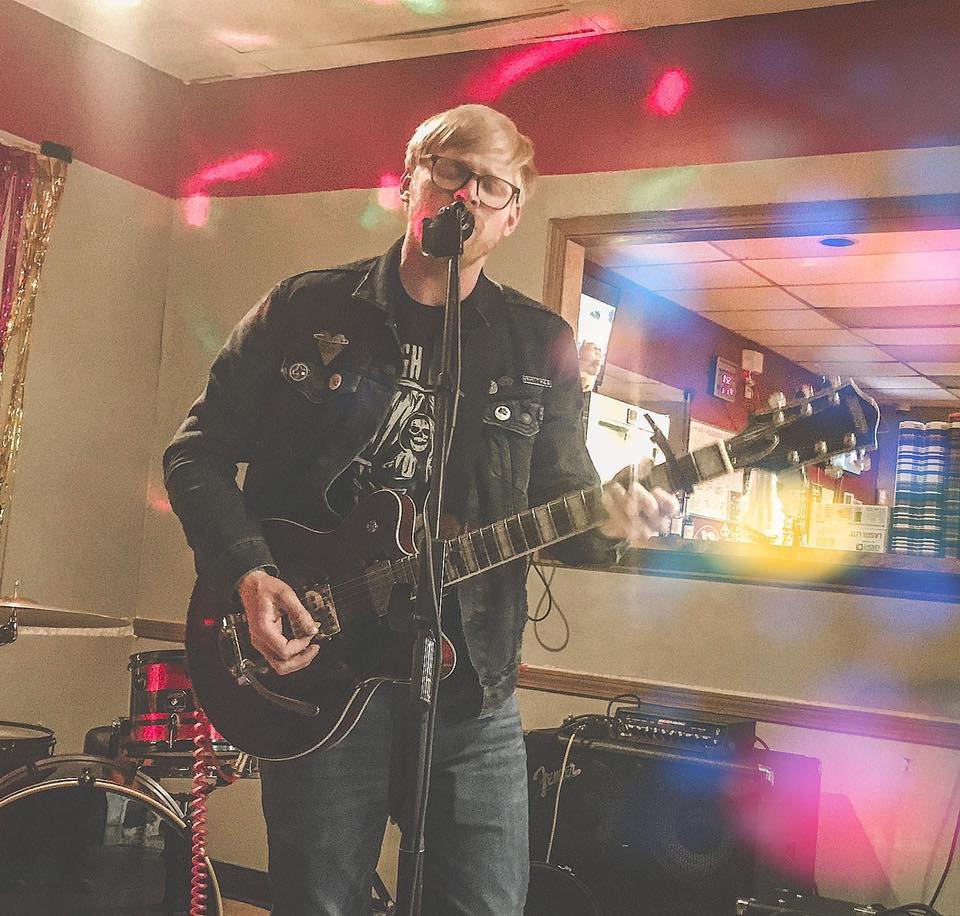


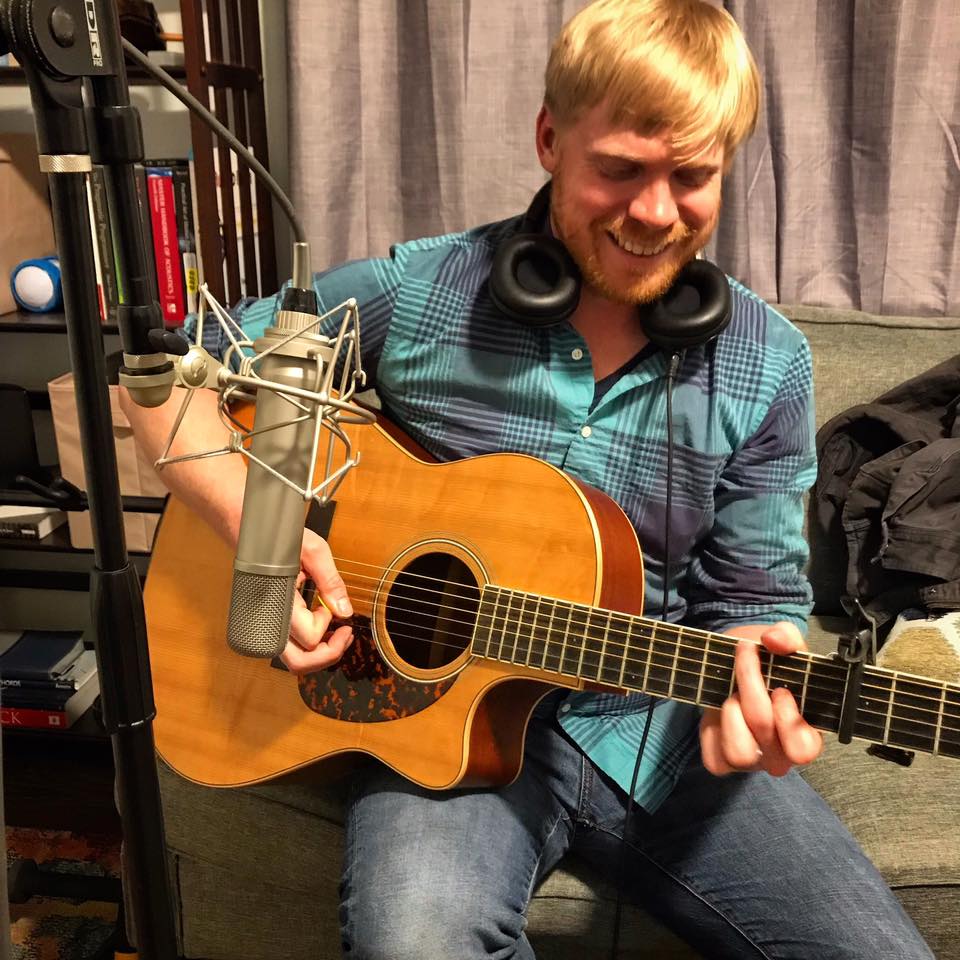

 The band has been incredibly active from 2005 – 2019, releasing several excellent Midwestern indie rock album including the fantastic On The Way to the Punchline, the powerfully inventive Woodpecker Paradise and the amazingly accessible and catchy, Disco Maroon. In a just musical world (do not hold your breath waiting!), Disco Maroon would have produced top 40 singles with ‘Hang Up’ and ‘My Little Crowd Pleaser.’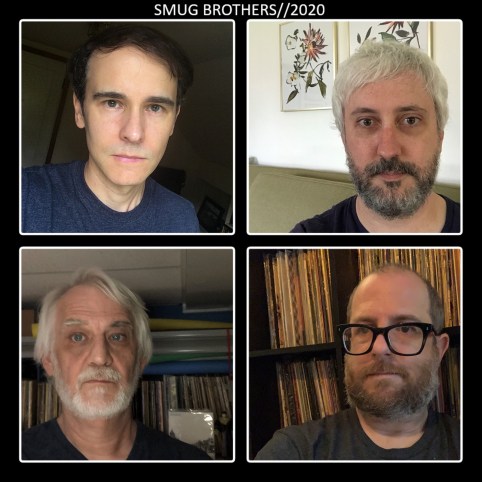
 Dr. J: What can you share with us about when and how you started writing the latest album Room Of The Year?
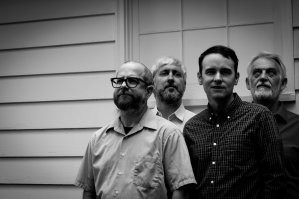 so comfortable using without asking what it means to be so dependent. I am thinking Radiator One, Good To Know Your Axis and Freshman Zephyr lyrically raise questions about technology. Would you say that is accurate? What themes were you addressing?
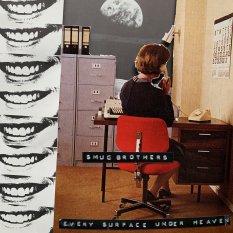 Dr. J: How would you describe the music that you typically create? How has that process evolved or changed over time (especially as you think about your journey from Attic Harvest to Serve A Thirsty Moon to Flame Verbatim and Room of the Year)?
 KM: Not playing shows has been a real bummer this year. First year since I started playing in bands in 1992 that I won’t do a single gig. But there’s always time to work on music and I’m grateful the four of us figured out how to work remotely to keep the ball moving. I miss “the Brothers,” but we did a Zoom call recently just to have a hang. That’s what band practice is like in 2020.

 Dr. J: What can you share with us about when and how you started writing your latest released song, “
 Dr. J: A previous song “
 Dr. J: How would you describe the music that you typically create? How has that process evolved or changed over time (especially as you think about your journey from the album “
 KW: I’m spending time working on myself. It’s leveled the playing field – No one can tour. We only have our songs now. I’m honing my craft and trying to elevate my work so it’s more than just noise. I think you have to practice being honest with yourself, and this is one of those difficult times when no one can really ‘look away’ we can only look at the problems we’ve created for ourselves as a society. I don’t like saying that we’re going to ‘get a lot of good art out of this (quarantine/the COVID crisis)’ because artists are under the same kind of pressure everyone else is, and our industry was collapsing years before COVID. Touring was one of the last ways musicians could make money. Artists can’t survive on streaming royalties- please directly support the artists that you like if you want them to continue making music. Between the death of album sales and now touring, we sure could use a break. I just want to survive this in more ways than one.
 Dr. J: What can you share with us about when and how you both started recording your latest record,
  Dr. J: You have worked closely with Patrick Himes at
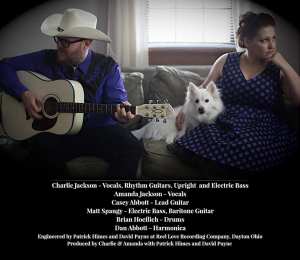
  Dr. J: The King & Queen of Dayton Country is a very different record than E.P. and Charlie Jackson and the Heartland Railway, how do these records compare? What influenced your work on each of them?
 Dr. J: ‘Call This Home’ – the first single from The King & Queen of Dayton Country – addresses forms of love and support that someone finds at home – is that a correct interpretation of the title? If that is correct, did you intend to address how difficult it is to make a loving home or did the song evolve in that direction over time?
 CJ: I can draw inspiration from just about anywhere, but my biggest muse has definitely always been Amanda. In the love songs (even if they aren’t autobiographical) I use her as the focal point of the love itself. For the sad songs and the heartbreak songs I recall back to our times apart in the rockier years of our early relationship, or I look at what I now know I would be missing out on if that love wasn’t there. Now, with this new level where I’m writing songs about her and for her to sing, she’s even more of a muse than she already was. Not just lyrically, but even the way I arrange the music revolves more around her. I write in keys that showcase her as much as possible. When I can coax her out of her shyness and get her to sing out, especially in her higher register, she has this natural vibrato in her voice that is just beautiful.
 Dr. J: How would you describe the music that you typically create? How has that process evolved or changed over time (especially as you think about your journey from These Days to Charlie Jackson and the Heartland Railway to The King & Queen of Dayton Country)?
 Dr. J: What is next for you musically? Do you have plans to record again with The Heartland Railway? How would you describe your thoughts at this point for your next project?
 Dr. J: What is your favorite song to perform with Amanda? What is your favorite song to perform with the Heartland Railway? What makes it a current favorite in your performances? Do you enjoy Live Streaming?
 Dr. J: What is one message you would hope that listeners find in the unique nature of your latest music?
 Most recently he has released an EP of local music covers with his partner Heather Redman called ‘Stay at Home‘. Their two voices glide and slide along as if they have been singing together their entire lives. Listening to their interpretation of these songs is a joy.
 DP: Well, The New Old-Fashioned started recording with Patrick back in 2011 or 2012. I had met Patrick back in 2006 and was a big fan of his old band, Flyaway Minion. By the time TNOF was ready to start recording, Patrick had relocated to Nashville and was running the studio down there. I heard he was looking for bands to record and it seemed like a really good fit for what we were doing. I was a big fan of his previous work like the Minion records and
  The other most important thing I learned from Patrick is that we can make classic sounding records the way our heroes did. Modern recording is very convenient and while I think that’s mostly a good thing, it’s easy for the romanticism of making records to get lost in the convenience. Everyone has their own way of making records and every way is valid, but the way we make records at Reel Love helps capture all the things I enjoy about making records. I’ve been very fortunate to be able to work with and study under Patrick. He’s taught we almost every thing I know about making records, which has become something I’m very passionate about. I’m forever grateful for that.
 Dr. J: How would you describe the music that you typically create? How has that process evolved or changed over time (especially as you think about your journey from Cheaper than Therapy to Orange Glow to Stay Home)?
 We’re almost done with the next New Old-Fashioned record which is a companion EP to our last record, Smalltown, Midwest, USA. It’s a couple songs from those sessions and a couple new ones. We’re excited to get it out, whenever it seems appropriate to do so, I guess. Kinda hard to know what to do right now.
 Dr. J: What is one message you would hope that listeners find in the unique nature of your latest music?
 My entire identity has been wrapped up in being a musician, performer, and songwriter since the moment I got my first guitar. It’s all I’ve ever wanted to do. So, I guess I’ve been going through a bit of an identity crises trying to figure out who I am outside of music.


 MB: Absolutely. I wanted to write a Bob Pollard song. If you listen to the song again, you’ll notice it has no chorus. Part of that was a mild form of protest against “the music business”… so much of the advice that gets thrown at songwriters takes the form of someone saying “don’t bore us, get to the chorus”… First, if someone is bored because the chorus didn’t happen during the first 20 to 30 seconds of a song, thta’s not a person that I think I want to be listening to my music. Second, how about no chorus at all then? The structure of the song is A A B C. There are plenty of Guided By Voices songs that are quite brief and have no chorus, but they’re catchy anyway. With that in mind, part of this was definitely meant as a form of admiration for Bob and his work, I kind of hope he hears it someday. I like to imagine it as a GBV song, and I can kind of see Bob doing that little hopping dance he does. The outro is heavily influenced by Fountains Of Wayne. That lead riff is played on guitar, but it could just as easily have been played on synth, after all, I wrote it on a piano. You’ll find some synth leads in their catalog. I also wanted a bunch of harmony vocals in there, which you’ll hear all over Fountains Of Wayne songs. All of the above to say that I wanted to take some of the things from these specific influences, but end up with a song that still sounds like ME, and I think we were able to get that done.
 Dr. J: How did the song come together musically for you?
 Dr. J: How would you describe the music that you typically create? How has that process evolved or changed over time (especially as you think about your journey from
  Dr. J: What is next for you musically? How would you describe your thoughts at this point for your next project after


 SC: Micah recorded the first and self-titled Seth Canan & The Carriers album as well as our single for ‘
 Dr. J: Keep Some Light is a meaningful song for all of us dealing with challenges; did you set out to address the concerns and challenges of everyday life when starting to work on that song?
 Dr. J: Where do you often derive inspiration to make music?
 More recently, Amber has finished a new song, Painting Pictures, that addresses several important features of the calling to create music and art. We want to extend our deep appreciation for Amber for answering these questions!
 Dr. J:
  Dr. J: How did the song come together musically for you? I began with writing lines that would fit the cadence of the last line of each verse, and then worked backwards to create a “character” for each segment of the song.
 Dr. J: What is next for you musically? How would you describe your thoughts at this point for your next project after Painting Pictures?
 in advertising and branding (in my past life) to promote myself and the new music. I eternally loathe this part of being an artist. But, the quarantine did offer me time to get an

 your tuesday afternoon alternative