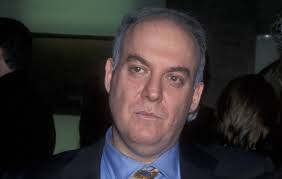
We should all see Howie Klein as one of the rare suits who never really became a suit at all: a true believer who smuggled punk, new wave, moral panic, and messy joy into the executive offices. Lester Bangs, who saw music-label executives as the enemy, would have trusted Klein because Klein trusted noise, contradiction, and artists who scared the right people. In Bangs’s universe, that made Klein less an industry man than a necessary co-conspirator—someone who understood that rock and roll only mattered when it refused to behave.
In the history of popular music, influence is often measured by hits, chart positions, or stadium tours. But some of the most consequential figures operate far from the spotlight, shaping the conditions that allow music—and musicians—to matter. Howie Klein, who died in December 2025 at the age of 77, was one such figure. He was not a performer, nor a household name to casual listeners. Yet his impact on popular music, especially from the late 1970s through the 1990s, was profound. As a radio DJ, independent label founder, major-label executive, and free-speech advocate, Klein helped bring punk, new wave, and alternative music into the mainstream while insisting that artistic freedom was not merely a marketing slogan but a civic value. Klein’s career offers a revealing lens into how popular music evolved during a period of intense cultural change—and how the industry’s internal battles over creativity, commerce, and censorship mirrored larger political struggles.
Klein’s career offers a revealing lens into how popular music evolved during a period of intense cultural change—and how the industry’s internal battles over creativity, commerce, and censorship mirrored larger political struggles.
From campus concerts to counterculture radio
Born Howard Klein in Brooklyn in 1948, Klein came of age as rock music was becoming both a mass medium and a site of generational conflict. While studying at Stony Brook University in the late 1960s, he immersed himself in music journalism and concert promotion. As a student, he helped bring artists such as Jimi Hendrix, Janis Joplin, the Doors, Pink Floyd, and the Who to campus—an early indication of his instinct for recognizing music that was pushing boundaries.
This formative period mattered. The late 1960s were not only a high point of musical experimentation but also a moment when music and politics were deeply intertwined. Klein absorbed the idea that popular music could challenge authority, expand cultural horizons, and create communities of dissent—an idea that would guide his work for decades.
After spending time abroad, Klein settled in San Francisco in the 1970s, a city then reinventing itself musically. The psychedelic era was fading, and a rawer, more confrontational sound was emerging. As a DJ at KSAN-FM, Klein hosted one of the earliest American radio programs dedicated to punk rock and new wave. At a time when such music was often dismissed as noise or nihilism, his show gave airtime—and legitimacy—to artists like the Sex Pistols, Iggy Pop, Devo, and other early punk innovators.
Radio, in this context, was not just a promotional tool. It was a cultural gateway. Klein’s programming helped translate a subcultural movement into something legible to a broader audience, without sanding down its edges.
415 Records and the logic of independence
In 1978, Klein co-founded 415 Records, an independent label named after San Francisco’s area code. The label embodied the do-it-yourself ethos of the punk era while operating with a keen awareness of the industry’s mechanics. 415 signed and developed bands such as Romeo Void, Translator, the Nuns, and the Units—artists who captured the tension of late-1970s urban life with angular guitars, synthesizers, and politically charged lyrics.
While 415 Records never rivaled the major labels in scale, its significance lay elsewhere. It demonstrated that independent labels could serve as incubators for innovation, nurturing artists who might later cross over into the mainstream. When 415 eventually entered a distribution deal with Columbia Records, it reflected a broader shift in the music business: the growing recognition that underground scenes were not threats to commercial music but its future.
Klein’s experience at 415 prepared him for a larger stage, but it did not diminish his skepticism toward corporate control. He remained committed to the idea that labels should serve artists, not the other way around.
Inside the majors: Sire and Reprise
Klein joined Sire Records in 1987, a label already known for bridging the underground and the mainstream. Sire’s roster included artists such as Talking Heads, the Ramones, and Depeche Mode—acts that had once been marginal but were now reshaping popular music. Klein fit naturally into this environment, bringing with him a sensibility formed in radio booths and independent offices rather than boardrooms.
In 1989, he was appointed president of Reprise Records, a Warner Music imprint with a storied history. During his tenure, which lasted until 2001, Klein oversaw releases by an extraordinarily diverse group of artists, including Neil Young, Lou Reed, Green Day, Alanis Morissette, Eric Clapton, Fleetwood Mac, Talking Heads, and The Ramones.
What distinguished Klein was not simply the commercial success of these artists—though many achieved it—but his reputation for protecting creative autonomy. At a time when consolidation was intensifying within the music industry, he resisted the pressure to reduce artists to demographic niches or short-term profit centers. Musicians frequently described him as an executive who listened, trusted, and intervened only when necessary.
This approach paid dividends. Albums like Green Day’s Dookie and Alanis Morissette’s Jagged Little Pill did more than sell millions of copies; they brought alternative and confessional voices into the center of popular culture. Klein understood that authenticity, even when messy or confrontational, could resonate more deeply than formula.
Music, censorship, and the politics of expression
Klein’s influence extended beyond artist development into the political arena. During the late 1980s and early 1990s, the American music industry became a battleground over censorship, most visibly in debates sparked by the Parents Music Resource Center (PMRC) and the introduction of “Parental Advisory” labels.
Unlike many executives who treated the controversy as a public relations problem, Klein framed it as a civil liberties issue. He argued that efforts to regulate lyrical content were less about protecting children than about disciplining dissent and reinforcing cultural hierarchies. Music, in his view, was an extension of free speech—and therefore deserving of the same constitutional protections.
His activism connected him to organizations such as the American Civil Liberties Union, which later recognized him with awards for his defense of free expression. He also played a role in Rock the Vote, a nonpartisan initiative aimed at encouraging young people—many mobilized through music culture—to participate in democratic life.
These commitments were not tangential to Klein’s work in music. They reflected a consistent philosophy: that popular culture shapes political consciousness, and that restricting artistic expression ultimately weakens democratic society.
A legacy beyond the charts
Howie Klein died on December 24, 2025, after battling pancreatic cancer. Tributes from musicians, journalists, and activists emphasized not only his professional accomplishments but his moral clarity. In an industry often caricatured as cynical or exploitative, Klein was remembered as someone who believed in music as a public good.
His career helps explain how punk and alternative music moved from the margins to the mainstream without entirely losing their critical edge. It also illuminates the role that behind-the-scenes figures play in determining which voices are amplified and which are silenced.
At a moment when debates over censorship, corporate consolidation, and cultural polarization are once again intensifying, Klein’s example feels newly relevant. He understood that popular music is never just entertainment. It is a space where power, identity, and freedom collide—and where the choices made by executives, programmers, and advocates can have consequences far beyond the record store or streaming chart.
In that sense, Howie Klein’s legacy is not only musical. It is civic. He believed that defending artists was inseparable from defending democracy itself, and he spent a lifetime acting on that belief.


 your tuesday afternoon alternative