Questions with… Sarah Rudy

One of the benefits of doing a radio show is the opportunity to explore music with musicians who make incredible art. To sweeten the pot, the chance to interview musicians who write genuine songs that speak to you as a person is a gift. When Sarah Rudy who records as Hello June, agreed to answer some of our questions, we were overjoyed. Hello June’s ‘Artifacts’ was our top pick for album of the year in 2023 which was a rich year for music. What especially moves us is the authenticity of the music that Hello June creates.

The power of authentic music lies in its ability to transcend barriers, evoke emotions, and create connections that resonate deeply within individuals and communities. Sar Rudy possesses an incredible ability to create music that does exactly that. Authentic music, born from genuine expression and sincerity, possesses a unique capacity to speak to the human experience in profound ways. And this is deeply needed.

One of the most striking aspects of authentic music is its ability to communicate universal emotions without feeling false, fake or unreal. Regardless of language or cultural background, the raw honesty and genuine expression found in authentic music can touch the hearts of listeners wherever they might live. Whether it’s a quiet – yet powerful – ballad like ‘Napkin’ or ‘The Moon’, or a spiritual folk tune ‘Soft Love’, or a passionate rock anthem ‘Faded Blue’, ’23’, or ‘California’, authentic music made by musicians who themselves feel what they are playing has a way of tapping into shared feelings of love, loss, joy, and longing, fostering empathy and understanding among people from diverse walks of life. We all have all felt this way. And the music of Hello June, carries all of those characteristics and even more.

Moreover, Hello June‘s authentic music serves as a powerful tool for cultural preservation and expression. Through reinterpretation of traditional songs ‘Country Roads’, gorgeous guitar tone ‘California’ and ‘No Easy Answer’, and incredible melodies — the whole record! — artists preserve their experience, heritage, pass down personally meaningful stories, and celebrate their unique identities. Authentic music becomes a vessel through which cultural narratives are woven, ensuring that rich histories and traditions that do receive the favored celebrations of an ever decreasing set of themes in the mainstream music industry are not lost to time but instead are celebrated and cherished for generations to come.

In addition to its cultural significance, authentic music has the power to inspire and provoke change. As listeners we are changed when we hear this music. A whisper — ‘Country Roads’, ‘Soft Love,’ ‘The Moon’ — can be as powerful as the loudest cry in the mix of hope and despair — ‘California,’ ‘No Easy Answer’. A protest song does not always require a message to fuel social movements with anthems of resilience and hope in the face of adversity, that can be accomplished within a deeply personal statement as well. Music has historically played a pivotal role in driving social and political change. Through its ability to rally people around common experience and ignite a sense of solidarity from the ebbs and flows of pain, authentic music becomes a catalyst for action at all levels, challenging the status quo and advocating for a better world, even if the focus is in your neighborhood or your home.

Dr. J: What can you share with us about when and how you started writing music?

Sarah Rudy (SR): I started to learn to play guitar in high school, but I wasn’t truly focusing on the act of songwriting yet. It wasn’t until college, where I spent a lot of time exploring with different artistic mediums and experimenting with different forms of creating. This is where I started to really feel an affinity towards writing songs.

Dr. J: What first led to your recording music? How do you approach production?

SR: I started to craft songs on the GarageBand DAW (Digital Audio Workstation) about the same time I started writing. Using a DAW in my workflow made sense, even at that point, because I wanted to work out fairly full arrangements. I wasn’t happy with just writing the bones of the song – I needed to feel the environment that song created. I guess my thought with this has always been that if I can’t get the song to “feel right” in physical space, I wouldn’t want it released. These days, I’ve found that my process is less of a rush to the production phase of things.

For me, the daw has been an integral part of my writing, but when it comes to recording an album, I’ve let others steer the ship. I’ve loved each studio experience I’ve had, but Ive learned so much that I can’t imagine giving up that much creative control on the next one. For the next releases, I plan to record those here in our studio and I plan on pulling in some good musician/engineering friends as needed. With the next releases, I want the recordings to be as vulnerable and closeup as they can be and I feel like it’s my job to figure out how to get there.

Dr. J: The song ‘California’ captures a remarkable constellation of musical influences. The song seems to have an almost 1980s feel. Is that a correct interpretation? If that is correct, did you intend to create a song that connects to that time period? If that is not correct, how would you describe the feeling of the song?

SR: I wanted the song to have a “nostalgic” feel – that was my main goal, tone-wise. I wanted California to capture the feeling of charged love – the kind that feels exciting and scary. In order to write the song, I really needed to take myself back to the “me” that existed in my 20s. I wanted the song to capture a certain hue/tone/light – I love that it takes you back to a particular place.

Dr. J: Where do you often derive inspiration to make music?

SR: I like to be completely focused, immersed, and filled up by the things I’m working on. If there is a thought, a line, a feeling, anything that sparks something in me that makes me tilt my head or feel a bit of magic, I usually feel inclined to chase it. I have found though, that the hardest thing is pulling inspiration from an anxious or avoidant mind, so in order to allow myself the freedom to create, I try to practice self awareness and allow myself the grace to come back to an idea if my mind/body isn’t in a favorable state to produce something meaningful. In terms of what I’m writing about lately – this week I’ve written a song that nods back to a time in my childhood and another one about feeling sort of feeling like an outsider. I guess I’m always just trying to process the thoughts that go through my mind.

Dr. J: How would you describe the music that you create? How has that process evolved or changed over time (especially as you think about your journey in the last few years)?

SR: Hmmm – great question. I usually tell people that we are an “indie rock band” that has been accepted in the Americana crowds. Live, we like to get down really soft and vulnerable and we like to bring the volume up just as heavy in those big parts. I love to marinate in the details of ambient sound, so that aspect usually isn’t too far away. I try to write songs that heal my head because i do feel like we’re all sharing around ideas and latching onto the ones that resonate with us. I guess I just hope that I get a chance to resonate with the right people.

Dr. J: What is next for you musically? How would you describe your thoughts at this point for your next project or release?

SR: I feel like I am just now really starting to understand who I am as a musician, as a singer, and as someone who is committed to living a creative life. I just had a few really exhaustingly rough months – this industry is tough. I do, now though, feel like I can clearly see my path forward, and I haven’t felt that, until now. I feel strong, autonomous, and I’m moving with purpose and allowing myself to nurture my creative spirit in ways that I haven’t felt able until now.

We will be launching a Patreon here in a month or two and I couldn’t be more excited about all that comes with it. We’ve labored so much over these thoughts. My next moves, including the Patreon, are a shift away from asking the industry to see me. The industry isn’t healthy enough for anyone to lean on, so leaning seems like a bad idea, right? To me it does, and I’m unwilling to spin my wheels anymore, I guess. I want a conversation directly with my fans. I want a way to build a community up in the way that I want to – not what someone else thinks I should be doing. It’s maybe an unglamorous and practical way to see it, but I hope to be a voice in this realm and I believe we need more alternatives thrown around. My hope is that my fans (and others) begin to see that the industry only serves the very top artists – the rest are hoping, floundering, and making bad decisions that they feel like they have to make, just to be seen. As an artist, you’re told many things you “need to do” and a lot of these things are distractions from what we should be spending time on. I’ve built a strategy that is not reliant on any industry because I refuse to be dragged around, and that’s where I felt I was.

That all being said, I am working on my first solo record. I am separately working with a small group of people on a brand new Hello June record. What’s more exciting to me than that is how much I’ll be incorporating Patreon into these releases. For instance, one perk of the Patreon that I’m super excited about is letting our fans in on our process. By that, I mean, incorporating them into the process – they will get access to bits and pieces (say, a verse and a chorus in length) and they’ll be able to choose which songs we move forward with as a band. We’ll then get to work and have “fly on the wall” sessions where they are invited to watch the next steps of the process. We’ll come back around to everyone with full songs, and some those full songs will eventually be released. I’m hoping to bring my fans closer to the project, be creating more than I am “content posting” and really grow and learn as musicians and artists in the meantime.

Dr. J: What is your favorite song to perform live? What is your favorite song to perform in general? What makes that song a current favorite in your performances?

    SR: I think I’ll always be fond of playing “Handshakes” live – the flow of that one live is just really really fun. When people lock in with me, it’s as if we’re actively having a conversation and they get me. They hear me. The same goes for Interstate. That song has bridged gaps and has healed my heart in ways that only sharing that song with fans would have allowed. I love looking out to audience and knowing that our experience is shared. I’ve had many beautiful experiences with this song.

    We also have a currently unreleased song called “Another Life.” We decided not to put it on Artifacts, but it’s been a fan-favorite since we’ve played it live. It stems from the same story-line as “California,” so I’d say you can expect a similar air to it. Our Patreon folks will get that one early for sure.

    We want to extend our sincere gratitude to Sar Rudy for answering our questions and continuing to make truly authentic excellent music! Click on the links below the article to visit Hello June’s social media or to listen to the songs that we discussed! If any musicians or artists would like to participate in future ’Questions with…’ columns, please feel free to email us at drjytaa@gmail.com. All photos and images courtesy of Hello June.

    Facebook Youtube Bandcamp Website Twitter Instagram Soundcloud TikTok

    Tamar Berk Interview

    Dr. J spoke with Tamar Berk in the evening on Wednesday, May 11, 2022 for Your Tuesday Afternoon Alternative. Tamar spoke about the powerful new record Start at The End, her music career, songwriting and her approach to recording and producing her music.

    Tamar shared some compelling insights as a songwriter in this interview! Anyone interested in the subject should explore her thoughts on the subject. Tamar was honest and remarkably introspective about how pain can be transformed into art through music. It was a real pleasure to speak with her about the music that she has made in her various music projects (Starball, Countdown, Pynnacles and Paradise to name a few). And it was a singular joy to talk to her about the exciting music that she has made in the past few years under her own name with The Restless Dreams of Youth (2021) and Start At The End (2022).

    If you do not know these records, we highly recommend that you explore them. Tamar’s songs evokes The Spinanes/Rebecca Gates and Liz Phair but the musical space she surveys does not end there. She uses a variety of musical ideas to create a sound that paints with a rich pallet of color and texture. The music is infectious, passionate, personal and introspective in an adventure that leads the listener into a communal rather than singular experience. Start At The End is one of our favorite records of the year!

    You can listen to Tamar’s music anywhere you stream but we recommend buying her excellent music at Bandcamp!

    You can contact Tamar through her social media https://twitter.com/TamarBerk

    Youtube

    Instagram.com

    For a complete list of her social media and music: https://ffm.bio/tamarberkmusic

    11 Questions with… Mike Bankhead

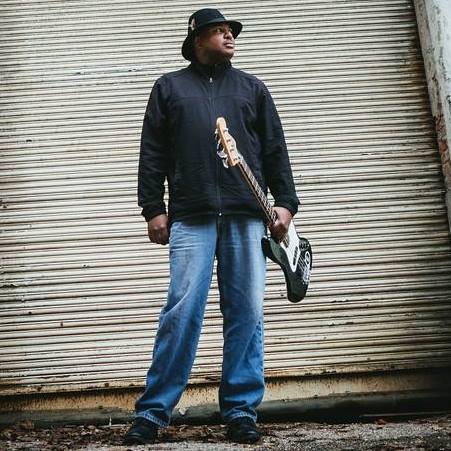
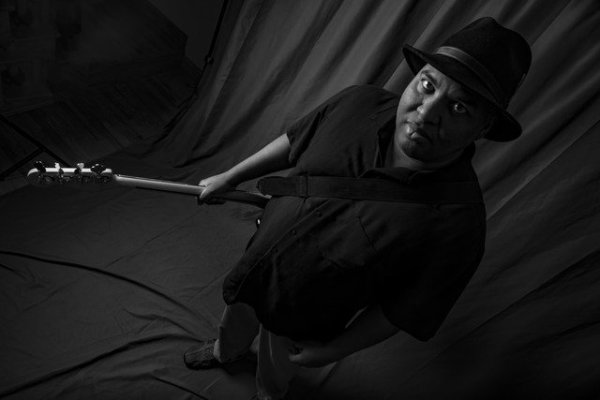
    101714517_10163801825875154_1076073664824213504_nThis interview with songwriter, bass player and keyboard stylist Mike Bankhead is the third installment in our series of ‘11 Questions with…‘. This series is an effort to understand songwriting by exploring in some detail the creative process through a deep examination of the recent craft of a talented musician. We hope that we all learn about area artists and the music that they are making. As well as learning about how they are creating music and doing so especially during these challenging times in which we find ourselves. How artists go about creating music, lyrics, themes, arrangements and more will be explored in this regular column.
    A hearty thank you to all of the artists and musicians for taking the time to answer these questions for this column! We appreciate you answering these questions for our readers/listeners on YTAA!

    Mike Bankhead is a Dayton, Ohio musician who constructs with deliberate care catchy melodic modern rock music that illustrates his gift for vibrant stories about the emotional impact of the decisions we make on our life journey. Mike clearly spends a great deal of time on his craft as his songs capture the just out of reach catchy melodies, inventive chord progressions and energetic rhythms that are fresh and inventive. Mike’s songwriting includes his insightful lyrics that explore the contested terrain of life, heartbreak, love, loss, location and the awful realization that having and not having are equally enthralling.

    Mike Bankhead released his debut album, Echo in the Crevices in 2017. He recorded the album at Reel Love Recording Company with well-known Dayton engineer and producer Patrick Himes. The album featured a literal who’s who of area talent, including Brian Hoeflich (Cherry Lee & the Hot Rod Hounds, Flyaway Minion, John Dubuc’s Guilty Pleasures), Tod Weidner (Shrug , Motel Beds), Kyle Byrum (Salvadore Ross), Tim Pritchard (The Boxcar Suite, Shrug, Flyaway Minion), and three-fourths of The New Old Fashioned. Just last year, Mike released a hook-filled exploration of longing called ‘Little Light‘ and the excellent split Defacing The Moon with Brandon Berry of The Paint Splats. And if that was not enough, he most recently — days ago in fact — released his latest single, ‘Promise.’

    73474968_1884674225011078_1339495236132405248_o

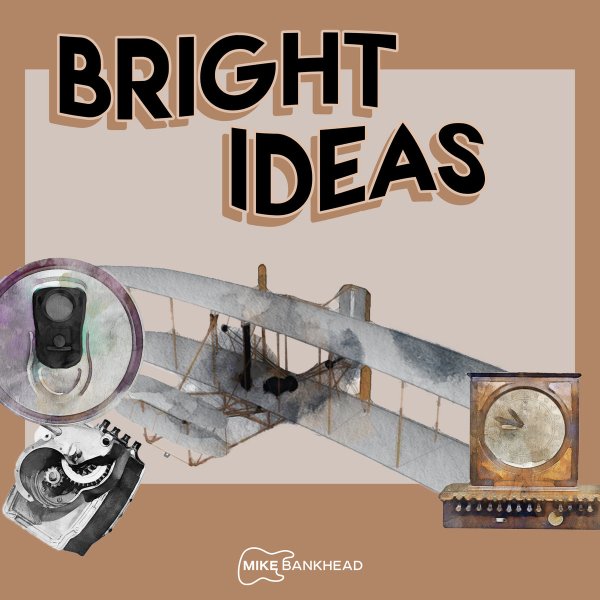
    Dr. J: What can you share with us about when and how you started writing your latest released songs, Bright Ideas?

    Mike Bankhead (MB): Wow, I wrote that long enough ago that I don’t think I remember exactly when. It was sometime after my first album was released back in summer of 2017, but definitely before February 2019 when I went in to Reel Love for a pre-production meeting.   These days I usually write on piano, but this one was definitely written on bass as far as the part you hear the rhythm guitar playing is concerned.  I did use the piano for the hook you hear in the outro, and to double check all of the notes I was singing during the other parts.

    Dr. J: You worked closely with Patrick Himes at Reel Love Recording Company here in Dayton, Ohio – what led to your recording with Patrick?

    MB: Patrick did the engineering work on my first album. Aside from that, I’ve probably known him for about 20 years? At least 20 years.  He’s so very talented, and after the experience of my first album, I know that I’m comfortable working with him.  I didn’t think for a moment about doing this song with anyone else.

    Dr. J:Bright Ideas’ is a fascinating song for all of us interested in music composition; did you set out to mirror some of your influences when starting to work on that song?

    17155483_1079840295494479_7656602931119695497_nMB: Absolutely. I wanted to write a Bob Pollard song.  If you listen to the song again, you’ll notice it has no chorus.  Part of that was a mild form of protest against “the music business”… so much of the advice that gets thrown at songwriters takes the form of someone saying “don’t bore us, get to the chorus”… First, if someone is bored because the chorus didn’t happen during the first 20 to 30 seconds of a song, thta’s not a person that I think I want to be listening to my music.  Second, how about no chorus at all then? The structure of the song is A A B C.  There are plenty of Guided By Voices songs that are quite brief and have no chorus, but they’re catchy anyway.  With that in mind, part of this was definitely meant as a form of admiration for Bob and his work, I kind of hope he hears it someday.  I like to imagine it as a GBV song, and I can kind of see Bob doing that little hopping dance he does.  The outro is heavily influenced by Fountains Of Wayne.  That lead riff is played on guitar, but it could just as easily have been played on synth, after all, I wrote it on a piano.  You’ll find some synth leads in their catalog.  I also wanted a bunch of harmony vocals in there, which you’ll hear all over Fountains Of Wayne songs.  All of the above to say that I wanted to take some of the things from these specific influences, but end up with a song that still sounds like ME, and I think we were able to get that done.

    Dr. J:Bright Ideas’ seems to address hopefulness – is that a correct interpretation of some of the lyrics and/or feeling in the song? In addition, if that is correct, did you intend to address hopefulness or did the song evolve in that direction over time? If that is not a correct interpretation, is there a theme to the song?

    MB: Yeah, I can see why it could be interpreted that way. I’m not entirely sure it started off heading that way. I definitely know that I wanted to write it in a major key, so it’s in E instead of E minor.  That itself is a change for me, I don’t usually write in major keys, I find something comforting in the mood that minor keys convey.  (As an aside, that’s probably very much a cultural construct based on what we as a whole are accustomed to hearing in Western music, but it’s hard to run from all of that musical history.)  Doing this in major lent itself to a, let’s say, BRIGHTER sound, and I think that really supports the title and overall theme of the song. The word “hope” is actually in the B section, so yeah, I’d say you’re on target with the interpretation.

    Lyrically and musically, the thing that happened first here was the lyric and melody “tell your teacher I got some bright ideas.”  I don’t at all remember when I came up with that, but whenever it was, I liked it enough to sing it into a voice memo.  At some point when I was writing the songs that eventually came to the studio with me, I went back and listened to a bunch of my old voice memos, and thought this one had decent potential for a song.  I’m glad I picked it, instead of having it still be out there all alone on my phone.  The rest of the song grew from that starting point.

    73333452_1884675495010951_4914365222908592128_oDr. J: How did the song come together musically for you?
    MB: Oops, I already kind of answered that in the previous question. To give more detail and leave no room for doubt, working from that voice memo I mentioned, I sat down with the bass and built the skeleton of the song… the rhythmic structure, the chords that the guitarist would end up playing.  Next was finishing out the melody, finishing out the lyrics, then double checking with the piano to make sure there were no false steps.  This thing doesn’t come naturally to me like it does to so many musicians.  I really have to WORK to make music, and the way my mind is, I have to understand how something functions in order to use it properly, so i definitely lean pretty hard on what I have learned about music theory when I’m writing.  Specifically when it comes to melody, I find every single note that I plan to sing on the piano, and make sure that it works within the chord structure of the song.  If it doesn’t, I either change the chord that is causing the clash, or pick another note to replace the one in the melody that sounds bad.  It’s definitely not the most organic way to write, and it’s certainly not the most efficient way to write, but that’s my way.  (Insert shrug emoji.)

    Dr. J: Where do you often derive inspiration to make music?

    MB: “Often” is the difficult word in that question, because it’s not a consistent source of inspiration. There are times when there is something I need to say, and I do that by writing a song. There are times when there are feelings that need to be dealt with, and I do that by messing around on bass or piano… sometimes a song comes out of it, sometimes it doesn’t.  (Like David Payne says, it’s ‘Cheaper Than Therapy, though I’m not sure if it’s as effective.)  There are times when I write because I know that I SHOULD, because if you don’t keep writing, you won’t get better.  It’s those times when I try to look at it like a job.  I started my own LLC, a small business around music, so it is very much a second job.  Sometimes on a job, you have to get work done even if you don’t feel like it, so there are indeed times when i don’t feel like writing, but I force myself to write.  I belong to an online songwriting group that has challenges every now and then where you have to write 5 songs in 5 days.  During those challenges, I write whether I’m inspired or not, because that’s the point of the challenge.  Remember when we used to go to shows?  A great show when I’m seeing artists I admire – whether they are from Dayton or a national touring band – a great show has me thinking about writing for the next few days after the show… it’s kind of a like a post-show high for me.  Watching a songwriter I respect do their thing is a massive source of inspiration. I try to learn from the shows I see, from the albums I listen to, from useful criticism, and from advice, if the advice comes from a source I trust.  One piece of advice that I think about now and then came from one of my favorite songwriters, Dan Wilson [Semisonic, Trip Shakespeare].  He’s a Minneapolis guy, so you’re probably familiar with him [Yup! – Dr. J].  He says “if it’s something that you would tell to a friend, it’s something that you can put into a song”… think about the kind of things we talk about with friends… whether it’s our spouse, or close colleague, or lifetime BFF, or someone who is a dear friend that we don’t see so often due to distance.  That’s a lot of material to draw from.

    I should also probably add that just because I write a song doesn’t mean anyone else will ever hear it.  I don’t throw away as many ideas or completed songs as I used to, but there are still things that I write that aren’t good enough to be heard by anyone else, and that’s OK.  At the end of the day, I think a songwriter has to write for them-self first.  Write what speaks to you, write what moves you, write something that says what you need to say, write what helps you deal with whatever you need to deal with, be authentic.  Maybe that’s something that nobody else should hear, and if that’s the case, it’s OK.

    0020011062_10Dr. J: How would you describe the music that you typically create? How has that process evolved or changed over time (especially as you think about your journey from Echo in The Crevices to Little Light to Bright Ideas)?
    MB: This sounds like you’re asking for an updated elevator pitch. If you’re not, that’s how I’m going to approach the answer, because I think we artists should always be ready with an elevator pitch.

    I make Midwestern indie rock that sounds like a less jocular version of Fountains Of Wayne trying to cover a Guided By Voices song in the style of Superdrag on one of their angsty days.  It usually is guitar-driven, but sometimes features piano.

    For how it’s changed since my first album, I’ve been making a conscious effort to write songs that are a bit tighter.  This isn’t a reaction to anyone complaining about long songs, it’s just that I haven’t recently found myself to need 6 minutes or 8 minutes to do what I want to do lyrically and musically.  On my first album, there are some long songs, but there needed to be.  I’ve been feeling less of that need recently. That said, I do kind of want to write a ten minute epic, but I have to find the right music for something like that. I’m also leaning a bit harder on my power pop influences.

    a3589681113_10Dr. J: What is next for you musically? How would you describe your thoughts at this point for your next project after Bright Ideas?

    MB: I spent February 2019 to February 2020 in the studio. I have 21 songs in various states of having been tracked.  Five of those songs are already out on the Defacing The Moon split.  “Bright Ideas” was also one of those songs.  A bunch more of those songs are going on my second full-length album, which is called Anxious Inventions & Fictions. The album is done, and the compact discs should show up before the end of June.  For the next few months, I’m going to be doing a PR and marketing campaign for the album.  I’d love to hire a company to do that for me, but that’s expensive, so I’ll be going full ‘DIY’.  That’s a great deal of work.  Sadly, I know that I won’t find much time to write new music or even practice my instruments over the next few months.  I’ll try to carve out some practice time here and there.  In order to get any writing done, I’ll have to specifically set writing appointments on my calendar and squeeze in time here and there. I also might release a stand-alone single near the end of this year, and maybe another one next spring.  These would be songs that are already tracked.

    Once the album is out, then I will turn attention to another project I have.  I have an outrageously talented co-writer named Ruth who lives in Ipswich, on the East Coast of England.  We have a project called ‘We Met In Paris’ (it works because it’s true), and we have around 25 songs now in various states of completion, and the plan is to keep writing.  No rush here, but we’re definitely going to make an album.  No rush because we want to do it right.  If a song isn’t good enough to go on the album, no worries, we keep writing.  That project is going to have a different sound than my solo work.  It’ll dip maybe a little into indie folk on occasion.  I promised Ruth that I will not make another full solo album until we release a ‘We Met In Paris’ album.  That doesn’t mean I might not run to the studio for the occasional one-off single if I can pull it off quickly, but for a lengthy project like I just finished, yeah, that won’t happen for at least a couple of years.

    I’m enthused about ‘We Met In Paris’.  Writing with Ruth feels good.  I see so much potential in the work we’re doing. As long as it keeps feeling good, we should keep writing, while at the same time being sure to make sure we’re making quality art.

    Dr. J: What is your favorite song to perform? What makes it a current favorite in your performances? Do you enjoy Live Streaming?

    MB: My favorite song to perform is ‘Promise. Interestingly, that’s the lead single for the next album, and it’ll be out in June. (The single, not the album.)  Part of what I like about it is that it still has that new song shine.  I guess it’s not super new anymore, but I think it’s one of the best things I’ve ever written, and playing it is kind of positive reinforcement.  Surely I’m not the only artist that goes through periods of hating everything I create, right?  Well, I haven’t had any of those feelings come up around ‘Promise yet.

    I enjoy the Live Streaming very much.  This reminds me that I should do it more often.  I actually get much less nervous doing streaming than playing live in the same room with people.  That said, I miss playing live in the same room as people.

    Dr. J: What is one message you would hope that listeners find in the unique nature of your latest music?

    MB: Honesty. I think that goes for my older stuff, too. Even when the protagonist of a given song is not necessarily me, and even if the song is not meant to reflect an actual real situation (looking at YOU, “Little Light”), the lyrical content should still be honest.  Sure, sometimes as songwriters we write fiction, and that’s OK, as long as it feels true.  I’m probably not expressing this in the best way, but it goes back to authenticity.  When you listen to ‘Bright Ideas, and when you listen to the upcoming Anxious Inventions & Fictions, I hope that you take away a feeling of authenticity.  I wish for people to realize that I’m not trying to chase musical trends or write what’s popular, I am trying to write the music that speaks to me first, and then share my art with others.  That doesn’t mean I will never experiment with playing around with genre or instrumentation, on writing from other points of view, writing in languages that aren’t English… but I wish for people to realize that I’m not pandering to anyone, and that I’m being honest and authentic.

    Dr. J: As a musician, how are you adapting to the challenges of the Coronavirus?

    MB: It’s strange, my life is mostly unaffected, specifically because being a musician isn’t my main source of income yet. I very much wish it to be. There is nothing I would love more than to get a regular paycheck in exchange for writing songs, but I’m not there.  I still have a corporate job.  Since I work that corporate job from home (and I’ve been doing that for a few years), nothing has changed significantly about my work situation yet.  I realize that not everyone can say this, and that I should absolutely reflect on this and be grateful for my situation.  If I were a full-time musician, things would be difficult right now.

    The pandemic hasn’t made its way into my art yet.  I’ve noticed that songs about various aspects of the pandemic and its impact have started to be released.  That’s cool if that is what moves a songwriter, but it’s not something I personally want to write about. Maybe in the future that will change, who knows?

    I miss live shows.  I can be in a terrible mood, and go see an acoustic performance at Showcase Thursday over at Yellow Cab, and then be in a better mood.  Something about a person and a guitar and a few songs just kind of makes me feel better.  I like the quiet shows.  I like the loud shows as well.

    One benefit of the pandemic is that I’ll have ample time to do my promotion campaign for the upcoming album.  I am going to take a week vacation from my corporate job, and of course, I’m not going anywhere.  (Yes, I realize Ohio has opened up, but I’ll still stay at home other than heading to the grocery store, thank you.)  That gives me plenty of time to put in the work.  Not just promotion, but also research and learning more about the business.  I’m also working on getting into sync licensing, and I plan to take some time to run down some leads in that area as well.


    Mike Bankhead Music on Facebook     Mike Bankhead on Twitter at @mbankheadmusic

    Mike Bankhead on Instagram at MikeBankheadMusic

    Thanks again to Mike for answering these questions! If you would like to participate in a future ’11 Questions with…’ column, please feel free to email us at drjytaa@gmail.com. If you have, a particular picture you would like used in the article, please feel free to attach that as well. All pictures and images of Mike Bankhead courtesy of the artist and photographer Patrick O’Reilly.

    your-tuesday-afternoon-alternative-color copy