“Mother, Pray for Me” finds The Beths doing what they do best: wrapping emotional unease in bright, tensile power-pop. It’s a song that feels instantly familiar if you know their catalog—those interlocking guitar lines, the melodic immediacy, Liz Stokes’ unmistakable vocal clarity—but it also pushes toward something rawer and more pleading than their usual wry self-interrogations.
From its opening measures, the song pulses with a kind of restless confession. Stokes delivers the title phrase not as a dramatic flourish but as a weary admission, a reaching-out from someone who’s been holding it together for too long. The Beths specialize in songs about the gap between who we want to be and who we are on our worst days; here, that gap takes on a spiritual edge. There’s a sense of hitting bottom—not catastrophically, but in the quieter, more believable ways people actually unravel.
The arrangement mirrors that emotional arc. The guitars shimmer and dart; the rhythm section plays with an almost anxious tightness, as if trying to keep the song from slipping out of its own grip. Harmonies, one of The Beths’ signature strengths, arrive like little reinforcements—friends showing up, steadying a shoulder. When the chorus lands, it’s both a release and a recognition: the pop sheen doesn’t lighten the weight of the plea so much as hold it with tenderness.
Lyrically, the song walks that Beths tightrope between self-reproach and self-awareness. The narrator isn’t blaming the world or asking for absolution; they’re simply acknowledging the moments when coping feels like an act of faith. The invocation of a mother’s prayer is less religious than relational—an admission that sometimes we need someone else’s hope to borrow.
“Mother, Pray for Me” ultimately stands out because it expands the band’s emotional vocabulary without abandoning their sonic DNA. It’s catchy, it’s cutting, and it lingers, an anthem for anyone who’s ever felt a little lost and dared to ask for help, even quietly.
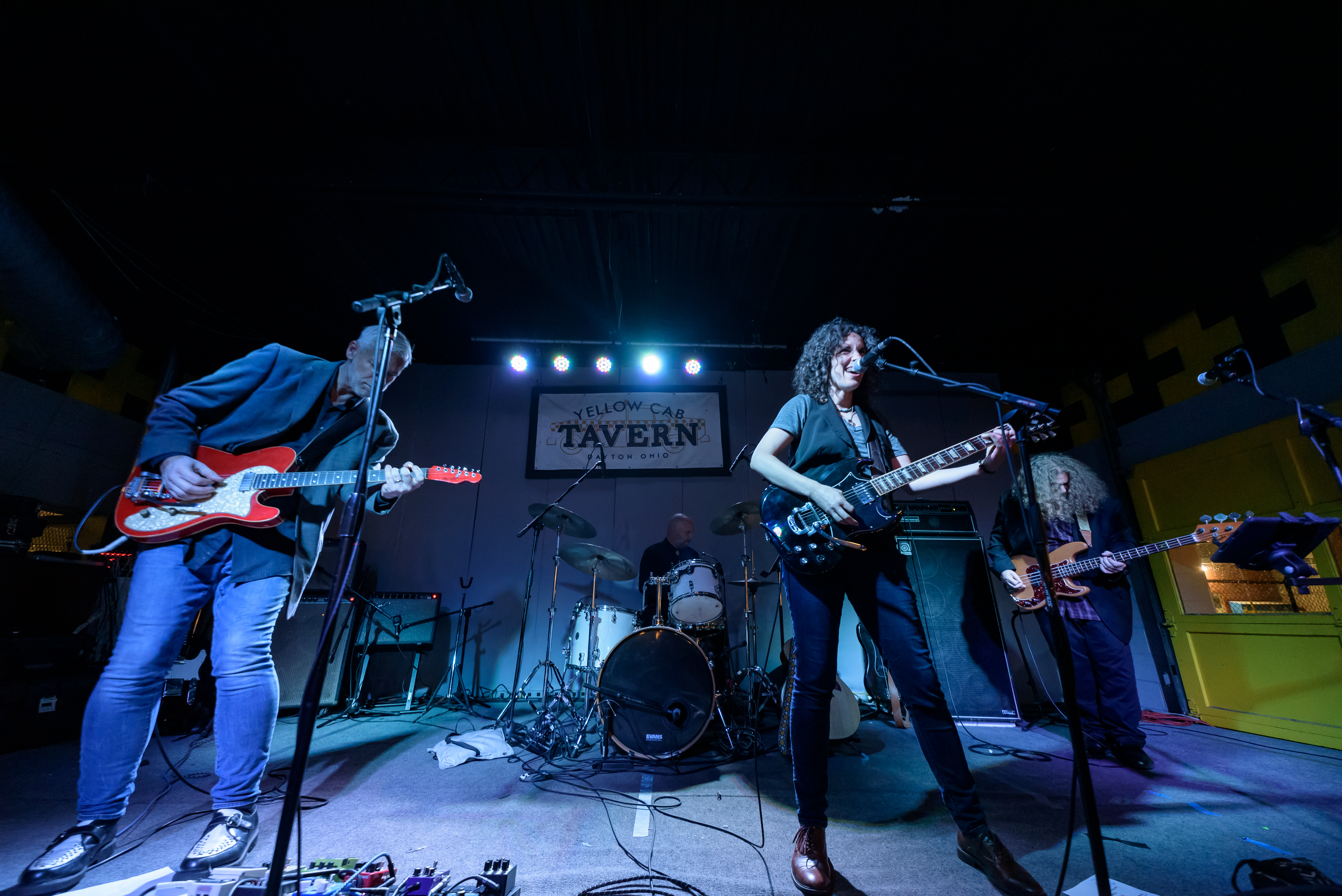
In a musical landscape flooded with glossy production and instant-stream forgettability,Everything’s A Shame stands out — not because it tries to conform, but because it embraces messy humanity: raw ideas, family schedules, basement rehearsals, and songs born from everyday chaos. The EP from Dayton-based rock band Sadbox (released October 3, 2025) feels intimately local while resonating with universal truths.
For a band balancing real-life demands — kids, careers, responsibilities — Sadbox delivers a sound that is energetic, quirky, honest, and sometimes unsettling. The result is a three-song burst of “technical weirdo rock,” as some have called it — music that doesn’t aim for radio-friendly formulas or uniform polish but seeks genuine expression, emotional depth, and a touch of controlled chaos.
In what follows, I examine who these musicians are, how the EP was created, what their sound and lyrics reveal, and why Everything’s A Shamefeels like a small but significant critique of the sanitized norms of mainstream rock.
Who’s making the noise — the people behind Sadbox
Sadbox isn’t a typical rock band that churns out songs just for fame. It’s a group of musicians grounded in everyday life, each with responsibilities beyond music. Sadbox is led by guitarist and lead singer Paul Levy, whose dual role as a surgeon brings a unique mix of precision and spontaneity to the band’s sound. He’s joined by Eli Alban on guitar, who also plays in The 1984 Draft and adds extra tonal nuance and energy to the group. Ryan Goudy provides the band’s steady, melodic bass foundation, while Ray Owens propels the songs with his dynamic, intuitive drumming. Completing the lineup for this release is Rachele Alban, whose vocals and keyboard work expand Sadbox’s sonic palette and deepen the emotional texture of the record.
The record — recorded, mixed, and mastered by local engineer/producer Fred Vahldiek known as Fredzo at Fredzoz Studio (one of our favorite records from The 1984 Draft, Best Friends Forever was recorded there) — is simple, direct, and straightforward. As drummer Ray Owens mentioned in an interview, balancing family life (with a collective total of 13 kids in the band) means music sometimes has to be as spontaneous and immediate as a family dinner: “the practice forum is similar to a live show.” That constraint — rather than hurting the music — seems to sharpen it, giving the band’s sound a rough clarity and urgency that polished over-production often hides.
Sound and style: “technical weirdo rock” with heart and edge
Sadbox’s music has been described as “alternapop / college-rock-style,” but Everything’s A Shame doesn’t fit neatly into any single category. Instead, it combines elements of grunge, rock, and weird-pop, with occasional narrative or character-driven lyrics that evoke theatrical rock or even prog-lite experiments.
The opening track — “Dust” — leans into ’90s grunge style. Over-amped vocals, gritty guitar sounds, and a tight rhythm section evoke the emotional chaos and existential worry of that time. The feeling of movement — a car speeding down a lonely road, a restless mind at midnight — stands out. That tension fits especially well with the lead singer’s dual identity: the precision of his professional life contrasted with the rough edges of his artistic side.
The second track, “All Rhymes for Scoop,” initially seems like a playful word game, but that expectation is overturned. Instead of listing rhymes for “scoop,” the song acts as a critique — perhaps — of shallow social media echo chambers. Lyrics and rhythms clash unpredictably, reflecting discomfort, discontent, and disillusionment. The syncopated beat combined with semi-nonsensical lyrical stutters mirrors the noise and overload of the digital age. The song reminds us of a previous outting, Mish Mash, from their 2021 record Future Copy.
The final song, “New Low,” slows things down. Clean arpeggiated guitar, minimal percussion, and dual vocals (Paul and Rachele) frame a sad, spare story: one of abandonment, loss, and longing. The song — reportedly inspired by the band finding a stray cat after a tenant move-out — becomes a narrative of innocence left behind, waiting in vain. Its emotional weight comes not from grand gestures but from quiet detail: the missing water dish, the empty stoop, the echo of loss.
Taken together, the three songs create a mini-arc: from restless escape, to social critique, to quiet grief and regret. The textures shift, the pacing varies, but the emotional flow — vulnerability, discomfort, longing — stays consistent.
Lyrics and themes: shame, impermanence, and the small cruelties of modern life
The title Everything’s A Shame seems both faintly sarcastic and deeply earnest. The songs reflect that duality — loss feels tragic, but also mundane; social collapse feels absurd, but also real; emotional weight is often disguised under everyday details.
As Paul Levy put it in an interview: “I am the consequence of the road I travel.” That line — repeated in “Dust” — connects personal history, existential weight, and the unpredictability of life. It frames identity not as a fixed point, but as something shaped by context, time, memory, and chance.
In “All Rhymes for Scoop,” the band critiques the vacuity of online life — the “argument platform,” the endless scroll, the performance of discourse without depth. Using lyrical non sequiturs and abrupt rhythmic shifts, Sadbox turns the song into a kind of musical protest against emptiness disguised as connection.
Then “New Low” returns to personal — and small — narratives: the lonely cat, the abandoned stoop, the emptiness left behind. It’s a portrait not of a sweeping life crisis, but of countless smaller traumas: displacement, abandonment, neglect. The catastrophic becomes quiet, ordinary, and all the more haunting for that.
These are not songs about grand despair or romantic heartbreak. They’re about surviving — surviving social collapse, familial pressure, shifting identity, emotional stasis. There’s shame in defeat, longing in loss, but also a stubborn, human need to speak, to express, to hold on.
The making of the EP: collaboration, constraints, and creative honesty
Given their busy lives — kids, jobs, daily responsibilities — the fact that Sadbox managed to write, rehearse, record, and release Everything’s A Shame is a testament to their dedication. In a radio interview, drummer Ray Owens explained how the band’s workflow had evolved: what used to be chaotic, slow jams now flow with precision; what once needed prompts and cues now occurs with a glance or shared rhythm. That improved chemistry is evident on the record.
Recording, mixing, and mastering were done by Fredzo at Fredzoz Studio — and the production shows an honesty-over-polish vibe. The guitars bite, the vocals crack, and the drums thud. Space is intentional: silence between notes, breaths between lyrics. Nothing feels overdone; everything feels essential.
That rawness—balanced with musical discipline—gives the EP its power. It’s not perfect, but it doesn’t need to be. It’s lived-in, human, sometimes ragged, and in its raggedness lies its truth.
What Everything’s A Shame achieves — and what it leaves unresolved
One of the EP’s main strengths is its coherence. Despite the sonic and lyrical variety (grunge-inspired rock, indie quirks, quiet ballads), the three tracks feel connected — through mood, theme, and emotional honesty. That sense of unity makes the EP seem like more than a random collection: it feels like a snapshot, a statement, a short film in three acts.
It also demonstrates what a band rooted in real life can achieve when they are committed: even with family obligations and limited time, Sadbox shows that artistic ambition and emotional honesty don’t require big budgets or months in the studio. Sometimes all it takes is clarity, teamwork, and the desire to record what you feel.
However, the EP also leaves space for growth. With just three tracks, listeners might want more — more depth, more storytelling, more time to pause. The ideas hinted at in “Dust,” “All Rhymes for Scoop,” and “New Low” seem like the start of something bigger. There’s a feeling of beginning, not ending.
Furthermore, the looseness that gives Sadbox its charm can also come across as unpolished, even rough around the edges. Listeners expecting tight arrangements or radio-ready vocals might find some of the vocal delivery off-kilter, the rhythms unsettled, and the mood dark. However, for others—those looking for realism, emotional depth, and spontaneous honesty—that roughness is part of the album’s appeal.
Why this EP matters — for the band, for Dayton, for listeners who crave honesty
For Sadbox, Everything’s A Shame reaffirms their commitment: they are serious about music despite life’s demands. Their willingness to embrace their circumstances — family, time constraints, the need for immediacy — doesn’t weaken their art; it enhances it. Their music is more about authenticity than perfection.
For their hometown of Dayton and the broader Ohio music scene, the EP is a tribute to the energy of independent music: small bands, DIY studios, local stages, real lives. It’s a reminder that creativity doesn’t wait for perfect conditions — sometimes it comes from necessity, urgency, and the quiet desperation of juggling everything we care about.
For listeners outside that scene, Everything’s A Shame offers a rare kind of intimacy. It doesn’t pretend to solve problems. It doesn’t promise catharsis or closure. It offers fragments: a line about regret, a wobbly chord, a story about a lost cat, a sigh in the vocal mic. And sometimes fragments are enough — enough to make you pause, reflect, and feel a little less alone.
Everything’s A Shame — a small record with big heart
In 2025, when music often feels disposable — a background for playlists, streams, and fleeting attention — Sadbox’s Everything’s A Shame acts as a quiet form of resistance: a plea to listen, to feel, to inhabit sound rather than glide past it. It’s unpolished. It doesn’t seek easy consumption. It requests patience, presence, and empathy.
Paul Levy, Eli Alban, Ryan Goudy, Ray Owens, Rachele Alban — they’re not rock stars living for tours or hits. They’re humans with lives, demands, imperfections. And yet they created something lovingly imperfect, collaborative, and genuine. That spirit — of DIY honesty, embracing constraints, and channeling everyday life into art — is as rare as it is essential.
Everything’s A Shame might be small — only three songs. But within those songs lie questions, longing, critique, grief, and hope. It doesn’t aim to cover the entire world. It seeks to share a piece of it. And sometimes, a piece is all we need.
In a year filled with shiny indie-rock releases, Damage the Pearl — the latest from Third of Never — stands out not just as a strong album but as a daring creative leap. It presents itself as an “Original Soundtrack,” blending rock, psychedelia, cinematic touches, and lyrical reflection into a unified whole. Instead of chasing hits, Third of Never offers a record that feels like a story, a mood, and an emotional piece all in one.
What follows in this favorite of 2025 consideration is an exploration of the key musicians behind the record, their roles, contributions, and chemistry, followed by a detailed analysis of the album’s sound, themes, and emotional impact. I argue that Damage the Pearl is not only one of the most compelling independent albums of 2025 but also a statement about what rock music can still be: inventive, collaborative, and emotionally powerful.
The musicians behind the music
At the heart of Third of Never is founder and guitarist/songwriter Jon Dawson, but Damage the Pearl also benefits from contributions by longtime collaborators and special guests.
Doug MacMillan — best known for his work with The Connells — handles lead vocals on the album. His voice offers a familiar yet fresh focus: a tone that blends vulnerability, grit, and a touch of wistful depth, perfect for the record’s haunting atmosphere. Jode Haskins plays bass (credited as “lead bass” on tracks like “Grab the Ground”), anchoring the record with a strong low-end that supports both the rockier and more psychedelic passages. Charles Cleaver contributes keyboard and possibly synth textures, giving some songs a layered, atmospheric dimension that broadens the sonic palette beyond straightforward rock. Brandon Ruth — on drums — drives the record’s rhythmic backbone, moving skillfully between finesse and force as the song’s mood calls for.
Beyond the core lineup, Damage the Pearl benefits from notable guest contributions: legendary keyboardist John “Rabbit” Bundrick (of The Who fame) and Steve Kilbey (of The Church), among others. Their input adds depth, history, and sonic color — reminding listeners that this is not a lo-fi one-man bedroom project but a fully realized band effort.
Together, they craft something alive — a vibrant collaboration of musicians, textures, and sensibilities.
A cinematic, psychedelic journey
Listening to Damage the Pearl feels less like playing an album and more like exploring a film’s soundtrack you haven’t seen yet. From the first moments, you’re pulled into a world of shifting moods: garage sparks, dreamy psychedelia, cinematic sweeps, and rock-driven hooks.
The lead single and our favorite track, “Grab the Ground,” sets the tone. Its shimmering guitars and steady groove evoke movement—literally and metaphorically—like a car speeding down a deserted highway under neon lights. This sense of motion aligns with the album’s larger goal: it is both a static work and a journey.
Other tracks lean toward subtle psychedelia or atmospheric rock: through keyboards, ambient touches, echoed vocals — layering mood over melody, feeling over immediacy. The guest contributions from Bundrick and Kilbey are especially effective here, broadening the band’s sonic identity beyond traditional rock tropes.
Even when the songs are more conventional rock-based (“groove + guitar + bass + drums + vocals”), the production gives them weight and space. The album rarely feels over-produced; Instead, it balances rawness and polish — capturing a tension between vulnerability and strength. As one review puts it: it “adds the right level of balance between instrumentation and vocals, so the full emotional effect of each song hits.”
What emerges is an album that’s both immediate and expansive — perfect for late-night introspection or full-volume road-trip listening.
Vulnerability and Resilience: Lyrics and emotional weight
One of the most powerful and compelling aspects of Damage the Pearl is how its lyrical themes, often focused on vulnerability, survival, identity, and inner conflict, intersect with the music’s cinematic and psychedelic character. The title track, Damage the Pearl, provides a sort of thematic statement for the record: the repeated line “What strikes the oyster doesn’t damage the pearl” suggests a reflection on resilience—inner fragility protected by layers of shell, with inner worth enduring outside shocks.
Lyrics like “remain cheerful despite your painful brain” suggest mental struggles, emotional effort, and the difficulty of staying light amid weight.
But there’s more here than just grief or melancholy. There is defiance, survival, and even hope. In relation to the sound—shifting from gritty to dreamy, rock to ambient—the album feels like an honest struggle with inner turmoil and external pressures. It doesn’t offer easy answers or neat closure. Instead, it welcomes listeners into a space of acknowledgment: “Yes, I feel what you feel,” it seems to say.
In interviews, the band confirms that Damage the Pearl was designed not just as an album but as a soundtrack to a film — a visual story that enhances its thematic goals. According to founder Jon Dawson, the cinematic concepts emerged late in the recording process, after the lines and moods had come together into something narratively suggestive.
This framing as “Original Soundtrack” shifts how you listen — every song becomes a scene, each mood a frame, and every lyric a line of dialogue in a larger story. And that story? It feels less like a tidy arc and more like a winding road trip through memory, loss, hope, and survival.
What Damage the Pearl does well, and where it leaves space
One of the album’s biggest strengths is its cohesion. Despite featuring multiple collaborators and a variety of sonic textures — from rock to psychedelia to ambient keys — the record feels unified. This is partly thanks to careful production and mixing, where every instrument, including vocals, occupies its own space, but also due to a consistent emotional and narrative tone. The listener isn’t jarred by sudden tonal shifts; instead, there’s a smooth flow and a clear internal logic — like a movie soundtrack that understands its scenes.
Moreover, the choice to present the album as a soundtrack is more than just stylistic; it enhances the listening experience. It sparks the imagination. It requires attention. It allows the listener to feel, reflect, and maybe even project their own stories onto the music.
At the same time, Damage the Pearl isn’t perfect — and that’s part of its honesty. It doesn’t always resolve its tensions. Some songs end softly, others fade into ambiguity. The “story” the album suggests is fragmented, impressionistic; you might find yourself with more questions than answers by the end. But maybe that’s the point. Maybe some emotional truths resist tidy closure.
There are moments when the cinematic ambition borders on grandiosity, where the mood threatens to overpower the song’s structure. But often, the balance — of texture, mood, simplicity, and complexity — pulls things back just in time.
Why Damage the Pearl matters — for Third of Never, for independent music, for listeners
For Third of Never, this album feels like a redefinition. No longer just a rock band producing standard records — they’ve expanded into a multimedia vision: soundtrack + album + film + narrative. It’s risky, ambitious, and yet grounded. It shows that the band is not moving backward into nostalgia or convention, but pushing forward into new possibilities.
For independent music in 2025 — when much of it feels packaged, algorithm-driven, and commercially safe — Damage the Pearl serves as a reminder that records can still be daring, mysterious, and emotionally intense. It demands something from the listener: patience, openness, and imagination. In return, it offers a lot: suspense, beauty, catharsis, resonance.
For listeners—especially those drawn to emotional honesty, moody textures, and music that feels alive rather than polished—this album is a gift. It doesn’t flinch from pain or uncertainty. It doesn’t offer easy answers. It provides space for reflection, for memory, for human complexity.
A soundtrack for the unsettled, a refuge for the introspective
In a musical landscape filled with albums that often feel like products — short, polished, predictable — Damage the Pearl feels like true art. It is chaotic, cinematic, full of emotion, and deeply human. It demonstrates what can happen when a band refuses to stick to a formula, when musicians collaborate across generations and genres (rock, psychedelia, cinematic ambition), and when they allow vulnerability and imagination to lead the work.
Third of Never and their individual collaborators — Jon Dawson, Doug MacMillan, Jode Haskins, Charles Cleaver, Brandon Ruth, John “Rabbit” Bundrick, Steve Kilbey — have created something that feels timeless, genre-blending, and fiercely genuine. This is not background music. It demands attention. It rewards patience.
If you haven’t heard Damage the Pearl yet — or if you’ve only listened once on shuffle, consider this a gentle nudge: put on headphones, turn down the lights, maybe grab a drink or nothing at all, and let the record wash over you. Maybe you’ll discover something in it you didn’t know you needed: a soundtrack for uncertainty, a companion for sleepless nights, or a mirror for unspoken feelings.
In a noisy world, Damage the Pearl is a subtle rebellion — an invitation to feel. And it’s one of the most worthwhile albums of 2025 so far.
In 2025, twin sisters Katie and Allison Crutchfield re-emerged in a manner few anticipated: not as members of a reformed punk band, but as collaborators on a new project called Snocaps. That reunion — their first musical partnership since their former band P.S. Eliot broke up in 2011 — signifies more than just nostalgia. It feels like a reconciliation of two distinct yet complementary musical sensibilities: Katie’s reflective Americana-influenced songwriting (familiar from Waxahatchee) and Allison’s sharper, hook-filled indie-rock instincts (from Swearin’). The result — the self-titled debut album Snocaps — is timely, heartfelt, and full of promise.
What makes this record especially compelling is that it doesn’t just rehash old chemistry. Instead, it showcases seasoned musicians playing with honesty, restraint, and an unexpected sense of freedom: the freedom to create music on their own terms, unburdened by expectations or commercial pressures. This essay examines the unique strengths of Katie and Allison — both individually and together — the role of their collaborators (notably MJ Lenderman and Brad Cook), and how Snocaps stands as a testament to their growth, creative synergy, and lasting relevance.
Katie Crutchfield: Americana roots, emotional clarity, evolving maturity
Katie Crutchfield has spent the past decade establishing herself as a compelling voice in indie rock, especially through Waxahatchee. Her songwriting typically centers on emotional honesty, rooted in real-life experiences, memory, love, regret, and self-discovery. On Snocaps, those qualities are very much present — but there’s also a heightened sense of reflection and acceptance, as if she’s writing not just from memory but from hindsight.
Tracks like “Wasteland” and “Doom” showcase this evolution. On “Wasteland,” Katie delivers alt-country grit and a sparse sense of solitude: the song explores themes of self-awareness, guilt, and longing. Meanwhile, “Doom” becomes a slow-burning reflection on fractured relationships and emotional burden — a gothic, folk-influenced breakup song where her voice conveys both resignation and defiance.
What’s remarkable is how she uses simplicity to maximize impact. Rather than relying on overly ornate arrangements, Katie often leaves space — a sparse guitar, a steady rhythm, a quiet harmonic — so her lyrics and voice can hold the listener’s attention. That restraint makes the emotional beats hit harder; you hear every inflection, hesitation, and sigh of regret or longing.
On Snocaps, there’s also a sense of emotional clarity and self-acceptance. These songs don’t fix everything — but they acknowledge pain, longing, and change without flinching. In that sense, Katie’s contribution feels mature, grounded, and painfully human.
Allison Crutchfield: hooks, energy, and a return with sharpened instincts
Allison Crutchfield has long been celebrated for her talent for catchy, guitar-driven hooks, a sharp indie-rock sensibility, and straightforward lyrics. With Swearin’, she built a reputation for raw, energetic songs. On Snocaps, she comes back with some of her most powerful and urgent material yet.
Her tracks on Snocaps — including “Heathcliff,” “Over Our Heads,” “You In Rehab,” and “Avalanche” — showcase her talent for melody and momentum. The album sometimes gains speed, urgency, and even a hint of recklessness: a fresh contrast to Katie’s more reflective moments. As one review mentions, songs like “Over Our Heads” move quickly, blending sharply crafted hooks with a laid-back, slacker-rock feel that keeps the music both well-structured and effortlessly loose.
Take “Heathcliff”: jangly guitars, picked bass, and a hook that seems to grow stronger with every listen — it evokes echoes of earlier indie-rock favorites while carving out new territory. And “You In Rehab,” alternately gritty and tender, carries a raw emotional weight: lyrics about recovery, regret, and ambiguous hope, delivered with heartfelt sincerity.
What’s impressive is how strong Allison sounds here: not as a nostalgia act returning to her former glories, but as an artist who has evolved, refined, and matured. Her vocals cut through clearly, the guitar hooks feel immediate, and the arrangements—whether fast or slow—all seem purposeful. Snocaps proves she’s lost none of her edge—and perhaps has gained a bit more clarity in her aim.
Together: complementary strengths, revived sister synergy, and a joint vision
If Katie brings introspection and emotional weight, and Allison brings energy and melodic drive — together, they create a balance that feels surprisingly natural, even after 14 years apart. As some critics note, the record feels like “a throwback and a vision of two brilliant songwriters in the here and now.”
Their vocal interplay — along with alternating songwriting credits — adds diversity and emotional depth to the album. Katie’s softer, more atmospheric songs sit beside Allison’s edgier rockers; together, they weave a tapestry of moods: from regret, longing, and reflection to restlessness, defiance, and passion. This variety keeps the album lively: it features no single tone or message but a chorus of lived experiences, emotions, and memories.
The fact that Snocaps was recorded in a burst — the sessions reportedly completed in a matter of days — adds to its rawness and honesty. The sisters described the project as a way to reconnect with the earliest, purest versions of their music-making selves — and you can hear that in the looseness, spontaneity, and emotional immediacy of many songs.
In some ways, the album operates like a conversation between two people with shared history but divergent paths — two versions of self, reunited. The result is both familiar and new: siblings making music again, but with years of growth, distance, and experience behind them.
The role of collaborators: building texture, grounding raw ideas, enriching musical depth
While Katie and Allison are the heart of Snocaps, the contributions of their collaborators — particularly MJ Lenderman and Brad Cook — are essential to what makes the record work so well.
The project features veteran musician-producer Brad Cook, who produced and engineered the record and also played instruments. His involvement ensures the album stays cohesive despite the varied voices and styles; he helps craft a sound that feels unified, intentional, and warm rather than scattered or inconsistent.
Then there’s MJ Lenderman: a multi-instrumentalist, guitarist, and drummer who plays on many tracks. His guitar work—electric, 12-string, atmospheric or gritty—adds depth, texture, and sometimes a rough edge that balances the emotional weight of the Crutchfields’ voices. In songs known for their melancholic or intense emotional content, his instrumentation often frames the song to amplify its impact rather than overshadow it.
This minimal guitar-bass-drums setup gives Snocaps a raw, intimate feel. There’s no unnecessary decoration; everything — from instrumentation to vocal delivery to production — feels intentional, genuine, and rooted. The result resembles a living room recording transformed through careful yet subtle craftsmanship: authentic, imperfect, and deeply personal.
In a musical moment often driven by maximal production and glossy polish, that restraint feels refreshing. It’s a reminder that sometimes the most resonant art comes from simplicity, collaboration, and genuine connection.
Lyrical themes and emotional resonance: nostalgia, growth, regret, resilience
One of the most compelling aspects of Snocaps lies in its lyrical honesty. The album treads familiar emotional territory — relationships, regret, addiction or recovery, longing, identity, roots — but does so with nuance and maturity. The years between P.S. Eliot and now show: these are not songs written in youth’s raw vulnerability, but with the awareness and reflection age brings.
For example:
On “You In Rehab,” Allison confronts the messiness of recovery and personal breakdown: regret, gratitude, and cautious hope co-exist in the lyrics.
In “Over Our Heads,” there is a sense of displacement and longing — a reflection on leaving hometowns or previous selves behind: “no hometown, no home state anymore.” That ache feels real, lived, universal.
Katie’s “Doom” brings out themes of disillusionment and heartbreak, exploring the weight of memory and the difficulty of moving forward without erasing the past.
In lighter moments — albeit tinged with bittersweetness — the songs deal with nostalgia, dreams, and the tension between youthful ambition and adult reality. The tracklist’s sequencing balances heavier songs with ones that have a glimmer of hope or wistful acceptance.
Throughout it all, the lyrical voice is understated but very emotional, exploring longing, regret, desire, and a stubborn kind of resilience. The recurring image of movement — roads, cars, leaving, returning — acts as a metaphor for inner journeys: navigating memory, home, identity, and growth.
In that sense, Snocaps doesn’t offer closure or easy answers. Instead, it offers accompaniment: a companion through uncertainty, regret, and hope. It’s less about fixing things than acknowledging them — and surviving.
Why Snocaps matters — for fans, for the sisters, for indie rock
Snocaps arrives at a moment when much music can feel calculated: long lead-ups, social-media-heavy rollouts, marketing, and image crafting. The fact that this album was released as a surprise — with no big campaign and no elaborate preamble — feels like a statement in itself. It’s an album made out of love, for sisterhood, for music.
For longtime fans of Katie and Allison — and their early band P.S. Eliot — this reunion is a welcome sight. But beyond nostalgia, Snocaps shows growth. It’s a reminder that time changes artists but doesn’t necessarily dull their voices. In fact, it can make them sharper.
For the broader indie-rock scene, Snocaps stands out as a subtle yet powerful example of what happens when experienced artists collaborate without pressure, allowing music to flow naturally, embracing imperfection, and prioritizing emotion over production polish. The album combines indie-rock hooks, Americana introspection, and raw honesty in a way that feels meaningful to listeners seeking authenticity and emotional depth.
Finally — for Katie and Allison themselves — Snocaps might be a one-off, but it feels like a reopening of a conversation: with each other, with their past, with their musical selves. It’s a moment of reckoning, reconciliation, and renewal — and it’s done with grace, restraint, and love.
Conclusion: The Crutchfields, reunited — and the power of making music on your own terms
In the whirlwind of 2025’s music scene — with flashy releases, social media buzz, and polished production — Snocaps arrives quiet, unassuming, and yet quietly insistence: this is music made for feeling, not for trending. It’s a record that trusts listener patience, emotional depth, and the power of simple instrumentals to carry weight. It’s flawed, honest, alive.
Katie Crutchfield brings her soul — subtle, wounded, hopeful. Allison Crutchfield brings her edge — sharp hooks, restless energy, unfiltered emotion. Together, their voices, histories, and instincts blend into something that feels both like a reunion and a reinvention. Adding collaborators like MJ Lenderman and Brad Cook — who contribute with taste, restraint, and shared history — results in an album that seems born out of necessity: a need to reconnect, to create, to speak.
Snocaps is more than just a project or a band. It’s a moment: a brief window into what happens when two talented siblings reclaim their story, their music, and their shared past — and turn it into something new. If you listen with your heart, you’ll hear history, honesty, and hope woven into jangly guitars, melancholic melodies, and voices that understand loss, healing, and resilience.
So if you’ve been waiting for something real, something personal, something without pretense? Snocaps is more than worth your time.
“Damage the Pearl,” the standout title track from Third of Never’s latest record, is one of those songs that feels instantly lived-in—emotionally weathered, musically tight, and lyrically honest in ways that reward repeat listens. What Third of Never does so well across their catalog, melding melodic rock with angular edges, reflective lyricism, and a sense of drama that never tips into excess, comes into sharper focus here. The song is as much about mood as it is about narrative, and it invites the listener into a world where beauty and fracture sit side-by-side.
From the opening seconds, the track establishes a sonic landscape marked by contrast. Guitars shimmer and bite, building a foundation that feels both urgent and dreamlike. That duality mirrors the song’s thematic tension: “damage” and “pearl” aren’t just opposing concepts; they’re the twin poles around which the emotional arc revolves. The metaphor is simple but resonant—the “pearl” as something precious, hard-won, and vulnerable to harm; the “damage” as both external force and self-inflicted consequence.
Doug McMillen’s vocal performance lends the song much of its emotional depth. His delivery is unhurried but charged, as though he’s carefully excavating each phrase. There’s a rasp at the edges that suggests long nights, regrets, and resilience. He doesn’t dramatize the lyrics so much as inhabit them, giving the impression that the story being told has been carried quietly for a long time before finally being voiced.
Musically, the band strikes an impressive balance between tight arrangement and spacious atmosphere. Steve Potak’s keyboard textures ripple through the mix, adding color without overwhelming the guitars. His playing brings a sense of uplift to the darker corners of the track, hinting that even in the midst of damage, there’s clarity or even transcendence to be found. The rhythm section keeps the song grounded, propulsive without being forceful, allowing the emotional tension to breathe.
Lyrically, “Damage the Pearl” explores the fragile points in relationships—the places where trust is tested, where mistakes leave marks, where people confront the limits of what can be repaired. But the song resists cynicism. Instead, it seems to inhabit that complicated emotional terrain where hope and regret coexist. When the chorus opens up, the sense of release is less cathartic triumph and more a weary, honest exhalation. The band understands that complexity is sometimes more powerful than resolution.
The production enhances this emotional palette. Clean, spacious, and unafraid of subtle imperfections, it allows each instrument to carry its own weight. There’s no sense of overpolishing; the track feels human, textured, and lived-in. That sense of authenticity shapes the listening experience: the song sounds like a confession whispered and then amplified into the open air.
“Damage the Pearl” ultimately succeeds because it serves as both a strong standalone track and a thematic touchstone for the album bearing its name. It captures Third of Never’s ability to marry craft and feeling—to write rock music that is polished but soulful, introspective but accessible. It lingers after it ends, like a bruise you only notice when you press on it, and like a pearl that gleams all the more for having survived pressure.
The New Zealand indie‑pop quartet The Beths have long stood out for their sharp songwriting, earworm melodies, and the emotional honesty that pulses through their lyrics. With their 2025 album Straight Line Was a Lie, they arrive at a new peak — refined in sound yet deeply raw in sentiment. It’s a record that doesn’t just reaffirm what makes them special; it feels like a rebirth: more considered, more textured, and more vulnerable than ever. As the band enters this next chapter, it’s become increasingly clear that The Beths aren’t just good at what they do — they’re extraordinary.
I want to take a moment and explore how each member’s musical contributions blend to form the band’s signature sound, and how the lyrics on Straight Line Was a Lie carve out an intimate, unsettling, yet hopeful portrait of life, growth, and mental health.
First, a quick refresher on the lineup. The Beths consist of:
Elizabeth Stokes – lead vocals, rhythm guitar, main songwriter
Jonathan Pearce – lead guitar, backing vocals, producer/engineer (on this record)
Benjamin Sinclair – bass guitar, backing vocals
Tristan Deck – drums, cymbals and percussion, backing vocals
In past releases, The Beths were already celebrated for their “jangly” guitar pop, shimmering harmonies, and driving rhythm section. On Straight Line Was a Lie, each member seems to lean more deeply into their strengths, and — crucially — into experimentation.
Elizabeth Stokes remains the heart of the band. Her voice — often conversational, sometimes aching — carries the emotional weight; her lyrical voice is sharper, more introspective, grappling frankly with themes of mental health, existential anxiety, familial ties, self-doubt, and the paradoxes of healing. The songs come from a place of personal upheaval, shaped by her experiences with health struggles, medication, and self‑reflection.
Jonathan Pearce wears dual hats on this record: lead guitarist and producer / engineer / mixer (on most tracks). That shift seems to have given the album a more cohesive, textured sonic palette: guitars (both his lead and Stokes’s rhythm) shimmer, sizzle, crash — sometimes jangly, sometimes atmospheric, sometimes dissonant. On songs like “Take,” the guitar solos ring with a fresh urgency; on “Ark of the Covenant,” guitar lines meld with subtle ambient touches to build something cinematic and haunting.
Benjamin Sinclair’s bass underpins the album with steady, often driving low‑end that grounds even the most introspective or experimental moments. While bass can be underappreciated in guitar‑heavy pop, here it anchors songs like “Take” with a muscular backbone that gives weight to the emotional landscape, and in upbeat numbers it drives the momentum forward, pushing choruses into sing‑along territory. The result is a rhythm section that feels both steady and alive.
Tristan Deck’s drumming and percussion complete the engine. On Straight Line Was a Lie, the drums don’t just keep time — they accentuate mood, shake loose tension, and steer transitions between jubilation and melancholy. Whether it’s propulsive beats on faster tracks or minimal, contemplative rhythms on the quieter ones, Deck’s playing adapts to the emotional terrain without overshadowing it. Backing vocals from Deck and Sinclair add subtle harmonic depth, reinforcing what has always been The Beths’ hallmark: layered vocal harmonies that linger.
Together, these four don’t just play instruments — they channel mood, memory, and meaning. On this record, the result feels less like a “band playing songs” and more like four people collaboratively mapping emotional terrain.
The sound of Straight Line Was a Lie: More than “jangly” pop
One of the defining qualities of The Beths’ earlier albums was that “jangly guitar + power‑pop hooks + emotional honesty” formula — and it worked beautifully. On Straight Line Was a Lie, they keep the hooks, but deepen the textures. The production (led by Pearce) emphasizes space, layering, contrast; songs can shift from bright, chiming pop to darker, atmospheric, even gritty territory. Critics note this album as “bigger, better and more complicated than they’ve ever been.”
The opening track and title song begins with a false start — a spoken “sorry I was thinking about something else” — a move that feels deliberate: it sets the tone for an album preoccupied with interruption, derailment, and return. The lyric “I thought I was getting better / But I’m back to where I started / And the straight line was a circle / Yeah the straight line was a lie” resounds as a central thesis. Life, the record suggests, is not a linear progression but a messy, looping, often contradictory journey.
Meanwhile, tracks like “No Joy” jolt with nervy urgency — the upbeat melody and driving beat bely lyrics that speak to anhedonia and existential stasis: “All my pleasures, guilty / Clean slate looking filthy / This year’s gonna kill me … Spirit should be crushing / But I don’t feel sad, I feel nothing.”
On “Metal,” they give form to something beautiful and strange: a metaphor about being alive as a “collaboration of bacteria, carbon and light,” needing “the metal in your blood to keep you alive.” It’s biological, cosmic, grounded, and dreamlike all at once — marrying emotion, science, and wonder in a simple but powerful package.
There’s also room for quiet minimalism. “Mother, Pray for Me” strips things back: gentle picking, soft vocals, aching longing. It’s a song about complicated family, grief, and generational wounds — and it lands not through bombast but through tender reserve.
Even the album’s final moments — on “Best Laid Plans” — feel bittersweet: jangly guitars and a buoyant rhythm, but implicit in the instrumentation and tone is a sense of unresolved longing, of “unfinished business.” It’s the sound of hope, but also of memory’s weight.
In sum: Straight Line Was a Lie isn’t simply “jangly indie pop with hooks” — it’s more ambitious: emotionally deeper, texturally richer, and willing to lean into shadows as much as light.
Lyrical worlds: Mental health, Memory, and the Myth of Progress
If the musical side is about textures, the lyrical work is about truth. On this record, The Beths — primarily through Stokes’s pen — interrogate themes of mental health, healing, identity, memory, and the uneasy breaks in between. The album’s title succinctly captures its philosophical impulse: that “linear progression is an illusion.” Life doesn’t follow a neat arc; healing does not happen on a straight line.
Much of that perspective comes from Stokes’s own life. In recent years she’s navigated serious health challenges (including a diagnosis with Graves’ disease), anxiety, and the disorienting effects of starting antidepressants for the first time. That upheaval forced a radical shift in how she writes: among other changes, she turned to stream‑of‑consciousness writing on a typewriter, exploring memories and feelings she’d avoided, and forcing herself to reckon with difficult emotions.
That kind of emotional honesty shows up throughout. On “Mosquitoes,” she wanders a creek near her home — a haven when “my house felt like a locked room” — only to find devastation: the same creek turned into a “raging sea” after floods. The song becomes quietly terrifying: an elegy to disappearance, impermanence, and the fragility of refuge.
In “Til My Heart Stops,” there’s a longing for simple embodied pleasures — riding a bike in the rain, flying a kite, dancing — even as the world feels heavy and weightless at once. According to one review, the song, with its unsettling distortion and ghostly atmosphere, “charts the fragility of life itself,” its abrupt ending like a heart’s final beat.
Elsewhere, “Ark of the Covenant” and “Best Laid Plans” explore inner excavation: digging through memory, confronting “fossilised nightmares,” searching for meaning — or closure — in the negative space of the self.
But it’s not purely despair or existential weight. There’s still wry humour, sharp imagery, and defiant tenderness. The need for “metal in your blood” in “Metal” — a call for grounding, resilience, a kind of elemental insistence on life — turns the personal and biological into something poetic and universal.
Taken together, the lyrics on Straight Line Was a Lie don’t just reflect mental health struggles or personal trauma — they interrogate the myth of constant improvement. They suggest healing is messy; growth is circular; humanity is fragile, often contradictory — but still worthy of wonder.
What this album means: Growth, Maturation, and a New Chapter for The Beths
For longtime fans, Straight Line Was a Lie may at first sound familiar: The Beths still write songs that stick in your brain. But this time, there’s a sense of expansion, of maturity, of ambition being reframed with nuance. Production is richer, the emotional stakes higher, and nothing feels simply disposable or background music. This is an album that rewards — demands — close listening.
Critically, the record has been widely praised. On aggregators it earns a strong Metascore, reflecting generally favorable to enthusiastic reviews. Reviewers note the band is “bigger, better and more complicated than they’ve ever been.” Others call it perhaps their “most incisive” album yet, one where existential anxieties and lyrical ambition meet pop hooks and evocative soundscapes.
Moreover, Straight Line Was a Lie feels like a milestone — not just in their discography, but in their artistic evolution. The move to have guitarist Jonathan Pearce handle production and engineering gives the album a more unified sonic identity. The decision by Stokes to overhaul her songwriting method — to face trauma, memory, and illness head‑on — brings a weight and vulnerability previously only hinted at. The whole band seems aligned: playing not just with precision and popcraft, but with emotional honesty.
For listeners, this album offers more than catchy choruses: it offers fellowship. It whispers that you are not alone if you’ve felt lost, stuck, or numb. It suggests that healing is not always about triumphs or tallies of progress, but about maintenance — about showing up, living, feeling, enduring. And it does all that while giving you songs you can dance to, or cry to, or sing loud at a concert.
Conclusion: The Beths as Emotional Architects
In a world that often feels driven by optimization, forward momentum, and constant productivity, Straight Line Was a Lie comes as a quiet, necessary reckoning. It refuses the idea that healing, growth, or life itself must follow a neat, linear trajectory. Instead, The Beths propose a different metaphor: life as cyclical, messy, and ongoing — something to be maintained, revisited, reflected upon, not “completed.”
As a band, The Beths have always been more than the sum of their catchy hooks or jangly guitars. On this album, they feel less like a pop act and more like emotional architects — sculptors of feeling, memory, and existential wonder. Each band member’s contribution is essential — from Stokes’s wrenching lyrics to Pearce’s layered production, from Sinclair’s grounding bass to Deck’s subtle but powerful rhythms.
Straight Line Was a Lie may end up being a soundtrack for an era — an album for when the world feels too fast, too forward, too relentlessly optimistic. It offers instead a different rhythm: patience, honesty, acceptance, and defiance.
If you haven’t listened to it yet — or haven’t listened closely — this is the moment: sit back, headphones on, and let The Beths guide you down the crooked, beautiful trail.
Taking time over Thanksgiving to watch The Beatles Anthology feels like pausing the noise of the present to sit with something timeless. The documentary’s sweep—its memories, its contradictions, its fragile humanity—lands differently when you experience it in the soft lull between holiday meals and family chatter. It becomes less a history lesson and more a reminder of how rare it is for art to reshape the world, and rarer still for us to slow down long enough to feel it. In the quiet of the holiday, the story of four kids from Liverpool overrunning an entire century feels both impossibly distant and strangely intimate, like rediscovering a familiar warmth you didn’t realize you’d missed.
There’s a moment early in The Beatles Anthology—now revived on Disney+ like a relic exhumed from a time capsule of swinging London and acid-washed utopianism—where you realize that no matter how many times you’ve heard the same myth, you’re still powerless to resist the gravitational pull of The Beatles. It’s not just nostalgia. It’s not even hero worship, though that’s baked into the culture at this point like sugar in a doughnut. It’s the strange, lingering shock of discovering that four kids from Liverpool somehow hijacked the 20th century, and we’re still picking through the wreckage.
Watching Anthology in 2025 feels a bit like binge-reading someone’s diary long after they’ve died and been canonized. The documentary is part time machine, part séance, part messy family photo album. And now, thanks to Disney+, the whole thing is packaged with the glossy inevitability of a Marvel re-release. Press play, and suddenly we’re back on the rooftop, or on the plane to JFK, or in Hamburg, crawling out of seedy bars before they even knew they were supposed to be legends.
The Beatles never asked to become a religion. But they didn’t exactly discourage it either.
Anthology as a Resurrection Machine
When Anthology first aired in 1995, it was a sprawling, nostalgic reconciliation project—three surviving Beatles trying to square the circle of their own history. It arrived with two “new” songs, “Free as a Bird” and “Real Love,” as if John Lennon were phoning in demos from the afterlife. There was a sense of closure, or at least the illusion of it.
Rewatching it now, the illusion fades fast.
Because what hits you is how unbelievably young they were when the circus erupted. The early footage is almost indecent: mop-topped cherubs strumming their way into global hysteria. Ringo looks like he still hasn’t figured out the joke. George hovers in the background with the Zen intensity of a kid already dreaming of escape. John and Paul—codependent, competitive, inseparable—seem like two halves of a single supernova destined to explode.
Disney+ doesn’t change any of this. But it reframes it. The Beatles come to us now in algorithmic form, recommended alongside Star Wars and The Simpsons. They’re no longer the gods of Rock History textbooks. They’re content.
And yet they refuse to shrink. What other band could endure a nine-part documentary and still leave you wanting more?
The Eternal Breakup
The thing people forget about Anthology is that it’s basically one long breakup album told in documentary form. You can almost feel the tectonic plates shifting as the series moves from Beatlemania to the studio years. The cameras stop capturing exhilaration and start capturing exhaustion.
“Help!” stops sounding like a joke.
“Yesterday” stops sounding like a fluke.
“Hey Jude” starts to feel like an apology.
The Beatles’ story is a tragedy disguised as a fairy tale. And Anthology never tries to hide that. In the early episodes, they’re compact and hungry and full of possibility. By the end, they’re four planets drifting out of orbit, held together only by tape, memory, and the vicious tenderness of old friends trying desperately not to say the wrong thing.
The venerable rock critic Lester Bangs would have loved this. He worshiped honesty almost as much as he worshiped guitars, and he would’ve recognized the profound emotional carnage humming under the surface of the Beatles myth. He would’ve also called them out for the contradictions—for preaching love while sometimes barely being able to stand each other, for reinventing the world while struggling to reinvent themselves.
But he would have forgiven them, too. Because the music was that good.
Beatlemania in the Age of Streaming
One of the strangest pleasures of the Disney+ re-release is how it recasts Anthology as a binge-worthy epic. You can watch the band evolve in real time, like some impossible evolution chart:
Cavemen in leather jackets → Cheeky pop savants → Psychedelic revolutionaries → Mature studio alchemists → Four guys too tired to keep pretending.
In the streaming era, this trajectory feels almost too clean, too narratively convenient. Today’s bands barely last two albums before the internet atomizes them into solo projects, Twitter feuds, or boutique coffee brands. The Beatles lasted about a decade, and in that decade they authored the modern idea of what a band could be.
What Anthology shows—sometimes accidentally—is that even at their peak, The Beatles were never comfortable with being The Beatles. That’s the secret fuel of the entire documentary: they’re constantly trying to escape the gravitational force of their own creation.
George Harrison’s weary look in the late ’60s? That’s the face of a man trapped inside someone else’s mythology.
The Beautiful, Exhausting Machinery of Genius
One of the most fascinating through-lines in Anthology is the insight it gives into the creative engine of Lennon-McCartney. There’s a moment where they’re discussing writing “With a Little Help from My Friends,” casually tossing out ideas like they’re doodling in the margins of history.
Paul: “What about this?”
John: “Hmm, okay, but maybe make it a bit more… weird.”
George Martin: “Boys, that’s quite good.”
Audience of millions worldwide: Loses mind. This is the alchemy fans come for. The magic trick. The thing we pretend we can understand.
But Anthology also gives us something rarer: the gears beneath the magic. The insecurities. The imposter syndrome. The grind. These guys didn’t just wake up and write “Something” or “A Day in the Life.” They worked. They argued. They pushed each other to the brink. If rock mythology usually polishes everything into legend, Anthology leaves the fingerprints.
Seeing the Beatles Through 2025 Eyes
Maybe the strangest thing about revisiting Anthology now is how contemporary it feels. The media frenzy, the public-private split, the pressure to constantly innovate—it all maps eerily onto modern celebrity culture, except the Beatles didn’t have social media to amplify their every misstep. Imagine John Lennon on Twitter. Imagine Paul McCartney forced to explain the concept of “Paperback Writer” on TikTok.
And yet, despite the decades between then and now, the emotional churn of the documentary still lands. You feel the claustrophobia of fame. You feel the thrill of artistic discovery. You feel the heartbreak of watching four people who genuinely loved each other become unable to continue sharing the same world.
Paul’s grief in the early ’80s interviews is still palpable. George’s dry humor remains a perfect counterweight. Ringo—god bless him—anchors everything with the resigned joy of someone who knew from day one that he was lucky to be there, even when it broke his heart.
The End Still Hurts
By the time Anthology reaches the breakup, there’s no surprise left. You know it’s coming. You know the rooftop concert is the final performance. You know that lawsuits and bitterness and tabloid nonsense overshadowed the final chapter.
And yet it still hurts. It always does.
Because Anthology makes clear that the Beatles weren’t just a band—they were a lifelong conversation. And like all great conversations, it eventually exhausted itself. “The dream is over,” Lennon sings in 1970. But Anthology shows that the dream was already cracking long before he said the words.
So Why Watch Again?
Because Anthology is the closest thing we have to the Beatles telling their own story—warts, brilliance, contradictions and all. And because in 2025, in a world where music is increasingly reduced to background noise for workouts and commutes, watching their evolution unfold over 10 hours feels almost radical.
It reminds us that music once mattered enough to rewrite the world. And that four flawed, brilliant people somehow changed everything before they even understood what they were doing.
Final Thought
Watching The Beatles Anthology on Disney+ is like returning to the scene of a beautiful accident. You know how it ends. You know who gets hurt. You know which friendships survive and which don’t. But you can’t look away, because the wreckage is too gorgeous and too human to ignore.
Lester Bangs would have told you the same thing, only louder, with more profanity, and while throwing on Revolver at full volume to prove a point. But the point remains:
The Beatles aren’t just a band. They’re a feeling. And Anthology—even three decades later—reminds us why that feeling still refuses to die.
It’s one of those things that should never have happened. A scruffy, half-broken underdog band from Minneapolis — ragged, defiant, often self-sabotaging — getting the deluxe archival treatment usually reserved for polished legends, for “classic rock” cathedrals. Yet here we are: 2025, and Rhino Records (a part of Warner Music Group) has dusted off Let It Be, remixed, remastered, reboxed, expanded — and in doing so given the world a second chance to see the bruised poetry of the original 1984 record in high fidelity.
The fact that The Replacements are getting this kind of attention now — decades after their original flame flickered out — is almost absurd. And yet that absurdity is perfect. Because Let It Be was never meant to be smooth. It was meant to hurt, to stumble, to scream. The Deluxe Edition doesn’t try to smooth those edges — it highlights them, reminding us why this band never fit neatly into the mainstream, and why that’s exactly why they mattered.
The Skeletons & the Heart — An Album Understood
Originally released in 1984 via the indie label Twin/Tone Records, Let It Be was a moment of clarity for The Replacements: a record of transition, of longing, of half-formed innocence battered against a rock & roll dream.
The 2025 Deluxe Edition gives us disc one: the remastered original album — eleven songs that remain as vivid, ragged, and vital as ever. Then comes the rarities — alternate versions, outtakes, home demos — and a full 28-song live set from March 1984 at the Cubby Bear in Chicago.
This isn’t a rehydrated corpse. It’s a beating heart, reconnected. It’s the band as they were — flawed, sprawling, incomplete — presented again not as “heritage,” but as rock & roll living in the cracks between hope and chaos.
Track by Track: The Skin & Bones of Youth
Think about “I Will Dare” — opener of the album and a dare in itself. That fuzz-ed cardinal riff, the off-kilter swagger, Paul Westerberg’s voice like it’s scraping against the point of a razor. The 2025 remaster gives the guitars more room to breathe; you hear the strings buzz, the drum skins snap, and every syllable of “dare” tastes like adrenaline. It lands like a punch in the gut — and that’s exactly the point.
Then there’s “Favorite Thing,” where the punk cheek turns into something almost tender. A strange, shimmering melody over brittle chords, a voice struggling between affection and alienation: “I just don’t know what to do.” On the original vinyl you heard the ghosts of cheap amps and cigarette smoke; on this remaster you hear the humanity underneath.
“We’re Comin’ Out,” “Tommy Gets His Tonsils Out,” “Black Diamond” — all of them jittery, half-formed attempts at grandeur, teenage longing, and adolescent confusion. But the album’s heart lives in songs like “Androgynous” and “Unsatisfied.”
“Androgynous”: one of the few rock songs in history that wears its empathy on its sleeve without collapsing into sanctimony. A melody that aches, lyrics that don’t posture — and in 2025, the alternate version restores a full piano intro, a different vocal take: a softer, more haunted Replacements, vulnerable but unpretentious. 
“Unsatisfied”: bitter, ragged, full of longing. Westerberg’s voice cracks, the rhythm stutters, the world trembles. On this remaster, the grit is there, but so is the clarity — the bass-line you never heard before, the snare drum’s tiny echo, the breath between words. It’s like seeing an old scar under better light — you cringe, but you also understand how it shaped the person.
Songs like “Answering Machine” — small, shy, off-kilter — make you feel the quiet desperation of isolation, of trying to connect and hearing nothing but static. On this remaster, those staticky edges sharpen; the loneliness doesn’t sound like a studio effect anymore, it sounds like the room you’re in after the lights go out.
Listening to Let It Be, side to side, track after track, is like rummaging through someone’s teenage bedroom: posters peeling off drywall, cigarettes half-smoked in an ashtray, dreams scribbled over notebook margins. It doesn’t sound like “great production.” It sounds like truth.
Why Let It Be Was Always Too Big for Its Boots — and Yet Never Big Enough
The Replacements were never built for the spotlight. They were too ragged around the edges, too self-aware, too… real. And by “real” I mean “full of contradictions.” They wanted fame, but they didn’t want the shackles that come with it. They chased rebellion, but they also had voices cracked open by longing. They wrote love songs when they barely knew how to keep their own lives together.
By the time they were capable of being “bigger,” self-destruction and disillusionment had already set in. The guitarist whose shards of noise cut through Let It Be — Bob Stinson — drifted away soon after. Addiction, inner demons, burnout: the usual rock mythology that turns alive bands into ghost stories. 
It’s improbable that a band like The Replacements would ever get a deluxe archival box. It’s even more improbable we’d get one in 2025 — a time when nostalgia usually means safe, stable comfort records. But part of what makes this remaster so thrilling is that it refuses comfort. It resurrects the mess. It preserves the fractures. It honors the band not as legends, but as poets of sloppiness, heartbreak, and restless hope.
That’s why this reissue is more than just for longtime fans. It’s for anyone who ever felt like an outsider, anyone who ever saw beauty in chaos, anyone who ever listened to music and found pieces of themselves in the distortion.
What the 2025 Deluxe Edition Actually Adds — the Blood Under the Skin
Thanks to Rhino’s box, we now have a wealth of previously inaccessible material: alternate takes of “Gary’s Got a Boner,” “Favorite Thing,” a restored alternate of “Androgynous,” unreleased outtakes like “Who’s Gonna Take Us Alive” and “Street Girl,” home demos, and more. 
But perhaps the jewel in the set is the 28-song live set from March 1984 at the Cubby Bear, Chicago. A crowd-sourced tape, long buried in obscurity, now remastered and set free. On this live set you hear the band thrashing through not just Let It Be material, but older punk-raw cuts, covers of The Beach Boys, Bad Company, and the kind of sweaty, ragged, near-chaotic energy that only a band on the edge can deliver.
Rhino.com will also offer an exclusive bonus 10-inch vinyl release, Live at City Garden. Bundled with the vinyl edition and a T-shirt, this six-song soundboard recording was captured at the legendary Trenton, New Jersey, punk club on February 11, 1984. Highlights of the live EP include a rare performance of the ballad “You’re Getting Married,” played at the request of the band’s original manager and Twin/Tone co-founder Peter Jesperson, who also co-produced both the original Let It Be and the new deluxe edition. That track is a small, strange flower growing out of the concrete of punk rock — gentle, awkward, and deeply human.
These extras don’t feel like padding. They feel like excavation. They don’t try to mythologize the band — they just show: this was real. This was messy. This was alive.
For Fans & The Uninitiated — Two Doors to the Same Room
If you’ve loved The Replacements for decades, this Deluxe Edition is catharsis. It’s memory, resurrection, vindication. It’s turning the lights back on in a room you once lived in — seeing every cigarette burn mark on the table, the scratched vinyls leaning against the wall, the ghost of teenage hope in the corner.
If you’re new to The Replacements — maybe you grew up after the vinyl era, maybe your Spotify algorithm just nudged you — Let It Be (2025 Deluxe Edition) is a perfect entry point. The remaster cleans — but doesn’t polish — the sound. It clarifies, but doesn’t sterilize. And the expanded material draws out the band’s contradictions: tender yet abrasive, sloppy yet sincere, desperate yet hopeful.
In a moment where rock & roll sometimes feels like it’s been shoved into a nostalgia museum — safe, curated, predictable — this reissue punches through: real ragged edges, real emotion, real imperfection. It reminds you that rock was once a refuge for freaks, for outsiders, for the restless.
What Could’ve Been — And Why It Still Means Something
It’s almost uncanny: listening to Let It Be now, you can hear the potential of a much bigger future. Songs like “I Will Dare” and “Androgynous” aren’t just artifacts of mid-80s indie; you half expect them to echo off arenas, to lay foundations for generations. The Replacements had the songwriting, the heart, the courage — and at times, it sounds like they had the will for greatness.
But rock & roll doesn’t reward sincerity if the band can’t survive themselves. Bob Stinson’s drift, the instability, the lack of polish — all of that doomed them from riding their own wave. And in retrospect, that’s part of the charm. Let It Be feels like the greatest nearly-album the 1980s never let bloom fully.
The 2025 Deluxe Edition doesn’t rewrite that history. It doesn’t pretend the band got what they deserved. What it does is more courageous: it says, “Here is who they were. Here is what they felt. Here is the wreckage — and the beauty.” For anyone willing to peer into the wreckage, there’s a kind of redemption there.
A Final Salvo: Why Let It Be (2025) Matters
There’s a moment in the history of rock & roll when everything cracked wide open, when the neat boxes called “punk,” “indie,” “pop” blurred into something messy and human. The Replacements were among the first to do it — not by design, but by desperation, by honesty, by the stubborn belief that rock didn’t need to be polished to matter. Let It Be wasn’t just an album: it was a middle finger to complacency, a howl in the concrete night, a slag-heap love letter to the lonely.
In 2025, to give that album a deluxe reissue — remastered, expanded, recontextualized — is to say that those guttural screams, those jangly chords, those messy homespun ballads still matter. It’s a statement: that rock need not be perfect to be perfect. That pain, longing, chaos, longing, and heartbreak deserve clarity, not gloss.
If you’ve never heard The Replacements — or if all you know are legends and hearsay — this version of Let It Be is a gift. Not because it’s pretty, but because it’s honest. Not because it’s comfortable, but because it’s real.
So press play. Let the guitars crack. Let the drums rattle. Let the voices ache. Because the room is dark — and once you open the door, you might never want to leave.
Unboxing Let It Be (Deluxe Edition)with Peter Jesperson feels a bit like opening a time capsule with the person who helped seal it shut decades ago. As he lifts the lid, there’s an unmistakable spark of recognition in his voice—each piece of packaging, every photo, every scuffed tape box seems to carry a memory only he can unlock. What might otherwise feel like a standard deluxe reissue suddenly becomes charged with lived history.
Jesperson doesn’t just describe the material; he animates it. He flips through the booklet and, in an offhand comment, drops you right back into the chaos and brilliance of The Replacements in 1984. The band’s humor, volatility, tenderness, and absolute unpredictability all surface as he recalls how certain songs came together or how a particular live moment found its way onto a bonus disc.
Moving through the set with him is like being guided by the band’s archivist-in-chief—someone who doesn’t merely know the story but lived inside it. His excitement is contagious, and as he handles each artifact, the deluxe edition becomes more than a product; it becomes a reunion with the band, filtered through someone who never stopped believing in them. In his hands, the ephemera transforms into something warm and personal, a reminder of how unlikely and extraordinary this music was—and still is.
It’s been a while since I found the time to upload a full show to Mixcloud! I promise to be better about posting them. The latest episode of YTAA 11-18-2025 is now available on Mixcloud. Please do me a favor and give it a listen when you have a chance.
Finding the time to post full episodes of Your Tuesday Afternoon Alternative on Mixcloud has been more of a challenge than I ever expected. What seems, on the surface, like a simple matter of uploading a show ends up being far more complicated once you stack it next to the responsibilities of everyday life, the planning that goes into each week’s broadcast, and the desire to make sure everything I share is as polished, listenable, and enjoyable as possible. I want to take the time to explain why it has taken me longer than it should to get full shows posted and—more importantly—to apologize for the delay and talk honestly about my commitment to becoming more consistent on Mixcloud.
First, producing Your Tuesday Afternoon Alternative isn’t just a matter of showing up, pressing “record,” and walking away. Even after so many years of doing the show, each episode requires preparation: listening to new music, organizing playlists, writing notes, checking information about artists, aligning segments, and making sure the flow feels right. That’s the part listeners hear directly. What listeners don’t see is everything that comes after the live broadcast—cleaning up the audio file, leveling tracks, trimming silence, removing dead air, tagging the episode, writing show notes, creating artwork, uploading everything, then double-checking it all to make sure it’s correct and accessible. It’s a process I care about, because sharing independent, alternative, and emerging music has always been something that deserves care.
But caring takes time, and time has been harder to come by lately.
Over the last several months (and, if I’m honest, probably longer than that), life has piled on its normal assortment of responsibilities: work, family, health, grading, teaching, commitments that can’t be rescheduled, and the thousand small tasks that accumulate without asking for permission. None of these things are unusual; they’re simply the parts of life that everyone negotiates in their own way. Yet what has happened, unintentionally, is that by the time I sit down to work on getting a full show uploaded, the day has already stretched far beyond the hours I planned on using.
Mixcloud uploads aren’t something I want to do halfway. I don’t want to toss a show online with minimal detail or sloppy audio just to say it’s there. That has never been the spirit of Your Tuesday Afternoon Alternative. The whole point is to introduce people to music worth hearing—bands pouring their hearts into their work, musicians making something genuine, songs with meaning and craft. That deserves a certain level of attention. It deserves to be done right.
And yet, even with the best intentions, the backlog grew.
So I want to be completely direct: I’m sorry. Sorry for taking so long to get episodes uploaded. Sorry for not communicating more clearly when I fell behind. Sorry for making listeners wait when so many of you reached out asking when the next show would be posted. Those messages were kind, encouraging, and patient—and every time I read one, it reminded me how much the show means to people who want to listen on their own schedule.
When people care enough to ask, that means something. And I don’t take that lightly.
The good news is that when you fall behind long enough, eventually you recognize that doing nothing only makes the problem larger. It is time to fix it. It is time to get the shows uploaded more consistently. It is time to make the Mixcloud archive what it should have been all along: a reliable place where listeners can catch up, re-listen, discover new music, or hear an episode they missed live.
I am committing—publicly and sincerely—to posting more consistently. That means setting aside designated time each week to prepare, edit, and upload the shows, even if that means reshuffling other tasks or being more disciplined about how I manage my schedule. It means breaking the work into smaller chunks so that it doesn’t feel overwhelming. It also means giving myself permission not to overthink every detail. The show should sound good, absolutely—but perfectionism can be just as paralyzing as disorganization.
More importantly, posting consistently is a way of honoring the musicians and bands who trust me with their art. It’s also a way of honoring the listeners who tune in every Tuesday afternoon, who send notes and recommendations, who say kind words about the music I share, and who make this show a genuine joy rather than another responsibility. If the live broadcast is about community, energy, and immediacy, then the Mixcloud archive is about access—about giving people the freedom to listen when and how they want, no matter their schedule.
I realize that promises are only as meaningful as the follow-through. Saying I will be more consistent is easy; actually doing it requires effort, planning, and accountability. So here is the practical plan: older shows will be uploaded in batches, and new episodes will go up shortly after each Tuesday broadcast. It may take a little time to clear the backlog, but the process has already begun, and I intend to keep it moving in a steady, realistic rhythm.
If you have been waiting, thank you—for your patience, your encouragement, your interest, and your willingness to stick with the show. If you’re new to the Mixcloud archive, welcome. And if you’re one of the many people who loves discovering under-the-radar music, I promise there is a lot coming your way.
In the end, Your Tuesday Afternoon Alternative has always been about connection: connecting listeners with artists, connecting independent musicians with audiences who want something outside the algorithm, and connecting a community that values creativity, heart, and authenticity in music. Getting the shows onto Mixcloud more reliably is part of strengthening those connections. It is part of respecting your time and honoring the work that musicians put into their craft.
So yes—it took me far too long. And yes—I am genuinely sorry for that.
But I am also incredibly grateful for everyone who continues to listen, share, and support the show. I appreciate you more than you know. And going forward, you can expect more consistent uploads, more reliable access to every episode, and the same commitment to sharing the best independent and alternative music I can find.
Thank you, sincerely—and stay tuned. The next batch of shows is on its way.
Indie music unites us because it thrives on authenticity, creativity, and emotional honesty. Unlike heavily commercialized tracks, it often reflects personal stories, experimentation, and unique perspectives that feel relatable. Fans connect through shared emotions—heartbreak, joy, longing, or defiance—finding meaning in sounds and lyrics that resonate with their own lives. The community around indie music also matters: attending shows, sharing discoveries, and supporting artists fosters a sense of belonging, where people celebrate individuality while feeling part of something bigger.
The Beths’ Best Laid Plans exemplifies the power of rhythm and groove in creating an irresistible musical experience. At its core, the song is anchored by tight, punchy percussion and a driving bassline that create both energy and momentum. This rhythmic foundation gives the track a sense of forward motion, allowing the melody and vocals to shine while the listener is physically engaged—tapping toes, nodding heads, or even dancing along. The combination of percussive precision and melodic bass makes the song feel immediate and alive, illustrating how the “feel” of a song is just as important as its harmonic or lyrical content.
This attention to rhythm and groove is a hallmark of many artists across indie and alternative music. Tamar Berk, for instance, uses nuanced percussion to build layers of tension and release in her music, creating songs that feel both intimate and expansive. Bird Streets similarly blends melodic hooks with a driving rhythm section, demonstrating how bass and drums can define a track’s emotional pulse. Guided By Voices, with their lo-fi yet meticulously arranged recordings, often showcase how a tight rhythm section can make even a chaotic-sounding song feel cohesive and infectious. The Connells and The Cords similarly emphasize song craft, where the music propels the storytelling and emotional impact.
Meanwhile, vocalists like Kim Ware and her effort, The Good Graces, highlight the interplay between rhythm and vocal delivery. In Kim’s songs, the percussive drive and melodic bassline not only support the vocal narrative but enhance the emotional resonance, creating moments of release and catharsis that linger with the listener. Just as The Beths use rhythm to energize Best Laid Plans, these artists leverage bass and percussion to make the music physically and emotionally engaging, proving that the “feel” of a song—its groove, drive, and momentum—is a central component of its power.
Ultimately, what unites these artists is a deep understanding of how guitar, percussion, bass, and overall feel can transform a song from a static composition into a living, breathing experience. From The Beths’ infectious grooves to Bird Streets’ emotive rhythms, from Guided By Voices’ lo-fi magic to Kim Ware’s soulful pulse, these musicians remind us that feel, texture and rhythm are not just accompaniment—it’s a force that connects listeners, moves bodies, and conveys emotions that words alone cannot capture.
The first time I heard Son Volt’s Trace, I thought, “Ah hell, here it is: Uncle Tupelo’s divorce decree, notarized on reel-to-reel, filed away in some Missouri courthouse basement where the plaster peels and the janitor drinks Falstaff or Bud Light out of a Styrofoam cup.” Jay Farrar stomps out of the wreckage, lugging his guitar like a busted-down jalopy radiator, and instead of screaming, he sighs, drawls, lets the words leak out slow like oil seeping into gravel. This isn’t rock and roll as firecracker catharsis; it’s rust-belt requiem. It’s the sound of gas stations going dark one by one on Route 66 and every half-drunk loner still praying the neon sign will flicker back to life.
See, Farrar isn’t interested in saving your soul or even giving you a hook to hum while you brush your teeth. He’s interested in reminding you that America has grit and grime, and the old idols, they are rotting.
Listen to “Windfall.” That harmonica doesn’t soar; it wheezes like your uncle’s lungs after three decades underground in coal mines. Yet it lifts you anyway, like catching a breeze on a road you know dead-ends in thirty miles. Farrar’s voice is carved from stone, immovable, half-asleep but never indifferent. He sings like he’s standing in the ruins of the sixties, looking around and muttering, “Guess this is what we’ve got left.” And dammit, what we’ve got left sounds gorgeous.
Trace isn’t alt-country. Alt-country is a marketing gimmick, an excuse for journalists to pretend they’ve discovered a new continent when really they’ve just found the same sad barstools Willie and Merle already angry because they don’t recognize the place. Trace is country with its skin peeled off, electrified and nailed to a telegraph pole. It’s Neil Young after the hangover, it’s Gram Parsons without the messiah complex. It’s the hum of America when the AM station fades out and all you’ve got is static—and suddenly the static is more moving than the song that was playing ever was.
Take “Drown.” Farrar growls it like a prophecy for people already underwater. The guitars crash like waves on cheap levees, the kind that always break. It’s furious and exhausted at the same time, the way you get when you’ve fought too long and realized the fight was fixed from the start. Then there’s “Tear Stained Eye,” where he asks if seeing a river run dry will make you start crying. Spoiler: it won’t. You’ll just stare and keep driving, and that numbness is exactly what Farrar’s documenting—he’s the archivist of our collective shrug.
But here’s the trick, the brilliance: instead of despair, Trace gives you dignity. The dignity of standing in a field that used to be a town, looking at the weeds grow through concrete and saying, “Okay, maybe this is freedom.” Farrar doesn’t want your hope. He wants your honesty. The honesty that says America’s dreams are boarded-up diners and broken jukeboxes, but inside those ruins, a few songs still rattle around like sacred relics.
And maybe that’s why Trace still matters. Because it’s not trying to sell you redemption. It’s not asking you to believe in the comeback of some mythic heartland. It’s just holding up the Polaroid of what’s gone and saying, “Here, take a look. Doesn’t it hurt beautifully?”
In the end, Trace is a ghost road record. It takes you down highways that don’t exist anymore, past radio towers that no longer transmit, through towns that can’t even hold onto their own zip codes. But by the time you get to the last track, you don’t feel lost. You feel found—because someone finally put into music that vague ache you’ve been hauling around, the one you thought was just your private sorrow. Turns out it’s everybody’s sorrow. And Jay Farrar, God bless his gravelly heart, sang it so we could all drive through it together.
Streaming Forward, Powered By The Past - if you love the 80s music, new music, Eurovision, cheesy pop and awesome playlists then let's get this pop party started!