Howie Klein: The Music Executive Who Believed Artists — and Democracy — Needed Defending

We should all see Howie Klein as one of the rare suits who never really became a suit at all: a true believer who smuggled punk, new wave, moral panic, and messy joy into the executive offices. Lester Bangs, who saw music-label executives as the enemy, would have trusted Klein because Klein trusted noise, contradiction, and artists who scared the right people. In Bangs’s universe, that made Klein less an industry man than a necessary co-conspirator—someone who understood that rock and roll only mattered when it refused to behave.

In the history of popular music, influence is often measured by hits, chart positions, or stadium tours. But some of the most consequential figures operate far from the spotlight, shaping the conditions that allow music—and musicians—to matter. Howie Klein, who died in December 2025 at the age of 77, was one such figure. He was not a performer, nor a household name to casual listeners. Yet his impact on popular music, especially from the late 1970s through the 1990s, was profound. As a radio DJ, independent label founder, major-label executive, and free-speech advocate, Klein helped bring punk, new wave, and alternative music into the mainstream while insisting that artistic freedom was not merely a marketing slogan but a civic value. Klein’s career offers a revealing lens into how popular music evolved during a period of intense cultural change—and how the industry’s internal battles over creativity, commerce, and censorship mirrored larger political struggles.

Klein’s career offers a revealing lens into how popular music evolved during a period of intense cultural change—and how the industry’s internal battles over creativity, commerce, and censorship mirrored larger political struggles.

From campus concerts to counterculture radio

Born Howard Klein in Brooklyn in 1948, Klein came of age as rock music was becoming both a mass medium and a site of generational conflict. While studying at Stony Brook University in the late 1960s, he immersed himself in music journalism and concert promotion. As a student, he helped bring artists such as Jimi Hendrix, Janis Joplin, the Doors, Pink Floyd, and the Who to campus—an early indication of his instinct for recognizing music that was pushing boundaries.

This formative period mattered. The late 1960s were not only a high point of musical experimentation but also a moment when music and politics were deeply intertwined. Klein absorbed the idea that popular music could challenge authority, expand cultural horizons, and create communities of dissent—an idea that would guide his work for decades.

After spending time abroad, Klein settled in San Francisco in the 1970s, a city then reinventing itself musically. The psychedelic era was fading, and a rawer, more confrontational sound was emerging. As a DJ at KSAN-FM, Klein hosted one of the earliest American radio programs dedicated to punk rock and new wave. At a time when such music was often dismissed as noise or nihilism, his show gave airtime—and legitimacy—to artists like the Sex Pistols, Iggy Pop, Devo, and other early punk innovators.

Radio, in this context, was not just a promotional tool. It was a cultural gateway. Klein’s programming helped translate a subcultural movement into something legible to a broader audience, without sanding down its edges.

415 Records and the logic of independence

In 1978, Klein co-founded 415 Records, an independent label named after San Francisco’s area code. The label embodied the do-it-yourself ethos of the punk era while operating with a keen awareness of the industry’s mechanics. 415 signed and developed bands such as Romeo Void, Translator, the Nuns, and the Units—artists who captured the tension of late-1970s urban life with angular guitars, synthesizers, and politically charged lyrics.

While 415 Records never rivaled the major labels in scale, its significance lay elsewhere. It demonstrated that independent labels could serve as incubators for innovation, nurturing artists who might later cross over into the mainstream. When 415 eventually entered a distribution deal with Columbia Records, it reflected a broader shift in the music business: the growing recognition that underground scenes were not threats to commercial music but its future.

Klein’s experience at 415 prepared him for a larger stage, but it did not diminish his skepticism toward corporate control. He remained committed to the idea that labels should serve artists, not the other way around.

Inside the majors: Sire and Reprise

Klein joined Sire Records in 1987, a label already known for bridging the underground and the mainstream. Sire’s roster included artists such as Talking Heads, the Ramones, and Depeche Mode—acts that had once been marginal but were now reshaping popular music. Klein fit naturally into this environment, bringing with him a sensibility formed in radio booths and independent offices rather than boardrooms.

In 1989, he was appointed president of Reprise Records, a Warner Music imprint with a storied history. During his tenure, which lasted until 2001, Klein oversaw releases by an extraordinarily diverse group of artists, including Neil Young, Lou Reed, Green Day, Alanis Morissette, Eric Clapton, Fleetwood Mac, Talking Heads, and The Ramones.

What distinguished Klein was not simply the commercial success of these artists—though many achieved it—but his reputation for protecting creative autonomy. At a time when consolidation was intensifying within the music industry, he resisted the pressure to reduce artists to demographic niches or short-term profit centers. Musicians frequently described him as an executive who listened, trusted, and intervened only when necessary.

This approach paid dividends. Albums like Green Day’s Dookie and Alanis Morissette’s Jagged Little Pill did more than sell millions of copies; they brought alternative and confessional voices into the center of popular culture. Klein understood that authenticity, even when messy or confrontational, could resonate more deeply than formula.

Music, censorship, and the politics of expression

Klein’s influence extended beyond artist development into the political arena. During the late 1980s and early 1990s, the American music industry became a battleground over censorship, most visibly in debates sparked by the Parents Music Resource Center (PMRC) and the introduction of “Parental Advisory” labels.

Unlike many executives who treated the controversy as a public relations problem, Klein framed it as a civil liberties issue. He argued that efforts to regulate lyrical content were less about protecting children than about disciplining dissent and reinforcing cultural hierarchies. Music, in his view, was an extension of free speech—and therefore deserving of the same constitutional protections.

His activism connected him to organizations such as the American Civil Liberties Union, which later recognized him with awards for his defense of free expression. He also played a role in Rock the Vote, a nonpartisan initiative aimed at encouraging young people—many mobilized through music culture—to participate in democratic life.

These commitments were not tangential to Klein’s work in music. They reflected a consistent philosophy: that popular culture shapes political consciousness, and that restricting artistic expression ultimately weakens democratic society.

A legacy beyond the charts

Howie Klein died on December 24, 2025, after battling pancreatic cancer. Tributes from musicians, journalists, and activists emphasized not only his professional accomplishments but his moral clarity. In an industry often caricatured as cynical or exploitative, Klein was remembered as someone who believed in music as a public good.

His career helps explain how punk and alternative music moved from the margins to the mainstream without entirely losing their critical edge. It also illuminates the role that behind-the-scenes figures play in determining which voices are amplified and which are silenced.

At a moment when debates over censorship, corporate consolidation, and cultural polarization are once again intensifying, Klein’s example feels newly relevant. He understood that popular music is never just entertainment. It is a space where power, identity, and freedom collide—and where the choices made by executives, programmers, and advocates can have consequences far beyond the record store or streaming chart.

In that sense, Howie Klein’s legacy is not only musical. It is civic. He believed that defending artists was inseparable from defending democracy itself, and he spent a lifetime acting on that belief.

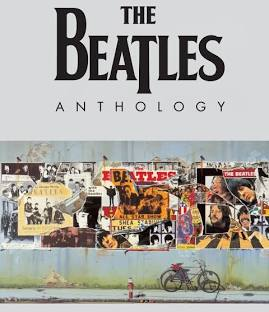
The Beatles Anthology Hits Disney+ — and the Band Is Somehow Still Breaking Up Before Our Eyes

Taking time over Thanksgiving to watch The Beatles Anthology feels like pausing the noise of the present to sit with something timeless. The documentary’s sweep—its memories, its contradictions, its fragile humanity—lands differently when you experience it in the soft lull between holiday meals and family chatter. It becomes less a history lesson and more a reminder of how rare it is for art to reshape the world, and rarer still for us to slow down long enough to feel it. In the quiet of the holiday, the story of four kids from Liverpool overrunning an entire century feels both impossibly distant and strangely intimate, like rediscovering a familiar warmth you didn’t realize you’d missed.

There’s a moment early in The Beatles Anthology—now revived on Disney+ like a relic exhumed from a time capsule of swinging London and acid-washed utopianism—where you realize that no matter how many times you’ve heard the same myth, you’re still powerless to resist the gravitational pull of The Beatles. It’s not just nostalgia. It’s not even hero worship, though that’s baked into the culture at this point like sugar in a doughnut. It’s the strange, lingering shock of discovering that four kids from Liverpool somehow hijacked the 20th century, and we’re still picking through the wreckage.

Watching Anthology in 2025 feels a bit like binge-reading someone’s diary long after they’ve died and been canonized. The documentary is part time machine, part séance, part messy family photo album. And now, thanks to Disney+, the whole thing is packaged with the glossy inevitability of a Marvel re-release. Press play, and suddenly we’re back on the rooftop, or on the plane to JFK, or in Hamburg, crawling out of seedy bars before they even knew they were supposed to be legends.

The Beatles never asked to become a religion. But they didn’t exactly discourage it either.

Anthology as a Resurrection Machine

When Anthology first aired in 1995, it was a sprawling, nostalgic reconciliation project—three surviving Beatles trying to square the circle of their own history. It arrived with two “new” songs, “Free as a Bird” and “Real Love,” as if John Lennon were phoning in demos from the afterlife. There was a sense of closure, or at least the illusion of it.

Rewatching it now, the illusion fades fast.

Because what hits you is how unbelievably young they were when the circus erupted. The early footage is almost indecent: mop-topped cherubs strumming their way into global hysteria. Ringo looks like he still hasn’t figured out the joke. George hovers in the background with the Zen intensity of a kid already dreaming of escape. John and Paul—codependent, competitive, inseparable—seem like two halves of a single supernova destined to explode.

Disney+ doesn’t change any of this. But it reframes it. The Beatles come to us now in algorithmic form, recommended alongside Star Wars and The Simpsons. They’re no longer the gods of Rock History textbooks. They’re content.

And yet they refuse to shrink. What other band could endure a nine-part documentary and still leave you wanting more?

The Eternal Breakup

The thing people forget about Anthology is that it’s basically one long breakup album told in documentary form. You can almost feel the tectonic plates shifting as the series moves from Beatlemania to the studio years. The cameras stop capturing exhilaration and start capturing exhaustion.

“Help!” stops sounding like a joke.

“Yesterday” stops sounding like a fluke.

“Hey Jude” starts to feel like an apology.

The Beatles’ story is a tragedy disguised as a fairy tale. And Anthology never tries to hide that. In the early episodes, they’re compact and hungry and full of possibility. By the end, they’re four planets drifting out of orbit, held together only by tape, memory, and the vicious tenderness of old friends trying desperately not to say the wrong thing.

The venerable rock critic Lester Bangs would have loved this. He worshiped honesty almost as much as he worshiped guitars, and he would’ve recognized the profound emotional carnage humming under the surface of the Beatles myth. He would’ve also called them out for the contradictions—for preaching love while sometimes barely being able to stand each other, for reinventing the world while struggling to reinvent themselves.

But he would have forgiven them, too. Because the music was that good.

Beatlemania in the Age of Streaming

One of the strangest pleasures of the Disney+ re-release is how it recasts Anthology as a binge-worthy epic. You can watch the band evolve in real time, like some impossible evolution chart:

Cavemen in leather jackets → Cheeky pop savants → Psychedelic revolutionaries → Mature studio alchemists → Four guys too tired to keep pretending.

In the streaming era, this trajectory feels almost too clean, too narratively convenient. Today’s bands barely last two albums before the internet atomizes them into solo projects, Twitter feuds, or boutique coffee brands. The Beatles lasted about a decade, and in that decade they authored the modern idea of what a band could be.

What Anthology shows—sometimes accidentally—is that even at their peak, The Beatles were never comfortable with being The Beatles. That’s the secret fuel of the entire documentary: they’re constantly trying to escape the gravitational force of their own creation.

George Harrison’s weary look in the late ’60s? That’s the face of a man trapped inside someone else’s mythology.

The Beautiful, Exhausting Machinery of Genius

One of the most fascinating through-lines in Anthology is the insight it gives into the creative engine of Lennon-McCartney. There’s a moment where they’re discussing writing “With a Little Help from My Friends,” casually tossing out ideas like they’re doodling in the margins of history.

Paul: “What about this?”

John: “Hmm, okay, but maybe make it a bit more… weird.”

George Martin: “Boys, that’s quite good.”

Audience of millions worldwide: Loses mind. This is the alchemy fans come for. The magic trick. The thing we pretend we can understand.

But Anthology also gives us something rarer: the gears beneath the magic. The insecurities. The imposter syndrome. The grind. These guys didn’t just wake up and write “Something” or “A Day in the Life.” They worked. They argued. They pushed each other to the brink. If rock mythology usually polishes everything into legend, Anthology leaves the fingerprints.

Seeing the Beatles Through 2025 Eyes

Maybe the strangest thing about revisiting Anthology now is how contemporary it feels. The media frenzy, the public-private split, the pressure to constantly innovate—it all maps eerily onto modern celebrity culture, except the Beatles didn’t have social media to amplify their every misstep. Imagine John Lennon on Twitter. Imagine Paul McCartney forced to explain the concept of “Paperback Writer” on TikTok.

And yet, despite the decades between then and now, the emotional churn of the documentary still lands. You feel the claustrophobia of fame. You feel the thrill of artistic discovery. You feel the heartbreak of watching four people who genuinely loved each other become unable to continue sharing the same world.

Paul’s grief in the early ’80s interviews is still palpable. George’s dry humor remains a perfect counterweight. Ringo—god bless him—anchors everything with the resigned joy of someone who knew from day one that he was lucky to be there, even when it broke his heart.

The End Still Hurts

By the time Anthology reaches the breakup, there’s no surprise left. You know it’s coming. You know the rooftop concert is the final performance. You know that lawsuits and bitterness and tabloid nonsense overshadowed the final chapter.

And yet it still hurts. It always does.

Because Anthology makes clear that the Beatles weren’t just a band—they were a lifelong conversation. And like all great conversations, it eventually exhausted itself. “The dream is over,” Lennon sings in 1970. But Anthology shows that the dream was already cracking long before he said the words.

So Why Watch Again?

Because Anthology is the closest thing we have to the Beatles telling their own story—warts, brilliance, contradictions and all. And because in 2025, in a world where music is increasingly reduced to background noise for workouts and commutes, watching their evolution unfold over 10 hours feels almost radical.

It reminds us that music once mattered enough to rewrite the world. And that four flawed, brilliant people somehow changed everything before they even understood what they were doing.

Final Thought

Watching The Beatles Anthology on Disney+ is like returning to the scene of a beautiful accident. You know how it ends. You know who gets hurt. You know which friendships survive and which don’t. But you can’t look away, because the wreckage is too gorgeous and too human to ignore.

Lester Bangs would have told you the same thing, only louder, with more profanity, and while throwing on Revolver at full volume to prove a point. But the point remains:

The Beatles aren’t just a band. They’re a feeling. And Anthology—even three decades later—reminds us why that feeling still refuses to die.

Video of the Day: The Replacements: Let It Be (Deluxe Edition) Unboxing and Interview with Peter Jesperson

Unboxing Let It Be (Deluxe Edition) with Peter Jesperson feels a bit like opening a time capsule with the person who helped seal it shut decades ago. As he lifts the lid, there’s an unmistakable spark of recognition in his voice—each piece of packaging, every photo, every scuffed tape box seems to carry a memory only he can unlock. What might otherwise feel like a standard deluxe reissue suddenly becomes charged with lived history.

Jesperson doesn’t just describe the material; he animates it. He flips through the booklet and, in an offhand comment, drops you right back into the chaos and brilliance of The Replacements in 1984. The band’s humor, volatility, tenderness, and absolute unpredictability all surface as he recalls how certain songs came together or how a particular live moment found its way onto a bonus disc.

Moving through the set with him is like being guided by the band’s archivist-in-chief—someone who doesn’t merely know the story but lived inside it. His excitement is contagious, and as he handles each artifact, the deluxe edition becomes more than a product; it becomes a reunion with the band, filtered through someone who never stopped believing in them. In his hands, the ephemera transforms into something warm and personal, a reminder of how unlikely and extraordinary this music was—and still is.