Jangling Toward the American Dream: Why State of Our Union by The Long Ryders Still Roars

There’s a particular kind of American music that feels like it was discovered rather than invented. It sounds dusty even when it’s new. It rattles like a truck driving too fast down a county road. And every so often a band comes along that grabs that tradition by the collar and reminds you that rock and roll didn’t begin in a boardroom or end in a streaming playlist.

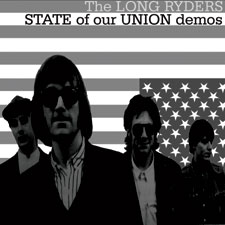
That’s exactly what The Long Ryders did with State of Our Union, their 1985 album that still sounds like a transmission from the backroads of American rock. If you care about where country rock, punk energy, and jangling guitar pop collide, this record is one of the great unsung documents of the era.

The easiest way to understand the album is to remember what the mid-1980s looked like musically. MTV had turned pop into a fluorescent spectacle. Synthesizers were everywhere. Hair metal was rising like some chrome-plated monster out of Los Angeles clubs. Meanwhile, the American roots tradition—folk, country, and the raw rock that grew out of them—was often treated like a museum exhibit.

But beneath the gloss, something else was happening. A loose constellation of bands started digging into the country-rock sound that had once been pioneered by groups like the Byrds, the Flying Burrito Brothers, and Gram Parsons. Instead of simply copying the past, they plugged those sounds into the urgency and speed of punk.

The Long Ryders were one of the most electrifying results of that collision. Led by singer and songwriter Sid Griffin alongside guitarist Stephen McCarthy, the band had already shown promise on their earlier records. But State of Our Union is where everything clicked: the songwriting, the politics, the guitar sound, and the sense that American rock history was not a relic but a living, noisy thing you could still push forward.
The first thing that hits you when listening to the album is the guitars. They don’t shimmer politely. They jangle like someone shaking a tambourine in the middle of a thunderstorm. McCarthy and Griffin build a sound that clearly nods to the Byrds’ twelve-string brilliance, but they play it with the kind of punch that makes it feel less like nostalgia and more like a revival meeting.

This is roots music with adrenaline. Take the album’s opening stretch and you immediately hear a band that understands the power of momentum. The songs move quickly, guitars ringing and drums pushing forward like the band knows that hesitation is the enemy of rock and roll. There’s a sense of restless motion running through the record, as if the entire album is happening somewhere between towns on a highway.

That movement is part of the album’s emotional core. State of Our Union is obsessed with America—its promises, its myths, and its contradictions. The title alone suggests a national report card, and several songs lean directly into that idea. Griffin, in particular, writes lyrics that sound like dispatches from someone who loves the country but refuses to look away from its problems. This isn’t flag-waving patriotism. It’s closer to what you might call critical affection: the belief that a place matters enough to argue about.

One of the album’s most famous tracks, “Looking for Lewis and Clark,” captures this spirit perfectly. On the surface, it’s a rollicking road song, guitars chiming and the rhythm section pushing ahead like the band’s van has just crossed a state line. But beneath the surface is a sly question about exploration and identity. The historical reference becomes a metaphor for searching—searching for direction, for meaning, for some version of the American dream that hasn’t been completely worn out.

That balance between exuberance and reflection is what gives the album its staying power.

Musically, the record is incredibly tight without ever sounding stiff. The rhythm section of Greg Sowders on drums and Tom Stevens on bass provides a steady, muscular foundation that keeps the songs grounded even when the guitars soar. Their playing has that crucial rock and roll quality: it swings just enough to keep things human. You can feel the band breathing together.

And then there’s the production, which wisely avoids the glossy excess that swallowed so many records in the 1980s. Instead of burying everything under layers of studio polish, the album keeps the sound open and immediate. It feels like you’re hearing a band in a room rather than a computer simulation of one.

That decision turned out to be prophetic. Decades later, when the alternative country movement started gaining attention in the 1990s with bands like Uncle Tupelo and the broader Americana scene, the blueprint was already sitting there in records like State of Our Union. The Long Ryders had essentially mapped the territory years earlier: take the storytelling and instrumentation of country rock, add the urgency of punk, and let the songs speak honestly about American life.

In other words, they helped invent a language that other bands would later become famous for speaking. Yet the album has never quite received the mainstream recognition it deserves. Part of that might be timing. The Long Ryders were slightly ahead of the curve, arriving before the industry knew what to do with this kind of hybrid sound. They existed in that awkward space between genres—too country for some rock audiences, too loud for traditional country radio.

But sometimes the records that slip through the commercial cracks are the ones that age the best. Listening to State of Our Union today, what stands out is how alive it feels. The guitars still sparkle and crash with purpose. The lyrics still resonate in a country that continues to wrestle with its own identity. And the band plays with a kind of joyous determination that reminds you why rock music mattered in the first place.

Because at its best, rock and roll isn’t just entertainment. It’s a way of arguing with the world. The Long Ryders understood that. They built an album that celebrates the open road while questioning where it leads. They took the ghosts of American music—folk songs, country laments, Byrds-style jangle—and ran them through amplifiers until those ghosts started dancing again.

That’s the real miracle of State of Our Union. It doesn’t sound like a history lesson. It sounds like a band discovering that the past still has gasoline in the tank. And once that engine starts, the ride is impossible to resist.


MTV Signs Off in 2025 With the Song That Started It All

On December 31, 2025, a landmark moment in music and television history quietly unfolded: MTV’s dedicated 24-hour music video channels ended their broadcast run by playing the very same music video they debuted with 44 years earlier—The Buggles’ “Video Killed the Radio Star.”  

This poetic symmetry, beginning and ending with the same song, is more than a nostalgic shrug. It reflects the arc of MTV’s influence on music, media, and popular culture, while offering a symbolic close to the era of television as a primary gateway for music discovery, as I discussed yesterday.

A Revolution Begins: MTV’s 1981 Launch

When MTV (Music Television) went on the air at 12:01 a.m. on August 1, 1981, its format was radical: a channel devoted exclusively to music videos playing around the clock. The first video ever broadcast was “Video Killed the Radio Star” by the British new wave band The Buggles.  

The choice was as fitting as it was prophetic. Released in 1979 under Island Records, the song was itself a commentary on technological change in media—the rise of recorded music, video and digital production threatening the primacy of radio. Written by Trevor Horn, Geoff Downes and Bruce Woolley, and propelled by its synth-pop sound, it topped charts in many countries and became synonymous with the dawn of a new musical era.  

For MTV, the video was more than a catchy tune—it was an emblem. By placing a visual experience at the forefront of music consumption, MTV helped redefine how generations discovered artists, songs and styles.

MTV’s Golden Age: Cultural Force and Industry Shaper

Throughout the 1980s and early 1990s, MTV’s influence spread far beyond the small number of U.S. homes that could first receive its signal. Shows like Headbangers Ball, Yo! MTV Raps and 120 Minutes brought genres from indie to heavy metal to hip-hop into living rooms worldwide. Music videos became central to an artist’s identity and success.

The phrase “I want my MTV,” popularized in early marketing campaigns, became shorthand for youthful aspiration and cultural currency. The network propelled personalities such as Daisy Fuentes, Andy Dick and Kenneth “Babyface” Edmonds into stardom, and helped launch the careers of artists from Madonna to Nirvana.  

MTV did more than broadcast music; it shaped how music was made. Record labels invested heavily in video production, and artists began approaching videos as art and narrative: from Michael Jackson’s cinematic Thriller to Peter Gabriel’s innovative visuals. These were not mere promotional tools—they were cultural events.

Shifting Tastes and the Digital Era

But the very forces that made MTV as indispensable in the 1980s, technology and shifting media consumption, also contributed to its decline as a music video destination. As cable expanded and then fragmented into dozens of channels, MTV began incorporating non-music programming like The Real World, Jersey Shore, and Ridiculousness as ratings drivers.

By the early 2000s, the rotation of music videos on MTV substantially diminished in the United States. Viewers found new ways to access music videos online through platforms like YouTube, Vevo, and later social media apps, eroding the unique value proposition that MTV once held.  

MTV’s decision to shift toward reality and entertainment formats, while commercially sensible, signaled a transformation of its brand identity. Instead of music television, it became a hub for youth-oriented pop culture broadly defined.

2025: The Last Music Videos Go Dark

The decision in 2025 to discontinue MTV’s 24-hour music video channels (including MTV Music, MTV 80s, MTV 90s, and MTV Live) marks the end of an era. While the core MTV channel remains on the air in some regions, focusing on reality programming, the dedicated music video channels that once defined the brand’s global footprint went dark as of December 31, 2025.  

In the U.K., Ireland, France, Germany, Poland, Australia and Brazil, MTV’s music video stations signed off in a series of final broadcasts that referenced the channel’s own history. Most poignantly, MTV Music’s final transmission featured “Video Killed the Radio Star”—the very track that launched MTV in 1981.  

This choice was deeply symbolic. It acknowledged MTV’s roots while also recognizing a cultural moment in which traditional broadcast television has largely ceded music video discovery to the internet and mobile platforms. The channels’ sign-off was not a quiet disappearance into obscurity but a deliberate nod to the entire arc—from analogue radio and early cable to the digital screens of today.

Why This Matters Beyond Nostalgia

MTV’s lifecycle mirrors broader shifts in media: from centralized broadcasting to decentralized, on-demand digital networks. In its heyday, MTV was both a curator and creator of popular culture; it influenced fashion, language, and musical trends globally. The end of its music video channels underscores how much control over media audiences and creators now wield through algorithms and digital distribution.

Yet, the enduring relevance of “Video Killed the Radio Star” is telling. The song’s narrative, about innovation displacing older forms of media, remains the story of MTV itself. MTV didn’t just broadcast music videos; it embodied a shift in how people engage with music as a multisensory, visual, and social experience.

The song’s symbolic role at both MTV’s inception and sign-off offers a poignant bookend: a reminder that media landscapes evolve, often in ways that creators and audiences could hardly predict.

A Cultural Footprint That Endures

As MTV’s music video channels sign off forever, the network’s legacy lives on. It reshaped the music business, redefined television programming, and helped forge the visual vernacular of contemporary pop culture. Its final act—playing the same iconic music video that introduced the network in 1981—celebrates a remarkable 44-year journey.

In closing with “Video Killed the Radio Star,” MTV did not signal an end to music videos or visual creativity; rather, it acknowledged that the battleground for such creativity has moved. Music videos now thrive on digital platforms, created by artists and audiences alike. Yet the memory of MTV’s rise, and its graceful farewell, reminds us of a time when a single song could announce not just a broadcast, but a cultural revolution.

Finding MTV in College: Staying Up All Night With a New Cultural World

MTV pulling the plug on music video play feels less like a funeral and more like the end of a long, weird afterparty where the jukebox kept looping the same hits. This moment begs reflection, not because something pure just died, but because the illusion finally did. Music never belonged to the screen—it belonged to the noise, the sweat, the argument, the room. With the videos gone, maybe we’re forced back to the dangerous idea that songs have to stand on their own again. But that also means considering what we gained, what we lost, maybe what we never truly possessed.

For many Americans, like me, who came of age in the early 1980s, MTV was not something that simply arrived in their lives—it was something they discovered. That discovery often depended on geography, access to cable television, and a move away from home. For students who grew up in small towns, MTV could feel less like a TV channel and more like a portal to an entirely different cultural universe.

I graduated from high school in 1983 from a small town in West Central Minnesota, a place where musical discovery still relied heavily on local radio stations, record stores, and whatever happened to make its way into the school gym at dances. Cable television was limited, and MTV—still new, still experimental—was not part of everyday life. Music existed primarily as sound, not spectacle.

For me, that changed in college.

Encountering MTV for the first time was a sensory shock. Here was a channel that played nothing but music—all night, uninterrupted, from artists I had barely heard of to songs that sounded like they came from the future. I remember staying up all night watching it, unable to turn it off, as if sleep had suddenly become optional. Each video flowed into the next, creating a kind of visual mixtape that felt both intimate and overwhelming. It felt so cool.

What made MTV so powerful in that moment was not just the music, but the sense of connection. For students arriving on campus from rural or small-town America, MTV offered a crash course in youth culture, fashion, politics, and identity. British new wave bands, ska-influenced neo-soul, the sly, stylish new romantics, and later West Coast hip-hop artists and glam-metal performers all shared the same screen, collapsing distance and difference in ways that radio never could. You didn’t just hear the music—you saw how artists dressed, moved, and imagined themselves. The possibilities for musical identity felt endless, a perspective that now feels far too ‘pie in the sky Pollyannaesque’ optimism.

Those late-night viewing sessions were also communal. Dorm rooms became gathering spaces where people argued over favorite videos, discovered new bands together, and learned the visual language of a generation. MTV didn’t just reflect youth culture—it actively taught it, especially to those of us encountering it for the first time after leaving home.

Looking back, it is striking how formative those nights were. MTV functioned as an informal education in popular culture, one that filled gaps left by geography and access. For students from places like small-town Minnesota, it was a reminder that culture was bigger, louder, and more visually expressive than anything we had previously experienced.

That sense of discovery—of staying up all night because you couldn’t stop watching—is difficult to replicate in today’s algorithm-driven media environment. But for a generation that found MTV in college, those nights remain a vivid memory of what it felt like to stumble into a shared cultural moment and realize that the world was far larger than you had imagined.