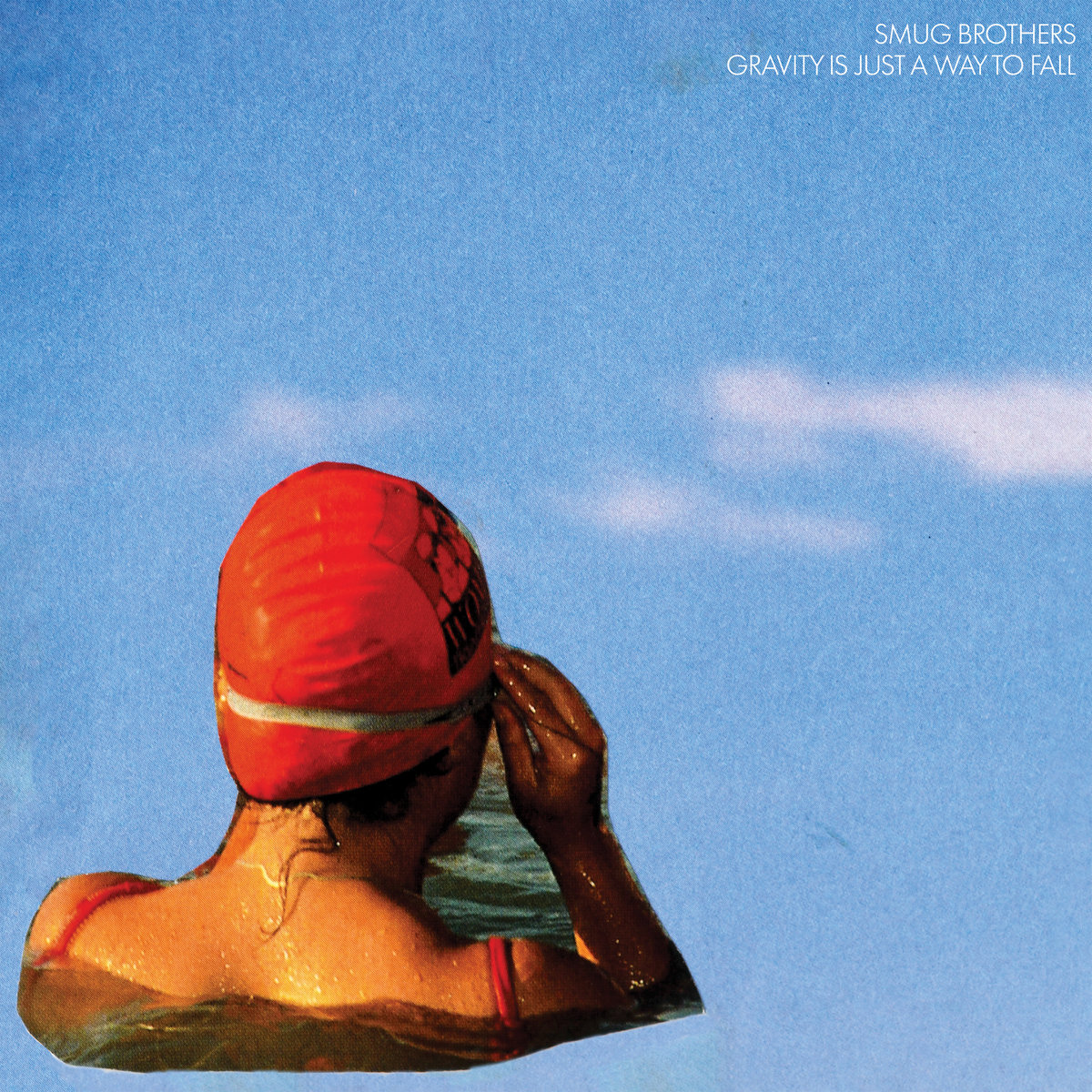
Feedback, Heartbreak, and Other Ohio Miracles: Smug Brothers at 20

If rock and roll has gravity, it’s the kind that pulls you sideways — toward the basement show, the overdriven amp, the song that sounds like it was recorded in a kitchen but somehow rearranges your emotional furniture. And for twenty years, Dayton/Columbus, Ohio’s Smug Brothers have been quietly defying that gravity by embracing it. Their forthcoming 20-year retrospective, Gravity Is Just A Way To Fall (out May 15, 2026), isn’t a victory lap so much as a beautifully scuffed scrapbook — a reminder that some of the best American guitar music of the last two decades has been hiding in plain sight.

To understand Smug Brothers, you have to start in Dayton and then take a drive to Columbus, Ohio — that stubbornly fertile patch of Midwest soil that has produced more sharp, strange guitar bands than the coasts would like to admit. Think Guided by Voices, think Times New Viking, think Cloud Nothings, think Heartless Bastards. Bands that made imperfection a matter of principle. Beautiful chaos. Bands that treated melody like contraband — something to be smuggled past the gatekeepers of taste.

Smug Brothers fit that lineage, but they also complicate it. What began in the mid-2000s as a scrappy recording project between singer/guitarist Kyle Melton and Darryl Robbins (of Motel Beds) hardened into something deeper and more resilient when legendary drummer Don Thrasher — yes, that Don Thrasher from Guided by Voices and Swearing at Motorists — joined the fold. Since 2009, Melton and Thrasher have formed the core of a band that feels less like a stable lineup and more like an ongoing conversation over music. Over the years, that dialogue has included a rotating cast — Marc Betts, Brian Baker, Shaine Sullivan, Larry Evans, Scott Tribble, Kyle Sowash, Ryan Shaffer — all contributing to a catalog that’s as collector-friendly as it is emotionally direct. Each player adding something distinctive to the records they worked on.

But here’s the beautiful irony: you don’t need to track down the cassettes, the limited LPs, or the out-of-print CDs. Gravity Is Just A Way To Fall does the curatorial work for you. Several tracks have been remastered; some have never appeared on vinyl; a few have never existed in any physical format at all. After twenty years, the band decided to “summarize the work up to this point.” That word — summarize — sounds almost academic. What they’ve actually done is distill the fever.

And what a fever it is.

Smug Brothers have always specialized in the kind of riff-driven indie pop that feels both handmade and cosmically aligned. The early lo-fi recordings hinted at greatness — fuzzed-out guitars, melodies that ducked and weaved, drums that sounded like they were daring the tape machine to keep up. But even in those rough cuts, you could hear the bones: a Beatlesque instinct for earworms, an affection for left turns, a refusal to sand down the serrated edges.

Over time, Melton’s recording finesse sharpened. He recorded and mixed much of this retrospective himself, with key collaborations from Darryl Robbins and Micah Carli. Everything was mastered by Carl Saff, whose touch has become something of a seal of quality in indie circles. The result is a set of songs that feel alive rather than embalmed. This isn’t nostalgia; it’s voltage.

What makes Smug Brothers matter — especially now — is their commitment to the album as an artifact and as an attitude that reflects the music within. The front cover, “Solutions Vary With Regions.” The back cover, “The Hungry Rainmaker” (Artwork by PHOTOMACH. Layout by Joe Patterson and PHOTOMACH). These aren’t afterthoughts; they’re part of the argument. In an era where music is often stripped of context and shuffled into algorithmic soup, Smug Brothers insist on the tactile, the visual, the deliberate. Even when the songs are streaming in invisible code, they carry the residue of collage and ink.

And then there are the songs themselves — all written by Kyle Melton. That authorship matters. Across two decades, Melton has built a body of work that feels diaristic without being self-indulgent. The hooks sneak up on you. The choruses don’t explode so much as insist. The guitars jangle, scrape, shimmer. The drums propel rather than pummel. You find yourself humming along before you realize you’ve been converted.

A retrospective like Gravity Is Just A Way To Fall lives or dies by sequencing, and Smug Brothers have always understood that an album isn’t just a container — it’s a mood swing you consent to. These thirteen tracks trace the band’s restless melodic intelligence, moving from punchy immediacy to sly introspection without ever losing that basement-show voltage. It opens with “Let Me Know When It’s Yes,” a title that feels like a thesis statement for the entire catalog — yearning wrapped in defiance. And to be fair, a song that we have often played on YTAA. The guitars chime with that familiar Midwestern shimmer, but there’s an undercurrent of impatience here, a sense that indecision is the real antagonist. It’s a perfect curtain-raiser: concise, hook-forward, emotionally ambivalent in the best way.

“Interior Magnets” (clocking in at an impressively tight 3:01) is classic Smug Brothers compression — all tension and release packed into a pop-song frame. The rhythm section locks in with that loose-tight chemistry Kyle Melton and Don Thrasher have refined over the years, while the melody spirals inward. It’s a song about attraction and repulsion, about the invisible forces that keep people circling each other. One of our favorite Smug Brothers’ songs, “Meet A Changing World,” expands the lens. There’s something almost anthemic about it — not stadium-anthemic, but neighborhood-anthemic. The guitars layer into a bright, bracing wash, as if the band is daring uncertainty to make the first move. In contrast, “It Was Hard To Be A Team Last Night” — a simply brilliant tune — pulls the focus back to the micro-level of human friction. It’s wry, a little bruised, propelled by a riff that sounds like it’s arguing with itself.

“Beethoven Tonight” is pure Smug Brothers mischief — high culture dragged through a fuzz pedal. The song plays with grandeur without surrendering to it, balancing a classical wink with garage-rock muscle. Then comes “Hang Up,” lean and kinetic, built around the kind of chorus that arrives before you’ve fully processed the verse. It’s sharp, unsentimental, and irresistibly replayable. “Javelina Nowhere” may be the record’s most evocative left turn. The title alone suggests a desert hallucination, and the arrangement follows through a slightly off-center, textural, humming with atmosphere. “Take It Out On Me” snaps the focus back into a tight melodic frame, pairing vulnerability with propulsion. It’s accusatory and generous at once, a hallmark of Melton’s songwriting.

“Silent Velvet” glides toward you, in contrast, with a softness in the title, grit in the execution. There’s a dream-pop shimmer brushing against serrated guitar lines. “Seemed Like You To Me” feels like an old photograph discovered in a jacket pocket: reflective, warm, edged with ambiguity. Late-album highlights “Pablo Icarus” and “Every One Is Really Five” showcase the band’s love of conceptual wordplay. The former fuses myth and modernity, soaring melodically before tilting toward the sun. The latter is rhythmically insistent, almost mathy in its phrasing, but anchored by a chorus that keeps it human.

Closing track “How Different We Are” is less a statement of division than an acknowledgment of complexity. The guitars don’t explode; they bloom. The rhythm section doesn’t crash; it carries. As finales go, it’s quietly expansive — a reminder that across twenty years, Smug Brothers have thrived on tension: between polish and rawness, intimacy and noise, gravity and lift.

If last year’s Stuck on Beta (2025) suggested a band still hungry, still refining, still pushing outward, this retrospective confirms the long arc. Smug Brothers didn’t burn out. They didn’t calcify. They kept writing, recording, releasing, playing shows, and deepening their chemistry. Gravity, in their hands, isn’t a force that pins you down; it’s the thing you learn to fall through with style.

There’s something profoundly Midwestern about that ethos. No grand manifestos. No self-mythologizing. Just songs that are stacked one after another, each carrying its own small revelation. In a culture obsessed with the new thing, retrospectives can feel like retirement parties. But Gravity Is Just A Way To Fall plays more like a dispatch from a band still in motion.

Twenty years in, Smug Brothers remind us that indie rock isn’t a genre so much as a practice: keep the overhead low, keep the guitars loud, keep the songs sharp, keep the faith. The noise may be louder than ever, the platforms more crowded, the attention spans shorter. But when a riff locks in, when a chorus lifts, when a drumbeat nudges your pulse into alignment, none of that matters.

Gravity is just a way to fall. And sometimes, falling is how you learn what’s been holding you up all along.

Short Songs Have Every Reason to Live

Apologies to Randy Newman for the title, I just could not help myself. We all love a good, long album, don’t we? The sprawling epics, the suites, the ambitious arcs that stretch into the horizon like the great classic rock composers, forever nudging us to find meaning in the slow build, the dramatic rise, and the quiet moments in between. But what about the short, sharp, explosive bursts of sound? What about the brief moments when the band isn’t asking you to follow them through a journey or listen to their complicated metaphors for life? No. These songs grab you by the throat, punch you in the gut, and leave you feeling strangely satisfied, if not slightly unsettled. They take less time than most elevator rides, yet they can leave an emotional scar more enduring than any prog-rock symphony.

So what is it about these short songs that keeps us coming back for more? Why do they work on us so profoundly, often without the luxury of extended introspection or complicated arrangements? Perhaps it’s because they are the sound of life itself—imperfect, intense, and fleeting. Some of the joy is in the very fact of existence. As much as the towering albums of our favorite bands represent a broader spectrum of emotion, there’s something brutally honest and pure about a song that cuts through all the clutter, hits you, and leaves. Let’s take a look at the power of these little bangers, and why they can sometimes be the most influential songs in the world.

Short Songs: The Art of the Quick Impact

Lester Bangs, god rest his sarcastic and critical soul, understood the beauty of brevity. Bangs wasn’t one to be bogged down by theory or length—he appreciated the visceral punch of the immediate, unfiltered emotion that comes from a quick blast of sound. Short songs demand attention, forcing listeners into an intense, often surprising relationship with the music. There’s no room for pretension or self-indulgence. The song either works, or it doesn’t. It’s just you and the music, for as long as it lasts—maybe a minute, maybe three, but never more. The art of the short song lies in its ability to do something profound in a limited time frame, leaving you with a lasting impression, or even a gnawing feeling, long after the final note has passed. This is something that Robert Pollard is an undisputed master of.

Consider a song like The Ramones’ “Blitzkrieg Bop.” It’s barely two minutes long, yet it feels like the embodiment of youthful rebellion, an anthem that encapsulates everything that punk was about—raw energy, simplicity, and urgency. You can hear it, and it’s already over before you’ve had time to think about it. The beauty of this lies in the idea that this song doesn’t ask for reflection, doesn’t demand your intellectual labor, and doesn’t beg for analysis. It just exists—a blur of riffs and hooks that sums up a generation in its frantic sprint.

The brevity of such songs allows them to penetrate deeper than a 10-minute waltz ever could, or at least with more immediate results. A song like “I Wanna Be Your Dog” by The Stooges, which comes in at just under three minutes, does more in those 180 seconds than most of the bloated albums of its time could ever hope to accomplish. It’s simple, dirty, primal, and unrelenting—stirring up more in you in a few short moments than you might expect from an entire album. The impact of these songs is often direct, like a cold slap in the face, forcing you to reckon with them immediately.

The Radio Effect: Why Short Songs Work on the Airwaves

Here’s the thing—short songs don’t just get to your head. They get to the ears of the listener. That’s because brevity is a tool that radio stations, especially in the era before streaming, loved to exploit. The shorter the song, the more it could be played in a given timeframe, and the more it could break through the noise. The best of these songs—ahem, the ones that actually had something to say—became iconic because they didn’t overstay their welcome.

Let’s talk about The Clash for a minute. Their song “London Calling” clocks in at just over three minutes. Sure, it’s a little longer than “Blitzkrieg Bop,” but it still falls into that sweet spot where it feels like a complete statement that doesn’t need to drag on. It’s infectious, it’s compelling, and it doesn’t waste time telling you what’s wrong with the world—it shows you. The energy of the song doesn’t let you get bogged down in excessive flourishes or unnecessary complexity. By stripping away the fat, the band leaves you with pure, unadulterated punk rock power.

Even though London Calling might not be the shortest song on the airwaves, its ability to harness the raw spirit of rebellion in such a brief time makes it the epitome of what a short song can do—take over the world, turn everything upside down, and leave you wanting more. Which, let’s face it, is what we all want from a song, anyway.

The Punch and the Aftertaste: How Short Songs Leave Their Mark

Here’s the funny thing about short songs—they often don’t have the time to linger. But that’s what gives them their staying power. They are designed to stick with you, like a one-night stand that leaves you with a hangover of thoughts and feelings you can’t shake off. After just a brief encounter, they slip into your subconscious, grabbing your brain and twisting it in unexpected ways. They linger, even though they don’t have the time to do so.

Take for example, a song like “Fell In Love With a Girl” by The White Stripes. It’s a burst of electric energy that clocks in at just under two minutes. But what makes it so unforgettable is its immediacy. The riff, the rhythm, the lyrics—they don’t give you time to do anything but react. You’re in it, you’re out of it, but the song sticks with you, lingering in your head long after it’s over.

This is the power of a short song. It may be over before you’ve even had time to process it fully, but that doesn’t matter because the impact is there. Bangs would understand that these moments—these songs that don’t let you breathe—carry an emotional weight that’s disproportionate to their length. The brevity works because it doesn’t give you time to second guess, to dissect, or to overthink. It’s pure, undiluted emotion that cuts through the noise, like a sucker punch to the gut.

“Walkaways” by Counting Crows is the kind of song that hits like a slow-motion crash—strummed guitar and Adam Duritz’s vocals unraveling with all the desperation of a last-ditch attempt to save something that was doomed from the start. There’s a bittersweet, almost reckless honesty in the way he sadly almost pleads the lines:

I’ve gotta rush away
She said, I’ve been to Boston before
And anyway, this change I’ve been feeling
Doesn’t make the rain fall
No big differences these days
Just the same old walkaways

The rhythm is wistful and haunting, like a dream you can’t escape but desperately need to get farther and farther from it and then find you did not take a single step. It’s a beautiful mess—a reflection of how all of us bleed, falter, and still somehow move forward.

Short Songs and the Change They Ignite

Now let’s get to the meat of it—the impact these songs have on listeners. Why are they so powerful? Because they demand attention. You blink and it’s gone. In a world saturated with noise, social media distractions, and endless content, these short songs remind us of a time when music could be something immediate, spontaneous, and anarchic. They explode into your world and leave you questioning everything, and then, before you can fully comprehend it, they vanish.

They also create a sense of community. Every fan of punk rock, indie, or garage knows that feeling when you’re in a room full of people and the first few chords of a short, familiar song kick in. The energy shifts. You can feel the collective understanding—everyone knows the song, everyone knows the intensity, and it’s about to hit us all at once. That communal feeling, that shared experience, amplifies the effect of the song, making it a primal ritual, a call to arms that’s delivered in the simplest of packages.

Short songs give us permission to feel in ways that long-winded tracks often can’t. They teach us that the most significant moments are often the briefest. That intensity doesn’t have to take hours to build. That revolution, rebellion, love, and loss can be boiled down to a few lines, a few chords, a few seconds. The brevity is part of their power.

Smug Brothers’ “Hang Up” is a sweaty, gritty blast of pop-punk that comes at you like a shot of espresso chased by a beer. It’s raw, it’s relentless, and it doesn’t care if you’re ready for it. The guitars jangle like a rusty chain being dragged across pavement, while the lyrics tap into that familiar frustration, the kind that never seems to go away. But the brilliance of this song is its brevity—it hits hard, gives you no room to breathe, and then it’s gone, leaving you half-alive, craving more. It’s chaos wrapped in catchy melodies—perfectly imperfect. Smug Brothers understand the power of a brilliant song can sometimes be best demonstrated by not lingering.

The Brief, the Bold, and the Beautiful

In the end, short songs are, to borrow from Lester Bangs himself, a “shotgun blast of truth” that demands to be felt, not analyzed. They are the anthems of chaos, the rebellion of simplicity, and the embodiment of that glorious moment when everything aligns just right. These songs may be brief, but in that briefness lies their eternal power.

Bangs would’ve told you that these little ditties are a reflection of life’s fleeting nature. Sometimes, you get a moment that burns so brightly, you’re left staring at the ashes afterward, not even sure how it happened. And the short song is the perfect vehicle for that kind of magic. Whether it’s two minutes, three minutes, or less, these songs will always have something to say—something that’s too urgent to stretch out, something that can only be told in a flash, like a lightning strike across the sky.