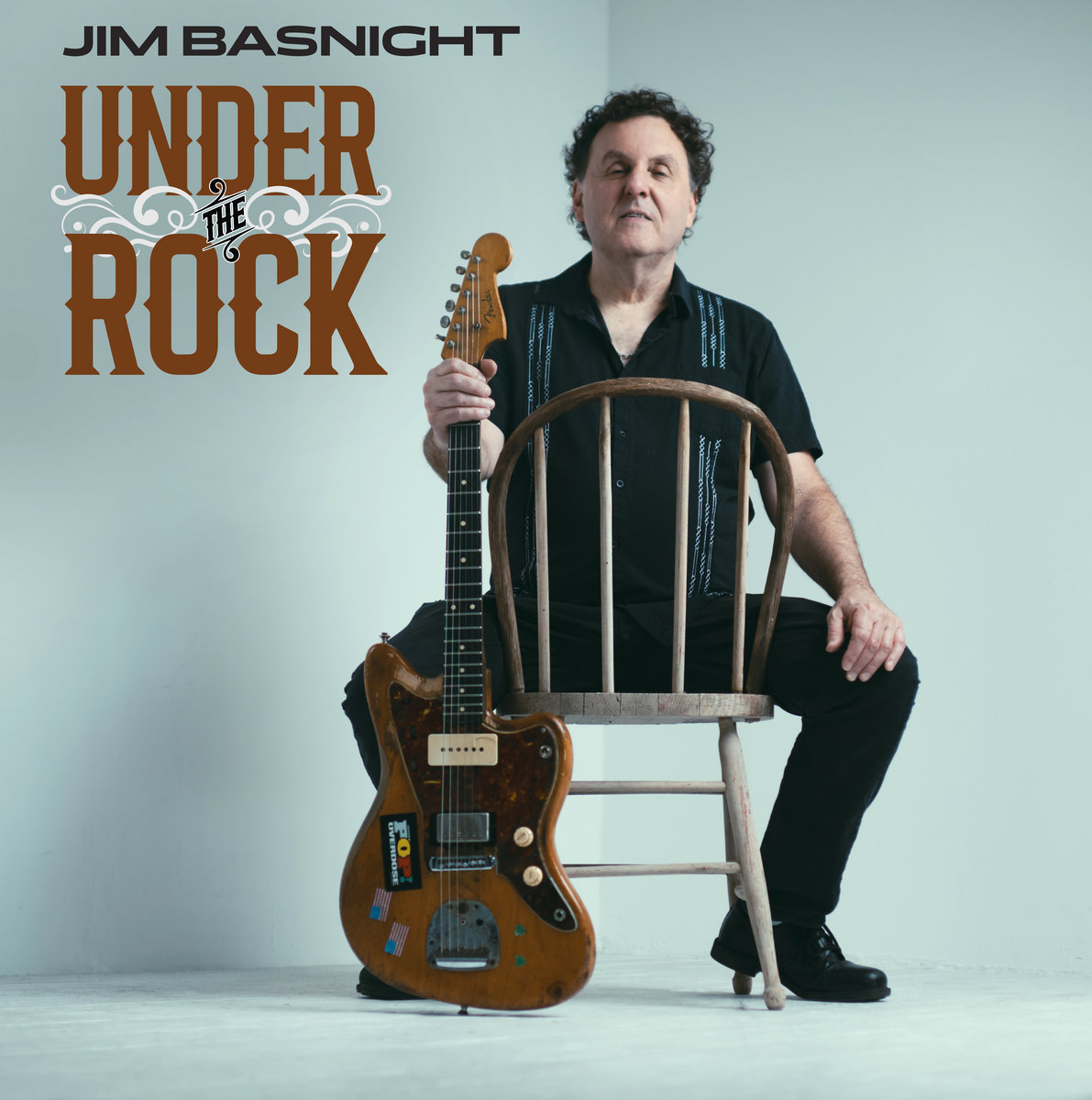
Rock records don’t arrive like messages from the future anymore; they crawl out from under the floorboards, smelling of time, sweat, and unfinished conversations. Under the Rock is one of those stubborn artifacts that refuses to die quietly. Jim Basnight doesn’t sell you revelation; he hands you proof, the sound of a songwriter who outlasted the noise, survived the cycles, and came back swinging not with volume, but with authority.
Jim Basnight has never been interested in novelty, only in arrival. Under the Rock sounds like the moment when a long-argued idea finally stops pacing the room and sits down and stays, perfectly certain it belongs there. This is his first album of all-new originals since 2019’s Not Changing, and it doesn’t sound like a comeback so much as a consolidation—five years of songwriting, touring, and living boiled down to something sturdy, melodic, and quietly defiant in the space of swaggering rock and roll.
Basnight has always written songs that know better than to scream at you. These are songs that wait for you outside in the undeniable groove of guitar and percussion. Under the Rock draws from the strongest material he’s written over the past half-decade, along with a few older pieces that have been dragged through the miles and sharpened by repetition. You can hear the refinement not as polish, but as confidence. The record captures a sound Basnight has been chasing for years. A sound imagined long before it existed, finally realized through patience, trust, and a refusal to rush the good parts.
Much of the album grew out of years on the road with drummer Sean Peabody and vocalist Beth Peabody, and it shows. Touring doesn’t just tighten a band—it creates a shared grammar, a way of knowing when not to play. Sean Peabody’s drumming is about feel rather than flash, locking into grooves that give the songs room to breathe without ever losing momentum. There’s an unspoken understanding at work here: the song always comes first.
Beth Peabody is one of the quiet revelations of Under the Rock. Her vocals don’t compete with Basnight’s; they complete them. Her phrasing is attentive, her pitch dead-on, but more importantly, her vocal personality has grown into something assured and expressive. She brings emotional shading that deepens the arrangements, turning good songs into lived-in ones. This isn’t backup singing—it’s partnership.
When Glenn Hummel steps in on drums for later sessions, he carries forward the rhythmic feel with the ease of someone who has been inside this music before, because he has. A longtime collaborator from the Jim Basnight Band, Hummel doesn’t reinvent the wheel; he keeps it rolling straight and true. The continuity matters. Under the Rock sounds cohesive because it is.
At the center of it all is Garey Shelton—bassist, engineer, mixer, and co-producer—anchoring every track. Thirty years of collaboration buys you something money can’t: trust without explanation. Working largely from his Seattle-area studio, Shelton often guided the project independently, shaping performances and sonics with an ear tuned not to trends but to truth. The bass playing is patient and grounded, the mixes clear without being sterile, warm without being nostalgic. Shelton helps realize the album’s clearest expression by knowing exactly when to intervene—and when to let Basnight be Basnight.
And that’s the thing: Under the Rock isn’t chasing relevance. It assumes it. Basnight writes like someone who understands that pop craft isn’t about youth or volume, but about clarity of intent. These songs carry melody the way some people carry history along with them, without strain, without apology. There’s rock here, yes, but also folk sense, power-pop instincts, and the accumulated wisdom of someone who’s learned that restraint is its own form of rebellion. Sometimes the music cooks best when you don’t throw everything possible in the stew.
The great music writer, reviewer, and critic Lester Bangs used to write about artists who meant it, who didn’t confuse sincerity with spectacle. Under the Rock is one of those records. It doesn’t beg for attention. It doesn’t posture. It just stands there, solid, humming with lived experience, daring you to mistake rock and roll arrangements for weakness.
Jim Basnight didn’t reinvent himself on Under the Rock. He didn’t need to. He just finally caught the sound he’d been hearing all along—and let it speak.

 your tuesday afternoon alternative