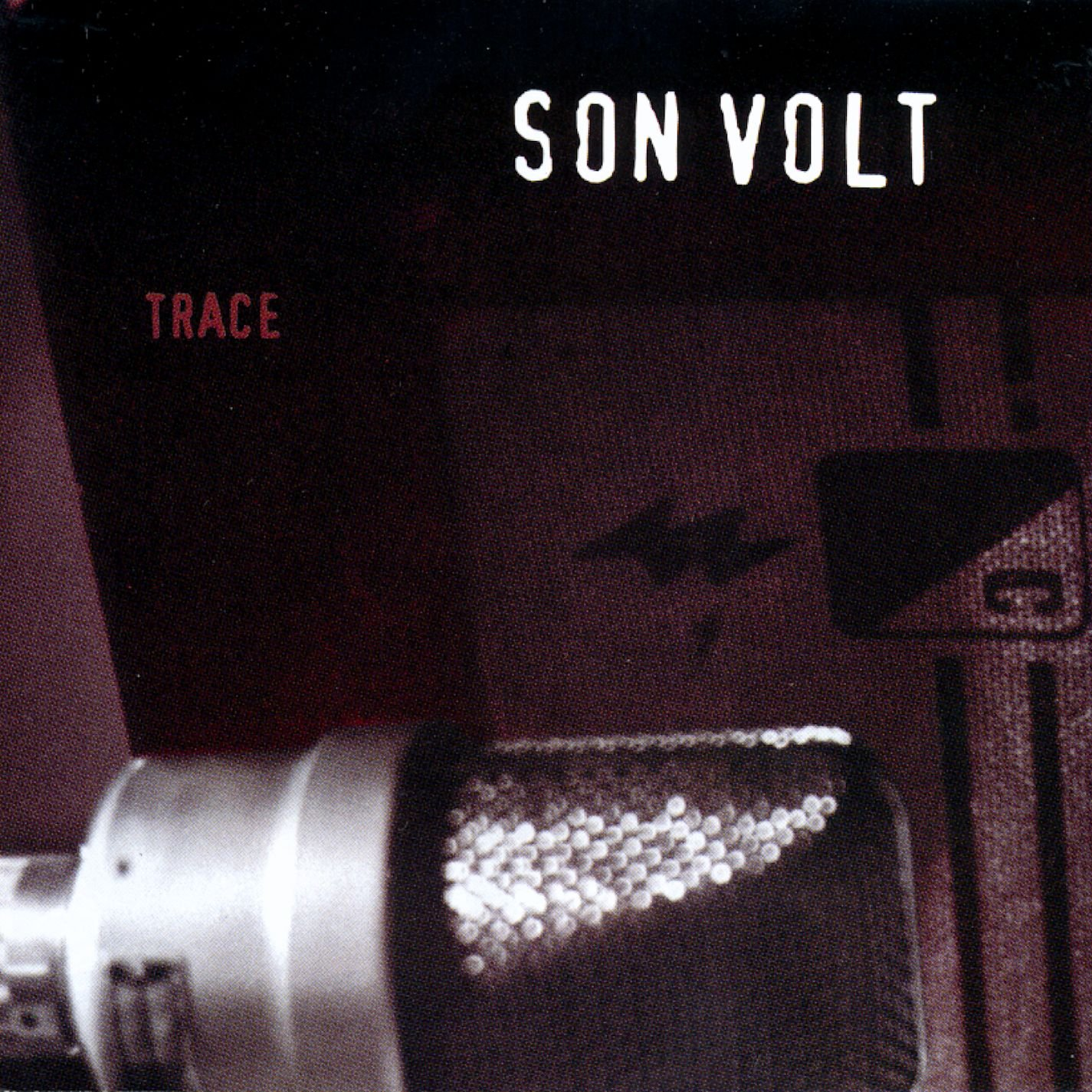
The first time I heard Son Volt’s Trace, I thought, “Ah hell, here it is: Uncle Tupelo’s divorce decree, notarized on reel-to-reel, filed away in some Missouri courthouse basement where the plaster peels and the janitor drinks Falstaff or Bud Light out of a Styrofoam cup.” Jay Farrar stomps out of the wreckage, lugging his guitar like a busted-down jalopy radiator, and instead of screaming, he sighs, drawls, lets the words leak out slow like oil seeping into gravel. This isn’t rock and roll as firecracker catharsis; it’s rust-belt requiem. It’s the sound of gas stations going dark one by one on Route 66 and every half-drunk loner still praying the neon sign will flicker back to life.
See, Farrar isn’t interested in saving your soul or even giving you a hook to hum while you brush your teeth. He’s interested in reminding you that America has grit and grime, and the old idols, they are rotting.
Listen to “Windfall.” That harmonica doesn’t soar; it wheezes like your uncle’s lungs after three decades underground in coal mines. Yet it lifts you anyway, like catching a breeze on a road you know dead-ends in thirty miles. Farrar’s voice is carved from stone, immovable, half-asleep but never indifferent. He sings like he’s standing in the ruins of the sixties, looking around and muttering, “Guess this is what we’ve got left.” And dammit, what we’ve got left sounds gorgeous.
Trace isn’t alt-country. Alt-country is a marketing gimmick, an excuse for journalists to pretend they’ve discovered a new continent when really they’ve just found the same sad barstools Willie and Merle already angry because they don’t recognize the place. Trace is country with its skin peeled off, electrified and nailed to a telegraph pole. It’s Neil Young after the hangover, it’s Gram Parsons without the messiah complex. It’s the hum of America when the AM station fades out and all you’ve got is static—and suddenly the static is more moving than the song that was playing ever was.
Take “Drown.” Farrar growls it like a prophecy for people already underwater. The guitars crash like waves on cheap levees, the kind that always break. It’s furious and exhausted at the same time, the way you get when you’ve fought too long and realized the fight was fixed from the start. Then there’s “Tear Stained Eye,” where he asks if seeing a river run dry will make you start crying. Spoiler: it won’t. You’ll just stare and keep driving, and that numbness is exactly what Farrar’s documenting—he’s the archivist of our collective shrug.
But here’s the trick, the brilliance: instead of despair, Trace gives you dignity. The dignity of standing in a field that used to be a town, looking at the weeds grow through concrete and saying, “Okay, maybe this is freedom.” Farrar doesn’t want your hope. He wants your honesty. The honesty that says America’s dreams are boarded-up diners and broken jukeboxes, but inside those ruins, a few songs still rattle around like sacred relics.
And maybe that’s why Trace still matters. Because it’s not trying to sell you redemption. It’s not asking you to believe in the comeback of some mythic heartland. It’s just holding up the Polaroid of what’s gone and saying, “Here, take a look. Doesn’t it hurt beautifully?”
In the end, Trace is a ghost road record. It takes you down highways that don’t exist anymore, past radio towers that no longer transmit, through towns that can’t even hold onto their own zip codes. But by the time you get to the last track, you don’t feel lost. You feel found—because someone finally put into music that vague ache you’ve been hauling around, the one you thought was just your private sorrow. Turns out it’s everybody’s sorrow. And Jay Farrar, God bless his gravelly heart, sang it so we could all drive through it together.


 your tuesday afternoon alternative