Songs Against the Sirens

When the helicopters circle low over a neighborhood, they make a sound that feels older than electricity. It is the thrum of authority announcing itself. In Minneapolis last winter, that sound mixed with others: the clatter of hurried suitcases, the click of phones spreading warnings in Spanish, Somali, Hmong, and English, the uneasy quiet of schoolrooms where too many desks sat empty. Federal immigration enforcement swept through the Twin Cities with a force that startled even communities accustomed to living with uncertainty.

And, as has happened so many times before in American history, musicians began turning the noise into music.

Protest songs rarely arrive as tidy manifestos. They appear instead as fragments of feeling—ballads scribbled on tour buses, verses tested at benefit shows, choruses sung in church basements and union halls. Bruce Springsteen has spent half a century mastering this art: the ability to take a specific injustice and fold it into the larger story of who we are. His recent live sets have revived “The Ghost of Tom Joad” and “American Skin (41 Shots),” reframing them for a new era in which questions of policing, borders, and belonging are once again painfully urgent. When he introduces those songs now, he often speaks directly about families living in fear of raids, making the connection between past struggles and present ones impossible to miss.

Springsteen has also used newer material to gesture toward the same terrain. In “Rainmaker,” from 2020’s Letter to You, he warns of leaders who “steal your dreams and kill your prayers,” a lyric that fans have increasingly heard as an indictment of the politics that enable harsh immigration crackdowns. At concerts in the Midwest, he has dedicated “Long Walk Home” to immigrant communities, turning an older song about alienation into a present-day pledge of solidarity. The message is classic Springsteen: America belongs to those who build it, not merely to those who police it.

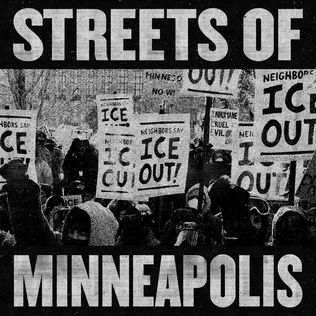
Bruce Springsteen’s “Streets of Minneapolis” stands as one of the most direct and urgent protest songs of his long career, written and released in January 2026 in response to violent federal immigration enforcement actions in Minneapolis. The song’s lyrics paint a stark picture of a city under duress—“a city aflame fought fire and ice ’neath an occupier’s boots”—and explicitly name the deaths of Alex Pretti and Renée Good at the hands of ICE agents as catalysts for the track’s creation. Springsteen recorded the song within days of the events and dedicated it to “the people of Minneapolis, our innocent immigrant neighbors,” underscoring its solidarity with those resisting what he called “state terror.” Musically, it begins with a spare acoustic arrangement before building into a fuller folk-rock chorus that includes a chant of “ICE out of Minneapolis,” transforming the narrative from lament to communal call to action. By invoking local streets and specific victims, Springsteen shifts from abstract critique to vivid storytelling, grounding national debates over immigration enforcement in the lived experiences of a particular place and its people.

Across the Atlantic, Billy Bragg has been sharpening his own brand of melodic concern. Bragg’s music has always insisted that politics is not an abstract debate but a lived experience. In recent years, he has circulated new compositions such as “The Sleep of Reason” and “King Tide and the Sunny Day Flood,” songs that connect nationalism, xenophobia, and state power in plainspoken language.

Billy Bragg’s recent song “City of Heroes” exemplifies how veteran protest singers are responding in real time to state violence and grassroots resistance. Written, recorded, and released in less than 24 hours in late January 2026, the track was inspired by the killing of Alex Pretti and the earlier death of Renée Good—both widely reported incidents involving U.S. Immigration and Customs Enforcement agents in Minneapolis, Minnesota. Bragg frames the song around a powerful invocation of Martin Niemöller’s famous warning about silence in the face of oppression, repurposing its structure to insist that individuals must stand up when “they came for the immigrants… refugees… five-year-olds… to my neighborhood.”

Rather than dwelling solely on the perpetrators of violence, the song centers the courage of ordinary Minneapolis residents who “will protect our home” despite tear gas, pepper spray, and intimidation, making the city itself a locus of collective heroism and moral witness. Through its stark lyrics and urgent folk-punk delivery, “City of Heroes” both honors local resistance and challenges listeners everywhere to confront injustice rather than look away.

What is different now is how quickly these songs travel and how intimately they are connected to specific communities. In Minnesota, local artists have woven themselves into the fabric of resistance. Somali American rapper Dua Saleh’s “body cast,” though not written solely about immigration, captures the claustrophobia of living under constant surveillance. Minneapolis songwriter Chastity Brown released “Back Seat” after volunteering with local advocacy groups; the song tells of a mother trying to explain to her son why “men in badges came before the sun.” Musicians have often turned their songs into anthems at rallies.

Nationally, a wave of artists has confronted immigration enforcement head-on. The Drive-By Truckers’ blistering “Babies in Cages” remains one of the clearest condemnations of family separation ever recorded, and the band has revived it repeatedly as raids intensify. Margo Price has performed the song at fundraisers, adding her own spoken-word verses about rural Midwestern towns emptied by deportations. Latin pop star Residente’s “This Is Not America” links border policy to a longer history of hemispheric violence, while Mexican-American band Las Cafeteras’ recent single “If I Was President” imagines a world where “no kid sleeps in a holding cell.”

Music becomes a form of accompaniment. It says to frightened families: you are not alone in this story.

Music critic Ann Powers has often observed that songs do not replace policy. They cannot halt a raid or change a law. But they shape the emotional climate in which those laws are debated. They help define what cruelty feels like and what compassion sounds like. In moments of crisis, they keep the human stakes visible. The current wave of immigration enforcement has produced images that feel almost medieval: agents in tactical gear arriving at dawn, children escorted past news cameras, workplaces emptied in minutes. Musicians respond by insisting on the modernity—and the intimacy—of these events.

These acts may seem small, but protest music has always worked through accumulation. One song becomes a hundred, then a thousand. The civil-rights anthems of the 1960s did not end segregation on their own, yet they provided the soundtrack that made the movement recognizable to itself. Today’s musicians are doing similar cultural labor, stitching together a sense of shared purpose across neighborhoods and genres. There is also a new bluntness in the language. Where earlier generations sometimes relied on metaphor, many contemporary artists name ICE directly. Punk bands from Duluth to Des Moines sell T-shirts that list hotline numbers on the back. Choirs gather outside detention centers to sing lullabies in many languages, turning public space into an improvised concert hall of solidarity.

Still, the best songs resist becoming mere slogans. Springsteen’s gift has always been his ability to locate the political inside the personal: the worker who just wants to get home, the teenager who dreams of a wider world, the immigrant who believes the promises printed on postcards. Bragg, too, mixes anger with tenderness, pairing sharp choruses with melodies that invite sing-alongs. Protest music must be welcoming as well as confrontational; it has to create a community big enough to hold grief and hope at the same time.

In Minneapolis and beyond, that community is gathering wherever music is made. At a recent benefit concert on the West Bank, performers from Somali jazz groups, Hmong folk ensembles, and indie-rock bands passed a guitar from hand to hand while families shared homemade food. Between songs, organizers explained how to donate to emergency housing funds and accompany neighbors to court hearings. The event felt less like a show than a temporary village, built out of rhythm and resolve.

This is how culture pushes back against fear. Not with grand gestures, but with steady, persistent acts of care. A chorus sung together. A lyric that tells the truth. A melody that refuses to look away.

The helicopters will eventually move on. Policies will change, as they always do. What remains are the stories people tell about how they treated one another when the pressure was on. Musicians like Springsteen and Bragg—and the countless local artists standing beside them—understand that their job is to help write those stories in sound: to give courage a tune that can be carried home and passed along.

Somewhere tonight in Minnesota, a teenager is learning three guitar chords and trying to fit the chaos around them into a song. That, too, is part of the resistance. In the long American argument over who belongs, music keeps insisting on an answer both simple and radical: everyone who can sing along.

Listening to the Hiss: Why Nebraska Is Bruce Springsteen’s Most Dangerous Album

I have been watching a lot of music movies and documentaries. One of the most interesting music films I have seen is Deliver Me From Nowhere.

So, sure… I’m supposed to talk about a movie here, Deliver Me From Nowhere, which already sounds like a bootleg lyric scribbled on a diner napkin at 3 a.m., which is exactly right, because if you’re going to make a movie about Bruce Springsteen and you don’t start from the place where he’s half-lost, half-feral, recording songs alone with ghosts rattling around the room, running around his mind, then you’re just making another shrine, another museum exhibit with the volume turned down.

The trick with Springsteen—especially for film—is that he’s been embalmed while still breathing. Bandanas, stadiums, flag-waving, the myth of blue-collar transcendence with a backbeat you can chant to while buying merch. All of that is real enough, but it’s also the loudest, safest version of him. Deliver Me From Nowhere wisely points the camera in the opposite direction: toward the guy sitting alone with a cheap recorder, a harmonica, and a head full of the past that we all are trying to outrun from when we were kids, running as much from as well as to American dread. Toward Nebraska.

Let’s get this out of the way right now: Nebraska is one of the best albums Bruce Springsteen ever made. Maybe the best. And before the E Street choir starts humming “Born to Run” in protest, understand that this isn’t a knock on the big stuff. Those records are monuments. Nebraska is a crime scene. And crime scenes tell you more about a culture than monuments ever do.

The movie—at least in spirit, and somewhat in execution—gets that Nebraska wasn’t a detour or a demo tape that accidentally escaped. It was a confrontation. Springsteen stares straight into the cracked mirror of American masculinity and says, “Okay, let’s not lie about this.” No big band. No catharsis-by-chorus. Just flat voices telling flat stories about people who don’t get saved, or don’t even believe in salvation anymore (honestly, which is worse?).

If you want to understand why Deliver Me From Nowhere matters, you have to understand that Nebraska is a record made by someone who had already “won.” The success machine was humming. He could have turned the crank again and printed another anthem. Instead, he made a record where the American Dream shows up already foreclosed, the lawn brown, the marriage strained, the highway leading nowhere in particular.

That’s not an accident. That’s a choice. And it’s a deeply uncommercial one, which is what makes it all the more meaningful.

What the movie seems to grasp—again, fingers crossed as it doesn’t chicken out—is that Springsteen’s genius isn’t just empathy. A lot of critics stop there, because empathy is safe. Empathy doesn’t ask uncomfortable questions. But Nebraska isn’t just empathetic; it’s accusatory. Not in a preachy way, but in the way a good true-crime story accuses you by refusing to tidy itself up.

Take the title track. A killer talks. No moral lesson. No orchestral swell telling you how to feel. Just a voice explaining itself, almost bored, almost numb over the fact that the world is a place full of mean, anger, and hostility. That’s radical. Rock music, especially in the early ’80s, wasn’t supposed to do that. Rock was about triumph, even when it pretended to be about suffering. Nebraska lets suffering sit there without redemption, like an unpaid bill that you read in the dark after the electricity has been turned off.

A film about this period has to resist the urge to explain too much. Explanation is the enemy of dread. If Deliver Me From Nowhere turns into a neat psychological case study—“here’s why Bruce felt sad”—then it misses the point. The power of Nebraska is that it doesn’t psychoanalyze its characters. It listens to them. And sometimes listening is more disturbing than understanding.

What makes Nebraska one of Springsteen’s best albums (I know, I already said that) is precisely what made it risky: it’s unfinished in all the right ways. The tape hiss is part of the meaning. The thin sound isn’t lo-fi nostalgia; it’s a sonic moral choice. These songs don’t deserve polish because their lives don’t have it. You don’t add reverb to a confession. You do not turn up a whisper, you lean in and listen hard.

If the movie captures that—if it lets silence do some of the talking—it could be one of the rare music films that understands restraint. Most biopics are loud because they’re afraid. Afraid the audience will get bored, afraid the myth won’t survive scrutiny. But Nebraska survives because it’s small. It’s the sound of someone realizing that being heard by millions doesn’t mean you’ve said what you needed to say. There’s also something profoundly American about the timing. Nebraska comes out in the early Reagan years, when optimism was being sold wholesale again, when flags were back in fashion, and the word “hardship” was being politely escorted off the stage. Springsteen responds not with protest anthems but with stories about people who don’t make it into speeches. That’s political without being programmatic. It’s sociology disguised as folk noir.

And here’s where the movie has an opportunity most Springsteen narratives avoid: showing that this record isn’t an aberration but a key. You can draw a line from Nebraska forward—to The Ghost of Tom Joad, to the quieter corners of Tunnel of Love, to every moment when Springsteen chooses unease over uplift. Nebraska isn’t the opposite of the stadium-Bruce; it’s the engine room underneath it.

In the end, Deliver Me From Nowhere doesn’t need to convince us that Springsteen is important. That argument was settled decades ago. What it needs to do is remind us that importance isn’t always loud, and greatness isn’t always communal. Sometimes it’s one guy, alone, trying to tell the truth without a safety net.

That’s why Nebraska endures. Not because it’s bleak, but because it’s honest. It refuses to fake hope, and in doing so, it earns whatever hope you find in it. If the movie understands that—if it trusts the audience to sit with discomfort, with ambiguity, with the hiss of the tape still running—then it won’t just be another rock biopic. It’ll be something rarer: a film that knows the quietest records sometimes make the most noise.

Favorites of 2025: Bruce Springsteen – Nebraska 82 Expanded Edition

Look, Nebraska was already perfect in that cold-coffee, blackout-3-a.m. way that records sometimes accidentally are—Springsteen mumbling ghosts into a four-track like he’s afraid the neighbors might hear him unraveling. You don’t “improve” a hallucination. But here comes Nebraska ’82 with its alternate visions, its rust-belt apparitions, and suddenly you realize perfection isn’t the point anyway. What we’re getting now is the messy archaeology of a masterpiece—the dirt under its fingernails, the tape hiss, the roads not taken. It doesn’t dethrone the original bedroom-confessional monolith; it stands off to the side like a cracked mirror held up to the same bleak American sky. And damn if that mirror doesn’t show something worth staring into all over again.

Nebraska ’82: Expanded Edition arrives at the right time

With the 2025 release of Nebraska ’82: Expanded Edition, Springsteen and his team have delivered the most comprehensive, honest, and vivid portrait of one of the most haunted, intimate, and influential albums in rock history. The box set includes a newly remastered version of Nebraska as originally released, previously unheard demo outtakes, the long-rumored “Electric Nebraska” sessions with the full band, and a newly recorded live performance filmed in 2025.

For newcomers and longtime fans alike, this release offers both context and extension: context for how Nebraska came to be — from home demos on a TASCAM to a full LP — and extension in the form of alternate takes, jukebox-ready electric arrangements, and reflections of the songs through decades of memory.

It’s not just nostalgia or archival shelf-cleaning. What emerges is an album whose darkness, subtlety, and emotional power remain urgent. Nebraska ’82 still speaks — perhaps even more clearly now — to lives marked by uncertainty, longing, and resilience.

The original Nebraska — stark, personal, unforgettable

When Springsteen recorded Nebraska in late 1981 and early 1982, he did so not with a studio full of musicians but with a four-track recorder in his bedroom, an acoustic guitar, and a stark vision. The result was an album unlike anything else in his catalogue: bleak, intimate, confessional, but not confessional in a self-pitying sense. These were songs born from solitude, from the rawness of fear, regret, despair — made real by economy of arrangement.

Tracks like “Atlantic City,” “Johnny 99,” “State Trooper,” and “My Father’s House” traversed the margins of the American dream: economic hardship, moral desperation, violence, yearning for redemption. The spare instrumentation — sometimes only a guitar and a voice — made every lyric, every tremor of the vocal, every pause between notes count. The result is widely considered one of the great solo records in rock.

Decades later, Nebraska remains the gold standard for how quiet, low-fi recordings can deliver emotional immediacy. For many, it’s not just an album — it’s a private confessional, seen through the lens of loneliness and lost dreams.

What the Expanded Edition adds — and why it matters

Remastering with care

First, the 2025 remaster brings Nebraska into sharper focus without erasing its haunted intimacy. In a landscape where remasters often polish away character, this one preserves the album’s texture — the creaks, the echoes, the warmth of an acoustic guitar reverberating in a home studio — while improving clarity and depth. Critics who’ve heard the new edition note that the remastering reveals subtle layers previously buried: the quiet background of a mandolin here, the soft echo in the final chords there, the breath before a harsh lyric.

In short: the remastered Nebraska doesn’t feel like a revived relic — it feels alive again.

Solo outtakes and previously unreleased songs

The set’s first discs unearth acoustic outtakes and songs from the original 1982 sessions that didn’t make the album: Child Bride, The Losin’ Kind, Gun in Every Home, and On the Prowl — material fans have traded as bootlegs for decades or assumed lost forever.

Hearing them in official, high-quality form is revelatory. Tracks like “Gun in Every Home” offer a nightmarish portrait of domestic collapse and despair; “On the Prowl” pulses with a restless, searching energy that resonates with the rest of the album’s themes. Even though these songs were originally omitted, they expand the emotional terrain of Nebraska — reminding listeners that the darkness had multiple facets and that the record’s focus was always selective, not total.

Electric Nebraska — the “what might have been”

Perhaps the most dramatic and controversial addition is the long-rumored “Electric Nebraska” sessions. In April 1982, shortly after finishing the solo demos, Springsteen brought several members of the E Street Band into the studio (including Max Weinberg and Garry Tallent) and attempted full-band recordings of several Nebraska songs. In 2025, those sessions have finally emerged publicly — the first time many had heard them.

The results provoke awe — and ambivalence. On one hand, songs like electric versions of Atlantic City or Johnny 99 have a muscular, rock-ready energy. A demo of Born in the U.S.A. — originally written in the same era — appears in trio form (Springsteen, Weinberg, Tallent), described as “punk rockabilly.”  It is electrifying, raw, and historically fascinating.

On the other hand — and critics largely agree — turning Nebraska into a full-band rock record would have gutted much of its power. The original’s bleak intimacy, its ghost-town loneliness, its moral urgency — all flowed from isolation and austerity. As Uncut’s review put it: “Electric Nebraska might have produced a competent rock album, but it wouldn’t have been Nebraska.”

The electric versions often feel like exercises — intriguing, occasionally thrilling, but never quite as honest. The contrast only strengthens the myth of the original: a man alone with a guitar, bearing witness to the American underbelly.

A 2025 live performance: memory as lens

Rounding out the set is a newly filmed live performance — Springsteen playing the full Nebraska album in order, at the Count Basie Theatre, Red Bank, New Jersey. Accompanied subtly by veteran musicians such as Larry Campbell and Charlie Giordano, the performance is respectful rather than grandiose, earnest rather than nostalgic. In a press statement, Springsteen remarked on the experience: hearing the songs again, he was struck by their “weight” — their capacity to move, even after decades.

The filmed concert is not a re-creation but a meditation. Compared with the original 1982 recordings, the live versions reflect the distance of time — a deeper voice, more lived-in phrasing — but they carry the songs’ sorrow, hope, and grit into a present that, for many listeners, remains uncertain.

What Nebraska ’82: Expanded Edition reveals about Nebraska’s enduring power

Listening to the full box set is, in a way, a masterclass in artistic decision — what to keep, what to discard, what to preserve, what to experiment with.

The original Nebraska stands undiminished. If anything, the contrast with the electric takes and outtakes sharpens what made it special. The sparseness, the solitude, the haunted tonal space — all reveal that Springsteen’s choice to release demos instead of studio recordings was not a compromise but a commitment to emotional truth. As one critic writes, the set underscores that “even when testing out the material with his most intuitive collaborators … the definitive version of Nebraska remains the one he captured on tape… tracking solo demos.”

Yet the collection is not purely about preservation — it expands the artist’s vision. The outtakes and electric versions show songs as living things: malleable, re-interpretive, incomplete. They reflect a period of creative restlessness, of questioning whether Americana songs needed to be acoustic, dark, personal, or if they could rock, rage, and roar.

For fans and historians, Nebraska ’82 offers context. For new listeners, it might serve as the entry point. For all, it’s a reminder that rock — stripped-down or electric — can still carry the weight of real human stories.

A few tensions and enduring questions

The Expanded Edition is not without controversy. Some reviewers warn against over-romanticizing the demos and dismissing the electric takes outright. As one Guardian column argues, if listeners imagine full-scale E Street–style treatments, they’ll likely be disappointed: the electric tracks “take the edge off, neutralising their impact.”

Others worry that the outtakes and alternate versions — while fascinating — might dilute the mythic purity of Nebraska. After all, part of the record’s power lies in its restraint. The expanded set invites comparisons, second-guessing, and reconsideration that can feel like peeling away a protective layer.

But perhaps that is precisely the point: art is not a mausoleum. Revisiting is not desecration — it is re-examination. And Nebraska ’82 gives listeners the tools to understand not just what the album was, but what it might have been, and what it still can be.

Why this edition matters — now so many years later

2025 is not 1982. The world Springsteen sang about — poverty, despair, moral compromise, broken dreams — has changed in many ways, yet in others remains startlingly similar. Economic instability, social dislocation, disillusionment with institutions — many of the conditions that haunted Nebraska then still haunt us now.

In that sense, Nebraska ’82: Expanded Edition arrives not as nostalgia, but as relevance. The spare melodies, the tales of desperation and longing, the fractures in the American dream — they resonate with renewed urgency. And by revisiting them alongside alternate takes and newer interpretations, listeners are invited to reflect not just on the past, but on how songs age, shift, and heal.

For younger listeners who might only know Springsteen from his arena-rock anthems or later work, this box set offers a different face of “the Boss” — quieter, darker, more human.

For longtime fans, it’s a gift: a chance to listen again, to compare, to reconsider.

A masterpiece re-examined — and still alive

Nebraska ’82: Expanded Edition does more than archive a landmark record. It reopens its doors, pulls back the curtain, and lets us hear not just the final songs, but the echoes, the experiments, the what-ifs, and the near-misses.

In doing so, it reaffirms what made Nebraska a classic: the courage to strip away everything but voice and guitar, to trust silence, to speak plainly about fear, regret, and survival. But it also acknowledges that songs are not static. They breathe, shift, and can be reborn.

Whether you come for the electric sessions, the unheard demos, the 2025 live film — or simply to hear Nebraska again — the result is the same: you feel the weight of its stories, the depth of its sorrow, the faint but persistent light of hope.

Forty-three years after it was first recorded in a bedroom in Colts Neck, Nebraska still matters. Nebraska ’82: Expanded Edition proves that not just as history, but as living, breathing music.

Album Rewind: The Ghost of Tom Joad

Released in November of 1995, The Ghost of Tom Joad marked a return toward acoustic, folk, and country influences that were part of Bruce Springsteen’s musical DNA.

The Ghost of Tom Joad plays like a dustbowl love letter to some of Bruce Springsteen’s music heroes. A gut punch to those who were expecting more ’80s excess and pop melancholia that permeated Springsteen albums like Born in the USA, The River, Human Touch, and Tunnel of Love. Returning to the Ghost of Tom Joad is like discovering a hidden gem in the mine of musical creativity.

‘Ghost’ remains a vibrant record not for overabundance in production and sound technology but for simplicity all too missing in contemporary music. This album reminds the listener of the moving nature of voice and guitar. A critique of a music superstar economy that Springsteen himself helped maintain. The Ghost of Tom Joad remains what a truly great record should be, a sound out of time not simply a reflection of the time period in which it was made. For all of these reasons and more, Ghost is a record with a unique pull. And while the album received a fair amount of critical praise upon its release, when discussing Springsteen’s music, The Ghost of Tom Joad is far more likely to be overlooked then explored.