
In the world of music, there are certain instruments that transcend their conventional roles, carrying with them the weight of history and the soul of a culture. Among these, the cigar box guitar has emerged as a true icon, steeped in bluesy mystique and a symbol of defiance against the conventional. This unassuming instrument, born from the ingenuity of impoverished musicians captured the essence of a genre so perfectly that it became emblematic of an entire musical movement. The electric guitar is undoubtedly one such instrument, carrying the weight of rock ‘n’ roll on its frets. Yet, nestled in the dusty corners of American musical heritage, there’s another instrument that’s been making a quiet but powerful comeback, breathing life into the roots of blues and folk music: the Cigar Box Guitar. This humble instrument, often crafted from repurposed materials like cigar boxes, reclaimed wood, and improvised hardware, has seen a resurgence in recent years, reviving the spirit of the Delta blues and capturing the imaginations of musicians and artisans alike.
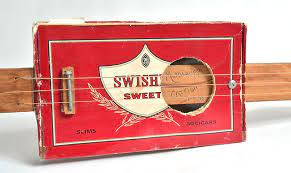
The origins of the Cigar Box Guitar are as humble as the materials used to construct it. It traces its roots back to the mid-1800s when it first emerged in the American South. In those days, slaves and impoverished workers denied access to conventional musical instruments, turned to their resourcefulness. They pieced together these simple, resonant instruments from discarded cigar boxes, broomsticks, and whatever else was readily available. These creations, initially seen as products of necessity, soon became the voice of a generation. The sound of a Cigar Box Guitar wails with the sorrow of the Delta, echoing the hardships and hopes of its creators.
Fast forward to the early 20th century, and the Cigar Box Guitar found its place in the burgeoning blues scene. Musicians like Blind Willie Johnson, Lightnin’ Hopkins, and Hound Dog Taylor adopted these homemade instruments, which were often easier to obtain than store-bought alternatives. The raw, primal sound of the Cigar Box Guitar complemented the emotional intensity of the blues, resulting in a unique and unforgettable sonic experience. These instruments embodied the spirit of the working-class bluesmen, using whatever they had to create music that would resonate through the ages.
However, as the decades rolled on and mass-produced instruments flooded the market, the Cigar Box Guitar faded into obscurity. The folk and blues revival of the 1960s briefly brought it back into the spotlight, but it never regained the prominence it once had. That is, until the 21st century, when a new generation of musicians and artisans rediscovered the magic of these humble instruments, sparking a Cigar Box Guitar renaissance.
The revival of the Cigar Box Guitar can be attributed to a confluence of factors. First and foremost, there was a growing desire among musicians to break away from the homogenized sound of mass-produced instruments and return to a more authentic, raw, and grassroots approach to music-making. In an era dominated by digital technology and auto-tuned perfection, the Cigar Box Guitar stands as a symbol of authenticity, imperfections, and individuality.
Another catalyst for this resurgence was the DIY (do-it-yourself) movements that have periodically swept through the musical world. Musicians and hobbyists began building their own Cigar Box Guitars, drawing inspiration from the past while infusing their creations with modern design sensibilities. The internet played a crucial role in connecting like-minded enthusiasts, enabling them to share knowledge, tutorials, and resources for building and playing these unique instruments. This newfound sense of community further fueled the Cigar Box Guitar revival.
This revival was not limited to just musicians. Artisans and craftsmen embraced the Cigar Box Guitar as a canvas for their creativity. These instruments became works of art, adorned with intricate designs, and crafted with meticulous attention to detail. Luthiers experimented with different materials and techniques, pushing the boundaries of what a Cigar Box Guitar could be. The intersection of craftsmanship and music gave rise to a subculture of Cigar Box Guitar enthusiasts, turning these instruments into coveted collector’s items.
One of the most significant factors contributing to the resurgence of the Cigar Box Guitar was its role in the modern blues and roots music scene. Musicians like Ben Harper, Seasick Steve, Samanta Fish, and Jack White began incorporating Cigar Box Guitars into their performances and recordings, introducing a new generation of listeners to the instrument’s unique and evocative sound. These artists breathed fresh life into the blues tradition, using Cigar Box Guitars to connect with the genre’s deep roots while adding their own contemporary twists.
Moreover, Cigar Box Guitar festivals and gatherings started popping up across the country, providing a platform for enthusiasts to showcase their creations and talents. These events brought together musicians, luthiers, and fans, fostering a sense of camaraderie and celebration of the instrument’s rich history. The Cigar Box Guitar had officially made its comeback and was here to stay.
The resurgence of the Cigar Box Guitar has not only been a revival of a musical instrument but also a revival of a rich cultural and artistic tradition. It’s a testament to the enduring power of music to transcend time and place, to connect people across generations, and to keep the spirit of the blues alive.
Today, Cigar Box Guitars come in various shapes and sizes, from the traditional three-string models to more experimental creations with multiple strings and complex electronics. Some are adorned with intricate artwork, while others retain the rustic charm of their predecessors. What unites them all is the unmistakable sound that harks back to the origins of the blues—a sound that carries the weight of history and the soul of the Delta.
As the Cigar Box Guitar resurgence continues to gain momentum, it serves as a reminder of the enduring appeal of handmade, authentic music. It’s a tribute to the resourcefulness of those who, in times of hardship, crafted beauty from the simplest of materials. It’s a celebration of the blues, a genre born from pain but tempered with resilience and hope.
In an age where the music industry is often dominated by commercialism and conformity, the Cigar Box Guitar resurgence is a rebellious and refreshing movement. It reminds us that music is not just a product to be consumed but a living, breathing art form that can be reinvented, reimagined, and reclaimed by anyone with a passion for its power.
As the Cigar Box Guitar takes center stage once again, it beckons us to rediscover the roots of American music, honor the legacy of those who played it in the past, and to carry forward the torch of creativity and authenticity. In the hands of a new generation of musicians and artisans, the Cigar Box Guitar is not just an instrument; it’s a testament to the enduring spirit of the blues and a symbol of the boundless possibilities that can arise from the simplest of beginnings.
So, as you listen to the hauntingly beautiful strains of a Cigar Box Guitar, remember that it’s more than just an instrument; it’s a living piece of history, a testament to the enduring power of music, and a reminder that sometimes, the most extraordinary things can emerge from the most ordinary of materials. The Cigar Box Guitar resurgence is a testament to the timeless allure of handmade music, and it’s a revival that’s here to stay, carrying the spirit of the blues into a new era.
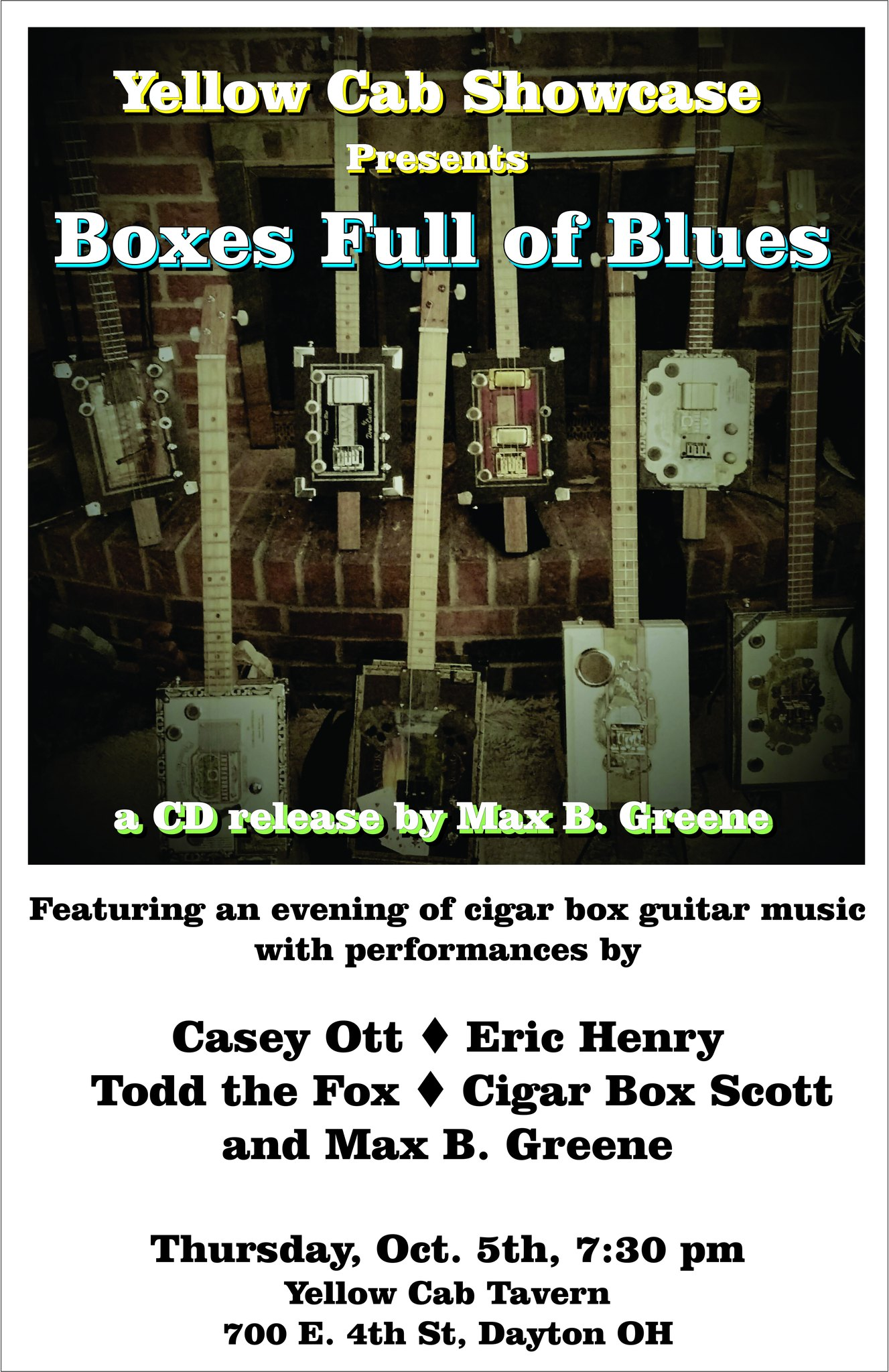
Dayton musician Max B. Greene has a new collection of blues music recorded on 3-string cigar box guitars that he is celebrating on Thursday, October 5th alongside guitarists Casey Ott, Eric Henry, Todd the Fox, and Cigar Box Scott. Max will be bringing in one of his guitars and playing a couple tunes on a cigar box guitar, as well as discussing the cigar box guitar phenomenon sweeping the country.

 your tuesday afternoon alternative