Questions with… Sarah Rudy

One of the benefits of doing a radio show is the opportunity to explore music with musicians who make incredible art. To sweeten the pot, the chance to interview musicians who write genuine songs that speak to you as a person is a gift. When Sarah Rudy who records as Hello June, agreed to answer some of our questions, we were overjoyed. Hello June’s ‘Artifacts’ was our top pick for album of the year in 2023 which was a rich year for music. What especially moves us is the authenticity of the music that Hello June creates.

The power of authentic music lies in its ability to transcend barriers, evoke emotions, and create connections that resonate deeply within individuals and communities. Sar Rudy possesses an incredible ability to create music that does exactly that. Authentic music, born from genuine expression and sincerity, possesses a unique capacity to speak to the human experience in profound ways. And this is deeply needed.

One of the most striking aspects of authentic music is its ability to communicate universal emotions without feeling false, fake or unreal. Regardless of language or cultural background, the raw honesty and genuine expression found in authentic music can touch the hearts of listeners wherever they might live. Whether it’s a quiet – yet powerful – ballad like ‘Napkin’ or ‘The Moon’, or a spiritual folk tune ‘Soft Love’, or a passionate rock anthem ‘Faded Blue’, ’23’, or ‘California’, authentic music made by musicians who themselves feel what they are playing has a way of tapping into shared feelings of love, loss, joy, and longing, fostering empathy and understanding among people from diverse walks of life. We all have all felt this way. And the music of Hello June, carries all of those characteristics and even more.

Moreover, Hello June‘s authentic music serves as a powerful tool for cultural preservation and expression. Through reinterpretation of traditional songs ‘Country Roads’, gorgeous guitar tone ‘California’ and ‘No Easy Answer’, and incredible melodies — the whole record! — artists preserve their experience, heritage, pass down personally meaningful stories, and celebrate their unique identities. Authentic music becomes a vessel through which cultural narratives are woven, ensuring that rich histories and traditions that do receive the favored celebrations of an ever decreasing set of themes in the mainstream music industry are not lost to time but instead are celebrated and cherished for generations to come.

In addition to its cultural significance, authentic music has the power to inspire and provoke change. As listeners we are changed when we hear this music. A whisper — ‘Country Roads’, ‘Soft Love,’ ‘The Moon’ — can be as powerful as the loudest cry in the mix of hope and despair — ‘California,’ ‘No Easy Answer’. A protest song does not always require a message to fuel social movements with anthems of resilience and hope in the face of adversity, that can be accomplished within a deeply personal statement as well. Music has historically played a pivotal role in driving social and political change. Through its ability to rally people around common experience and ignite a sense of solidarity from the ebbs and flows of pain, authentic music becomes a catalyst for action at all levels, challenging the status quo and advocating for a better world, even if the focus is in your neighborhood or your home.

Dr. J: What can you share with us about when and how you started writing music?

Sarah Rudy (SR): I started to learn to play guitar in high school, but I wasn’t truly focusing on the act of songwriting yet. It wasn’t until college, where I spent a lot of time exploring with different artistic mediums and experimenting with different forms of creating. This is where I started to really feel an affinity towards writing songs.

Dr. J: What first led to your recording music? How do you approach production?

SR: I started to craft songs on the GarageBand DAW (Digital Audio Workstation) about the same time I started writing. Using a DAW in my workflow made sense, even at that point, because I wanted to work out fairly full arrangements. I wasn’t happy with just writing the bones of the song – I needed to feel the environment that song created. I guess my thought with this has always been that if I can’t get the song to “feel right” in physical space, I wouldn’t want it released. These days, I’ve found that my process is less of a rush to the production phase of things.

For me, the daw has been an integral part of my writing, but when it comes to recording an album, I’ve let others steer the ship. I’ve loved each studio experience I’ve had, but Ive learned so much that I can’t imagine giving up that much creative control on the next one. For the next releases, I plan to record those here in our studio and I plan on pulling in some good musician/engineering friends as needed. With the next releases, I want the recordings to be as vulnerable and closeup as they can be and I feel like it’s my job to figure out how to get there.

Dr. J: The song ‘California’ captures a remarkable constellation of musical influences. The song seems to have an almost 1980s feel. Is that a correct interpretation? If that is correct, did you intend to create a song that connects to that time period? If that is not correct, how would you describe the feeling of the song?

SR: I wanted the song to have a “nostalgic” feel – that was my main goal, tone-wise. I wanted California to capture the feeling of charged love – the kind that feels exciting and scary. In order to write the song, I really needed to take myself back to the “me” that existed in my 20s. I wanted the song to capture a certain hue/tone/light – I love that it takes you back to a particular place.

Dr. J: Where do you often derive inspiration to make music?

SR: I like to be completely focused, immersed, and filled up by the things I’m working on. If there is a thought, a line, a feeling, anything that sparks something in me that makes me tilt my head or feel a bit of magic, I usually feel inclined to chase it. I have found though, that the hardest thing is pulling inspiration from an anxious or avoidant mind, so in order to allow myself the freedom to create, I try to practice self awareness and allow myself the grace to come back to an idea if my mind/body isn’t in a favorable state to produce something meaningful. In terms of what I’m writing about lately – this week I’ve written a song that nods back to a time in my childhood and another one about feeling sort of feeling like an outsider. I guess I’m always just trying to process the thoughts that go through my mind.

Dr. J: How would you describe the music that you create? How has that process evolved or changed over time (especially as you think about your journey in the last few years)?

SR: Hmmm – great question. I usually tell people that we are an “indie rock band” that has been accepted in the Americana crowds. Live, we like to get down really soft and vulnerable and we like to bring the volume up just as heavy in those big parts. I love to marinate in the details of ambient sound, so that aspect usually isn’t too far away. I try to write songs that heal my head because i do feel like we’re all sharing around ideas and latching onto the ones that resonate with us. I guess I just hope that I get a chance to resonate with the right people.

Dr. J: What is next for you musically? How would you describe your thoughts at this point for your next project or release?

SR: I feel like I am just now really starting to understand who I am as a musician, as a singer, and as someone who is committed to living a creative life. I just had a few really exhaustingly rough months – this industry is tough. I do, now though, feel like I can clearly see my path forward, and I haven’t felt that, until now. I feel strong, autonomous, and I’m moving with purpose and allowing myself to nurture my creative spirit in ways that I haven’t felt able until now.

We will be launching a Patreon here in a month or two and I couldn’t be more excited about all that comes with it. We’ve labored so much over these thoughts. My next moves, including the Patreon, are a shift away from asking the industry to see me. The industry isn’t healthy enough for anyone to lean on, so leaning seems like a bad idea, right? To me it does, and I’m unwilling to spin my wheels anymore, I guess. I want a conversation directly with my fans. I want a way to build a community up in the way that I want to – not what someone else thinks I should be doing. It’s maybe an unglamorous and practical way to see it, but I hope to be a voice in this realm and I believe we need more alternatives thrown around. My hope is that my fans (and others) begin to see that the industry only serves the very top artists – the rest are hoping, floundering, and making bad decisions that they feel like they have to make, just to be seen. As an artist, you’re told many things you “need to do” and a lot of these things are distractions from what we should be spending time on. I’ve built a strategy that is not reliant on any industry because I refuse to be dragged around, and that’s where I felt I was.

That all being said, I am working on my first solo record. I am separately working with a small group of people on a brand new Hello June record. What’s more exciting to me than that is how much I’ll be incorporating Patreon into these releases. For instance, one perk of the Patreon that I’m super excited about is letting our fans in on our process. By that, I mean, incorporating them into the process – they will get access to bits and pieces (say, a verse and a chorus in length) and they’ll be able to choose which songs we move forward with as a band. We’ll then get to work and have “fly on the wall” sessions where they are invited to watch the next steps of the process. We’ll come back around to everyone with full songs, and some those full songs will eventually be released. I’m hoping to bring my fans closer to the project, be creating more than I am “content posting” and really grow and learn as musicians and artists in the meantime.

Dr. J: What is your favorite song to perform live? What is your favorite song to perform in general? What makes that song a current favorite in your performances?

    SR: I think I’ll always be fond of playing “Handshakes” live – the flow of that one live is just really really fun. When people lock in with me, it’s as if we’re actively having a conversation and they get me. They hear me. The same goes for Interstate. That song has bridged gaps and has healed my heart in ways that only sharing that song with fans would have allowed. I love looking out to audience and knowing that our experience is shared. I’ve had many beautiful experiences with this song.

    We also have a currently unreleased song called “Another Life.” We decided not to put it on Artifacts, but it’s been a fan-favorite since we’ve played it live. It stems from the same story-line as “California,” so I’d say you can expect a similar air to it. Our Patreon folks will get that one early for sure.

    We want to extend our sincere gratitude to Sar Rudy for answering our questions and continuing to make truly authentic excellent music! Click on the links below the article to visit Hello June’s social media or to listen to the songs that we discussed! If any musicians or artists would like to participate in future ’Questions with…’ columns, please feel free to email us at drjytaa@gmail.com. All photos and images courtesy of Hello June.

    Facebook Youtube Bandcamp Website Twitter Instagram Soundcloud TikTok

    11 Questions with… Given Names

    Happy New Year to everyone! Welcome to 2024!

    The new year opens with the return of our 11 Questions with… column. Given Names is an exciting new project from Dr. J’s home state of Minnesota. That state has always been home to thrilling music such as The Replacements, Husker Du, Soul Asylum, Prince, Semisonic, Babe in Toyland, The Jayhawks, The Suburbs, and many more.

    Given Names is a group of friends who create music that combines elements of indie, rock, dream pop, and power pop, with hints of synth and dance. The group is an exciting indie pop quartet based in Mankato and Minneapolis, featuring Laura Schultz (lead vocals, rhythm guitar), Meghan Irwin (synth, backing vocals), Michelle Roche (drums, backing vocals), and Mandy Wirig (lead guitar, backing vocals). In 2023, they released their debut single, “Makin’ Eyes’ last year. It is a song that channels their influences while incorporating their distinctive musical vision. It is also one of our favorite singles from this past year.

    Given Names creates a swirling yet solid indie dream pop that encapsulates the ethereal essence of dreams through a distinctly feminine lens. It is a musical realm where the boundaries between reality and imagination blur, and emotions cascade in a surreal mix of sound. The musicians collaborate to craft a sonic dreamscape that is both otherworldly and intimately connected to the intricacies of experience. It is real.

    Dream pop is often characterized by its atmospheric soundscapes and lush melodies, sound becomes a canvas for these artistic collaborations to explore themes of loss, love, empowerment, and self-discovery. The almost ethereal vocals, layered and harmonized, transport listeners into a transcendent-like state where time seems to slow down, and emotions are amplified. The dreamy quality of the music is a manifestation of the artists’ collective desire to create a space that reflects the intricacies of the psyche.

    Lyrically, ‘Makin Eyes’ delves into introspective narratives that navigate the complexities of relationships, self-realization, connection, and the pursuit of one’s dreams. Themes of resilience and empowerment seem to subtly weave through the verses, creating a tapestry of emotions that resonate with listeners on a deeply personal level.

    The collaborative nature of Given Names fosters a bond among the artists involved, each contributing a unique perspective to the collective soundscape. This collaboration extends beyond the music itself, influencing the visuals, single art, and live performances. The result is a holistic artistic expression that celebrates the diversity of artists’ voices and experiences. As dreamy all-women-created power pop continues to evolve, it not only pushes the boundaries of musical exploration but also challenges preconceived notions about femininity in the music industry. It remembers and celebrates the creative prowess of women in shaping the sonic landscapes of sonic dreams and emotions, inviting listeners to immerse themselves in a world where the line between reality and reverie is beautifully blurred.

    We contacted the band and Laura and Mandy kindly answered our questions for this column (LS: Laura Schultz; MW: Mandy Wirig).

    Dr. J: What can you share with us about when and how you started writing music?

    LS: I started writing music with a good friend, Laura MacDonald, in high school. She and I wrote songs about strange dreams we had or our World History Teacher, (some lyrics were “Mr. Schnieder, you’re a really cool guy. In World History, you taught us to ask why”). I started doing it more seriously in undergrad in Oshkosh, WI, where I played with some absolutely amazing musicians and friends.

    MW: I started writing music in high school. I began playing guitar at thirteen and was in my first band, a punk band, at 16-17. I’ve always been influenced by singer/songwriters and the very melody-driven sounds of the sixties, particularly The Beatles and McCartney, and that influence can be found in almost all of my guitar parts.

    Dr. J: What first led to your recording music? How do you approach production?

    LS: I see recording as a snapshot of a song in a moment. It may not be how we always perform the song, but it is representative of that moment, with those players and resources that we had at the time. I think of a producer as an editor, someone who can look more objectively at the song and make suggestions, or provide an outside perspective that we might not have been able to access, since we are closer to the song itself.

    Dr. J: ‘Makin Eyes’ is your most recent music, what led to the making of that song? What were the main influences on your recording this song?

    LS: From the writing perspective, almost all of my songs are written the same way I wrote them with my high school friend, Laura. I free-write a full page of words, careful not to judge them as they come out, not thinking of them as lyrics but just as phrases or strings of words, then I go back and circle words or phrases I like, then I figure out how they all make sense together. The music comes last for me, but it comes easiest for me after I have lyrics.

    MW: My love of melody is what inspired the main guitar riff in the song. I’ve always loved how “hummable” George Harrison’s guitar solos are, and how prominent melodic guitar work is in so much of the British Invasion and Power Pop songs that I love. I wanted a lead guitar part that could stand on its own as a melody while still incorporating that shimmery, jangly sound.

    Dr. J: The song ‘Makin Eyes’ seems to capture a remarkable constellation of musical influences. The song seems to have an ‘80s pop feel. Is that a correct interpretation? If that is correct, did you intend to create a song that connects to that style? If that is not correct, how would you describe the feeling of the song?

    LS: Well thank you! I think you can interpret the song however you like! ’80s pop feel sounds good to me! I try not to think about what style I’m writing songs in, just kind of letting the song ask for what it needs.

    MW: I think it definitely hearkens back to bands like The Go-Gos and The Bangles, who themselves were influenced by a lot of Power Pop and earlier styles of music, and I love that you’ve grouped “Makin Eyes” in that category.

    Dr. J: How did the song ‘Makin Eyes’ come together musically for you?

    MW: Laura is our principal songwriter, and she brought the lyrics and chords to us shortly after I joined the band, so this is one of the first songs that was a true full-band collaboration for us. Within two weeks of our first rehearsal, I had brought the song home and developed what became the signature guitar riff, and the song has really fleshed out during the last couple of years as we’ve continued to perform it live. To see how it’s evolved into the multi-tracked studio version with all of its jangle and shimmer has been really gratifying.

    Dr. J: Where do you often derive inspiration to make music?

    LS: I think of my lyrics as a sort of amalgamation of what is happening in my life, the way I am consciously or unconsciously feeling about things; the worries or thrills or boredoms of everyday life. I think of songs as a container for my present moment experience.

    MW: I’m also a visual artist in addition to a musician, and each medium has always influenced the other. I also derive inspiration from surrounding myself with art of all types—the books I read, the music I listen to, the films I watch, the events I attend. And as cliche as it sounds, there’s nothing quite like a hot shower, a weird dream, or boredom to spark an idea that can be scribbled down for creation.

    Dr. J: What is next for you musically? How would you describe your thoughts at this point for your next project or release?

    MW: We’re currently in the process of finishing up our first album and getting ready to choose our second single for release. The plan is to get those squared away, and then to start performing more often, hopefully expanding the areas we’re booking shows in beyond our southern Minnesota roots.

    Dr. J: How would you describe the music that you create? How has that process evolved or changed over time (especially as you think about your journey in the last few years)?

    MW: We describe the music we create as Indie Pop, which is a pretty broad category in and of itself. We originally began as a four-piece with a synth player, and that synth-heavy ‘80s influence is still prevalent in our work, but we also include influences like the Velvet Underground, Low, and reverb-heavy guitar work from the mid- to late-‘60s.

    Dr. J: What is your favorite song to perform live? What is your favorite song to perform in general? What makes that song a current favorite in your performances?

    MW: My personal favorite is “Game Was Rigged.” It’s a story of love gone wrong set to a bouncy melody that’s impossible not to dance to when you’re playing it.

    Dr. J: What is one message you would hope that listeners find in ‘Makin Eyes’?

    LS: Honestly what first comes to mind is that I’m interested in narrowing the gap between performer and audience member. I want people to feel as though they could write a song too, they could perform it, they could record it! If it’s something that inspires you, please let it! Let’s all make things.

    Dr. J: a musician, how are you adapting to the challenges of creating music? What are your biggest challenges to creating music?

    MW: We’ve got a somewhat unique situation where we don’t all live in the same location anymore, with Laura and Michelle living in Mankato while I’ve moved almost an hour-and-a-half away to Minneapolis. Things like practices and recording sessions definitely need to be planned out pretty well in advance to
    accommodate this. We’re also three very busy women juggling full-time careers in addition to the band—I’m an artist, teaching artist, and gallery owner, Laura is a social worker, and Michelle is a full-time musician and music teacher who plays in several groups—which can make it challenging to not only coordinate our schedules, but also to make time for things like social media and finding new venues to perform.

    We want to extend our sincere gratitude to Given Names and especially Laura and Mandy for answering our questions and continuing to make some really excellent music! Click on the links below the article to visit their social media or to listen to the song that we discussed! If any musicians or artists would like to participate in future ’11 Questions with…’ columns, please feel free to email us at drjytaa@gmail.com. All photos and images courtesy of Given Names.

    Bandcamp  Instagram  YouTube

    11 Questions with… Greg Humphreys

    In American music, there are artists whose regional roots run deep, intertwining with the cultural fabric of their home state. Greg Humphreys, the charismatic frontman of Dillon Fence, has spent decades carving out a musical niche that echoes the soulful resonance of North Carolina. His solo endeavors, marked by a fusion of rock, blues, jazz, and Americana, showcase a maturity that comes from a life dedicated to the pursuit of authentic sound.

    Humphreys’ musical journey began in the late ’80s with the formation of Dillon Fence, a Chapel Hill-based alternative rock band that became synonymous with the burgeoning music scene in North Carolina. The band’s sound, characterized by jangly guitars, introspective lyrics, and Humphreys’ powerful, soulful emotive vocals, contributed to the distinctive Southern sound emerging from that fertile music community that also gave rise to The Connells, The Veldt, Fetchin’ Bones, Superchunk, Let’s Active and The dBs.

    Fast forward to the present, and Humphreys has embarked on a solo career that demonstrates both evolution and continuity. His 2021 release, “Spanish Steps,” stands as a testament to his ability to navigate diverse musical waters while maintaining a distinct Southern sensibility. His most recent single, “Take a Trip (Catch a Plane)” crosses soul, ’70s pop, jazz, and smooth strands of rock and roll. Humphreys’ voice, weathered by years of musical exploration but never beaten down, lends a richness that serves as the perfect vehicle for the emotional weight carried by his lyrics. The song weaves a narrative that touches on love, loss, and the inexorable pull of life’s forces, creating a compelling experience.

    Humphreys skillfully blends genres, drawing from the deep well of American musical traditions. He is equally comfortable channeling a rootsy, folk vibe with acoustic guitars or when creating a sonic laid-back atmosphere. He is also just as skillful when letting everything hang out in a full-blown rock song. Humphreys’ ability to seamlessly integrate elements of the South’s musical heritage into a contemporary framework is one reason out of the many characteristics of his songs that make them feel like lifelong friends.

    Whether one is listening to Greg’s solo work or his efforts in Dillon Fence and Hobex, the songs he makes allow him to flex his songwriting muscles, delivering introspective lyrics with a raw vulnerability that resonates with listeners. “Take a Trip (Catch a Plane)” stands out as a poignant exploration of the complexities of life and the enduring power of hope, driven by Humphreys’ soulful crooning and the subtle, never forced, instrumentation that accompanies it. Humphreys’ guitar work, a hallmark of his style, shines throughout the tune, demonstrating both technical proficiency and an intuitive understanding of the emotional nuances embedded in his compositions.

    In a musical landscape often dominated by trends, the passing ‘sound of the moment’, and fleeting fads, Greg Humphreys stands as a beacon of authenticity, his music is tangibly real… it resonates. Greg’s music not only pays tribute to the distinctive musical heritage of North Carolina but also adds another chapter to Humphreys’ ongoing exploration of sound and emotion. His most recent music invites listeners to journey through the landscapes of the South, guided by a seasoned troubadour whose passion for music burns as passionately and brightly as ever.

    Dr. J: What can you share with us about when and how you started writing music?

    I started writing songs in high school. My high school garage band “The Trash” decided to start playing our original music… our members would bring songs in to try. My early songs make me wince a bit, but you have to start somewhere. Dillon Fence bass player (and fellow The Trash member) Chris Goode and I will often sing a line or two from these old songs for a few chuckles. 

    I have to say, my basic appreciation and understanding of songcraft came from my dad. He was always listening to his favorite songs learning them and playing them on his guitar in his spare time.

    I also think that my strong desire/need to create, expressed through art and music, comes from my mom. She’s been a visual artist for as long as I can remember and has had some different, interesting periods to her artistic expression.

    Dr. J: What first led to your recording music? How do you approach production? 

    I started recording on a boombox, then a couple of boomboxes. I remember re-creating the harmony solos on Boston’s “Peace of Mind” with two boom boxes in High School. 

    After a couple years of this, my parents helped me get a Fostex 4 track recorder, which was my constant companion until I started learning ProTools / DAW recording in the late 90s. I have boxes and boxes of songs and music ideas I recorded in the 90s on that 4 track.

    Of course, I learned a lot from the professional engineers and producers I worked with early on when making records with Dillon Fence and Hobex: Steve Gronback, John Plymale, Lou Giordano, Ron St. Germain, Mark Williams, David Leonard. I’ve also been lucky to sit in/take part in sessions with pros like John Wood, Joe Boyd, Al Kooper, Bill Symczyk, Chris Stamey, Mitch Easter, Don Dixon, and Jim Dickinson. 

    As far as my production approach, I think my main attitude is, that there’s no “correct” way to do things. All that really matters is do you have an end result that is compelling and/or worthy of listening to over and over. If budget was no issue, I’d probably do a more collaborative recording with other musicians/engineers/studios, but I do enjoy making records on my own. 

    I try to keep in mind that some of my favorite records were made with some of the most basic recording technology. I believe that what is going on in front of the mic is usually the most important factor in recording most musicians or singers. 

    Dr. J: ‘Take a Trip (Catch a Plane)’ is your most recent music, what led to the making of that song? What were the main influences on your recording of this song? 

    I talked about it at length in my bio over greghumphreys.net if you’d like to pull from that/peruse that. but essentially it’s a song I wrote for my wife kind of trying to express one of those feelings that’s personal yet universal. Hopefully, the song has the same quality.

    Dr. J: The song Take a Trip (Catch a Plane)’ seems to capture a remarkable constellation of musical influences. The song seems to have a 1970s soul feel. Is that a correct interpretation? If that is correct, did you intend to create a song that connects to that style? If that is not correct, how would you describe the feeling of the song?

    The rhythm section definitely has a ’70s soul vibe – Marvin Gaye records are always a North Star for me. I played bass guitar on this track, which is also a lot of fun and something I haven’t been doing on my trio records. This track is basically a taste of an approach I’ve been taking. Using drum machine sounds to create grooves. Building songs around a melody, groove, or musical idea using a looper. Then, building the arrangement over time either in live performance or in the studio.

     It’s not really that different from a songwriting approach I’ve used for bands I’ve fronted over the years. It’s just that I am able to create more of a “keeper” version on my own these days.

    Dr. J: How did the song Take a Trip (Catch a Plane)’ come together musically for you?

    The song really started from being inspired by a moment in a George Shearing “Lullaby of Birdland” recording where the musicians play the melody (Jazz terminology would be “the head”) together. I wanted to use that vibraphone sound, and I wrote a melody that is vaguely reminiscent of the Shearing tune – not as harmonically sophisticated, but still good. After that, I just followed my instincts to complete the song.

    Dr. J: Where do you often derive inspiration to make music?

    Looking back on my songwriting path, I’d say my main wellspring of music-making has been expressing myself – getting out all those feelings I have difficulty manifesting any other way. The confessional songwriting thing has definitely been a big part of who I am as a writer. That being said, I like switching it up and trying different approaches, and that shows up in my songs as well.

    Dr. J: How would you describe the music that you create? How has that process evolved or changed over time (especially as you think about your journey in the last few years)?

    I feel like in the back of my mind I’m always trying to create something that is timeless and universal. The quality that a great piece of music or song has – if you take it out of its cultural context, does it still resonate? I think that’s why I enjoy going down the wormhole with music from different eras or time periods and finding songs that grab me.

    Dr. J: What is next for you musically? How would you describe your thoughts at this point for your next project or release?

    I am close to the finish line on a couple of recording projects. One is a Dillon Fence live album that we recorded in April 2023. I think it captures the energy of the band in a good way and I’m looking forward to sharing it with our fans. I am proud of that catalog of music. 

    The second is another solo album in the same fashion as my 2021 album “Spanish Steps,” using a lot of the approaches and techniques I mentioned earlier. “Take a Trip (Catch a Plane)” will be included on this album, as well as some other songs I’ve been writing over the last 3-4 years. I find that these days with my family life taking precedence I’m not nearly as prolific as I used to be. The songs that I do complete tend to be real “keepers” – songs that I keep coming back to over time. 

    Dr. J: What is your favorite song to perform live? What is your favorite song to perform in general? What makes that song a current favorite in your performances? 

    I think the song that I usually enjoy performing live most is usually my most recent song that I really believe in – the song that fits that category lately is called “Fall into the Sea.” That being said, I’ve gotta give props to a song I co-wrote with my old friend Jim Smith, “Windows,” which was originally on the Hobex LP “Back in the 90s.” I still play that song in almost every show. It just works, it connects, it makes people happy, and that makes me happy. 

    Dr. J: What is one message you would hope that listeners find in Take a Trip (Catch a Plane)’?

    Hopefully, they’ll find inspiration to renew their love for their significant other. That’s what it’s really about. The ‘Take a trip’ part is just an impetus to do that.

    Dr. J: As a musician, how are you adapting to the challenges of creating music? What are your biggest challenges in creating music? 

    That’s a big question. Honestly, I don’t really know which way to go. The sheer volume of music produced these days and the torrential nature of media consumption are obviously on my mind, as far as what is ahead. I consider myself lucky I have an (admittedly boutique) audience that still comes to see me play and listen to my music online, but obviously, the Internet disruption is real and it has affected my life. It has always been a rollercoaster ride and a struggle to pursue a creative life, though. 

    I think my biggest challenge is managing the balance between my family life and my desire to pursue my art and music. There’s just not enough time in the day to do what I’d like to do. Once I have the time, I’m often too tired to do it! 

    We want to extend our sincere gratitude to Greg Humphreys for answering our questions and continuing to make some really excellent music! Click on the links throughout the article to visit his social media or to listen to various songs that were discussed! If any musicians or artists would like to participate in future ’11 Questions with…’ columns, please feel free to email us at drjytaa@gmail.com. All photos and images courtesy of Greg Humphreys.

    Facebook Youtube Bandcamp Take a Trip (Catch a Plane) Website Twitter Instagram Soundcloud Linktr.ee

    11 Questions with… Trapper Schoepp

    In the tapestry of rootsy Americana music, Trapper Schoepp emerges as a singular and unyielding thread, weaving tales that resonate with a raw cinematic voice of American storytelling. Hailing from the heartland of Wisconsin, Schoepp is not just a musician; he is a troubadour, a poet, and a chronicler of the human experience. In April of this year, Trapper embarked on a journey and invited us to come along. His last album remains a fast drive on a gravel road through lyrical landscapes and melodic realms. Of his album, Siren Songs,’ — perhaps more a collection of stories from the heart and bone of life — we can feel the distance in time, place, and relationships.

    Schoepp’s music is an alchemy of tradition and innovation, a fusion of folk, rock, and Americana that defies easy categorization. Schoepp’s work is imbued with a sense of timelessness, a nod to the roots of American music while fearlessly exploring his own territories. His songs are not mere compositions; they are living entities, breathing and evolving with each note, each chord, and each carefully chosen word.

    The lyrical prowess of Trapper Schoepp is reminiscent of the great storytellers who have graced the American musical landscape. It is clear that Schoepp is a connoisseur of lyrics that cut to the core of the human experience and find solace in vivid portraits with words. Whether unraveling the complexities of love or navigating the tumultuous waters of contemporary society, Schoepp’s lyrics are a mirror reflecting the question of where we go from here, when we are not even sure what that means.

    Yet, Schoepp is not content with resting on the laurels of tradition. Schoepp fearlessly tackles pressing social issues, offering poignant commentary on the state of the world. His music becomes a vessel for introspection and societal critique, echoing the sentiments of an artist committed to using his craft as a force for change.

    Trapper Schoepp stands as a beacon. Through his unwavering commitment to authenticity and unrelenting passion for storytelling, Schoepp not only pays homage to the roots of American music but also pushes the boundaries, leaving an indelible mark on the ever-evolving tapestry of sound. Thank you for taking the time to answer our questions, good sir!

    Dr. J: What can you share with us about when and how you started writing music?

    I herniated a disc in my back when I was fifteen. My mother signed me up for guitar lessons and here I am! Still at it. My dentist at the time also gave me and my brother a box set of early Bob Dylan CDs. I think it was just serendipitous timing that I found music. Also, the stillness of a small town makes any kid start looking for a world outside of the one they see. 

    Dr. J: What first led to your recording music? How do you approach production?

    Songs first! I just did an album at Johnny Cash’s Cabin and I used the same two mics for 14 songs. Granted, very nice mics! But I try not to obsess too much on the technical side of recording. Leave it to the pros! We had two really great producers on my latest album – Patrick Sansone of Wilco and John Jackson of The Jayhawks. Both brought a lot of wisdom and joy to the recording process. 

    I recorded my first album along Lake Pepin in Wisconsin with a group called Patchouli. I stripped the paint off their house in exchange for recording time. However ya gotta get it done, it gets done. I think a lot of artists feel this need to do it. That’s important. 

    Dr. J: The cover of Lefty Frizzell’s ‘Long Black Veil’ is your most recent music, what led to the making of that song? What were the main influences on your recording of this song?

    Obviously, Johnny Cash! You’ve heard of him?! I think he’s the last thing we Americans all agreed on…It’s a beautiful and haunting tune we’ve been ending our shows with. The story of a love triangle gone wrong with a public hanging in the town square… Classic folk music. Sign me up!

    Dr. J: The song ‘Cliffs of Dover’ is the lead track on your last full-length album, Siren Songs seems to capture a remarkable constellation of musical influences. The song seems to have a pop feel. Is that a correct interpretation? If that is correct, did you intend to create a song that connects to that style? If that is not correct, how would you describe the feeling of the song?

    I’m obsessed with classic pop music from the 60s and 70s. Stuff like Paul McCartney, Gilbert O’Sullivan, Harry Nillson, Randy Newman…Songwriter’s songwriters. Those singers inspire me a lot but I’m also listening to old-school hip-hop, Brian Eno’s ambient records, and early folk and blues music. I try to be open to any kind of music as long as it moves me.

    Dr. J: How did the song ‘Cliffs of Dover’ come together musically for you?

    I think I was listening to the song “Ca Plane Pour Moi” by Plastic Bertrand while news of the end of the Afghanistan war was on the TV. I felt so heartbroken for all those lost, as well as those dealing with PTSD. The lyrics describe a veteran struggling and the chorus takes us back to Vera Lynn’s WW2 anthem. 

    Dr. J: Where do you often derive inspiration to make music?

    As a songwriter, I’m always hot on the trail for the next song idea. It could be anything. A TV show, a good meal, an overheard conversation…Anything can inspire a song if you let it. 

    Dr. J: How would you describe the music that you create? How has that process evolved or changed over time (especially as you think about your journey in the last few years)?

     For better or worse, I’m an inspired writer. I’m typically not sitting down, hammer and nail, pounding out songs every day. I try to write and sing what I’m excited about at that moment. There’s no particularly great mystery to it. It can be thought of as a trade as anything else. There is a magic to it, though.

    Dr. J: What is next for you musically? How would you describe your thoughts at this point for your next project or release?

    I’m interested in the classic country now but we’ll see if I still have my old boots around…

    Dr. J: What is your favorite song to perform live? What is your favorite song to perform in general? What makes that song a current favorite in your performances?

    Typically whatever is the newest to the set. Going into that great unknown musically can be a thrill. We play a Dylan song “Meet Me In The Morning” after the song I published with Bob Dylan, “On, Wisconsin.”

    Dr. J: What is one message you would hope that listeners find in ‘Cliffs of Dover’?

    It’s a call to peace in a sense. We’re living through difficult times now and I think music can be good balm. Despite the darkness and war in the world right now, I’m hoping we find some light through art and music. 

    Dr. J: As a musician, how are you adapting to the challenges of creating music? What are your biggest challenges in creating music?

    Finding the time! I think performers of all kinds are pulled in a lot of different directions and it’s good to make that time for yourself to write.

    We want to extend our sincere gratitude to Trapper Schoepp for answering our questions and continuing to make some really excellent music! Click on the links throughout the article to visit his social media or to listen to various songs that were discussed! If any musicians or artists would like to participate in future ’11 Questions with…’ columns, please feel free to email us at drjytaa@gmail.com. All photos and images courtesy of Trapper Schoepp.

    Facebook Youtube Bandcamp Long Black Veil Website Twitter Instagram Soundcloud

    11 Questions with… The Popravinas

    In the dimly lit corners of Americana, where the roots of rock ‘n’ roll intertwine with the twang of country, emerges The Popravinas—a band that embodies the spirit of a bygone era while injecting it with fresh, irreverent energy. Their latest, “3-Month Situation,” is a rollicking journey through heartache, relationships, and a hell of a good time.

    From the first notes, it’s evident that The Popravinas are not here to play it safe. The song kicks off with an infectious jangly guitar that leads to a foot-stomping feel that sets the tone for the wild ride ahead. The gravelly vocals carry the weight of countless complicated romance stories, while the band’s tight instrumentation weaves a sonic tapestry that’s both nostalgic and contemporary. “3-Month Situation” is an unapologetic celebration of the working-class troubadour tradition of honest inspection of relationships. The song pays homage to the trials found in relationships like a mature Springsteen and early Johnny Cash. Appreciation to Eddy Sill for answering our questions!

    Dr. J: What can you share with us about when and how you started writing music?

    Back around the early 90s, I was part of a rather raucous alternative pop band in Los Angeles called The Mutts. One of the guitar players who was quite a prolific songwriter, heard some raw ideas of mine and encouraged me to start seriously writing songs. Once I started to do so, I saw people responding very positively to those tunes when I sang them onstage. My confidence grew quite quickly, and as time went on, it became a way of life for me.

    Dr. J: What first led to your recording music? How do you approach production?

    Recording (especially in the past) has always been somewhat of a boring process for me. In recent years, the advancements in digital recording have made it so much more pleasurable, easy, and exciting. I much prefer it as opposed to sitting in a boring studio for hours on end, as we now do much of our recording right in our bedrooms, emailing various takes back and forth to Lead Guitar/Producer John Adair.

    Dr. J: 3-Month Situation’ is your most recent music, what led to the making of that song? What were the main influences on your recording of this song?

    That’s a funny question because it was actually brought on by a woman who is a long-time friend of mine. She fairly recently mentioned that she was in a “three-month situation” with a guy, and it didn’t turn out all that well. I immediately wrote those three words down as a potential song title. The amazing thing is that I was going through some old emails from about seven years ago, and there was an email from her saying that she had just gotten out of a “three-month situation!” When I saw that, I knew I had to run with it, and it’s one of those songs that developed very quickly from that point.

    Dr. J: The song ‘3-Month Situation’ captures a remarkable constellation of musical influences. The song seems to have an almost country feel. Is that a correct interpretation? If that is correct, did you intend to create a song that connects to that style? If that is not correct, how would you describe the feeling of the song?

    We’ve done a bit of the Alt-Country thing on all four of our past albums, and you will hear that on some of the upcoming tunes (such as 3-Month Situation). Lyrically the song is better served in this style. The original idea was a bit more of a rock-n-roll song, but things can change a bit as different guitar & keyboard parts are created. We have a keyboard player (Bryon Haney) who actually lives in Charleston, SC, and he has added some good textures to the recordings in the past few years. He plays with us when we tour back east, and occasionally he comes out west to join us onstage.

    Dr. J: How did the song ‘3-Month Situation come together musically for you?

    As per our usual workflow, it starts with a very basic, lo-fi recording of whatever lyrics/melodies are drafted and a very basic, maybe one guitar, demo.  It’s mainly used to map out the tempo and structure.  After we recorded the drum track, we built up the instruments and then recorded the vocals last.  

    3- Month had a few more layers of instruments but ultimately we stripped some away for some better dynamics and to give it a little more sovereignty from our other tunes.

    Dr. J: Where do you often derive inspiration to make music?

    It can be literally anywhere. It can be my next-door neighbor or many times it is traveling to faraway places like Europe. Most of it is observations and interpretations of personal and social experiences. Much of the time, humor is essential.

    Dr. J: How would you describe the music that you create? How has that process evolved or changed over time (especially as you think about your journey in the last few years)?

    It definitely has a combination of “twang and pop.” I used to kind of fight off the California vibe, but as time has gone on, I tend to let that flow if it needs to be in that direction. As a band, we have evolved to be more autonomous in recording our own ideas and instruments which has relieved a lot of the stresses of time and money.  The downside is we have less interaction creating all together at once in the same room which can bring some creative advantages. 

    Dr. J: What is next for you musically? How would you describe your thoughts at this point for your next project or release?

    We are looking forward to a new album to be released in the Spring of 2024, possibly sooner. We like to think things through on new material, as opposed to bombarding the market. Each of our albums has its own vibe and sound yet remains in our particular unique style.  I believe we offer a truly original sound while sounding extremely familiar to our listeners. 

    Dr. J: What is your favorite song to perform live? What is your favorite song to perform in general? What makes that song a current favorite in your performances?

    That is a tough one. I know our drummer (Steve Markowitz)  has a favorite in “Zoom to the Ocean” from our last album, “Goons West.”  It has some pretty challenging guitar parts that sound easier than they are to play.  People seem to like that one. I really enjoyed playing “3-Month Situation” live for the first time this past weekend… Until I went blank on some of the lyrics… Ha! But sometimes that kind of thing can really get an audience going, as we are the type of band that can have that kind of looseness work for us.

    10. What is one message you would hope that listeners find in ‘3-Month Situation’?

    Well, I hope that it strikes people musically and they can relate to what it speaks of. I was really impressed when it first came out that you (Art Jipson/Dr. J) tweeted how high the percentage is of people that date, and it all ends within three months. I love that kind of factual feedback!… lol.

    Dr. J: As a musician, how are you adapting to the challenges of creating music? What are your biggest challenges in creating music?

    Creating music can be easy. Being in a band can take some work. Getting the music heard is almost impossible.  There are so many obstacles if you don’t know the right people. We’d like to get some proper management, but until then we will continue on, and conduct our business as usual. Hey! If It was easy, everyone would do it!

    We want to extend our sincere gratitude to Eddy and The Popravinas for answering our questions and continuing to make some really excellent music! Click on the links throughout the article to visit their social media or to listen to various songs that were discussed! If any musicians or artists would like to participate in future ’11 Questions with…’ columns, please feel free to email us at drjytaa@gmail.com. All photos and images courtesy of The Popravinas.

    Bandcamp Facebook Youtube Twitter/X Instagram Reverb Nation

    11 Questions with… Tod Weidner

    Tod Weidner is an institution in his home town of Dayton, Ohio. Tod is a visionary songwriter making music that drives a listener to tap their toes without realizing the impactful lyric until one has been hooked. Tod has led the incredible band Shrug for decades. The admiration for Tod’s music has been well earned from a songcraft that brims with a direct and honest rock and roll that veers across rock, indie, folk and more. Tod’s gift for writing catchy songs that open an honest dialogue is one of the most important characteristics of his music! While Tod has relocated to the Bay Area, his music continues the sonic journeys he started in Dayton.

    Dr. J: What can you share with us about when and how you started writing music?

    Lyrically speaking, I’ve been hugely influenced by my dad. He was a high school English and Literature teacher for over 30 years, and he passed on to me a love of words and how to put them together.

    Musically Speaking, I started playing guitar in my sophomore year of high school, in January of 1986. I grew up in a rural area of Ohio, about 25 miles geographically and a thousand light years philosophically from Dayton. Underground rock (“college rock” as it was known then) was a thing, but it hadn’t really reached our sheltered little school to any real extent. We just had the radio – AOR or Top 40. If I had been more familiar with punk and DIY indie bands of the day, it may have occurred to me that I could write my own music as soon as I had a couple chords under my belt but, as it was, those radio formats instilled a feeling that these artists were untouchable superhuman beings descended down from Mt. Olympus, so the best we mortals could do was to learn how to play their music and- maybe, if we were good enough- join a cover band. 

    At some point around 1990, I began to realize that I didn’t have to play covers of other people’s music. The early “gateway drug” bands that lured me from the flashy ‘80s hard rock into more organic, underground stuff were Jane’s Addiction, Soundgarden, Mother Love Bone, Screaming Trees, Masters of Reality, Faith No More, and bands like that. I started coming up with riffs and developing them into truly dreadful early attempts at songs. Those bands led me to early R.E.M., Robin Hitchcock & The Egyptians, and other groups that had a little more “jangle” to their sound, and that was a turning point in my sense of songcraft. In 1993 I joined a short-lived Dayton band called Tim, which is where I first started contributing my own songs. After a year or so, I left Tim and started Shrug, and that’s where I really shifted into a higher gear. I was a sponge- I was devouring music as fast as I could find it, and learning about songwriting along the way.

    Dr. J: What first led to your recording music? How do you approach production?

    TW: When I was just starting out writing songs, my bandmate and I found this huge monstrosity of a stereo called a Sinclair Studio 100 at a close-out furniture store in Columbus. It was about the size of a window unit air conditioner, with a turntable, a tuner, and a dual cassette deck. The thing was, though, that it also had a setting where you could use it as a four-track recorder- the EQ sliders turned into faders, and you could record multitrack demos on it. My buddy and I each bought one, and I developed some extremely rudimentary recording chops, by trial and error. I haven’t listened to any of those cassettes I made for years and years; it would be somewhere between amusing and horrifying to hear them again.

    How do I approach production? That’s a complicated question. It’s always evolving. My favorite way to do it is to get everyone in a room together and just play live. Let some happy accidents and mistakes happen- that’s where the good stuff lives. That’s not always doable, though. Sometimes space or noise limitations force you to build songs one or two instruments at a time, which gives you more control over the finished product and opens up the song to some interesting possibilities for experimentation. 

    There’s a time and a place for both approaches. Ideally, I like to let the song dictate the method. Having said that, I’ve been writing and recording demos alone on GarageBand lately, so building the song piece by piece is kind of the default mode for me at the moment, at least as far as pre-production goes. 

    The solo singles I’ve released so far and the ones in the immediate pipeline- aside from “The Boys of Summer” (which was done by myself at home) have been mostly recorded in a beautiful, big, spacious studio in Los Angeles, and I’ve been blessed to have some monster musicians on the sessions, so the lion’s share of the music gets tracked live, with vocals and some extra guitar overdubs added later. It’s a good mix of the two methods.  

    Dr. J: Boys of Summer is your most recent music, what led to the making of that song? What was the main influence on your recording this cover?

    TW: It was serendipity- pure happenstance. I’ve always adored the original version, written by Mike Campbell and Don Henley. It’s such an evocative song about nostalgia, and it resonates with me more and more the older I get. I always thought it would be cool to cover it at some point.

    So it happened that, this past New Year’s Day, 2022, I was at home, in my music room, with a few hours to kill, so I just started messing around with the song, kind of flying by the seat of my pants. I didn’t want to do a copy of the original; I never understand it when artists do that. What’s the point? I had an idea to keep it sparse- dark and skeletal, kind of turning the upbeat mood of the original into something that delivers the same sentiment in a more brooding way. Don Henley’s version is, in my eyes, sung by a successful alpha-type guy who’s reminiscing about an old flame. But he never really gets close to owning up to taking any blame in why the relationship ended. The narrator of my version of the song is a loser. He let the best thing that ever happened to him drift away, and he knows it. 

    I had no intention of doing anything with my version- it was just sort of something to do for a few hours. I sent it to my manager on a whim, because I knew he liked the original as much as I did. He really liked my version, and convinced me that we should release it. I have a song coming out soon that we really want all the pieces in place for, so releasing a version of a song that people are already familiar with makes a certain amount of sense from a business standpoint. We figured a cover would reach a few new ears to give us that much bigger of an audience when the “real next course” gets served up. How that goes remains to be seen, but the response to “The Boys of Summer” has been really great so far, so I’m already considering it a win.

    I’m actually glad I recorded the song with no lofty goals for it to be released, because there’s a vulnerability in the vocal performance that probably wouldn’t have survived all the overthinking I would have done had I been trying for “a single”. “Quick, dirty, and instinctive” is the way to go sometimes.  

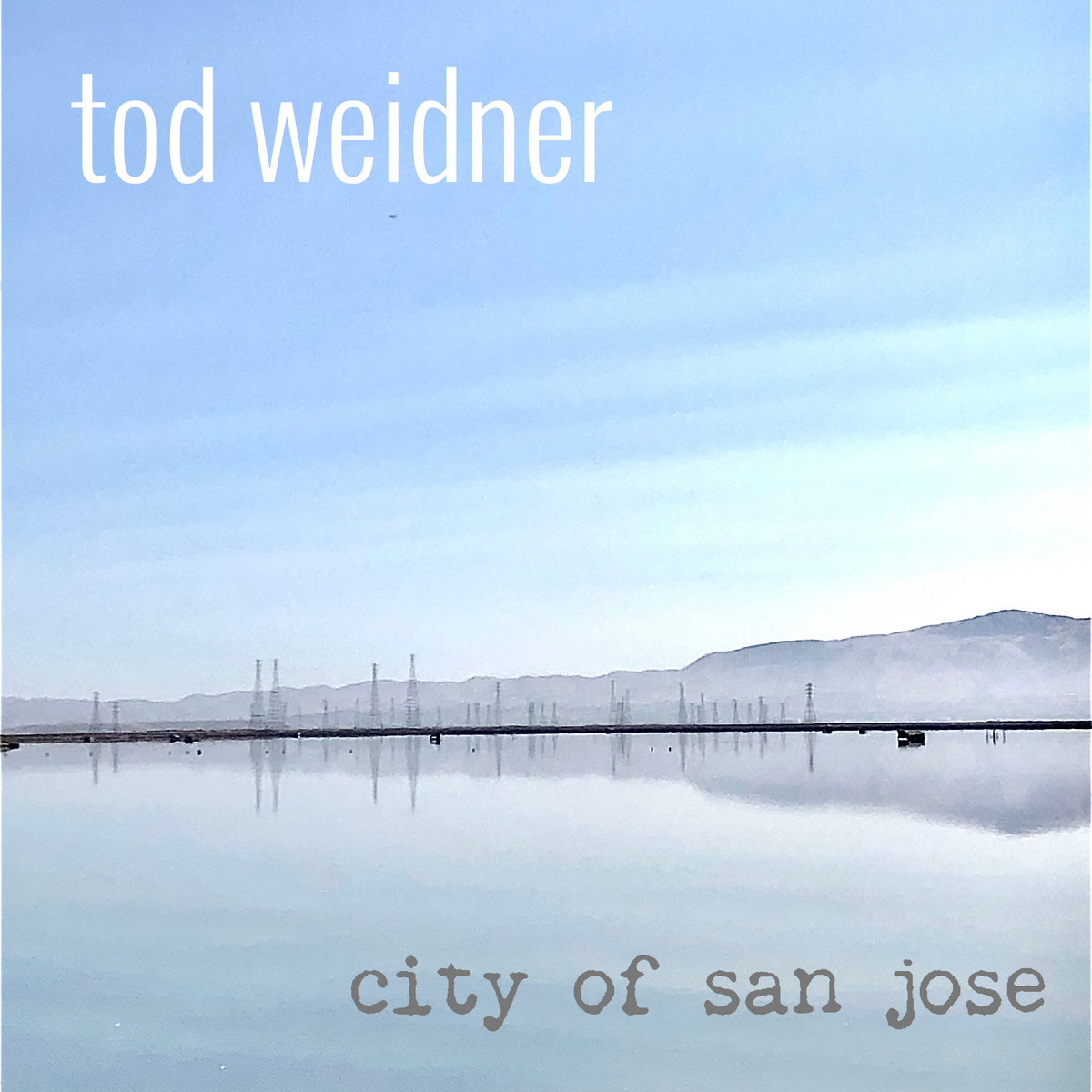
    Dr. J: The song ‘City of San Jose’ captures a remarkable constellation of musical influences. The song seems to have an almost 1970s feel. Is that a correct interpretation? If that is correct, did you intend to create a song that connects to that time period? If that is not correct, how would you describe the feeling of the song?

    TW: No, I’d say that’s a very accurate assessment. Most of what I do is rooted in the music of the 60s and 70s, either directly or one generation removed, and most of my favorite artists were doing their best work back then.

    Dr. J: How did the song ‘City of San Jose’ come together musically for you?

    TW: The song is kind of a love letter to a section of the San Francisco Bay Trail near where I live. During the peak of Lockdown, it was a great place to get some exercise away from a lot of other people. I also came up with a lot of lyrics for this current batch of songs out there. 

    I used an alternate tuning on my guitar for that one- DADGAD, a tuning that a lot of British artists gravitated towards in the late 60s and 70s; people like Bert Jansch, John Martyn, and Nick Drake. Jimmy Page used DADGAD on a lot of Led Zeppelin tracks, as well. My original demo for the song was very much in the British Folk vein- a bit quieter, more pastoral. When we got in the studio to record the actual version it became much more upbeat, but I’m not mad about that at all. I like both approaches a lot, and the final version we did in the studio served as a good introduction to the world of “Tod Weidner as a solo artist.”

    Dr. J: Where do you often derive inspiration to make music?

    TW: Well, it’s a compulsion, really. Playing guitar is really the one thing in my life that never fails to make me feel better. If I’m depressed, anxious, or out of sorts, there’s nothing I like better than to just pick up the guitar and lose myself for an hour or two. It’s my form of meditation. More often than not, a kernel of an idea will pop up somewhere in the course of my aimless noodling. The “voice memos” app on my phone is overflowing with minute-long ideas that either eventually will or already have become full-fledged songs.

    Lyrically, I’ve been really making an effort over the past few years to simplify. In the beginning, I delighted in using big flowery words in my songs just for their own sake. While there’s certainly nothing wrong with that, per se, I’ve been fascinated lately with the songcraft of people like John Prine, Johnny Cash, or Tom Petty: songwriters who can lay down a simple truth that everyone can relate to, but with a clever little spin on it that just makes it land like a bomb. There’s a deceptively fine art to that, and I’m always trying to get better at it. Fewer words, more impact.

    Dr. J: How would you describe the music that you typically create? How has that process evolved or changed over time (especially as you think about your journey in the last few years)?

    TW: My standard line about my music is “songs about Love, Loss, The Loss of Love, and The Love of Loss”. There tends to be a touch of yearning, or wistfulness, a bit of melancholy in most of my music- “Sad Bastard Music”, as some people call it. It’s not dark all the time, but I think most artists have a tendency to ruminate about things, at least the ones I gravitate to. 

    Moving to California from Ohio was already a big new chapter in my life in and of itself, but the prospect of starting a solo career with a new tribe of people also definitely represents a turning of the page. Dayton will always be home, and I thank my lucky stars that I got to learn how to be a musician and writer in such an amazingly fertile music scene as Dayton’s, but there comes a time when a nurturing, close-knit environment runs the risk of becoming an insular echo chamber-type situation. In all honesty, that’s what Dayton started feeling like toward the end of my time there. It was time to get somewhere new and try my stuff out on people who hadn’t known me for decades. It’s a healthy thing to do. 

    My dear old friend, and now manager, Jack Piatt, has always championed my music, and through him, I’ve gotten to meet and work with people out here from very different backgrounds than mine. Which is also a healthy thing to do. Nomad, the gentleman who has produced my first five singles, has a resume that includes- among other things- a long stint as Babyface’s musical director. So he has a strong background in Soul and R&B, and that gives him a much different perspective than I have, coming from a more-or-less strict rock background. The “me” from 10 or 15 years ago would’ve been very skeptical of working with someone like that. But, as I said, this is a major new chapter of my life and career. I told myself, “Tod, you’ve been doing things a certain way for over 25 years. If you want to continue in the same bubble you’ve been operating in, you might as well just go back to Dayton and record the usual stuff with the same people at the same places.” If I want to get somewhere new, it’s a good idea to take some new outside advice, be open to change, and let go of some of my innate urges to control every aspect of the situation. I decided to start saying “yes”, instead of, “I dunno, that’s not how I usually do it.” And I have to say- it’s been working out really well so far. It’s refreshing, and exciting.  

    Dr. J: What is next for you musically? How would you describe your thoughts at this point for your next project?

    TW: The next single is coming out sometime in February, and I think it’s going to really surprise people who are familiar with my back catalog. I’m very excited about this track, and the people I recorded it with. That’s all I want to say about it for now.

    The plan is to release a digital single at a rate of about one a month, and eventually end up with enough songs for a full, physical album. I’m still old school enough that I like to hold a record or a CD in my hand and read liner notes and whatnot.

    I came out of Lockdown with about 20 new songs, and I’m as proud of them as any I’ve ever written; I really believe it’s some of my best work, and I am dying to get on the road and play them for people. 

    Dr. J: What is your favorite song to perform live? What is your favorite song to perform in general? What makes that song a current favorite in your performances?

    TW: I don’t know if I have a favorite song to perform. I have favorite types of songs, maybe. I love playing a song that lets me stretch out and go somewhere on the guitar because, at the end of the day, I still think of myself as a guitar player.

    And I love a song that I can crawl inside and live in while I’m singing it. I just want to play something that moves people. That’s the objective: to play with sincerity and move people. There’s not much point in doing anything else. 

    Dr. J: What is one message you would hope that listeners find in the unique nature of your latest music?

    TW: Well, as I said earlier, I tend to lean toward the darker end of the emotional spectrum with my songs, but lately- with this latest batch of songs, especially- I’ve been making more of a concerted effort to include a little ray of sunlight here and there in the songs. With the last several years of trauma and uncertainty, I think Hope is a valuable, rare commodity, and people need as much of it as they can get. 

    Music, and Art in general, serves multiple purposes: it can provide a feeling of escape for the listener, a chance to forget their troubles and go somewhere else for a few minutes. That’s a lovely thing.

    But Music can also be a hand to hold in the dark. It can tell the listener, “You’re going through some painful times. I know how you feel, I feel that way, too. Let’s feel that way together.” That can be a beautiful thing, too- letting the listener know they’re not alone. I know Music has gotten me through some dark days and nights, and if my songs can help someone in that way, then I’ve done my part.  

    Dr. J: As a musician, how are you adapting to the challenges of the Coronavirus?

    TW: Same as everyone, I suppose. It depends on the day. I miss playing shows, I know that. I hope that, sooner than later, I can get back to playing a gig without worrying about people going home sick. I’m also very aware of the privileged position from which I’m speaking.; my wife has been working from home, and we’re getting by alright. A lot of folks don’t have that luxury.

    The silver lining for me, as a musician, has been the enforced down time. As I mentioned, it’s allowed me to really buckle down and work and produce a lot of songs I’m proud of. I’m thankful that I have songwriting as a way to work out my fear, dread, and anxiety. Again, a lot of people don’t have an outlet like that. 

    I guess it comes back to what I touched on in the previous question. As a singer/songwriter during this whole mess, I have a responsibility to reflect the times, relate to the listener, and provide them with some degree of solace. All things considered, it’s not a bad job to have.  

    We want to extend our sincere gratitude to Tod for answering our questions and continuing to make some really excellent music! Click on the links throughout the article to visit his social media or to listen to various songs that were discussed! If any musicians or artists would like to participate in future ’11 Questions with…’ columns, please feel free to email us at drjytaa@gmail.com. All photos and images courtesy of Tod Weidner.

    Bandcamp Youtube  Instagram Website TikTok

    11 Questions with… Super 8

    Paul “Trip” Ryan of the one man band, Super 8, has been making some of the most melodic psychedelic indie-pop music around! Much of UK-based Trip’s music shimmers and sways into exquisitely crafted ear worms. In addition to his knack for melody, Trip also makes music with a lightness that sometimes hides the melancholy. This back and forth is most welcome in these days of challenge. As a one man band playing all of the instruments, an atmosphere is raised that allows listeners to drop into a musical concoction that does not ever disappoint. Each delicious single and the incredible collaboration with the incredible Lisa Mychols, crackles and glistens with just the right amount of sonic tension. If one were to look up ‘catchy songs’ in an encyclopedia, the entry would simply say ‘Super 8.’

    Dr. J: What can you share with us about when and how you started writing music?

    Super 8 (Trip): Well first off, thanks so much for taking the time to formulate these questions and for your interest in this music I make. OK, here goes then … I have always loved music! A very early memory of mine was listening to Simon & Garfunkel played in the family car when I was a kid and really connecting with the harmonies and rhythms. Later in my early teens I found an old, beat up guitar in an attic. In hindsight it was a truly terrible instrument with only four (rusty!) strings but, for a few months at least, I actually thought it was the greatest thing in the world! To encourage my enthusiasm my Folks later bought me a better acoustic guitar and, from there, I saved up pocket money to buy an electric one. I’m still ‘wheeling’n’dealing’ musical instruments to this day and still get that buzz that I had as a kid when I get to play a new instrument. In fact, my latest musical instrument fixation is the birthday present I received from my thoughtful wife at Hogmanay – a small bass harmonica. I’m so taken with it I put it to good use straight away – it’s a feature instrument on the new single (‘Out of My Head’). You can see me getting to grips with it in the video.

    As for how I started writing music … it’s something I just fell into naturally. It just feels like the right thing for me to be doing in this life. I’ve had no formal training as such, I just try to capture the sounds I hear in my head as best I can with whatever musical tools I have at my disposal at any given time.

    Dr. J: What first led to your recording music as SUPER 8? How do you approach production?

    Trip: I trod the musical boards in a few local bands growing up in the North West of England. With Liverpool a short train ride to the west and Manchester another short train ride to the east it was an inspiring place to grow up (Warrington). I moved north to Scotland around the turn of the millennium and, borne of necessity without any band mates around, I tentatively started to make music on my own. (I had never sung one of my own songs prior to coming to Scotland – there must be something in the water here!) There was a brief spell at the beginning of the century where I tried the whole ‘band thing’ again but it didn’t work out… so ever since I’ve just accepted that I’m a solo studio artist (read: ‘hermit’!).

    That said over the last couple of years as well as keeping my hand in with solo SUPER 8 stuff  I have been collaborating remotely with the LA-based artist Lisa Mychols (more on that later).  As to how I approach production? I’m not the world’s most technical guy I must admit. I’m not interested in the latest ‘must-have!’ fad gadget nor tweaking software for hours on end, I just use my ears until I find sounds that work well together. I play everything you hear on my solo records. Some instruments I can play better than others but I will give anything a go to try to get a tune out of it, whatever works for the song really. At the end of the day it’s ALL about the song!      

    Dr. J: Out of My Head is your most recent music, what led to the making of that song? What was the main influence on your songwriting at that time that you wrote this?

    Trip: ‘Out Of My Head’ came together really quickly. I had the embryonic idea for it just before Christmas and threw down a rough musical sketch before heading south to England for the festive period. On my return I realized it would benefit from being faster and ‘quirkier’. As I said, I had been gifted a bass harmonica by this point so, after a quick crash course in bass harmonica technique (and discovering you can only blow into it, there’s no sound if you suck!) I attempted to put it to good use right away. The single came together really quickly after that. The wife and I made a quick (daft!) video for it last Wednesday and it was released (via Bandcamp) over the weekend just gone.  As a composer I like it when inspiration strikes like that! What was just a rough idea can become a fully-formed & finished piece with a quick turnaround. I feel I do my best work when I’m ‘lost in music’ and ‘in the zone’ as it were! It’s inspiring and keeps me on my toes. I’m naturally a pretty impulsive person who needs to keep motivated. I tend to tire and lose interest when projects drag on.

    As for the main influence for this particular song. Hmm… I hadn’t really thought about it but, now you ask, MAYBE it’s about a love that has been lost? And/or rejection? Or a feeling of being stuck in a certain situation out of one’s control with no apparent clear plan for the way forward. That and the knock-on doubts, personal frustration and disorientation as a result hence the title ‘Out Of My Head’. Or maybe it’s not about any of that and it’s about what book to read next? (I’m currently reading Brian Wilson’s autobiography). I dunno, some songs are hard to explain. They just ‘are what they are’ – a musical snapshot of a moment in time. I personally don’t write a diary so it all has to come out in some way I guess. As you can see, I’m not that great at explaining my songs – I prefer to just let the songs do the talking.        

    Dr. J: ‘Lisa Mychols & SUPER 8 album was the album you released in 2020 with Lisa Mychols. The songs on that record seem almost purposefully lighter hearted. Is that a correct interpretation of the record? If that is correct, did you intend to create an album that was purposefully more fun?

    Trip: Ahh yeah, the debut album with Lisa was great fun – an absolute blast from start to finish! It just seemed to come along at the perfect time (for both of us I think!) It all started with a one-off single (‘Time Bomb’). We had such a laugh making that one (including being cast as clay figures in the video by my talented wife Gill!) that we decided to carry on and see where this 5,000 mile remote collaboration might lead. (Lisa lives in LA, I reside in Scotland so the whole album was made via file sharing. Believe it or not we have never actually met in person!)

    Before too long we had what we thought was going to make a strong EP but then we did a couple more songs together and just thought: “Hey! What the heck? Let’s try for a full length album!” We were ping-ponging files back and forth across the Atlantic and just vibing off the whole project. It wasn’t our intention to make an entire Summer-themed album, that’s just the way it came out. We just let the songs inform us as to how THEY wanted to go. All very organic and natural sounding, nothing on that album was forced or premeditated, not written to order, we just went with the flow and within the space of just a few very creative months we had our album ‘in the can’. On its release (via the cool Canadian label: ‘The Beautiful Music’) it received numerous rave reviews with many folk referring to it as their ‘Album of the Summer’. I’m still very proud of that album. It definitely bottled a musical moment in time. Happy days & good vibrations! File under: ‘California/Brit Pop!’  

    Dr. J: How did the song ‘All My Worries come together musically for you?

    Trip: I have to hold my hand up and admit that I was listening to a lot of Beatles around the time this was written. (Who am I trying to kid, I’m ALWAYS listening to The Beatles!) I guess I just soaked up some extra Beatles vibe around this time and it came out in this song. Again, not premeditated, the way this one panned out is the way this song informed me how it wanted to be. (That said, I admit it IS very Beatles-y-sounding …. to my ears anyway!)

    Dr. J: Where do you often derive inspiration to make music?

    Trip: Well, there’s The Beatles (see above – LOL!) but it doesn’t just come from listening to other folk’s music. It’s hard to explain really but I shall at least try …. most of the music I write actually comes to me ‘from within’ … and usually at the most inopportune moments! For example, I’ll be out walking somewhere and “BOOM!” I get a melody or a riff popping into my head and have to scrabble to capture it before it’s gone. (The voice recorder on my phone has helped me remember quite a few songs that would otherwise have been lost!) Another example? I could be mid-shave say and … “AARGGH! Here we go again!” It’s a curse at times but I can’t complain. The most exasperating situation?  At night. I’m a light sleeper and most nights I find it very difficult to get off to sleep – it takes a long time for my mind to shut down! It’s often just when I’m (finally!) in that strange Twilight Zone place between conscious and unconscious thought that “PING!” a new song idea will choose to present itself!  When it does, I either have to: A) wake myself up to capture it somehow or B) just let it slide hoping that, by rights, if it’s good enough then I should be able to just remember it until I wake at a civilized time in the morning, right?

    Dr. J: How would you describe the music that you typically create? How has that process evolved or changed over time (especially as you think about your journey in the last few years?

    Trip: Again, quite a difficult question as I find it very hard to describe my music ….. it’s more ‘a feeling’. I try not to pigeon-hole the music I make. There’s plenty of acts out there that play to their strengths and tastes as in: “We’re a Ska band!” or “We’re a Power Pop band!” (Whatever ‘Power Pop’ is – ha!) but, for me, I like to mix it up and keep fans of my music on their toes. I like the fact that I can, for example, write a little jazzy bossanova tune with Lisa (eg: ‘Your Summer Theme’) then go from that to an out ’n’ out Rocker with a medieval baroque section in 6/8 timing just thrown in for good measure (LOL!) There’s actually a lot of humour embedded into these songs I write. How would I sum them all up? It’s all just a big pick’n’mix musical melting pot really! As to how my songwriting process has evolved, I’d like to think I’m getting better as I go along here but, that said, I do not wish to get ‘too good’. I like all the ‘happy accidents’ that happen in the studio …. and the things that don’t seem to make sense. If I actually knew what I was doing and all the theory behind it then perhaps these chance moments would vanish and I’m not prepared to take that risk so I’ll just keep doing this while I can and not think too much about the process. So long as making music continues to be a fun, creative outlet for me then I shall endeavour to keep making it.  

    Dr. J: What is next for you musically? How would you describe your thoughts at this point for your next project?

    Trip: Well it’s the start of a new year so we’re supposed to have resolutions, right? Musically speaking I already know I don’t want another year like last year! Looking back on it I got way too distracted with musical commissions and I completely took my eye off the ball (or should that be ‘ear’?) where making NEW music was concerned. So much so that I actually only managed to finish a mere handful of self-penned original songs (which is not like me at all – prior to 2021 I had a reputation for being prolific!) Here now in 2022 I need to turn that around and ‘get back’ to the one thing I feel I’m good at i.e.: being ‘a songwriter’. I hope to have two new albums out in 2022, one SUPER 8 solo and a follow-up with Lisa – watch this space!

    Dr. J: What is your favorite song to perform live? What is your favorite song to perform in general? What makes that song a current favorite in your performances?

    Trip: Like I say, I’m more of what you’d call ‘a studio musician’ nowadays. Being a solo ‘one man band’ as it were, I haven’t played a gig in the longest time. I guess my performances these days are on the records I make, what I play into the microphone when I’m multi-tracking a song. I tend to just let the songs do the talking now pretty much! I don’t really tend to have ‘a favourite’. I just go from recording one song to the next really.

    Dr. J: What is one message you would hope that listeners find in the unique nature of your latest music?

    No real ‘message’ as such more ‘a feeling’. That the music I present makes the listener feel good in themselves. Not one ‘thing’ in particular, just ‘a connection’. I write from the heart I guess and just try to be true to my school as it were – to write music that I like and, if I like it, hopefully others might too. ‘Tis a strange and magical thing ‘music’. It’s all so subjective!   

    Dr. J: As a musician, how are you adapting to the challenges of the Coronavirus?

    Trip: Like everyone, I wish this thing would just disappear and let us all get back to and on with ‘normal’ life as we knew it – we live in hope! In the meantime we have to just keep our heads up and deal with the cards we’ve been dealt here. Musically speaking the one good thing to come out of all of this I guess is that us musicians have realised the potential of making music via file-sharing. I can’t really think of anything else positive to say on the whole ‘Corona’ front! Anyway, stay safe and thanks for reading!

    We want to extend our sincere gratitude to Trip for answering our questions and continuing to make some really excellent music as Super 8! Click on the links throughout the article to visit his social media or to listen to various songs that were discussed! If any musicians or artists would like to participate in future ’11 Questions with…’ columns, please feel free to email us at drjytaa@gmail.com. All photos and images courtesy of Trip.

    Facebook Bandcamp Youtube 

    11 Questions with… Kim Ware of The Good Graces

    Drummer turned guitarist Kim Ware has been making emotionally powerful indie folk rock since 2009’s Bring on the Tambourines! Her last full length, 2019’s Prose and Consciousness merged her sense of melody with layered songwriting that pulled the listener into a rich world of Southern culture, meditations on life and efforts to improve ourselves. Kim’s music often raises questions about how we make real lasting relations in our communities. Stand out tracks like ‘Three’, ‘His Name was the Color that I Loved’ and ‘Wants + Needs’ brought Ware’s mature songwriting together with music that allows listeners to feel the experience even if it is for all too brief a moment. Kim has continued to release new music such as 2021’s ‘capital R (single)‘ and 2020’s powerful ‘Stopped Making Plans‘ and ‘Things Will Be Better in the Morning.’ These songs demonstrate her commitment to intelligent musical discourse. It was a real pleasure to correspond with Kim about her music.

    1. What can you share with us about when and how you started writing your latest song, ‘Stopped Making Plans’?

    This song had some pretty weird origins that were both very intentional but also very accidental at the same time! I say that because it came to be thanks to an assignment for a songwriting group I’m part of.

    We meet on Mondays; it was a Sunday afternoon and I thought, “I don’t have a new song to share tomorrow.” The prompt was “foreign languages” so I simply started by thinking about countries I’d like to visit. My mind went to Germany first; my husband is from there but I’ve never visited. I was thinking about how my friend Andy had also booked a trip to Italy in late 2019 but of course it didn’t happen.

    Anyway, I sort of organized those thoughts to be more about plans falling through, and missing loved ones. In the case of the Italy mention, rather than focusing on Andy’s trip I very intentionally thought about Michele Gazich. He plays violin for Mary Gauthier, and though I don’t know him well I’ve met him at Song School in Colorado, and we’re friends on Facebook. Back around last February / March, before Covid had severely impacted the US but was taking its toll on Italy, where he lives, he was posting about what was going on. It was so frightening. That, plus my working for a major digital publisher at the time (which happens to be health-focused), led me to take all this pretty seriously from the very beginning.

    It’s been such a mental and emotional drain. I kept thinking it might be something I’d write about but it all just seemed too big. Suddenly, approaching it this way (very indirectly at first) just worked. Once I realized what I wanted the song to capture (the trials of last year, with a focus on plans being cancelled), it came together pretty quickly.

    I also feel the need to say before writing it I had just finished reading Viktor Frankl’s “Man’s Search for Meaning” for graduate school. In it, he focuses a good bit on hope, and imagining a future, and how important it is to our existence. That seemed to be top of mind – that the roughest part of all this, for me (a natural planner) was adapting to not making plans.

    2. In the past you have had strong collaborations, did the coronavirus/Covid-19 situation change how you wrote and worked on the song?

    Very much. In November 2019, the Good Graces played our release show for “Prose and Consciousness.” That was such a wonderful experience, like everything just came together for that show. Little did we know we’d only be able to play a couple more together. I would have loved to have included the folks who played that show with me on this song, but logistically that’s a lot harder to coordinate now. I also moved last summer, from Atlanta (where they are all based) to North Carolina, to be closer to elderly family members. The combination of Covid plus just being in a place where I don’t know as many musicians meant I felt very, very isolated. That’s definitely changed how I work on music now. I wrote the song alone, and then recorded my guitar and vocal tracks at home. I sent those to engineer/producer Jerry Kee, and he added everything else. We’re working on a full album this way. Though it’s not what I would have imagined had you asked me last year how I’d make my next album, it’s working really well.

    3. ‘Stopped Making Plans’ is a song that explores the impact of the pandemic, police violence and other social issues, did you set out to address these particular ideas when starting to work on that song?

    Not at all! As I mentioned up top, it didn’t start out being about that at all. But, it quickly turned into that. I just wanted to be very honest. Those are the things that took so much of my mental energy and empathy last year. So once I started going there, I couldn’t really avoid them.

    4. Many of your songs have addressed the strength or weakness of social bonds – is that a correct interpretation of some of the lyrics and the feel of your music? If that is correct, do you intend to write about social bonds and connections or did the song evolve in that direction over time?

    That’s so interesting, and really insightful. I put a lot of thought into relationships, I suppose. And not just a-b relationships, but like my place, my role in a given community. How we all “relate”. And connections – that’s definitely something I’ve been very focused on exploring, for years now. All that said though, I don’t think I ever intentionally write about them. I’m very much an in-the-moment songwriter. Something comes to me, and I try to follow it. Sometimes I can shape it into something that makes some sense, but as often it falls by the wayside, I guess to make room for something else. I’m studying to get my master’s in counseling, and social bonds and connections is a big focus there. So I imagine that will continue to come up, either directly or indirectly, in my music.

    5. How did ‘Stopped Making Plans’ come together musically for you?

    Once I figured out the direction and general melody, the vocal part came together quickly. That tends to be what happens for most of my songs. The guitar part was the challenge. I’d say my finger-picking skills are pretty novice. But I really pushed myself to give this particular guitar part a real “part,” a real presence in the song. Really I thought the recorded version would stay pretty minimal. So I worked really hard to figure out that guitar melody and actually be able to execute it. The bridge was particularly tricky! But finally I got it; it’s a lot different from my playing on most all my other songs which is typically either very strummy and rhythmic, or very very simple, repetitive picking. Anyway, as I mentioned above, once I sent it to Jerry he had a very different vision for it! At first I wasn’t sure about it, but by the end I really loved everything he brought to it (and I still have my original demo with just me – that’s posted on my Bandcamp, too – If I ever really feel like hearing or sharing that more minimal version).

    6. Where do you often derive inspiration to make music?

    I think of songwriting a lot like dreams. I’ve always thought dreams just “mean” whatever you decide they mean, and if you asked someone else, they might have a very different interpretation. To me, dreams seem to mostly just be a way of processing whatever has happened that day. Songs are very much the same. I process through them. I’m not sure I “figure stuff out,” but – when I get it right – I manage to put something pretty complex and challenging for me to even talk about into a 3-or-4-minute piece of art. That is just the coolest thing to me! It’s the single thing I love most about songwriting.

    So I guess I’m saying I get inspiration from challenges – but it’s almost never intentional. My mind just always wants to solve problems, I think. Or at least take a complex problem and break it down into something simpler, more manageable. I think it’s my need to do that that inspires me to write songs. It’s my means of processing.

    7. How would you describe the music that you typically create? How has that process evolved or changed over time (especially as you think about your journey from Set Your Sights (in 2017) to Prose and Consciousness (2019) to your recent music)?

    I think it’s always been really personal and honest. That’s sort of the metric for me; sometimes I write for “side projects” and one of the things that makes it a Good Graces song vs. a song for one of those other projects is if it’s so honest that I’d probably be uncomfortable talking about it.

    I think that’s been consistent, from my very first song back in ’07 or so. It’s evolved a lot; I guess it’s gotten a little more polished? And I’ve had a lot of different folks contribute to it over the years. They’ve all inspired and had an influence on me, the songwriting, and the final product in one way or another. I do think now I’m starting to veer just slightly from Americana and folk and maybe more towards indie and bedroom pop (which is a place I’m also pretty familiar with, I think my 2014 album “Close to the Sun” was more that sort of style). The southern influence isn’t going anywhere though, I think that’s unavoidable due to my vocals. But working with Jerry here recently, and him adding things like drum machine and keys, has made me realize a sort of different way to present the songs.

    8. What is next for you musically? How would you describe your thoughts at this point for your next project after Stop Making Plans?

    Jerry and I have about 16 or 17 songs we’re trying to get through this year. I think we’ve finished up 5 so far. I’d like to release a few more singles and then maybe around the fall or so start pulling everything together for an album. But that said, last year taught me to just sort of be more in the moment and not get too married to any one idea or method when it comes to releasing music. I recently launched a Patreon which I’m really enjoying – my focused is shifting just a little from “the next album” to “what am I making this week?” I will always love making albums though, and the format, it’s just that right now it feels like there’s got to be something more, or different from that, you know? One thing I’ve noticed is that I’m pretty burnt out on the traditional way of making and promoting music. It was getting so focused on likes, pageviews, followers, etc. That’s why I like doing things like Patreon. Sure, it’s great if the numbers go up. But for me what’s far more important is the connection I’m making through songs. If I’m even lucky enough to make one. That’s the greatest thing. I’m trying to focus more on little things that remind me of that connection.

    Oh! I also recently launched a podcast that sort of talks about these things so I may as well plug that here! It’s called Quarantined With the Good Graces and you can find it on most all the podcast platforms. It’s an interview podcast and I’m releasing a new episode each Tuesday. At the moment, I’m focusing as much on that as I am my songs, and it feels really right to me.

    9. What is your favorite song to perform? What makes it a current favorite in your performances?

    It’s almost always “7-Year Sentence (Going to Hell)”. Back in Atlanta, I’d usually have a group of friends come sing the end choruses with me. It was a highlight of our shows, and really cathartic. I tend to sing that song louder and more emotionally than a lot of my other songs, and it always feels really good.

    10. What is one message you would hope that listeners find in the unique nature of your latest music?

    That we’re all struggling through this in our own way. If nothing else connects us, I think that does.

    11. As a musician, how are you adapting to the challenges of the Coronavirus?

    I’ve really been trying to immerse myself in my new life – my husband and I moved into my aunt’s old farmhouse at the beginning of this year. It’s right beside my dad’s peach orchard. He passed away a couple of summers ago, but being here, right beside everything that was so much a part of him, I feel really close to him. The other day I walked around the perimeter of the orchard; it was soooo cold! But during that time, I thought, this is exactly where I’m supposed to be, and exactly what I’m supposed to be doing in this moment. I guess that’s how I’m trying to adapt. By being present and focused on thethings that are important.

    I left my day job at the beginning of the year (2021), so I could focus more on school and all this life stuff with the house and my family. So, I’m still sort of trying to figure out what my new life even is. But I’m also doing some things that I wanted to do but never had time to. I took an online improv class through Second City and I absolutely loved it. And I’m currently taking a songwriting class. That’s a little more like “work” for me, which is interesting. But I’m grateful to have a little more time to spend on that now. I’m viewing this time as a transition for me; I don’t feel particularly settled yet, but I feel like that’s starting to come more into view.

    We want to extend our sincere gratitude to Kim Ware for answering our questions and continuing to make some really excellent music! Click on the links throughout the article to visit Kim’s social media or to listen to various songs that were discussed! If any musicians or artists would like to participate in future ’11 Questions’ columns, please feel free to email us at drjytaa@gmail.com. All photos and images courtesy of Kim Ware/The Good Graces.

    Facebook Website Patreon Bandcamp

    11 Questions with… Jayne Sachs

    Some time ago songwriter Jayne Sachs agreed to answer our 11 Questions for this column! We appreciate Jayne taking the time out of her busy schedule to respond to these questions about songwriting, music making and performing. In 2015, she was a Daytonian of the Week!

    Singer/Songwriter Jayne Sachs has been crafting songs in the Dayton Music Scene and beyond for several years. Jayne is currently a songwriter at Matt Lindsey Music in Nashville. She is an award winning songwriter with two first place wins in the prestigious John Lennon Songwriting Contest in the country and pop music categories, a rare occurrence. She is also a top winner in The UK Songwriting Contest and the International Acoustic Music Awards in the country category, we could go on and list the extensive recognition for her songwriting skills and techniques but that is not what this column is about. Our purpose here is to learn about songwriting and music directly from Jayne. However, I would be remiss if I did not take a moment to thank her because Jayne has also been very kind with her time agreeing to speak to Dr. J’s classes about music and songwriting.

    1. What can you share with us about when and how you started writing your latest music?

    For the last eight years I have been writing songs for pitching in the Nashville country market. Before this, I was in the indie/alt pop genre as an artist and performer.

    When my dad on his death bed (sorry, I always go dark!) asked me about my future in music he asked what publishers do and if I could “get one”. I was pretty sure I couldn’t just “get one” but didn’t know enough about what they do and how I could actually ever get signed by one. I knew that publishers were located in all the music cities, with Nashville being the closest.

    After my dad died, I received a letter that he had written to me while he was still alive. He told me how proud he was of my music journey and if I should ever decide to not continue, I should be happy with what I’ve done. Since I had no intention of slowing down I thought back to our conversation about publishers and decided to understand that side of the industry. One thing lead to another and I learned the country genre inside and out and actually ended up getting signed by a long time Nashville publisher. I write daily and turn songs into him for pitching. I wish I could tell my dad.

    2. You worked closely with several musicians throughout your career, what led to your collaborations?

    The musicians I’ve worked with the most and the longest are my band mates Steve VanEtten, Scott Shiverdecker and Kelly Morelock. I worked with Kelly prior to that with a different line up as well. What lead to that collaboration originally was my need for a live band, but also musicians who could take the songs and help arrange them in cool ways. Each one of these players is an expert on his instrument. Without them the songs would have remained acoustic based, but these guys put muscle behind my singer songwriter diddies.

    3. Rain is a personal favorite, so I am curious about it. The song seems different to me from some of your other songs and music. What were you trying to capture with that song?

    I wrote “Rain” about the music industry. But it’s a song that can be interpreted in any way that resonates with the listener. I guess I was feeling that the rain I was hoping for would wash the dirt of trying to get signed off of me so I could just feel free.

    4. Rain also seems to address some ideas about expressing oneself. If that is correct, did you intend to address that theme?Is there a theme that you find yourself working with in your songs?

    If that is your interpretation, then I meant to address it! I am all for the meaning of a song being how the listener takes it, except for my Nashville songs which can’t leave anything up for interpretation. Stuff is very literal in that market. But the theme of Rain for me is breaking out and washing shit off of myself and feeling carefree. I’ve always wanted to dance naked in an alley.. who wouldn’t?! Well maybe not in the bitter winter.. but even…

    5. How did Rain come together musically for you?

    Rain is on a cd called Velveteen Girl. It was the only project I recorded with musicians other than my mates. I was working with a producer in Nashville, Lij Shaw, and he brought in his friends who do a lot of studio work. My band was on a break at that time as Scott and Steve already had kids and needed some time with their families. I’m proud of that cd and then my band emulated the songs so well once we got back together for live shows.

    6. Where do you often derive inspiration to make music?

    My songs as an artist tend to be dark and somewhat personal, whether they sound more ballad or more up tempo, sad or sarcastic. The song may not be about me specifically, but there is always an emotional bed that the song is lying on that I can relate to completely… the emotion. So to answer your question, the inspiration is the emotion. I may have just heard something that made me tear up, or laugh or feel empathy… and then if that feeling sticks around longer than a minute I may grab my guitar and try to dance with that feeling a bit. Listening to other’s songs that resonate with me is always inspiring. When I hear something I really love, my favorite thing to do is grab my own guitar and write.

    7. How would you describe the music that you typically create? How has that process evolved or changed over time (especially as you think about your journey across your various projects such as your earlier music compared to the music you are making now)?

     Writing for the Nashville market is what I’m concentrating on now but my journey in music started around age 18 at OSU when I started playing out a bit. As soon as I started writing original songs, I always wrote to perform them and then to record them and then to play them for an audience. I left music for a long while to have a normal career, even though I picked TV (a story in itself), but brought music back into my life in my 30’s. That is when I really got serious about writing and finding my true voice as an artist. That’s when I started playing live with a band and my career grew beautiful and crazy fun wings! This continued for years and years until I started writing for Nashville, a total shift in focus.

    Learning how to write for the masses was like getting a PhD in neurosurgery. I dove into it with a fierce need to understand It and it’s been no different than learning a very specific skill.. or maybe brainwashing.. not sure! I feel I am a better writer now in general because I understand crafting for marketability purposes, but the trade off is not having the carefree heart as I did as an artist just writing for my project. I struggle to keep “me” in my writing now, but too much of “me” limits the chance of an artist wanting to record it. I’m writing for other artists now who are looking to record songs that resonate with them… and those artists are choosing songs that their audience will like… and those songs are being dissected by their label and team to figure out which ones could become singles and possibly a  #1 on radio. So when I sit down to write now, I am trying to write a hit. And I’m still trying to keep a bit of me in it so I can still somehow relate to the emotion in the song.. but writing it in a way that will appeal to the masses. It’s f’n hard!! It’s the hardest writing I’ve ever attempted. 

    8. What is next for you musically? How would you describe your thoughts at this point for your next project?

    I’m not sure what is next. I’m neck deep in Nashville. If I drown, I drown… but I’m a fairly resilient human who can dog paddle like an expert dog paddler! I’m extremely goal oriented and the goal is to get a major artist to cut one of my songs. I’m getting closer. Garth Brooks put a vocal on one of my co-written songs but then he ultimately passed on it. I heard that he sent it to another artist who he thought it might be better suited for. But we didn’t hear anything else on it. Ugh!! We were all holding our breaths on that one!

    9. What is your favorite song to perform? What makes it a current favorite in your performances?

    Oh let me see… a favorite? That’s hard to pick. I have a song I wrote for the Nashville market called “Somewhere” which I love to perform. I wrote it two years ago. It happened to win The John Lennon Songwriting Contest in the country category which was pretty darn validating.

    10. What is one message you would hope that listeners find in the unique nature of your latest music?

    Since my latest music is not for myself as an artist, I would say I hope listeners would still hear “me” in there as I struggle to keep that heart beating while writing in a completely different way.

    11. As a musician, how did you adapt to the challenges of the Coronavirus? Is that changing for your now as music events are opening up again?

    Since Covid, I’ve been co-writing via Zoom instead of being in a physical room with people in Nashville. I was traveling to music city every three weeks or so but I haven’t been back since the beginning of Covid. During the last year, I’ve done a few sets live via Facebook, so that is new territory for me. I miss the stage greatly. It’s where I honestly feel at home. Now that things are opening up, I hope to do a few shows every now and then.

    You can follow Jayne Sachs on various social media including:

    We want to extend our sincere gratitude to Jayne Sachs for answering our questions and continuing to make some really excellent music! Click on the links throughout the article to visit Jayne’s social media or to listen to various songs that were discussed! If any musicians or artists would like to participate in future ’11 Questions’ columns, please feel free to email us at drjytaa@gmail.com. All photos and images courtesy of Jayne Sachs.

    11 Questions with… Nick Kizirnis

    101714517_10163801825875154_1076073664824213504_nThe 11 Questions with… column returns with guitarist, songwriter Nick Kizrinis! He graciously answered these questions about his latest music projects. We want to publicly thank him for taking the time to answer these questions!
    Nick has been involved in numerous music projects. He first picked up a guitar at the age of 12 and one could say that he never really put it down. Some of his earliest music followed the creative playfulness of the surf rock guitar sound. The overlooked band The Mulchmen played an updated surf rock that captured the energy of that style while simultaneously exploring new musical terrain.

    Nick has released some tremendous solo work including the incredible ‘Into the Loud’ that expanded on the guitar driven rock genre with a touch of pastiche and a heart full of passion. More recently, Nick has explored the textures of guitar driven melody with elements of jazz and swing in The Nicky Kay Orchestra. Work with several notable Dayton musicians like Paige Beller led Nick to an enthusiasm for adventurous lyrical expression. This led to the expansive latest record, The Distance. A musical work that stretches across rock, folk, Americana, jazz and more. That record includes the contributions of veteran songwriters and performers Kate Wakefield (Lung), Mark Patterson (Son Volt), Tod Weidner (Shrug), “Crazy” Joe Tritschler and Patrick Himes (Bribing Senators, Black Jacket Symphony, Reel Love Recording).

    Nick Kizirnis 1 by Jennifer TaylorThe Distance demonstrates Kizirnis’ remarkable skill as a guitarist and a songwriter. Bridging musical spaces that make for an emotional listening experience, the record reveals lessons to be learned about the affairs of the heart. The collaborative process that Nick undertook allowed him to move past any limitations of his own perspective and voice and give flight to songs that drew stories about life, love, loss and the discontinuity of connection that is universal to all of us.
    The album begins with the emotional devastation of ‘The Beginning’ in which Wakefield sings powerfully about loss with lilt that has the impact of a million sledge hammers, especially when she sings ‘used to hold me as I slept at night, now I sleep alone’. ‘Way To Me’ counters with an almost hopeful quality that the path back to one another may be difficult and treacherous but is not and should not be impossible. And then ‘The Distance’ patiently takes the listener into the social dislocation of impending separation where the music and the lyrics wrap and twist around one another implying and delivering that sense of falling apart. And that is only the first three songs on this record! Listening deeply to ‘The Distance’ and not experiencing an emotion is simply not possible. The inclusion of a few covers on this collection of songs only adds depth to the ideas explored.

    Built by many gifted players over several years, Kizirnis has created an album that bridges different tones, textures and colors that explore the dilemma of love, concern and connection without unnecessary drama.

    Dr. J: What can you share with us about when and how you started writing your latest album The Distance?

    Nick Kizirnis 2 by Jennifer TaylorNick Kizirnis (NK): I started writing the songs for the album back in 2016 as a challenge to myself to see if I actually could do it. I’d written a lot of songs before, but most of them were actually instrumentals.
    I started waking up at 5am every day to write, which turns out to work well for me (I still do it today). Once I had a good routine (coffee, write, more coffee) I found that the work of writing became easier, and then I found other times that I could take advantage of because I was ready. And it became really enjoyable.

    At some point I realized that writing for my own singing voice was really limiting what I thought I could do with these new songs. I decided that my songs could be in anybody’s voice, it didn’t have to be mine. Suddenly that limitation disappeared, and everything started coming together.

    Around the same time my friend Mark Patterson was in town and we decided to give the songs a try between his tours with Son Volt. Patrick Himes challenged me to just come in and record a song. At that point everything started to move forward very naturally.

    https://www.youtube.com/watch?v=Q6ICpC9o6Pw

    Nick Kizirnis Band Live 2 by Chris CosenzaDr. J: You worked closely with several local musicians, especially Kate Wakefield, what led to your collaborations? Can you discuss your partnership with Kate?
    NK: After deciding that I didn’t have to sing the songs, I started thinking about where else I could take the idea of removing limits I usually put on myself (that is do it mostly myself). I started asking other friends to come in and play guitars and other parts that I would usually do. I invited Patrick, Tod Weidner, Kate Wakefield and Joe Tritschler see what would happen when they interpreted the songs. While I was still playing a lot on the record, I intentionally took my hands of the steering wheel and listened to what everyone else came up with and let that guide the recording process.

    I would work out the arrangements with Mark, then we would record demos of each song, get everything mapped out, and send them to everyone so that they would know what we were going for. And then everyone would come into the studio and recorded what they felt the song should be. It was a great experience to watch these songs evolve as we all worked together.

    Nick Kizirnis Band by Jennifer TaylorThe band (or part of the band) would record a few songs, scheduled around Mark’s tours with Son Volt. Kate was also on tour with Lung during this time so she would record vocals and cellos separately. Between Lung and Son Volt, Mark and Kate have never met. Kate worked off my demos or the band’s rough tracks, using them as a reference to build out the melodies and harmonies. Regarding the cello, those parts were always thought of as mood/texture – same as the keyboards Patrick would play later. We ended up with a couple of songs, especially “The Distance,” where the cello and keys created a very heavy mood, which I loved – and which I had never planned for on the original demos. That was one of the many great things about the process. We would build these songs up and then opportunities would present themselves.
    The Distance Album Cover Art by Rachel BottingI want to mention here how amazing and generous everyone was, and how grateful I am for the help and support and their friendship. Patrick is an amazing multi-instrumentalist and studio magician and really know how to work with me through the process of making album. Mark taught me all about touring and running a band when I was a teenager, and through his years in Austin is this brilliant “song-writers drummer” … he helped coach me through the song arrangements and that alone was an amazing experience. Tod has been a friend and I’ve long admired his singing, playing and writing. Kate is my favorite singer in the world, and I think she’s an amazing cellist with a really unique voice and also a great songwriter. Then of course there is Joe who has been my friend and musical partner for years. Joe. The brilliance and “effortlessness” in his playing is so inspiring, and I feel very lucky to have played, recorded and travelled with him over the years.
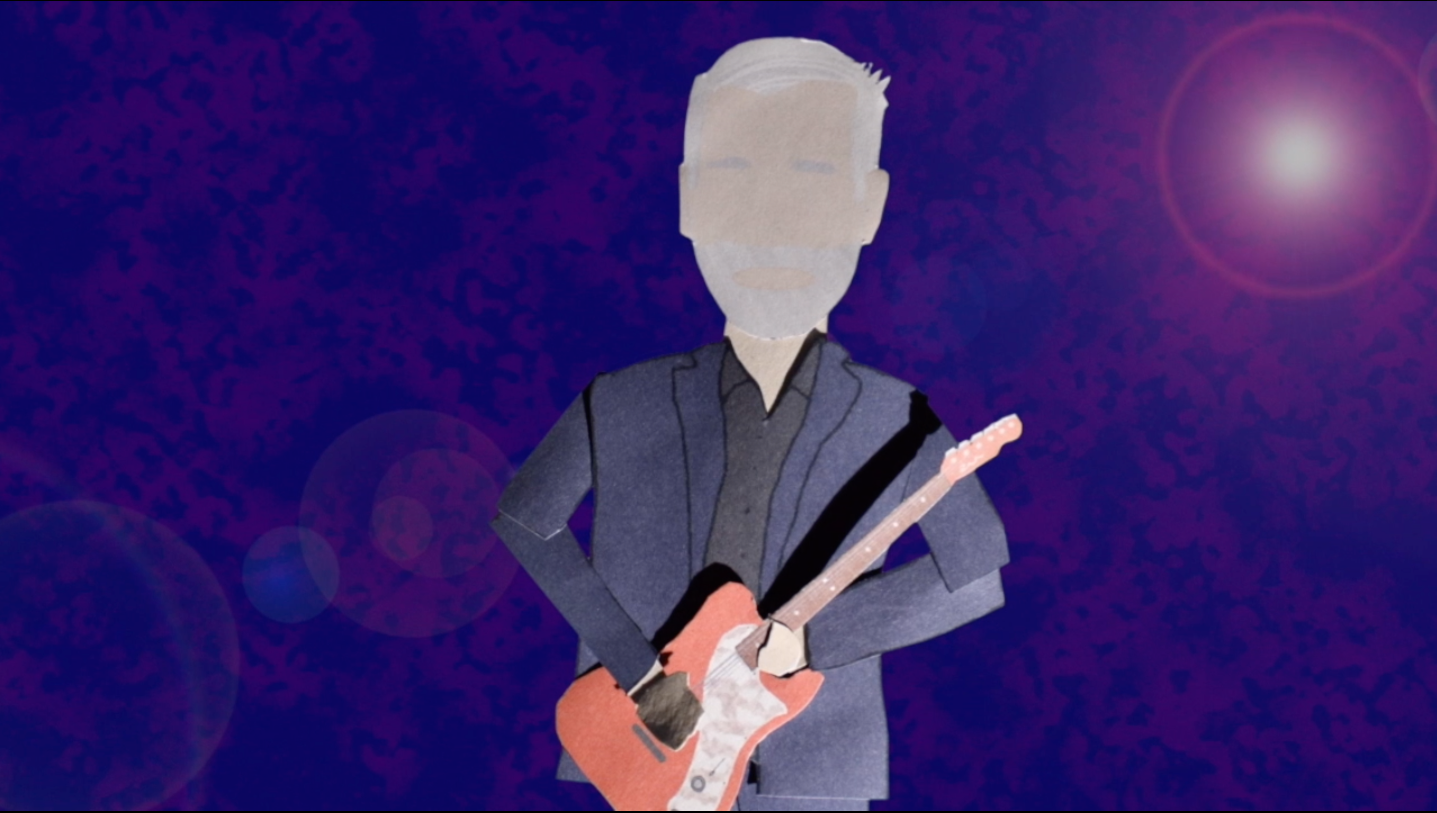
    And while I’m at it, I really appreciate Rachel Botting’s beautiful album artwork, Sean Haney’s precise mastering, and Scott Kinnison at ATOM Records who has been releasing my albums since 2000. To have that kind of support is truly amazing and I am very grateful.

    https://www.youtube.com/watch?v=BJYSmfOD6fs

    Dr. J: ‘Tell Me Tomorrow‘ is a personal favorite, so I am curious about it. The song is catchy and very different than some of your previous music. What were you trying to capture with that song?

    NK: Thank you! That song is different, maybe even from the rest of the album. I’m really happy with it. By the time I started that song I was knee-deep into songs about heartaches and heartbreaks, and of course this one was going to the same, but it’s actually about trying to on after a relationship falls apart. So it’s bit stronger – it rocks a bit harder (for me), and as you said, and for some reason it’s catchier. All of the other songs have people who are caught or left behind in their relationships, but this is the first one who is actually breaking free (actually it’s the second, I’ll let you guess who was the first). It was always intended to be the last song on the album, and it actually is IF you think of the last three as more of a coda to the album (which I do).

    I did not know that Kate would add a mini-choir to the end of the song. That’s one of my favorite moments of the album, I love the way it works with Tod’s guitar solo. There are a few moments like that on the album where vocals, cellos, keys, and guitars work together and add textures that I’ve always wanted to hear (but didn’t know it).

    Dr. J: ‘The Distance‘ also seems to addresses not simply physical separation but social distance. If that is correct, did you intend to address that theme? Is there a theme to the songs on the record as a whole?

    NK: ‘The Distance‘ is a collection of songs about the loss of love, separation and emotional distance … but I never thought of the album as having a theme or concept. In my mind I was thinking about how albums by Roy Orbison, Gram Parsons, George Jones and similar artists collected these sad love songs and stories and presented them not as a theme but maybe as a soundtrack for the sad and lonely, maybe as they drive around late at night all alone. I’ve had people tell me as much, which feels nice – oh, not nice, I guess but validating.

    Social distance is an interesting observation … all the songs on ‘The Distance‘ deal with relationships ending and people leaving, but also the emotional and social separation of partners and their interactions as they go through these ordeals. Not sure if that’s what you are getting at it, but it seems like everyone on the album goes through it in quite a bit of detail.

    Dr. J: How did The Distance come together musically for you? What was it like to collaborate on a video for the song?

    NK: I was looking for the chance to collaborate on a music video during the pandemic – obviously all plans were halted, we were all trying to figure out what to do. (Artist/Animator) Katie Marks reached out to me with a treatment for “The Distance” and I loved it. Katie went all out, creating 2,000 images, elaborate puppets and backgrounds, and an amazing storyline that really communicated the song in a new way. It was such a great experience for me and I hope folks will check out the video and Katie’s other work (www.katieannmarks.com) … and hopefully it’s a good example of what can happen when two people get together and trust in each other to make something really exciting.

    Dr. J: Where do you often derive inspiration to make music?

    NK: I’ve been listening to music since I was kid – at first it was Elvis, Johnny Cash, Duane Eddy, and then a crash course in jazz, blues and classic rock before I discovered punk. By then I started playing guitar, I was in a band, and I wanted to write my own songs based on all this music that inspired me.

    At first it was the sounds that artists made – with their instruments, but later in the recording process. To this day it’s a huge influence. But as time passed, the stories that artist told and how they told them (through lyrics, voice, instruments, recordings, arrangements) really motivated me. I’ve always wanted to figure out “how did they do that,” and that’s led me to listen to many styles of music to better understand and to take away as inspiration.

    Sometimes that can result in a very weird mix of inputs – imagine a mix tape with GBV’s “My Son Cool” and the first Trio Bulgarka album and Sleepwalk (Danny Gatton’s version). But I love it all. I love discovering new music and realizing that there’s so much I have yet to hear (and so much amazing music still to be made).

    How many times I tried - The Distance music video - Katie MarksDr. J: How would you describe the music that you typically create? How has that process evolved or changed over time (especially as you think about your journey across your various projects such as your earlier music – I am a big fan of ‘Into the Loud’, the Nicky Kay Orchestra, The Distance)?

    NK: I have always been interested in playing different styles and exploring different sounds, and so I’ve never stayed in one place too long – I started in Ramones/Replacements punk rock, then Devo/CVB/Robyn Hitchcock/XTC – influenced indie/alternative, and it just kept changing from there, including alot surf instrumental, some rockabilly, and finally what I think I do now, which in my mind is a combination of all these things – but not directly.

    I used to write with a band, within a style of a band. Now my main focus is on writing songs that I could perform on my own but could also play in record in other styles with different sounds. It’s a great feeling to not worry if a song doesn’t fit a style or genre for a specific band. I love having a band, I love having friends to work with, but for whatever reason when I get outside of a given group I am more creative and productive. Maybe that will change as I learn to be a better songwriter, which would be fine with me! I’m enjoying the journey, it makes me feel happy.

    Dr. J: What is next for you musically? How would you describe your thoughts at this point for your next project after ‘The Distance’?

    NK: I am very happy with how ‘The Distance’ turned out and how it was received, so now I am also asking myself “what’s next”? I thought I would just keep writing, maybe in the same style, and then the pandemic put an end to any expectations. I didn’t write for a few months, and when I did the songs were very different. That’s fine of course, who knows what songs will become, but it did make me start to wonder where I would go from here. Now I have enough songs to start work on another album, and while I don’t feel it will sound like The Distance, I do think there are sounds and ideas that will be a continuation, or a next step.

    I’m challenging myself again – how can I continue to improve? What do I need to learn? Who could I work with to help me progress? It’s all really interesting to me, just to find out what I can explore as a songwriter. Last time I worked alone, then brought in a friend to help with arrangements, and then had more friends really take over the recording, although I was still there to direct. Where could I go from there? What else can I do to experiment?

    Dr. J: What is your favorite song to perform? What makes it a current favorite in your performances?

    NK: “Cone Back to Me” from The Distance is definitely my favorite. I’ve played it with the band, as well as solo (for the NPR Tiny Desk Contest, as well as live), and we are working on a video for it. It was the second song we recorded together (the first was “The Beginning”) and it turned out so well that I was really encouraged to continue working on the album. I’m very happy with how the song turned out, but really the experience of recording it was a great one. “Slipping Away” is another one, because I get a lot of positive feedback about it (always nice!), I made a fun video for it with Sam Manavis, Mark and I had a great time arranging it, and it just turned out right (I think).

    Dr. J: What is one message you would hope that listeners find in the unique nature of your latest music?

    NK: Well, this may sound strange considering most of the songs on the album are about the loss of love and the failure of relationships, but through the songs and the way we recorded them I hope the listener will hear that love and every happiness that brings is possible – even when we have some seemingly bad experiences and/or learn some hard lessons. Maybe some of these songs remind people of their own experiences and help them see that here they are, they’ve been able to learn and move on.

    (I actually wish those experiences on no one ever, but hopefully whatever people do go through will help them get to a better place in their lives).

    Nick Kizirnis Band Live 1 by Andy ValeriDr. J: As a musician, how did you adapt to the challenges of the Coronavirus? Is that changing for your now as music events are opening up again?

    NK: The big thing for me was recording at home and collaborating with other friends and musicians virtually. I had recorded songs but never anything I would think about releasing. I had the opportunity to record music for an animated short titled “Darryl” produced by Lydia Kladtis at the University of Dayton. I recorded guitars and sent the tracks to Kate Wakefield who added cello and vocals. We produced three short songs for the film.

    That motivated me to record an (unreleased as of yet) acoustic instrumental EP following the same process. Once the record is finished we are going to create a second version with a friend that will be a percussion-based, completely remixed treatment of the same songs. All remote.

    That went so well that I started reaching out to other musicians to contribute tracks to some new songs I have been writing. Soon we’ll take my tracks and theirs to the studio and merge them with new in-studio tracks.

    I also recorded a song for The Breeders where we were in their home studio, but everything was being edited and mixed at another studio in New Orleans at the same time. It was a really fun experience.

    So, I guess being quarantined led me to an opportunity that was always there but I never took advantage of. I’m excited about what else I may be able to do once I’m better at recording and collaborating with other people.

    You can follow Nick Kizirnis on various social media including:

    Facebook     Website     Instagram    Twitter

    Spotify    Bandcamp     YouTube   Atom Records

    YTAA MonsterWe want to extend our sincere gratitude to Nick Kizirnis for answering our questions and continuing to make some really excellent music! Click on the links throughout the article to visit Nick’s social media or to listen to various songs that were discussed! If any musicians or artists would like to participate in future ’11 Questions’ columns, please feel free to email us at drjytaa@gmail.com. All photos and images courtesy of Nick Kizirnis, Andy Valeri, Chris Cosenza and Jennifer Taylor Photography.

    your-tuesday-afternoon-alternative-color copy

    11 Questions with… Chad Wells

    101714517_10163801825875154_1076073664824213504_nWe could not be more excited about an ’11 Questions with…’ column, then we are to have songwriter, guitarist, singer, visual artist, philosopher, tattoo artist/business owner and Revered — Chad Wells! He graciously answered these questions a few months ago. To call Chad a renaissance man is to understate all of his gifts. As with all of the musicians who are so kind to participate in this effort, we want to publicly thank him for taking the time out of his busy schedule to answer these questions!

    Chad has a lengthy music resume. His time in COH, The Jackalopes, Cricketbows, Wells & Watson and more has given him the opportunity to make some of the most creative atmospheric psychedelic punk rock this side of… well, to be honest these projects are incredibly unique and comparisons just end up showing that the writer’s reach exceeds their grasp.

    We have been fans of Cricketbows since their fantastic album, ‘Diamonds‘. That record careens across classic rock to country to an excellent Monkees cover (Porpoise Song) to straight-forward rock and roll (All the Way Down and Kiss Alive) to psychedelic rock (Little Tiny Houses and Landing on The Moon) and tremendous emotional territory in-between all of those genres. Chad’s music has evolved over time from in your face, direct punk made with an eye toward embracing the emotions you are feeling to reflective psychedelia and folk rock in the Wells & Watson duo. And unlike this writer, Revered Wells’ reach is easily within his orbit.

    GEA - dr j guest lecturer finals-13If you do not know the music of Cricketbows then I am excited for you! There is significant music discovery in your future. What started as a solo project transformed over several records into a full band. In fact, the excellent ‘Diamonds‘ which was recorded in 2014 with Grammy winning Producer Brian Olive (Soledad Brothers, The Greenhornes) was the first full length record as a complete group released in 2015. The following EP ‘Communion‘ incorporated pop music intro the band’s repertoire in songs like ‘Beat of My Heart‘. During the challenging year of the pandemic, Chad was even able to create a set of dystopian electronic singles under the moniker New Way Vendetta. Check out the 80’s homage in ‘Light as a Feather.’

    197532652_1256634581459071_4922346402199669240_nThe latest Cricketbows album ‘Raised on Rock and Roll‘ raises the stakes higher. While maintaining the sonic elements of their previous recordings, ‘Raised‘ questions the nature of connections that we all too often take for granted. What is it to speak like ‘Electric Guitars’ as Chad sings in the title track? What does it mean to pretend that you care for others when you really do not (‘Saccharine Sweet‘). Remember when you would listen to music when you were supposed to go to sleep but the thrill of discovery kept you awake? The song ‘Raised on Rock and Roll‘ explores the consciousness shaping experience of hearing music that is part of your identity for the first time. Not putting on the cast off identity of your parents and family, but a sense of who you are in music that is not reducible to what others around you are doing. This is so powerful for those of us who had to work to discover music in the pre-Internet era. Even if that experience occurred under the covers when you were supposed to be sleeping. And now when we can hear almost anything at any time in any place, finding music you can call your own is just as life affirming.

    Shaped not only by the pandemic but the search for the most captivating melody while still holding the idea of experimentation in their hearts, Cricketbows capture the challenges of identity, social bonds, the faces we show to others and the faces that make us who we truly are as people, as citizens, as family.

    0011248191_10

    Dr. J: What can you share with us about when and how you started writing your latest Cricketbows record?

    Chad Wells (CW): We started writing the songs that would become the new Cricketbows record around the same time that our ‘Communion‘ EP came out (Fall 2017). I’m kind of always writing and to collect my ideas, I use everything from quick iPhone video and audio recordings, to scraps of paper and napkins. Generally, these ideas make their way to the band slowly – a song at a time – and we work them up in rehearsal, play them live for a while and eventually we feel like we have enough material to record an album and we go do that. In this case, Zachary Gabbard of The Buffalo Killers had Produced our EP ‘Communion and almost as soon as that collection was released, he called us back to the studio to start working on the next release before we had even had time to start really working on any new material. So, the songs for “Raised On Rock And Roll” were culled from existing demos I had laying around in various states of non-completion and we also chose a couple songs that we had been playing live for some time that I had released as Cricketbows before the band really existed. We went into the studio at Howler Hills (Gabbard’s studio) but the sessions didn’t end up on the final album because the songs just didn’t feel like they were fully together yet. So we took the songs on the road, playing as many shows as we could and we continued reworking the demos in our rehearsal space and we hammered them into shape. Once we finally had a tight set of songs together, we went into the Candyland Recording Studio in Dayton, Kentucky and laid down the tracks that would become the album.

    Dr. J: In the past you worked closely with your bandmates in Cricketbows, did the coronavirus/Covid-19 situation change how you wrote and worked on the record?

    CW: The record was fully written and recorded prior to the Pandemic so it didn’t really affect the writing or production of the album. It did monumentally delay the release of the album and the mixing process had to be done remotely. Whereas in the past we would sit in on mixing sessions with an engineer and sort of have our hands on the board and our suggestions acted upon in real time, in this case we would get mixes from Mike Montgomery  via email, listen and send him back notes about what to turn up, what to turn down, what to EQ differently and things like that.

    Dr. J: ‘Raised on Rock and Roll is a song that lists several artists, albums and lyrical imagery from several classic rock and roll songs, did you set out to address these particular artists/musicians/creatives when starting to work on that song?

    198296616_331569131788983_7778535060744588242_nCW: I definitely didn’t start with a list or motive to include all of those specific artists, songs or albums. I had the first line “I speak electric guitar, in fire orange and bright blue” which was a nod to the fact that Aarika and I both suffer from or are gifted with a bit of Synesthesia – a condition where sounds may be experienced in the brain as a color or shape or taste instead of just as sound. From  there, I wanted to expand on that line in a direction that talked about how my mind works the way it does because I was raised in a world where Rock And Roll music was not just a backdrop to life, but was an important element of life. We weren’t religious really and we weren’t sports or military people. Everything that a so-called “normal” person might get from those family traditions and lifestyles, I got from Rock And Roll – so I tried to touch on some of the cornerstones and recurring images and symbols of that part of my upbringing. So I reference the “lightning” of “Elvis and Bowie and Frehley” as well as referring to The Beatles as the “Saints” I say prayers to along with nods to everything from Fats Domino to Pink Floyd.

    Dr. J: ‘Kentucky Mountain Lady also addresses love and personal connection – is that a correct interpretation of some of the lyrics and the feel of the song? In addition, if that is correct, did you intend to address love or did the song evolve in that direction over time?

    CW: I wrote that song after a road trip down to Menifee County, Kentucky with my wife and my Father to visit the final resting place of my Grandfather, Bethard Wells. While we were there, we drove around the area where my paternal Grandparents grew up. The smells of those woods and the beautiful fog filled hollows between the hills and mountains was extremely inspiring to me and left me with a yearning to get back there. I imagined a world where my wife and I could live and love and survive on the fruits of what that land provides. I tried to paint a pretty straightforward picture of that magical area and how the environment itself could be a sort of rural utopia perfectly suited to living a life with someone you love outside the rat race of the city.

    Dr. J: How did ‘Kentucky Mountain Lady come together musically for you?

    CW: I tend to play with a few alternate tunings and one of my favorites is called “open G”. When a player that’s used to playing in standard tunings, sets their instrument up in an alternate tuning, they tend to find and unlock creative ideas that they wouldn’t necessarily stumble upon in the standard tuning. Chord shapes are different and note relationships between the strings are different.  So I had stumbled across these very jazzy, warm chords that ended up being the verse chords of the song. Open G lends itself to a very country, bluesy, rural folk sound so the sound of the tuning and playing around with different droning patterns with moving melodic patterns was the perfect bed for the song. In hindsight I hear a lot of Joni Mitchell influence in the song and music and it also feels very similar to “Echoes” by Pink Floyd – as does our song “Raggedy Hillside” which is also in Open G.  I think that the experiments with Americana style music by Led Zeppelin, The Rolling Stones, Crosby, Stills And Nash and groups like that have always been some of my favorite music but I rarely wrote anything in that style until Cricketbows came together and we just sort of drifted into that kind of sound together as a band when we started using less distortion and effects and started playing a lot more acoustic music and using very clean sounds.

    a0037514624_10Dr. J: Where do you often derive inspiration to make music?
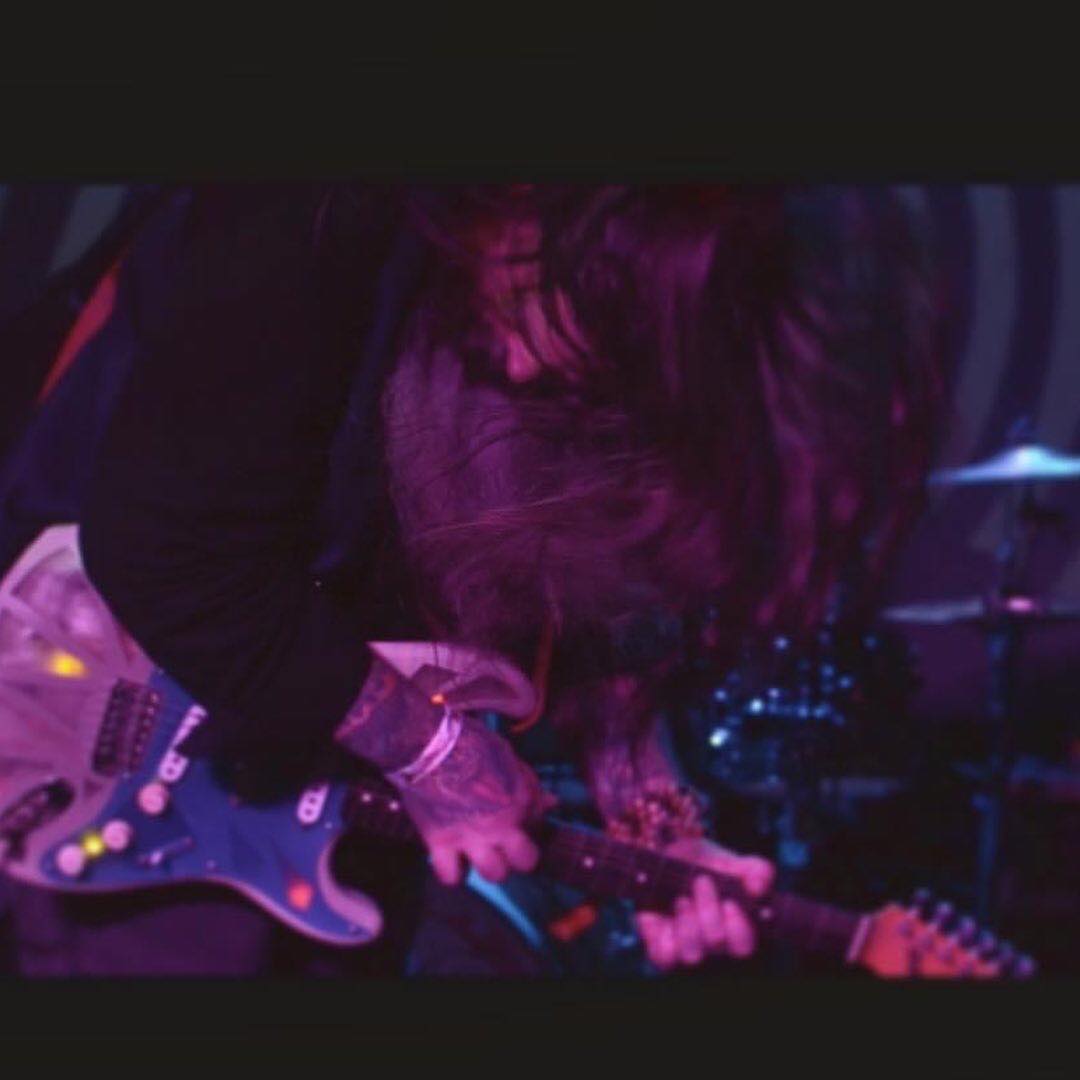
    CW: My inspiration to create is compulsive. I communicate better with lyrics and sound than I do just trying to talk. I listen to a ton of music and when I hear something that gives me an emotional response, I am often inspired to try to recreate that response myself with my own music. I’m not talented enough as a player to just learn someone else’s song and get the emotional response that way, so I experiment and fiddle about until I find things that speak to me. Also, playing with the players in Cricketbows is so inspirational. I can play two notes and everyone will join in and play along and expand a song into new territories through improvisation that is really amazing. The average listener, just happening upon one of our jam sessions would believe that we had written and rehearsed something a million times because it’s so cohesively fluid – but in reality we are probably playing the thing for the first time.

    Dr. J: How would you describe the music that you typically create? How has that process evolved or changed over time (especially as you think about your journey from ‘Diamonds’ to the ‘Communion’ EP to the most recent album)?

    CW: Cricketbows has always been about being honest. My previous bands were always sort of me playing a character or a role that is about the theme of the band. In Cricketbows I found a place where I could write from my heart and soul and not worry about what the audience might think. As we’ve progressed as a group, I think that we’re developing a sound that is pretty hard to pin down but it’s also extremely recognizable in some way. Our disparate influences come together to form something that’s all at once new and exciting but is also steeped in the traditions of what I can only call “Classic Rock”. Cricketbows is psychedelic but we tend to stray away from the trappings of typical psychedelia. We’re not using silly voices and effects that sound like we’re other-dimensional ghosts. We’re not using a bunch of effects that make the guitars go “WAHWAHWAHWAHWAH”. We’re using ultra clean signals and real voices with minimal effects. It is far more relative to early Elton John, Blind Faith, Eric Clapton and Fleetwood Mac than it is to MGMT. or King Gizzard or whatever modern psych is. I guess in the simplest terms, we’re more like “The White Album” than we are like “Sgt. Peppers”.

    Dr. J: What is next for you musically? How would you describe your thoughts at this point for your next project after ‘Raised on Rock and Roll‘?

    198345642_792918058089540_3023201045980744783_nCW: I have no idea how we’re going to move forward with a new record in the current state of the world. I hope that vaccines work and that we’re eventually able to be in a room together again. If not, it’s going to be some interesting home recording stuff. We have been playing around with some cover songs recorded remotely. We released a Black Crowes (“Good Friday”) cover back around the beginning of the Pandemic and lockdowns and it was pretty fun and interesting. We have a couple others in the can that we may or may not release. One is a cover of “I Think We’re Alone Now” that is pretty fun. Side projects are also a thing. Aarika and I do a couple different projects together that work well as far as remote recording and things like that – New Way Vendetta, a new-wave influenced electro-punk band and Wells & Watson – a darker Americana themed acoustic project. We have plans to release a bunch of stuff under a bunch of different names in the near future. As for Cricketbows, we’ll just be patient and see where it all goes.

    Dr. J: What is your favorite song to perform? What makes it a current favorite in your performances?

    CW: “Ride Or Die” from the new album is my favorite to perform as it has a country-gospel intro with lots of harmony and prettiness and then kicks into a beefed up glam punk song that is a really strong, tight rock song.

    Dr. J: What is one message you would hope that listeners find in the unique nature of your latest music?

    CW:  I think this new music is about honesty and love. Be true and do love stuff!

    Dr. J: As a musician, how are you adapting to the challenges of the Coronavirus?

    CW: It’s very hard. It’s hard to watch the people who are out trying to play shows and do stuff as if Coronavirus is not happening – or as if it’s worth the risk. We haven’t been in a room together as a band during this whole thing. We haven’t played a note in the same room together as a band in over a year now but I sit at home and watch all kinds of people who are still cramming into studios and onto stages together. I know how little these players get paid to perform. I know how few people are coming out to see them play. Music is my life to the degree that I’ve risked everything to do it. Gone broke trying to do it. Passed on jobs and money and all kinds of opportunities to do other things because the music was more important than anything else. But I’ve seen what the virus has done to friends and members of my family who got it – and if my music was responsible for one single Coronavirus case it would absolutely destroy me. People who are playing shows will say that they’re being careful, but what about the people who might come to your show that aren’t being careful?

    So here we sit, not playing any album release shows. Not booking anything for the future and hoping that it’ll all go away. In the meantime, I’m trying to use the time constructively. I’ve learned new recording programs, I’ve learned to do animation that we use in our videos and I’ve focused on a lot of the behind the scenes, nuts and bolts parts of our online presence and band management stuff that usually gets overlooked.

    You can follow Chad Wells and Cricketbows on various social media including:

    Facebook     Twitter at @cricketbows     Instagram at Cricketbows

    Spotify    Bandcamp     YouTube at CricketbowsOfficial

    YTAA MonsterWe want to extend our sincere gratitude to Revered Wells for answering our questions and continuing to make some really excellent music! Click on the links throughout the article to visit Cricketbows’ Bandcamp page! If any musicians or artists would like to participate in future ’11 Questions’ columns, please feel free to email us at drjytaa@gmail.com. All photos and images courtesy of Chad Wells and Gabrielle Elizabeth Studios photography.

    your-tuesday-afternoon-alternative-color copy

    11 Questions with… Jeffrey Dean Foster

    101714517_10163801825875154_1076073664824213504_nIn our latest installment of ’11 Questions with…’ column, we are excited to feature Jeffrey Dean Foster. We reached out to him a few months ago with 11 questions for this column. He is a gifted songwriter, singer, guitarist and more. We want to publicly thank him for taking the time out of his schedule to answer these questions for us here at YTAA!

    Jeffrey has been making some of the most thoughtful and energetic  music being made anywhere over four decades. His music encompasses a compassion that is direct and reflective. Jeffrey is able to create rock, folk, alt-country among other genres that feels inviting and invigorating. His touch with a lyric demonstrates both his fresh insight and a call for recognizing the connection and community that we all have a place we can call home together. Add the swirl of electric guitars, bass, drums and keyboards to the mix and then the music feels like an invocation!

    518c4deebc145.imageJeffrey Dean Foster has been making music in a prestigious list of bands for quite some time: The Right Profile, The Carneys and The Pinetops are on his resume! He has had an active solo career as well. The Right Profile was sought after and signed by Clive Davis for Arista Records. In these groups and in his solo work, he has created music that tells stories about the social bonds that hold us together even when we do not feel that comfort. His latest record, ‘I’m Starting to Bleed’ is being released on vinyl this weekend for Record Store Day (on Saturday, June 12 this year). All proceeds from vinyl sales will go to support The Shalom Project based in Winston-Salem, North Carolina – an organization that supports families in need. Chris Stamey, The Veldt and The Backsliders are all releasing EPs for The Shalom Project as well. On July 30th ‘I’m Starting To Bleed’ will be made available on CD and on all streaming platforms.

    173672123_5328147950588488_6160351963110197999_n‘I’m Starting To Bleed’ channels an inner dialogue over how to combat cruelty and a loss of compassion. Like so many of us, Jeffrey Dean Foster watched the social protests following George Floyd’s murder and he felt the need to respond to the inhumanity and hostility of that senseless death. ‘I’m Starting To Bleed’ is a musical response to that loss. While wide-eyed and recognizing the challenge in creating change and reimagining healthy communities, the songs on this record move between an almost pastoral, agrarian feel to passionate Big Star and Kinks influenced rock and roll. Several of the songs, while hopeful, carry the weight of the difficult worlds we find ourselves challenged to change and remake.

    703551_406648409405158_1411994103_o

    Dr. J: What can you share with us about when and how you started writing your latest music?

    Jeffrey Dean Foster (JDF): I never really stopped writing but this past pandemic year did give me some impetus to focus a few things. Having the world kind of stop and be still had it’s good points.

    Dr. J: You worked closely with Don Dixon and Mitch Easter, what led to your recording with them?

    JFD:  I’ve known them for 35 years. Dixon was one of the first “rock stars” that would talk to me when I’d go see his totally rocking band Arrogance. They had really great songs AND they were gloriously loud in the clubs. Mitch produced the very first record that I ever made around 1982. Since then Mitch and Don have been involved in almost every record I’ve ever made in one form or another. Dixon produced a tape that ultimately got my first band [The Right Profile] signed to Arista Records. Mitch has mixed my last two albums (‘Million Star Hotel’ and ‘The Arrow’) They are just trusted friends that I can call on for musical or life advice.

    Dr. J: Tell Somebody is a personal favorite, so I am naturally curious about it. The song is compelling and driving musically. The lyrics seem very optimistic. Did you set out to write a song about human connection when starting to work on that song?

    JDF: I think I was alone at home one night and some fave musician had just died. That of course is going to keep happening with more and more frequency as time marches on. My last album The Arrow seemed to have a lot to do with mortality and we lost a lot of friends in the years leading up to it. Most of Tell Somebody came really quickly as just a wake up call to reach out to your pals  and loved ones before you can’t.

    Dr. J: Headin’ Home also addresses other connection and the comfort of home – is that a correct interpretation of some of the lyrics and feel of the song? In addition, if that is correct, did you intend to address connection, love, and community or did the song evolve in that direction over time?

    JFD: Headin’ Home was definitely a product of the pandemic lock down way of life.  I just started playing and singing about homebound snapshots.  It’s a bit of a laugh. I recorded it all real quick and then made an entire video on my iPhone in several hours. It was pretty tossed off but it kind of inspired me to see that I could do that, record something at home that folks might wanna hear.

    Dr. J: How did the ‘I’m Starting To Bleed’ record come together musically for you?

    JDF: After week after week of police brutality last spring and summer I wanted to get something out of me. I didn’t know if anyone would ever hear it or even if they should hear what a white singer songwriter had to say about any part of the black experience. I thought a lot about that and almost thought that it shouldn’t see the light of day. After talking to some friends I came to terms with it. Michael Kurtz from Record Store Day heard the song and came back with the idea of putting it out as a vinyl EP for Record Store Day. We decided that it would be a benefit for The Shalom Project where I work. I help run a free medical clinic, food pantry and clothing closet there. We even talked some of my other NC friends into contributing an EP for the cause. My old friend Tabitha Soren of MTV News fame had the perfect photo for the album cover too.

    IMG_6910Dr. J: Where do you often derive inspiration to make music?

    JDF: I live out in the woods on a lake and every window I look out shows me some kind of nature and wildlife. I don’t end up writing songs about that wildlife but I think it makes me feel part of something larger than me. A lot of my songs can be pretty internal and puzzling and I like that. The songs that are making up the ‘I’m Starting to Bleed’ record are probably the most straightforward and external that I’ve written. More outward looking than inward.

    Dr. J: How would you describe the music that you typically create? How has that process evolved or changed over time (especially as you think about your journey from ‘I’m Starting To Bleed’)?

    JDF: I’m not the one to tell you much about the songs that I come up with. I’ve think people that I like write songs because they can’t talk about the ideas or emotions in them. I’m totally fine with art not spelling things out for me, whether it’s Bob Dylan or David Lynch.  I’ll tell you one bit of trivia though. When I was writing and recording I’m Starting to Bleed I wanted something almost like a Smokey Robinson song but with a healthy shadow of dread. Of course, I can’t come anywhere close to Smokey but that was something to shoot for.

    Dr. J: What is next for you musically? How would you describe your thoughts at this point for your next project after I’m Starting To Bleed? You can read an early review from The Big Takeover.

    JDF: I have some other tracks already mixed and I’d like to finish a few more and make a new full length JDF album. ‘I’m Starting to Bleed’ feels like a kind of special record. Everything about it could have only happened in this weird time of 2020/2021.

    Dr. J: What is your favorite song to perform? What makes it a current favorite in your performances?

    JDF: Well nobody is performing much these days. I have a song called ‘So Lonesome I Could Fly’ that I’ve probably played more than any other. It’s had a full life, from being covered by Marti Jones to being included in the soundtrack to the Ang Lee film ‘Billy Lynn’s Long Halftime Walk’  I still don’t get tired of playing it.

    Dr. J: What is one message you would hope that listeners find in the unique nature of your latest music?

    JDF: Any message that listeners can tune into is fine with me. If they feel anything, you’ve succeeded in some way. I just know that music that affected me during my life just got under my skin and now is just part of me. I mean ‘Waterloo Sunset’ by The Kinks might as well be tattooed on me. It’s that much a part of me.

    Dr. J: As a musician, how are you adapting to the challenges of the Coronavirus?

    JDF: I’ve done some streaming shows that some very professional and careful people having arranged. Playing on good looking stages and filming and recording the happening and then beaming it out to the internet. I have no desire to try and take some dumb shortcut and try and get folks packed into a club scene. I’m comfortable out here in the woods too!

    You can follow Jeffery Dean Foster on various social media including:

    Facebook     Twitter at @songboyfoster     Instagram at JeffreyDeanFoster

    Spotify    Bandcamp     YouTube

    YTAA MonsterWe want to extend our sincere gratitude to Jeffrey for answering our questions and continuing to make some really excellent music! Click on the links throughout the article to visit Jeffrey’s Bandcamp page! If any musicians or artists would like to participate in future ’11 Questions’ columns, please feel free to email us at drjytaa@gmail.com. All photos and images courtesy of Jeffrey Dean Foster.

    your-tuesday-afternoon-alternative-color copy