Continuing Relevance of Rubber Soul

You know what? Saying rock and roll really began with Rubber Soul isn’t some heretical bolt from the blue; it’s the kind of wild-eyed truth you only admit after years of peeling back the layers of myth and noise. Because that record wasn’t just an album; it was the moment the Beatles stopped being mop-topped charm merchants and turned into full-blown sonic arsonists.

Rubber Soul is where the walls blew open — where pop hooks sprouted strange new limbs, where folk met psychedelia in a dark alley and decided to run away together, where music discovered it didn’t have to smile to be loved.

You can feel the whole future of rock wriggling under the skin of those tracks. It was the Big Bang disguised as a studio experiment, the blueprint for everyone who ever wanted their guitar to be both a confession and a weapon. So yeah — call it the beginning. Plenty of albums came before, but Rubber Soul is where rock stopped crawling and started walking into the fire.

“Rock and roll as we know it began with Rubber Soul” isn’t just a clever line—it’s the truth Paste is tapping into. Released on December 3rd in 1965, the album marks the moment the Beatles stepped out of the frenzy of Beatlemania and into a more mature, deeply intentional era of songwriting. Rubber Soul didn’t just elevate their own sound; it challenged everyone around them—most famously pushing the Beach Boys to rethink their sun-soaked formulas and ultimately inspiring Pet Sounds.

What makes Rubber Soul so enduring is how confidently it bridges pop accessibility with artistic experimentation. The band broadened the emotional and musical palette of rock, weaving in introspection, sharper storytelling, and new textures that hinted at the psychedelic shift to come. It’s the point where John, Paul, George, and Ringo became not just stars, but innovators—artists who were actively reshaping the possibilities of popular music.

Paste is right to celebrate it: Rubber Soul wasn’t just another release—it was the hinge on which the Beatles’ legacy, and arguably modern rock itself, turned.

December ’65 the Beatles were supposed to be polished mascots of Beatlemania, grinning through another round of yeah-yeah-yeahs. Instead they walked into the studio, slammed the door behind them, and came out holding a whole new universe in their hands.

Rubber Soul is the moment they stopped playing the pop-star game and started playing God with melody and mood. Suddenly the harmonies got darker, the jokes got stranger, and the whole band sounded like they’d actually been listening—to Dylan, to each other, to the static in their own heads. And the Beach Boys? Forget surfboards; this album practically shoved Brian Wilson into a sensory deprivation tank and dared him to come back with something better.

What Paste gets right is that Rubber Soul isn’t just a “mature” Beatles record—it’s the pivot where the mop-tops mutated into the mad scientists we mythologize. A band shedding its skin in real time. A warning shot to everyone else who thought they were making serious music.

If rock and roll has a Year Zero, this album is one of the few places you can actually hear the fuse catching.

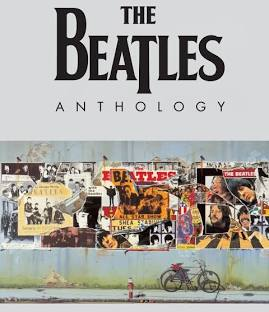
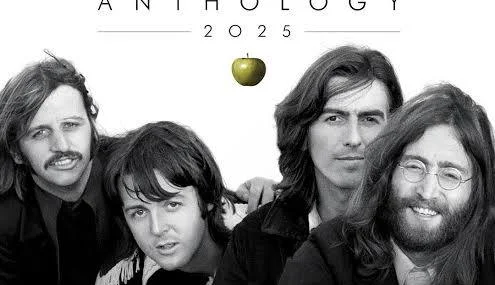
The Beatles Anthology Hits Disney+ — and the Band Is Somehow Still Breaking Up Before Our Eyes

Taking time over Thanksgiving to watch The Beatles Anthology feels like pausing the noise of the present to sit with something timeless. The documentary’s sweep—its memories, its contradictions, its fragile humanity—lands differently when you experience it in the soft lull between holiday meals and family chatter. It becomes less a history lesson and more a reminder of how rare it is for art to reshape the world, and rarer still for us to slow down long enough to feel it. In the quiet of the holiday, the story of four kids from Liverpool overrunning an entire century feels both impossibly distant and strangely intimate, like rediscovering a familiar warmth you didn’t realize you’d missed.

There’s a moment early in The Beatles Anthology—now revived on Disney+ like a relic exhumed from a time capsule of swinging London and acid-washed utopianism—where you realize that no matter how many times you’ve heard the same myth, you’re still powerless to resist the gravitational pull of The Beatles. It’s not just nostalgia. It’s not even hero worship, though that’s baked into the culture at this point like sugar in a doughnut. It’s the strange, lingering shock of discovering that four kids from Liverpool somehow hijacked the 20th century, and we’re still picking through the wreckage.

Watching Anthology in 2025 feels a bit like binge-reading someone’s diary long after they’ve died and been canonized. The documentary is part time machine, part séance, part messy family photo album. And now, thanks to Disney+, the whole thing is packaged with the glossy inevitability of a Marvel re-release. Press play, and suddenly we’re back on the rooftop, or on the plane to JFK, or in Hamburg, crawling out of seedy bars before they even knew they were supposed to be legends.

The Beatles never asked to become a religion. But they didn’t exactly discourage it either.

Anthology as a Resurrection Machine

When Anthology first aired in 1995, it was a sprawling, nostalgic reconciliation project—three surviving Beatles trying to square the circle of their own history. It arrived with two “new” songs, “Free as a Bird” and “Real Love,” as if John Lennon were phoning in demos from the afterlife. There was a sense of closure, or at least the illusion of it.

Rewatching it now, the illusion fades fast.

Because what hits you is how unbelievably young they were when the circus erupted. The early footage is almost indecent: mop-topped cherubs strumming their way into global hysteria. Ringo looks like he still hasn’t figured out the joke. George hovers in the background with the Zen intensity of a kid already dreaming of escape. John and Paul—codependent, competitive, inseparable—seem like two halves of a single supernova destined to explode.

Disney+ doesn’t change any of this. But it reframes it. The Beatles come to us now in algorithmic form, recommended alongside Star Wars and The Simpsons. They’re no longer the gods of Rock History textbooks. They’re content.

And yet they refuse to shrink. What other band could endure a nine-part documentary and still leave you wanting more?

The Eternal Breakup

The thing people forget about Anthology is that it’s basically one long breakup album told in documentary form. You can almost feel the tectonic plates shifting as the series moves from Beatlemania to the studio years. The cameras stop capturing exhilaration and start capturing exhaustion.

“Help!” stops sounding like a joke.

“Yesterday” stops sounding like a fluke.

“Hey Jude” starts to feel like an apology.

The Beatles’ story is a tragedy disguised as a fairy tale. And Anthology never tries to hide that. In the early episodes, they’re compact and hungry and full of possibility. By the end, they’re four planets drifting out of orbit, held together only by tape, memory, and the vicious tenderness of old friends trying desperately not to say the wrong thing.

The venerable rock critic Lester Bangs would have loved this. He worshiped honesty almost as much as he worshiped guitars, and he would’ve recognized the profound emotional carnage humming under the surface of the Beatles myth. He would’ve also called them out for the contradictions—for preaching love while sometimes barely being able to stand each other, for reinventing the world while struggling to reinvent themselves.

But he would have forgiven them, too. Because the music was that good.

Beatlemania in the Age of Streaming

One of the strangest pleasures of the Disney+ re-release is how it recasts Anthology as a binge-worthy epic. You can watch the band evolve in real time, like some impossible evolution chart:

Cavemen in leather jackets → Cheeky pop savants → Psychedelic revolutionaries → Mature studio alchemists → Four guys too tired to keep pretending.

In the streaming era, this trajectory feels almost too clean, too narratively convenient. Today’s bands barely last two albums before the internet atomizes them into solo projects, Twitter feuds, or boutique coffee brands. The Beatles lasted about a decade, and in that decade they authored the modern idea of what a band could be.

What Anthology shows—sometimes accidentally—is that even at their peak, The Beatles were never comfortable with being The Beatles. That’s the secret fuel of the entire documentary: they’re constantly trying to escape the gravitational force of their own creation.

George Harrison’s weary look in the late ’60s? That’s the face of a man trapped inside someone else’s mythology.

The Beautiful, Exhausting Machinery of Genius

One of the most fascinating through-lines in Anthology is the insight it gives into the creative engine of Lennon-McCartney. There’s a moment where they’re discussing writing “With a Little Help from My Friends,” casually tossing out ideas like they’re doodling in the margins of history.

Paul: “What about this?”

John: “Hmm, okay, but maybe make it a bit more… weird.”

George Martin: “Boys, that’s quite good.”

Audience of millions worldwide: Loses mind. This is the alchemy fans come for. The magic trick. The thing we pretend we can understand.

But Anthology also gives us something rarer: the gears beneath the magic. The insecurities. The imposter syndrome. The grind. These guys didn’t just wake up and write “Something” or “A Day in the Life.” They worked. They argued. They pushed each other to the brink. If rock mythology usually polishes everything into legend, Anthology leaves the fingerprints.

Seeing the Beatles Through 2025 Eyes

Maybe the strangest thing about revisiting Anthology now is how contemporary it feels. The media frenzy, the public-private split, the pressure to constantly innovate—it all maps eerily onto modern celebrity culture, except the Beatles didn’t have social media to amplify their every misstep. Imagine John Lennon on Twitter. Imagine Paul McCartney forced to explain the concept of “Paperback Writer” on TikTok.

And yet, despite the decades between then and now, the emotional churn of the documentary still lands. You feel the claustrophobia of fame. You feel the thrill of artistic discovery. You feel the heartbreak of watching four people who genuinely loved each other become unable to continue sharing the same world.

Paul’s grief in the early ’80s interviews is still palpable. George’s dry humor remains a perfect counterweight. Ringo—god bless him—anchors everything with the resigned joy of someone who knew from day one that he was lucky to be there, even when it broke his heart.

The End Still Hurts

By the time Anthology reaches the breakup, there’s no surprise left. You know it’s coming. You know the rooftop concert is the final performance. You know that lawsuits and bitterness and tabloid nonsense overshadowed the final chapter.

And yet it still hurts. It always does.

Because Anthology makes clear that the Beatles weren’t just a band—they were a lifelong conversation. And like all great conversations, it eventually exhausted itself. “The dream is over,” Lennon sings in 1970. But Anthology shows that the dream was already cracking long before he said the words.

So Why Watch Again?

Because Anthology is the closest thing we have to the Beatles telling their own story—warts, brilliance, contradictions and all. And because in 2025, in a world where music is increasingly reduced to background noise for workouts and commutes, watching their evolution unfold over 10 hours feels almost radical.

It reminds us that music once mattered enough to rewrite the world. And that four flawed, brilliant people somehow changed everything before they even understood what they were doing.

Final Thought

Watching The Beatles Anthology on Disney+ is like returning to the scene of a beautiful accident. You know how it ends. You know who gets hurt. You know which friendships survive and which don’t. But you can’t look away, because the wreckage is too gorgeous and too human to ignore.

Lester Bangs would have told you the same thing, only louder, with more profanity, and while throwing on Revolver at full volume to prove a point. But the point remains:

The Beatles aren’t just a band. They’re a feeling. And Anthology—even three decades later—reminds us why that feeling still refuses to die.

The Enduring Resonance of Albums

In the ever-evolving landscape of music, where singles reign supreme on the charts and dominate streaming and what’s left of radio airwaves, it may seem audacious to suggest that albums still hold an essential place in the hearts of musicians and music fans. Consider the profound exploration of the myriad reasons that albums, those cohesive and immersive bodies of work, continue to be more important to the world of music than singles. Simply put, why do albums, as comprehensive artistic expressions, outshine the fleeting glimmers of singles? In an updated article in June of this year, The New York Times noted that Vinyl is selling so well that it has become difficult to sell.

In today’s digital age, where the allure of instant gratification looms large, singles often capture our attention with catchy hooks and immediate gratification. The latest new “thing” pushed by the music industry. However, one could argue that singles stand as mere fragments of a larger narrative, while albums, these grand tapestries of sound, continue to stand tall as the ultimate artistic statement. I would like to explore why albums reign supreme, holding the keys to the heart and soul of the music world.

To understand the importance of albums, one must delve into the very essence of music itself. At the core of the musical experience lies storytelling and emotional depth, attributes that albums are uniquely positioned to deliver. Unlike singles, which are often a fleeting burst of musical energy, albums invite us to step into the artist’s world, witness a narrative unfold, and take a journey through a spectrum of observations and emotions. I recently wrote about an album that delivers just such a passionate kick, Hello June’s Artifacts – which you should explore because in doing so, you are exploring yourself.

While singles can provide instant gratification, it’s albums that offer a depth of connection with an artist/band. A well-crafted album reveals the artist’s identity, their evolving style, and their growth over time. It is through albums that we can chart an artist’s musical journey, from their early struggles to the heights of their creative prowess. While singles are often designed to strike like lightning, albums are the tempest that follows, the storm that leaves us soaked. A full record gives artists the freedom to experiment and explore. Take, for instance, The Beatles’ “Sgt. Pepper’s Lonely Hearts Club Band.” This groundbreaking album saw the band transition from their pop roots into a new realm of sonic experimentation ( although, I could argue that this search for ever-expansive creative expression began with “Rubbert Soul” and took a leap forward into the ether with ‘Revolver,” but “Sgt. Pepper is the album that most people know so I use that as the example here). The canvas of an album allows artists to stretch their creative muscles, delivering a varied, dynamic, and enriching musical experience.

The sequencing of songs in an album is a meticulous art. It’s not just about stringing tracks together; it’s about creating a cohesive narrative. From the frenetic energy of an opening track to the cathartic release of the closing one, albums take us on a journey that singles, by their very nature, cannot replicate. The art of sequencing tracks on an album is like composing a symphony. A well-structured album takes the listener on a journey, from the opening notes to the closing chords. The arrangement of tracks is a work of art, carefully designed to elicit emotional highs and lows. Albums make us feel as if we’re part of something bigger, a story told through sound.

Think of iconic albums like Pink Floyd’s “The Wall” or The Beatles’ “Revolver” (see I found a space for it). These are masterpieces that transcend individual songs, and it’s the collective experience of listening to the entire album that elevates the music to a different realm. Albums are capable of evoking deep emotions, transcending time and space to create profound memories. Albums, in all their glory, are where the art of storytelling finds its true home. From Pink Floyd’s “The Wall” to Kendrick Lamar’s “good kid, m.A.A.d city,” these long-form musical narratives immerse the listener in a profound experience. It’s not just about catchy hooks or a chorus; it’s about crafting a journey that unravels, evokes emotions, and leaves an indelible mark on the listener.

One key aspect of albums that singles lack is thematic unity. An album often explores a central theme, be it love, politics, or existential musings. This thematic continuity enriches the listening experience and helps listeners connect with the artist’s vision on a profound level. Albums are the fertile ground where new genres and subcultures take root and thrive. Think about Nirvana’s “Nevermind” ushering in the grunge era or Public Enemy’s “It Takes a Nation of Millions to Hold Us Back” shaping the future of hip-hop. These albums weren’t just music; they were cultural movements. Albums provide the platform for artists to explore new musical territories, ultimately influencing the very landscape of popular music.

The art of album cover design is another underappreciated aspect of the album format. Iconic album covers such as Nirvana’s “Nevermind” or Pink Floyd’s “The Dark Side of the Moon” are etched in the annals of music history, providing a visual representation of the artist’s vision.

Albums allow artists to experiment and take risks, push the boundaries of their creativity, and challenge listeners. Singles, on the other hand, are often shaped by the need for immediate chart success. It’s the albums that serve as the canvas for musical exploration and innovation. Albums serve as a bridge between artists and their audiences. Through the lyrics, melodies, and arrangements, artists reveal their innermost thoughts, feelings, and experiences. Listening to an album is not just passive consumption; it’s an intimate, transformative experience. Whether it’s the heartbreak of Adele’s “21” or the political urgency of Bob Dylan’s “The Times They Are A-Changin’,” albums foster a profound connection with the listener.

Not only do albums provide a broader canvas for musical expression, but they also offer artists a platform to collaborate with a diverse range of musicians, producers, and engineers. These collaborative efforts can result in a rich tapestry of sound that transcends the limitations of singles.

The album format is also crucial in showcasing an artist’s versatility. While a single may only capture one facet of an artist’s talent, an album can showcase their range, from intimate ballads to boundless rockers, from introspective lyrics to politically charged anthems. Consider the album as an immersive experience, akin to reading a novel or watching a film. Albums encourage us to set aside time, to actively engage with the music, and to appreciate the full spectrum of an artist’s expression. They invite us to lose ourselves in a sonic world.

One of the most compelling arguments in favor of albums is their capacity to provoke deep and sustained discussion. Critics and fans alike engage in in-depth analyses of albums, debating their merits, themes, and artistic choices. Singles, although enjoyable, rarely evoke the same level of discourse. As we’ve seen, albums possess unique qualities that make them a vital and enduring aspect of music. The depth, thematic coherence, sequencing, visual art, room for experimentation, and capacity for discussion all contribute to their longevity. In an age where instant gratification often trumps artistic depth, the enduring importance of albums in the world of music should not be underestimated.