Jangling Toward the American Dream: Why State of Our Union by The Long Ryders Still Roars

There’s a particular kind of American music that feels like it was discovered rather than invented. It sounds dusty even when it’s new. It rattles like a truck driving too fast down a county road. And every so often a band comes along that grabs that tradition by the collar and reminds you that rock and roll didn’t begin in a boardroom or end in a streaming playlist.

That’s exactly what The Long Ryders did with State of Our Union, their 1985 album that still sounds like a transmission from the backroads of American rock. If you care about where country rock, punk energy, and jangling guitar pop collide, this record is one of the great unsung documents of the era.

The easiest way to understand the album is to remember what the mid-1980s looked like musically. MTV had turned pop into a fluorescent spectacle. Synthesizers were everywhere. Hair metal was rising like some chrome-plated monster out of Los Angeles clubs. Meanwhile, the American roots tradition—folk, country, and the raw rock that grew out of them—was often treated like a museum exhibit.

But beneath the gloss, something else was happening. A loose constellation of bands started digging into the country-rock sound that had once been pioneered by groups like the Byrds, the Flying Burrito Brothers, and Gram Parsons. Instead of simply copying the past, they plugged those sounds into the urgency and speed of punk.

The Long Ryders were one of the most electrifying results of that collision. Led by singer and songwriter Sid Griffin alongside guitarist Stephen McCarthy, the band had already shown promise on their earlier records. But State of Our Union is where everything clicked: the songwriting, the politics, the guitar sound, and the sense that American rock history was not a relic but a living, noisy thing you could still push forward.

The first thing that hits you when listening to the album is the guitars. They don’t shimmer politely. They jangle like someone shaking a tambourine in the middle of a thunderstorm. McCarthy and Griffin build a sound that clearly nods to the Byrds’ twelve-string brilliance, but they play it with the kind of punch that makes it feel less like nostalgia and more like a revival meeting.

This is roots music with adrenaline. Take the album’s opening stretch and you immediately hear a band that understands the power of momentum. The songs move quickly, guitars ringing and drums pushing forward like the band knows that hesitation is the enemy of rock and roll. There’s a sense of restless motion running through the record, as if the entire album is happening somewhere between towns on a highway.

That movement is part of the album’s emotional core. State of Our Union is obsessed with America—its promises, its myths, and its contradictions. The title alone suggests a national report card, and several songs lean directly into that idea. Griffin, in particular, writes lyrics that sound like dispatches from someone who loves the country but refuses to look away from its problems. This isn’t flag-waving patriotism. It’s closer to what you might call critical affection: the belief that a place matters enough to argue about.

One of the album’s most famous tracks, “Looking for Lewis and Clark,” captures this spirit perfectly. On the surface, it’s a rollicking road song, guitars chiming and the rhythm section pushing ahead like the band’s van has just crossed a state line. But beneath the surface is a sly question about exploration and identity. The historical reference becomes a metaphor for searching—searching for direction, for meaning, for some version of the American dream that hasn’t been completely worn out.

That balance between exuberance and reflection is what gives the album its staying power.

Musically, the record is incredibly tight without ever sounding stiff. The rhythm section of Greg Sowders on drums and Tom Stevens on bass provides a steady, muscular foundation that keeps the songs grounded even when the guitars soar. Their playing has that crucial rock and roll quality: it swings just enough to keep things human. You can feel the band breathing together.

And then there’s the production, which wisely avoids the glossy excess that swallowed so many records in the 1980s. Instead of burying everything under layers of studio polish, the album keeps the sound open and immediate. It feels like you’re hearing a band in a room rather than a computer simulation of one.

That decision turned out to be prophetic. Decades later, when the alternative country movement started gaining attention in the 1990s with bands like Uncle Tupelo and the broader Americana scene, the blueprint was already sitting there in records like State of Our Union. The Long Ryders had essentially mapped the territory years earlier: take the storytelling and instrumentation of country rock, add the urgency of punk, and let the songs speak honestly about American life.

In other words, they helped invent a language that other bands would later become famous for speaking. Yet the album has never quite received the mainstream recognition it deserves. Part of that might be timing. The Long Ryders were slightly ahead of the curve, arriving before the industry knew what to do with this kind of hybrid sound. They existed in that awkward space between genres—too country for some rock audiences, too loud for traditional country radio.

But sometimes the records that slip through the commercial cracks are the ones that age the best. Listening to State of Our Union today, what stands out is how alive it feels. The guitars still sparkle and crash with purpose. The lyrics still resonate in a country that continues to wrestle with its own identity. And the band plays with a kind of joyous determination that reminds you why rock music mattered in the first place.

Because at its best, rock and roll isn’t just entertainment. It’s a way of arguing with the world. The Long Ryders understood that. They built an album that celebrates the open road while questioning where it leads. They took the ghosts of American music—folk songs, country laments, Byrds-style jangle—and ran them through amplifiers until those ghosts started dancing again.

That’s the real miracle of State of Our Union. It doesn’t sound like a history lesson. It sounds like a band discovering that the past still has gasoline in the tank. And once that engine starts, the ride is impossible to resist.

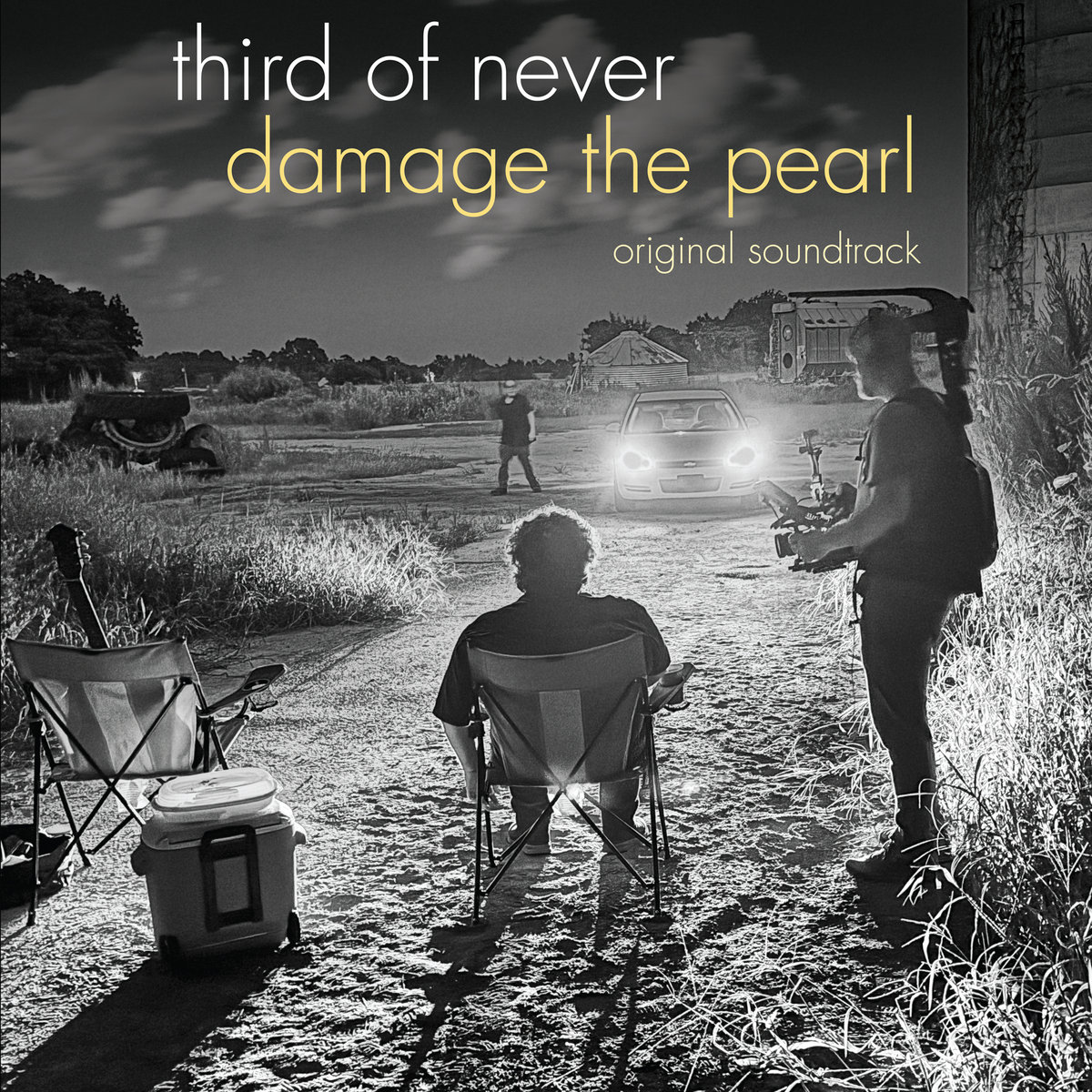
Favorites of 2025: Third of Never – Damage The Pearl

Third of Never and Damage the Pearl matters

In a year filled with shiny indie-rock releases, Damage the Pearl — the latest from Third of Never — stands out not just as a strong album but as a daring creative leap. It presents itself as an “Original Soundtrack,” blending rock, psychedelia, cinematic touches, and lyrical reflection into a unified whole. Instead of chasing hits, Third of Never offers a record that feels like a story, a mood, and an emotional piece all in one.

What follows in this favorite of 2025 consideration is an exploration of the key musicians behind the record, their roles, contributions, and chemistry, followed by a detailed analysis of the album’s sound, themes, and emotional impact. I argue that Damage the Pearl is not only one of the most compelling independent albums of 2025 but also a statement about what rock music can still be: inventive, collaborative, and emotionally powerful.

The musicians behind the music

At the heart of Third of Never is founder and guitarist/songwriter Jon Dawson, but Damage the Pearl also benefits from contributions by longtime collaborators and special guests.

Doug MacMillan — best known for his work with The Connells — handles lead vocals on the album. His voice offers a familiar yet fresh focus: a tone that blends vulnerability, grit, and a touch of wistful depth, perfect for the record’s haunting atmosphere. Jode Haskins plays bass (credited as “lead bass” on tracks like “Grab the Ground”), anchoring the record with a strong low-end that supports both the rockier and more psychedelic passages. Charles Cleaver contributes keyboard and possibly synth textures, giving some songs a layered, atmospheric dimension that broadens the sonic palette beyond straightforward rock. Brandon Ruth — on drums — drives the record’s rhythmic backbone, moving skillfully between finesse and force as the song’s mood calls for.

Beyond the core lineup, Damage the Pearl benefits from notable guest contributions: legendary keyboardist John “Rabbit” Bundrick (of The Who fame) and Steve Kilbey (of The Church), among others. Their input adds depth, history, and sonic color — reminding listeners that this is not a lo-fi one-man bedroom project but a fully realized band effort.

Together, they craft something alive — a vibrant collaboration of musicians, textures, and sensibilities.

A cinematic, psychedelic journey

Listening to Damage the Pearl feels less like playing an album and more like exploring a film’s soundtrack you haven’t seen yet. From the first moments, you’re pulled into a world of shifting moods: garage sparks, dreamy psychedelia, cinematic sweeps, and rock-driven hooks.

The lead single and our favorite track, “Grab the Ground,” sets the tone. Its shimmering guitars and steady groove evoke movement—literally and metaphorically—like a car speeding down a deserted highway under neon lights. This sense of motion aligns with the album’s larger goal: it is both a static work and a journey.

Other tracks lean toward subtle psychedelia or atmospheric rock: through keyboards, ambient touches, echoed vocals — layering mood over melody, feeling over immediacy. The guest contributions from Bundrick and Kilbey are especially effective here, broadening the band’s sonic identity beyond traditional rock tropes.

Even when the songs are more conventional rock-based (“groove + guitar + bass + drums + vocals”), the production gives them weight and space. The album rarely feels over-produced; Instead, it balances rawness and polish — capturing a tension between vulnerability and strength. As one review puts it: it “adds the right level of balance between instrumentation and vocals, so the full emotional effect of each song hits.”

What emerges is an album that’s both immediate and expansive — perfect for late-night introspection or full-volume road-trip listening.

Vulnerability and Resilience: Lyrics and emotional weight

One of the most powerful and compelling aspects of Damage the Pearl is how its lyrical themes, often focused on vulnerability, survival, identity, and inner conflict, intersect with the music’s cinematic and psychedelic character. The title track, Damage the Pearl, provides a sort of thematic statement for the record: the repeated line “What strikes the oyster doesn’t damage the pearl” suggests a reflection on resilience—inner fragility protected by layers of shell, with inner worth enduring outside shocks.

Lyrics like “remain cheerful despite your painful brain” suggest mental struggles, emotional effort, and the difficulty of staying light amid weight.

But there’s more here than just grief or melancholy. There is defiance, survival, and even hope. In relation to the sound—shifting from gritty to dreamy, rock to ambient—the album feels like an honest struggle with inner turmoil and external pressures. It doesn’t offer easy answers or neat closure. Instead, it welcomes listeners into a space of acknowledgment: “Yes, I feel what you feel,” it seems to say.

In interviews, the band confirms that Damage the Pearl was designed not just as an album but as a soundtrack to a film — a visual story that enhances its thematic goals. According to founder Jon Dawson, the cinematic concepts emerged late in the recording process, after the lines and moods had come together into something narratively suggestive.

This framing as “Original Soundtrack” shifts how you listen — every song becomes a scene, each mood a frame, and every lyric a line of dialogue in a larger story. And that story? It feels less like a tidy arc and more like a winding road trip through memory, loss, hope, and survival.

What Damage the Pearl does well, and where it leaves space

One of the album’s biggest strengths is its cohesion. Despite featuring multiple collaborators and a variety of sonic textures — from rock to psychedelia to ambient keys — the record feels unified. This is partly thanks to careful production and mixing, where every instrument, including vocals, occupies its own space, but also due to a consistent emotional and narrative tone. The listener isn’t jarred by sudden tonal shifts; instead, there’s a smooth flow and a clear internal logic — like a movie soundtrack that understands its scenes.

Moreover, the choice to present the album as a soundtrack is more than just stylistic; it enhances the listening experience. It sparks the imagination. It requires attention. It allows the listener to feel, reflect, and maybe even project their own stories onto the music.

At the same time, Damage the Pearl isn’t perfect — and that’s part of its honesty. It doesn’t always resolve its tensions. Some songs end softly, others fade into ambiguity. The “story” the album suggests is fragmented, impressionistic; you might find yourself with more questions than answers by the end. But maybe that’s the point. Maybe some emotional truths resist tidy closure.

There are moments when the cinematic ambition borders on grandiosity, where the mood threatens to overpower the song’s structure. But often, the balance — of texture, mood, simplicity, and complexity — pulls things back just in time.

Why Damage the Pearl matters — for Third of Never, for independent music, for listeners

For Third of Never, this album feels like a redefinition. No longer just a rock band producing standard records — they’ve expanded into a multimedia vision: soundtrack + album + film + narrative. It’s risky, ambitious, and yet grounded. It shows that the band is not moving backward into nostalgia or convention, but pushing forward into new possibilities.

For independent music in 2025 — when much of it feels packaged, algorithm-driven, and commercially safe — Damage the Pearl serves as a reminder that records can still be daring, mysterious, and emotionally intense. It demands something from the listener: patience, openness, and imagination. In return, it offers a lot: suspense, beauty, catharsis, resonance.

For listeners—especially those drawn to emotional honesty, moody textures, and music that feels alive rather than polished—this album is a gift. It doesn’t flinch from pain or uncertainty. It doesn’t offer easy answers. It provides space for reflection, for memory, for human complexity.

A soundtrack for the unsettled, a refuge for the introspective

In a musical landscape filled with albums that often feel like products — short, polished, predictable — Damage the Pearl feels like true art. It is chaotic, cinematic, full of emotion, and deeply human. It demonstrates what can happen when a band refuses to stick to a formula, when musicians collaborate across generations and genres (rock, psychedelia, cinematic ambition), and when they allow vulnerability and imagination to lead the work.

Third of Never and their individual collaborators — Jon Dawson, Doug MacMillan, Jode Haskins, Charles Cleaver, Brandon Ruth, John “Rabbit” Bundrick, Steve Kilbey — have created something that feels timeless, genre-blending, and fiercely genuine. This is not background music. It demands attention. It rewards patience.

If you haven’t heard Damage the Pearl yet — or if you’ve only listened once on shuffle, consider this a gentle nudge: put on headphones, turn down the lights, maybe grab a drink or nothing at all, and let the record wash over you. Maybe you’ll discover something in it you didn’t know you needed: a soundtrack for uncertainty, a companion for sleepless nights, or a mirror for unspoken feelings.

In a noisy world, Damage the Pearl is a subtle rebellion — an invitation to feel. And it’s one of the most worthwhile albums of 2025 so far.