Favorites of 2025: The Kyle Sowashes – Start Making Sense

We could have easily titled this column ‘Making Sense of It All: The Kyle Sowashes and the Enduring Power of Indie Rock Honesty,’ because the band’s new record not only showcases their musical growth but also highlights how their plainspoken sincerity continues to resonate in a genre often crowded with irony and affectation.

Independent rock has long thrived on the margins—small rooms, frayed gear, and bands that carve out meaning from the ordinary. Few groups embody this spirit as honestly and as energetically as The Kyle Sowashes, the long-running Columbus, Ohio outfit centered around singer, guitarist, and songwriter Kyle Sowash. Their terrific new record, Start Making Sense, feels both like a culmination of years of steady work and a refreshed sense of purpose. It is an album that sounds lived-in yet ambitious, familiar yet surprisingly expansive.

Like so many of their releases, it is driven by a collaborative band spirit, anchored by Sowash’s unmistakable songwriting voice. But on Start Making Sense, the musicians around him play an especially notable role. This is not merely a collection of songs written by a single songwriter—it is a group effort in the best sense, marked by thoughtful arrangements, spirited performances, and a chemistry that can only develop after years of making music together. The result is a record that feels warm, wry, cathartic, and deeply human.

A Band Made of People, Not Parts

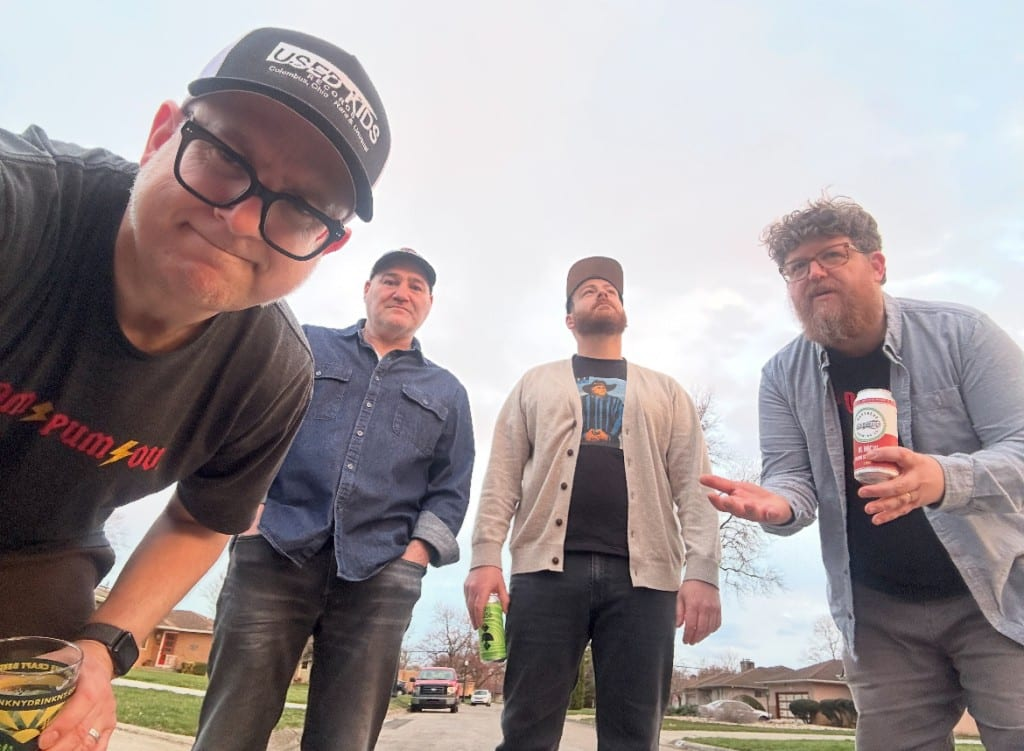
The Kyle Sowashes have always been a band that foregrounds musicianship over mythology. No one is placed on a pedestal; every member shapes the sound. On Start Making Sense, the interplay among the musicians is central to what makes the record feel so alive.

At the center, of course, is Kyle Sowash, the principal songwriter, guitarist, and narrator of the band’s emotional landscape. His style has always blended self-deprecation with sincerity, humor with frustration, resignation with hope. He writes songs the way people talk when they’ve stopped trying to impress anyone. That honesty, paired with a gift for sticky melodies and driving chord progressions, continues to anchor the band.

But the supporting cast expands and elevates the material. The rhythm section, always a strength for the group, is especially tight on this release. The basslines give songs bounce and propulsion, while the drumming adds both momentum and nuance—capable of big-room punch but also subtle shifts in tone that mirror Sowash’s lyrical turns. Together they give the album its shape: urgent when needed, contemplative when the songs pull inward.

The guitar arrangements, too, show a band deeply comfortable playing with space. There are moments of noisy celebration, fuzzed-out riffs, and guitar lines that nod to 90s indie rock and power pop without ever feeling derivative. But there is also restraint when the songs call for it—arpeggiated lines, single-note phrases, and open-chord patterns that accent Sowash’s vocal pacing. The band understands when to push and when to stay out of the way, and that mutual sensitivity is one of the record’s quiet triumphs.

All of this makes Start Making Sense feel less like a front-person project and more like a snapshot of a genuine musical community. The band members are collaborators—not session players—and the record reflects that shared vision.
Sound: An Indie Rock Dial Tuned Just Right

The defining pleasure of listening to The Kyle Sowashes is the feeling that the band knows exactly who they are and that they approach their sound not as a limitation but as an expressive engine. Start Making Sense follows this tradition, delivering songs that are rooted in classic indie rock but refreshed through craft, energy, and emotional clarity.

The album’s guitar-forward sound recalls the big-hearted crunch of bands like Superchunk, The Weakerthans, early Guided by Voices, and 90s midwestern basement rock. But The Kyle Sowashes are not imitators. Their tone is warmer, their pacing more deliberate, their hooks more conversational. They capture what it feels like to be a functional adult who still carries adolescent anxieties; what it feels like to want to grow but not always know how.

The production strikes a careful balance. It is clean enough to reveal the band’s tight musicianship but raw enough to preserve the lived-in charm that defines their identity. The vocals are present but never over-polished; the guitars are textured but not overly layered; the drums have a live-room feel that makes even the more introspective songs sound communal.

This approach is particularly effective because Sowash’s songwriting thrives on immediacy. These songs feel like they were meant to be played in small rooms full of people who understand what it’s like to try, fail, and try again. The sonic palette—guitars that jangle and buzz, drums that sprint and shuffle, bass that grounds and guides—mirrors the emotional palette of the songs themselves.

What the Lyrics Reveal: Vulnerability Without Pretension

What has always separated Kyle Sowash from many of his indie rock peers is his ability to write lyrics that feel like real conversations. He avoids metaphors that spin out into abstraction and instead leans on the everyday: the tension between optimism and exhaustion, the mundane rhythms of adulthood, the stubborn persistence of doubt.

On Start Making Sense, the lyrics feel particularly pointed. There is a thematic thread running through the record about wanting to take stock of one’s life, wanting to be better (or at least different), but also feeling the tug of old habits or long-held insecurities. This tension animates the album emotionally.

Sowash wrestles with questions familiar to anyone who has lived long enough to feel the weight of their own decisions:

  • Am I becoming the person I hoped to be?
  • Am I letting people down without realizing it?
  • Is it too late to make meaningful changes?
  • Why does clarity arrive when I am least prepared for it?

And yet, the writing never lapses into self-pity. Sowash has a rare talent for pairing difficult emotions with flashes of humor or casual understatement. His delivery—half earnest, half exasperated—adds to this effect. Even in the most introspective moments, he trusts his audience. He doesn’t sermonize or hide behind dense metaphor. He simply tells the truth as he sees it.

The Album as a Whole: Why Start Making Sense Works

The strength of the record lies not just in its individual songs but in its overall narrative arc. Start Making Sense feels like a journey, not in a conceptual or theatrical sense, but in the emotional progression from beginning to end.

The early tracks tend to have a forward-thrusting, energetic urgency—songs filled with questions, doubts, and attempts to find clarity. As the album unfolds, the pacing shifts: there are moments of introspection, acceptance, humor, resignation, and renewed commitment.

By the final songs, the album arrives somewhere quieter and more grounded. The narrator has not solved everything—far from it—but there is a sense of movement, of incremental progress. And that sense is arguably more meaningful than any dramatic revelation would be.

This emotional pacing mirrors the band’s musical pacing. The guitars pull back when the lyrics sink deeper; the rhythm section tightens when the narrator feels unsettled; the arrangements widen when Sowash leans into hopeful refrains. The band listens to the songs, and the songs reward that attention.

Why They Matter Now

There is something profoundly refreshing about hearing a band like The Kyle Sowashes release a record like Start Making Sense in 2025. In a music culture where so many albums are shaped by algorithms, trends, or online personas, this record feels defiantly human. It is made by musicians who value craft, community, and honesty over spectacle.

Moreover, the themes of Start Making Sense—struggle, ambivalence, small victories, persistent hope—resonate in a cultural moment marked by fatigue and uncertainty. Many listeners will hear echoes of their own lives in the record: the feeling of trying to recalibrate when everything seems slightly off; the desire to “start making sense” of things that once felt straightforward.

The album does not promise transformation or transcendence. Instead, it offers companionship—a reminder that confusion and self-questioning are universal, and that music can help make sense of things even when life does not.

A Career Highlight and a Quiet Triumph

Start Making Sense stands as one of The Kyle Sowashes’ most affecting and best-crafted albums. It blends the energy of earlier records with a deeper emotional palette; it shows a band confident in its identity yet open to growth. The musicianship is sharp, the lyrics are resonant, and the sound manages to be both comfortingly familiar and subtly evolved.

It is not merely a strong indie rock record—it is a document of adulthood, of persistence, of reassessment, of trying again. In its modesty, it finds profundity; in its humor, it finds catharsis; in its unvarnished honesty, it finds connection. For longtime fans, Start Making Sense will feel like a natural and satisfying next chapter. For new listeners, it offers a compelling introduction to a band that has quietly built one of the most sincere bodies of work in Midwestern indie rock. And for everyone, it offers something increasingly rare: a rock album that makes you feel less alone.

Favorites of 2025: Sadbox – Everything’s A Shame

Sadbox and Everything’s A Shame

In a musical landscape flooded with glossy production and instant-stream forgettability, Everything’s A Shame stands out — not because it tries to conform, but because it embraces messy humanity: raw ideas, family schedules, basement rehearsals, and songs born from everyday chaos. The EP from Dayton-based rock band Sadbox (released October 3, 2025) feels intimately local while resonating with universal truths.

For a band balancing real-life demands — kids, careers, responsibilities — Sadbox delivers a sound that is energetic, quirky, honest, and sometimes unsettling. The result is a three-song burst of “technical weirdo rock,” as some have called it — music that doesn’t aim for radio-friendly formulas or uniform polish but seeks genuine expression, emotional depth, and a touch of controlled chaos.

In what follows, I examine who these musicians are, how the EP was created, what their sound and lyrics reveal, and why Everything’s A Shame feels like a small but significant critique of the sanitized norms of mainstream rock.

Who’s making the noise — the people behind Sadbox

Sadbox isn’t a typical rock band that churns out songs just for fame. It’s a group of musicians grounded in everyday life, each with responsibilities beyond music. Sadbox is led by guitarist and lead singer Paul Levy, whose dual role as a surgeon brings a unique mix of precision and spontaneity to the band’s sound. He’s joined by Eli Alban on guitar, who also plays in The 1984 Draft and adds extra tonal nuance and energy to the group. Ryan Goudy provides the band’s steady, melodic bass foundation, while Ray Owens propels the songs with his dynamic, intuitive drumming. Completing the lineup for this release is Rachele Alban, whose vocals and keyboard work expand Sadbox’s sonic palette and deepen the emotional texture of the record.

The record — recorded, mixed, and mastered by local engineer/producer Fred Vahldiek known as Fredzo at Fredzoz Studio (one of our favorite records from The 1984 Draft, Best Friends Forever was recorded there) — is simple, direct, and straightforward. As drummer Ray Owens mentioned in an interview, balancing family life (with a collective total of 13 kids in the band) means music sometimes has to be as spontaneous and immediate as a family dinner: “the practice forum is similar to a live show.” That constraint — rather than hurting the music — seems to sharpen it, giving the band’s sound a rough clarity and urgency that polished over-production often hides.

Sound and style: “technical weirdo rock” with heart and edge

Sadbox’s music has been described as “alternapop / college-rock-style,” but Everything’s A Shame doesn’t fit neatly into any single category. Instead, it combines elements of grunge, rock, and weird-pop, with occasional narrative or character-driven lyrics that evoke theatrical rock or even prog-lite experiments.

The opening track — “Dust” — leans into ’90s grunge style. Over-amped vocals, gritty guitar sounds, and a tight rhythm section evoke the emotional chaos and existential worry of that time. The feeling of movement — a car speeding down a lonely road, a restless mind at midnight — stands out. That tension fits especially well with the lead singer’s dual identity: the precision of his professional life contrasted with the rough edges of his artistic side.

The second track, “All Rhymes for Scoop,” initially seems like a playful word game, but that expectation is overturned. Instead of listing rhymes for “scoop,” the song acts as a critique — perhaps — of shallow social media echo chambers. Lyrics and rhythms clash unpredictably, reflecting discomfort, discontent, and disillusionment. The syncopated beat combined with semi-nonsensical lyrical stutters mirrors the noise and overload of the digital age. The song reminds us of a previous outting, Mish Mash, from their 2021 record Future Copy.

The final song, “New Low,” slows things down. Clean arpeggiated guitar, minimal percussion, and dual vocals (Paul and Rachele) frame a sad, spare story: one of abandonment, loss, and longing. The song — reportedly inspired by the band finding a stray cat after a tenant move-out — becomes a narrative of innocence left behind, waiting in vain. Its emotional weight comes not from grand gestures but from quiet detail: the missing water dish, the empty stoop, the echo of loss.

Taken together, the three songs create a mini-arc: from restless escape, to social critique, to quiet grief and regret. The textures shift, the pacing varies, but the emotional flow — vulnerability, discomfort, longing — stays consistent.

Lyrics and themes: shame, impermanence, and the small cruelties of modern life

The title Everything’s A Shame seems both faintly sarcastic and deeply earnest. The songs reflect that duality — loss feels tragic, but also mundane; social collapse feels absurd, but also real; emotional weight is often disguised under everyday details.

As Paul Levy put it in an interview: “I am the consequence of the road I travel.” That line — repeated in “Dust” — connects personal history, existential weight, and the unpredictability of life. It frames identity not as a fixed point, but as something shaped by context, time, memory, and chance.

In “All Rhymes for Scoop,” the band critiques the vacuity of online life — the “argument platform,” the endless scroll, the performance of discourse without depth. Using lyrical non sequiturs and abrupt rhythmic shifts, Sadbox turns the song into a kind of musical protest against emptiness disguised as connection.

Then “New Low” returns to personal — and small — narratives: the lonely cat, the abandoned stoop, the emptiness left behind. It’s a portrait not of a sweeping life crisis, but of countless smaller traumas: displacement, abandonment, neglect. The catastrophic becomes quiet, ordinary, and all the more haunting for that.

These are not songs about grand despair or romantic heartbreak. They’re about surviving — surviving social collapse, familial pressure, shifting identity, emotional stasis. There’s shame in defeat, longing in loss, but also a stubborn, human need to speak, to express, to hold on.

The making of the EP: collaboration, constraints, and creative honesty

Given their busy lives — kids, jobs, daily responsibilities — the fact that Sadbox managed to write, rehearse, record, and release Everything’s A Shame is a testament to their dedication. In a  radio interview, drummer Ray Owens explained how the band’s workflow had evolved: what used to be chaotic, slow jams now flow with precision; what once needed prompts and cues now occurs with a glance or shared rhythm. That improved chemistry is evident on the record.

Recording, mixing, and mastering were done by Fredzo at Fredzoz Studio — and the production shows an honesty-over-polish vibe. The guitars bite, the vocals crack, and the drums thud. Space is intentional: silence between notes, breaths between lyrics. Nothing feels overdone; everything feels essential.

That rawness—balanced with musical discipline—gives the EP its power. It’s not perfect, but it doesn’t need to be. It’s lived-in, human, sometimes ragged, and in its raggedness lies its truth.

What Everything’s A Shame achieves — and what it leaves unresolved

One of the EP’s main strengths is its coherence. Despite the sonic and lyrical variety (grunge-inspired rock, indie quirks, quiet ballads), the three tracks feel connected — through mood, theme, and emotional honesty. That sense of unity makes the EP seem like more than a random collection: it feels like a snapshot, a statement, a short film in three acts.

It also demonstrates what a band rooted in real life can achieve when they are committed: even with family obligations and limited time, Sadbox shows that artistic ambition and emotional honesty don’t require big budgets or months in the studio. Sometimes all it takes is clarity, teamwork, and the desire to record what you feel.

However, the EP also leaves space for growth. With just three tracks, listeners might want more — more depth, more storytelling, more time to pause. The ideas hinted at in “Dust,” “All Rhymes for Scoop,” and “New Low” seem like the start of something bigger. There’s a feeling of beginning, not ending.

Furthermore, the looseness that gives Sadbox its charm can also come across as unpolished, even rough around the edges. Listeners expecting tight arrangements or radio-ready vocals might find some of the vocal delivery off-kilter, the rhythms unsettled, and the mood dark. However, for others—those looking for realism, emotional depth, and spontaneous honesty—that roughness is part of the album’s appeal.

Why this EP matters — for the band, for Dayton, for listeners who crave honesty

For Sadbox, Everything’s A Shame reaffirms their commitment: they are serious about music despite life’s demands. Their willingness to embrace their circumstances — family, time constraints, the need for immediacy — doesn’t weaken their art; it enhances it. Their music is more about authenticity than perfection.

For their hometown of Dayton and the broader Ohio music scene, the EP is a tribute to the energy of independent music: small bands, DIY studios, local stages, real lives. It’s a reminder that creativity doesn’t wait for perfect conditions — sometimes it comes from necessity, urgency, and the quiet desperation of juggling everything we care about.

For listeners outside that scene, Everything’s A Shame offers a rare kind of intimacy. It doesn’t pretend to solve problems. It doesn’t promise catharsis or closure. It offers fragments: a line about regret, a wobbly chord, a story about a lost cat, a sigh in the vocal mic. And sometimes fragments are enough — enough to make you pause, reflect, and feel a little less alone.

Everything’s A Shame — a small record with big heart

In 2025, when music often feels disposable — a background for playlists, streams, and fleeting attention — Sadbox’s Everything’s A Shame acts as a quiet form of resistance: a plea to listen, to feel, to inhabit sound rather than glide past it. It’s unpolished. It doesn’t seek easy consumption. It requests patience, presence, and empathy.

Paul Levy, Eli Alban, Ryan Goudy, Ray Owens, Rachele Alban — they’re not rock stars living for tours or hits. They’re humans with lives, demands, imperfections. And yet they created something lovingly imperfect, collaborative, and genuine. That spirit — of DIY honesty, embracing constraints, and channeling everyday life into art — is as rare as it is essential.

Everything’s A Shame might be small — only three songs. But within those songs lie questions, longing, critique, grief, and hope. It doesn’t aim to cover the entire world. It seeks to share a piece of it. And sometimes, a piece is all we need.