Favorites of 2025: The Kyle Sowashes – Start Making Sense

We could have easily titled this column ‘Making Sense of It All: The Kyle Sowashes and the Enduring Power of Indie Rock Honesty,’ because the band’s new record not only showcases their musical growth but also highlights how their plainspoken sincerity continues to resonate in a genre often crowded with irony and affectation.

Independent rock has long thrived on the margins—small rooms, frayed gear, and bands that carve out meaning from the ordinary. Few groups embody this spirit as honestly and as energetically as The Kyle Sowashes, the long-running Columbus, Ohio outfit centered around singer, guitarist, and songwriter Kyle Sowash. Their terrific new record, Start Making Sense, feels both like a culmination of years of steady work and a refreshed sense of purpose. It is an album that sounds lived-in yet ambitious, familiar yet surprisingly expansive.

Like so many of their releases, it is driven by a collaborative band spirit, anchored by Sowash’s unmistakable songwriting voice. But on Start Making Sense, the musicians around him play an especially notable role. This is not merely a collection of songs written by a single songwriter—it is a group effort in the best sense, marked by thoughtful arrangements, spirited performances, and a chemistry that can only develop after years of making music together. The result is a record that feels warm, wry, cathartic, and deeply human.

A Band Made of People, Not Parts

The Kyle Sowashes have always been a band that foregrounds musicianship over mythology. No one is placed on a pedestal; every member shapes the sound. On Start Making Sense, the interplay among the musicians is central to what makes the record feel so alive.

At the center, of course, is Kyle Sowash, the principal songwriter, guitarist, and narrator of the band’s emotional landscape. His style has always blended self-deprecation with sincerity, humor with frustration, resignation with hope. He writes songs the way people talk when they’ve stopped trying to impress anyone. That honesty, paired with a gift for sticky melodies and driving chord progressions, continues to anchor the band.

But the supporting cast expands and elevates the material. The rhythm section, always a strength for the group, is especially tight on this release. The basslines give songs bounce and propulsion, while the drumming adds both momentum and nuance—capable of big-room punch but also subtle shifts in tone that mirror Sowash’s lyrical turns. Together they give the album its shape: urgent when needed, contemplative when the songs pull inward.

The guitar arrangements, too, show a band deeply comfortable playing with space. There are moments of noisy celebration, fuzzed-out riffs, and guitar lines that nod to 90s indie rock and power pop without ever feeling derivative. But there is also restraint when the songs call for it—arpeggiated lines, single-note phrases, and open-chord patterns that accent Sowash’s vocal pacing. The band understands when to push and when to stay out of the way, and that mutual sensitivity is one of the record’s quiet triumphs.

All of this makes Start Making Sense feel less like a front-person project and more like a snapshot of a genuine musical community. The band members are collaborators—not session players—and the record reflects that shared vision.

Sound: An Indie Rock Dial Tuned Just Right

The defining pleasure of listening to The Kyle Sowashes is the feeling that the band knows exactly who they are and that they approach their sound not as a limitation but as an expressive engine. Start Making Sense follows this tradition, delivering songs that are rooted in classic indie rock but refreshed through craft, energy, and emotional clarity.

The album’s guitar-forward sound recalls the big-hearted crunch of bands like Superchunk, The Weakerthans, early Guided by Voices, and 90s midwestern basement rock. But The Kyle Sowashes are not imitators. Their tone is warmer, their pacing more deliberate, their hooks more conversational. They capture what it feels like to be a functional adult who still carries adolescent anxieties; what it feels like to want to grow but not always know how.

The production strikes a careful balance. It is clean enough to reveal the band’s tight musicianship but raw enough to preserve the lived-in charm that defines their identity. The vocals are present but never over-polished; the guitars are textured but not overly layered; the drums have a live-room feel that makes even the more introspective songs sound communal.

This approach is particularly effective because Sowash’s songwriting thrives on immediacy. These songs feel like they were meant to be played in small rooms full of people who understand what it’s like to try, fail, and try again. The sonic palette—guitars that jangle and buzz, drums that sprint and shuffle, bass that grounds and guides—mirrors the emotional palette of the songs themselves.

What the Lyrics Reveal: Vulnerability Without Pretension

What has always separated Kyle Sowash from many of his indie rock peers is his ability to write lyrics that feel like real conversations. He avoids metaphors that spin out into abstraction and instead leans on the everyday: the tension between optimism and exhaustion, the mundane rhythms of adulthood, the stubborn persistence of doubt.

On Start Making Sense, the lyrics feel particularly pointed. There is a thematic thread running through the record about wanting to take stock of one’s life, wanting to be better (or at least different), but also feeling the tug of old habits or long-held insecurities. This tension animates the album emotionally.

Sowash wrestles with questions familiar to anyone who has lived long enough to feel the weight of their own decisions:

  • Am I becoming the person I hoped to be?
  • Am I letting people down without realizing it?
  • Is it too late to make meaningful changes?
  • Why does clarity arrive when I am least prepared for it?

And yet, the writing never lapses into self-pity. Sowash has a rare talent for pairing difficult emotions with flashes of humor or casual understatement. His delivery—half earnest, half exasperated—adds to this effect. Even in the most introspective moments, he trusts his audience. He doesn’t sermonize or hide behind dense metaphor. He simply tells the truth as he sees it.

The Album as a Whole: Why Start Making Sense Works

The strength of the record lies not just in its individual songs but in its overall narrative arc. Start Making Sense feels like a journey, not in a conceptual or theatrical sense, but in the emotional progression from beginning to end.

The early tracks tend to have a forward-thrusting, energetic urgency—songs filled with questions, doubts, and attempts to find clarity. As the album unfolds, the pacing shifts: there are moments of introspection, acceptance, humor, resignation, and renewed commitment.

By the final songs, the album arrives somewhere quieter and more grounded. The narrator has not solved everything—far from it—but there is a sense of movement, of incremental progress. And that sense is arguably more meaningful than any dramatic revelation would be.

This emotional pacing mirrors the band’s musical pacing. The guitars pull back when the lyrics sink deeper; the rhythm section tightens when the narrator feels unsettled; the arrangements widen when Sowash leans into hopeful refrains. The band listens to the songs, and the songs reward that attention.

Why They Matter Now

There is something profoundly refreshing about hearing a band like The Kyle Sowashes release a record like Start Making Sense in 2025. In a music culture where so many albums are shaped by algorithms, trends, or online personas, this record feels defiantly human. It is made by musicians who value craft, community, and honesty over spectacle.

Moreover, the themes of Start Making Sense—struggle, ambivalence, small victories, persistent hope—resonate in a cultural moment marked by fatigue and uncertainty. Many listeners will hear echoes of their own lives in the record: the feeling of trying to recalibrate when everything seems slightly off; the desire to “start making sense” of things that once felt straightforward.

The album does not promise transformation or transcendence. Instead, it offers companionship—a reminder that confusion and self-questioning are universal, and that music can help make sense of things even when life does not.

A Career Highlight and a Quiet Triumph

Start Making Sense stands as one of The Kyle Sowashes’ most affecting and best-crafted albums. It blends the energy of earlier records with a deeper emotional palette; it shows a band confident in its identity yet open to growth. The musicianship is sharp, the lyrics are resonant, and the sound manages to be both comfortingly familiar and subtly evolved.

It is not merely a strong indie rock record—it is a document of adulthood, of persistence, of reassessment, of trying again. In its modesty, it finds profundity; in its humor, it finds catharsis; in its unvarnished honesty, it finds connection. For longtime fans, Start Making Sense will feel like a natural and satisfying next chapter. For new listeners, it offers a compelling introduction to a band that has quietly built one of the most sincere bodies of work in Midwestern indie rock. And for everyone, it offers something increasingly rare: a rock album that makes you feel less alone.

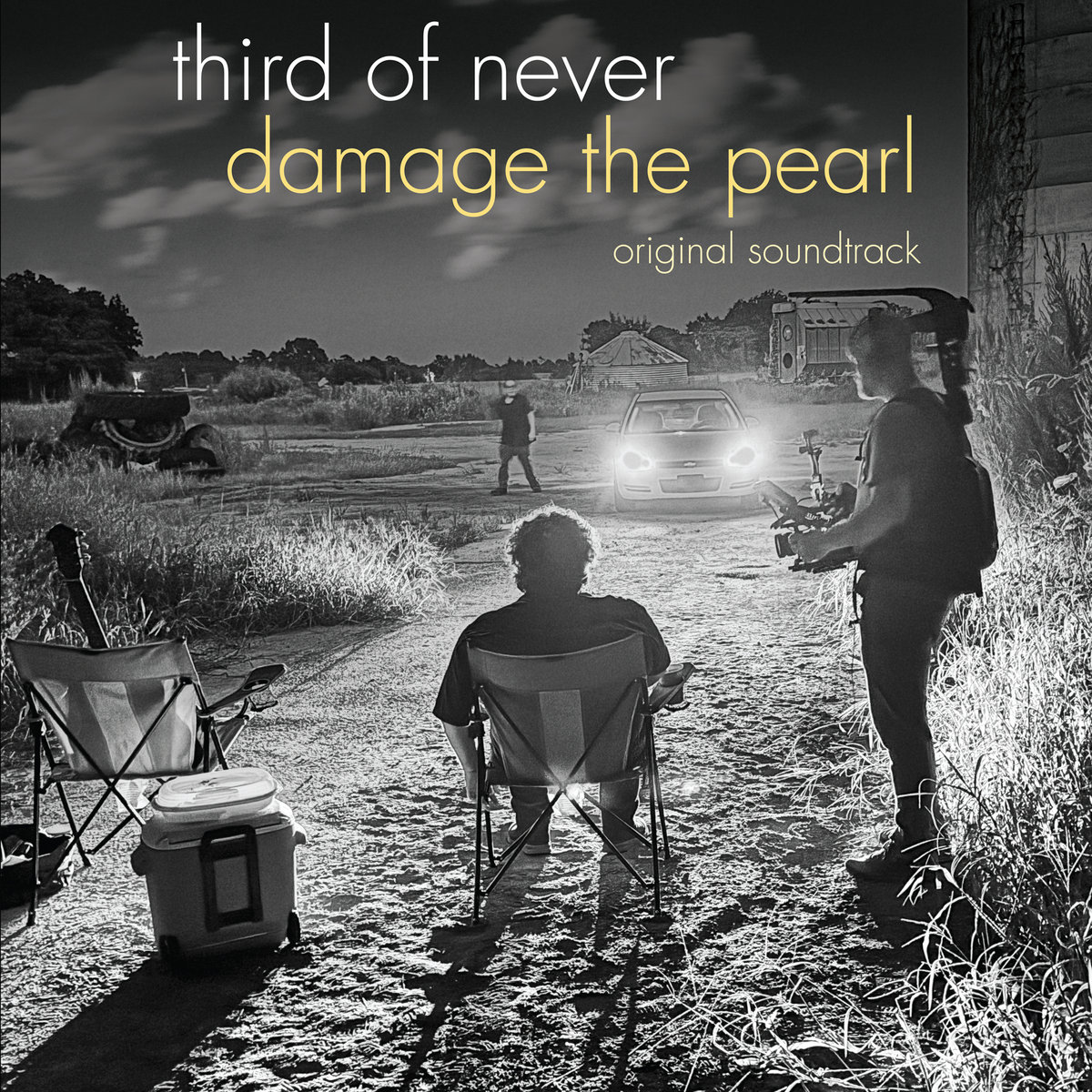
Favorites of 2025: Third of Never – Damage The Pearl

Third of Never and Damage the Pearl matters

In a year filled with shiny indie-rock releases, Damage the Pearl — the latest from Third of Never — stands out not just as a strong album but as a daring creative leap. It presents itself as an “Original Soundtrack,” blending rock, psychedelia, cinematic touches, and lyrical reflection into a unified whole. Instead of chasing hits, Third of Never offers a record that feels like a story, a mood, and an emotional piece all in one.

What follows in this favorite of 2025 consideration is an exploration of the key musicians behind the record, their roles, contributions, and chemistry, followed by a detailed analysis of the album’s sound, themes, and emotional impact. I argue that Damage the Pearl is not only one of the most compelling independent albums of 2025 but also a statement about what rock music can still be: inventive, collaborative, and emotionally powerful.

The musicians behind the music

At the heart of Third of Never is founder and guitarist/songwriter Jon Dawson, but Damage the Pearl also benefits from contributions by longtime collaborators and special guests.

Doug MacMillan — best known for his work with The Connells — handles lead vocals on the album. His voice offers a familiar yet fresh focus: a tone that blends vulnerability, grit, and a touch of wistful depth, perfect for the record’s haunting atmosphere. Jode Haskins plays bass (credited as “lead bass” on tracks like “Grab the Ground”), anchoring the record with a strong low-end that supports both the rockier and more psychedelic passages. Charles Cleaver contributes keyboard and possibly synth textures, giving some songs a layered, atmospheric dimension that broadens the sonic palette beyond straightforward rock. Brandon Ruth — on drums — drives the record’s rhythmic backbone, moving skillfully between finesse and force as the song’s mood calls for.

Beyond the core lineup, Damage the Pearl benefits from notable guest contributions: legendary keyboardist John “Rabbit” Bundrick (of The Who fame) and Steve Kilbey (of The Church), among others. Their input adds depth, history, and sonic color — reminding listeners that this is not a lo-fi one-man bedroom project but a fully realized band effort.

Together, they craft something alive — a vibrant collaboration of musicians, textures, and sensibilities.

A cinematic, psychedelic journey

Listening to Damage the Pearl feels less like playing an album and more like exploring a film’s soundtrack you haven’t seen yet. From the first moments, you’re pulled into a world of shifting moods: garage sparks, dreamy psychedelia, cinematic sweeps, and rock-driven hooks.

The lead single and our favorite track, “Grab the Ground,” sets the tone. Its shimmering guitars and steady groove evoke movement—literally and metaphorically—like a car speeding down a deserted highway under neon lights. This sense of motion aligns with the album’s larger goal: it is both a static work and a journey.

Other tracks lean toward subtle psychedelia or atmospheric rock: through keyboards, ambient touches, echoed vocals — layering mood over melody, feeling over immediacy. The guest contributions from Bundrick and Kilbey are especially effective here, broadening the band’s sonic identity beyond traditional rock tropes.

Even when the songs are more conventional rock-based (“groove + guitar + bass + drums + vocals”), the production gives them weight and space. The album rarely feels over-produced; Instead, it balances rawness and polish — capturing a tension between vulnerability and strength. As one review puts it: it “adds the right level of balance between instrumentation and vocals, so the full emotional effect of each song hits.”

What emerges is an album that’s both immediate and expansive — perfect for late-night introspection or full-volume road-trip listening.

Vulnerability and Resilience: Lyrics and emotional weight

One of the most powerful and compelling aspects of Damage the Pearl is how its lyrical themes, often focused on vulnerability, survival, identity, and inner conflict, intersect with the music’s cinematic and psychedelic character. The title track, Damage the Pearl, provides a sort of thematic statement for the record: the repeated line “What strikes the oyster doesn’t damage the pearl” suggests a reflection on resilience—inner fragility protected by layers of shell, with inner worth enduring outside shocks.

Lyrics like “remain cheerful despite your painful brain” suggest mental struggles, emotional effort, and the difficulty of staying light amid weight.

But there’s more here than just grief or melancholy. There is defiance, survival, and even hope. In relation to the sound—shifting from gritty to dreamy, rock to ambient—the album feels like an honest struggle with inner turmoil and external pressures. It doesn’t offer easy answers or neat closure. Instead, it welcomes listeners into a space of acknowledgment: “Yes, I feel what you feel,” it seems to say.

In interviews, the band confirms that Damage the Pearl was designed not just as an album but as a soundtrack to a film — a visual story that enhances its thematic goals. According to founder Jon Dawson, the cinematic concepts emerged late in the recording process, after the lines and moods had come together into something narratively suggestive.

This framing as “Original Soundtrack” shifts how you listen — every song becomes a scene, each mood a frame, and every lyric a line of dialogue in a larger story. And that story? It feels less like a tidy arc and more like a winding road trip through memory, loss, hope, and survival.

What Damage the Pearl does well, and where it leaves space

One of the album’s biggest strengths is its cohesion. Despite featuring multiple collaborators and a variety of sonic textures — from rock to psychedelia to ambient keys — the record feels unified. This is partly thanks to careful production and mixing, where every instrument, including vocals, occupies its own space, but also due to a consistent emotional and narrative tone. The listener isn’t jarred by sudden tonal shifts; instead, there’s a smooth flow and a clear internal logic — like a movie soundtrack that understands its scenes.

Moreover, the choice to present the album as a soundtrack is more than just stylistic; it enhances the listening experience. It sparks the imagination. It requires attention. It allows the listener to feel, reflect, and maybe even project their own stories onto the music.

At the same time, Damage the Pearl isn’t perfect — and that’s part of its honesty. It doesn’t always resolve its tensions. Some songs end softly, others fade into ambiguity. The “story” the album suggests is fragmented, impressionistic; you might find yourself with more questions than answers by the end. But maybe that’s the point. Maybe some emotional truths resist tidy closure.

There are moments when the cinematic ambition borders on grandiosity, where the mood threatens to overpower the song’s structure. But often, the balance — of texture, mood, simplicity, and complexity — pulls things back just in time.

Why Damage the Pearl matters — for Third of Never, for independent music, for listeners

For Third of Never, this album feels like a redefinition. No longer just a rock band producing standard records — they’ve expanded into a multimedia vision: soundtrack + album + film + narrative. It’s risky, ambitious, and yet grounded. It shows that the band is not moving backward into nostalgia or convention, but pushing forward into new possibilities.

For independent music in 2025 — when much of it feels packaged, algorithm-driven, and commercially safe — Damage the Pearl serves as a reminder that records can still be daring, mysterious, and emotionally intense. It demands something from the listener: patience, openness, and imagination. In return, it offers a lot: suspense, beauty, catharsis, resonance.

For listeners—especially those drawn to emotional honesty, moody textures, and music that feels alive rather than polished—this album is a gift. It doesn’t flinch from pain or uncertainty. It doesn’t offer easy answers. It provides space for reflection, for memory, for human complexity.

A soundtrack for the unsettled, a refuge for the introspective

In a musical landscape filled with albums that often feel like products — short, polished, predictable — Damage the Pearl feels like true art. It is chaotic, cinematic, full of emotion, and deeply human. It demonstrates what can happen when a band refuses to stick to a formula, when musicians collaborate across generations and genres (rock, psychedelia, cinematic ambition), and when they allow vulnerability and imagination to lead the work.

Third of Never and their individual collaborators — Jon Dawson, Doug MacMillan, Jode Haskins, Charles Cleaver, Brandon Ruth, John “Rabbit” Bundrick, Steve Kilbey — have created something that feels timeless, genre-blending, and fiercely genuine. This is not background music. It demands attention. It rewards patience.

If you haven’t heard Damage the Pearl yet — or if you’ve only listened once on shuffle, consider this a gentle nudge: put on headphones, turn down the lights, maybe grab a drink or nothing at all, and let the record wash over you. Maybe you’ll discover something in it you didn’t know you needed: a soundtrack for uncertainty, a companion for sleepless nights, or a mirror for unspoken feelings.

In a noisy world, Damage the Pearl is a subtle rebellion — an invitation to feel. And it’s one of the most worthwhile albums of 2025 so far.